By NastyNils·
Motorcycle comparison · Naked Bike
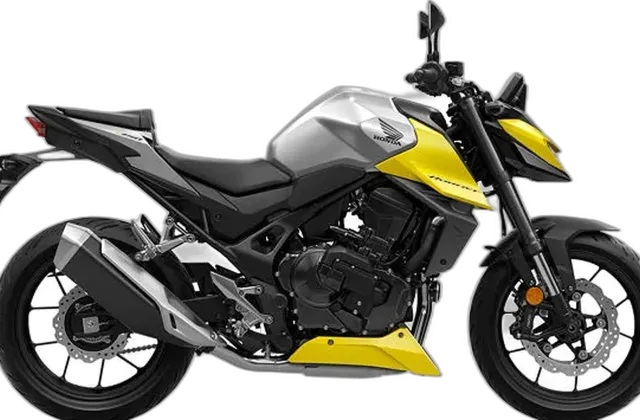
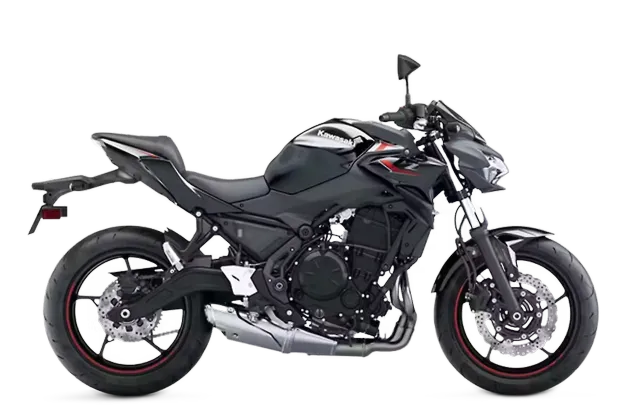
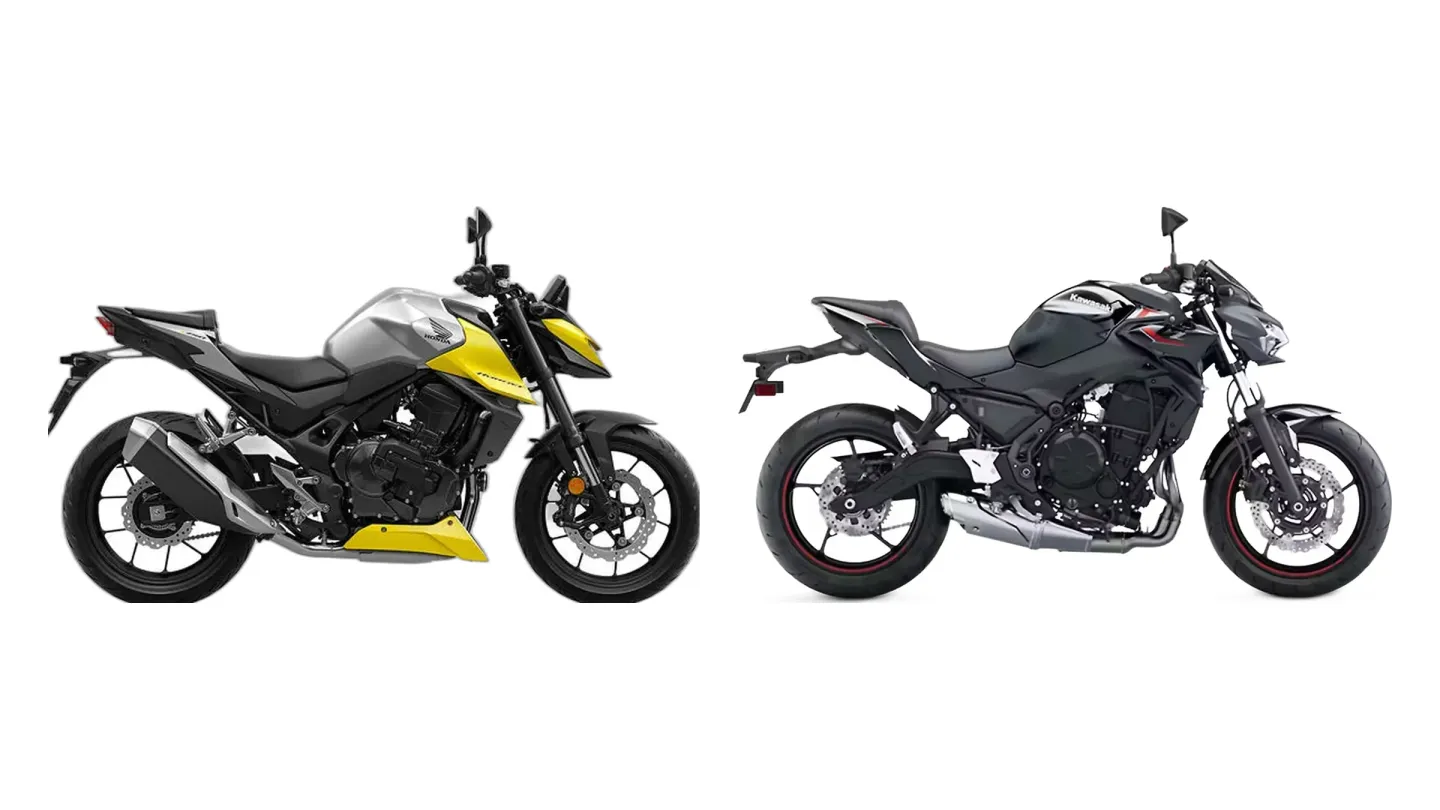
Honda CB750 Hornet (RH12) vs Kawasaki Z650 (MY2017)
Honda CB750 Hornet vs Kawasaki Z650: which one's easier to live with every day.
You'll roll off the Honda CB750 Hornet's throttle and its engine braking doesn't upset the chassis. Crack the Kawasaki Z650's throttle at low revs and it pulls strong.
So which one do you buy?
The CB750 Hornet has the edge if…
Traveling with luggage
A touch ahead: CB750 Hornet
For a week away, the CB750 Hornet noses in front. That comes from a better reliability record and a better passenger seat. Fit the bags you want before you decide.
Daily commuting & city riding
Nose ahead: CB750 Hornet
Day in, day out, the CB750 Hornet nudges ahead in traffic. Thank simpler maintenance for that. It isn't a big enough gap to plan around.
Sporty riding on twisty roads
Inches ahead: CB750 Hornet
On a twisty road, the CB750 Hornet edges ahead. Credit more feel through the bars. Not by enough to settle it alone.
A confidence-building first motorcycle
Slight edge: CB750 Hornet
The CB750 Hornet asks a little less of a rookie. The difference is more comfort. That's a narrow edge, so sit on both before you decide.
What makes each one tick
CB750 Hornet
There's no argument at corner entry: the Hornet's bars answer the first nudge. One push and it goes. The front lever squeezes in progressively, and a hard grab doesn't change how predictably it bites. Its twin beats out a V-twin's uneven pulse.
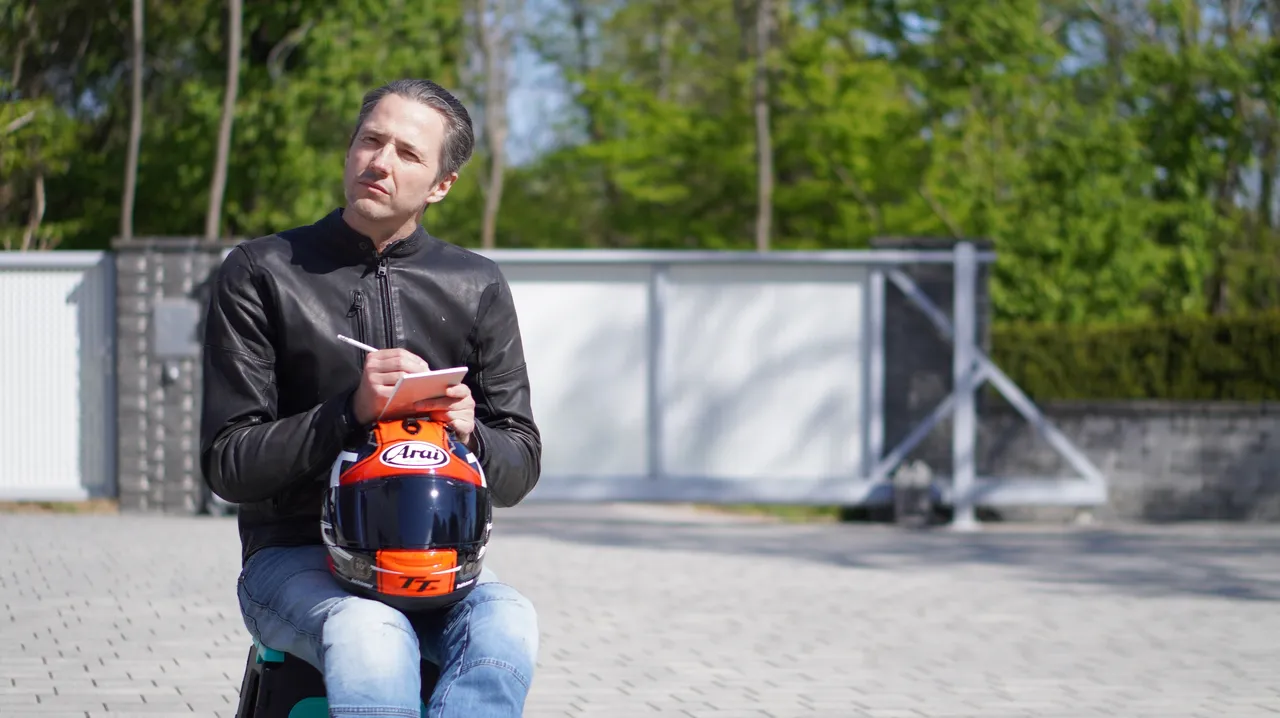
Nils rode the CB750 Hornet in Austria in 2023, and in Austria in 2024 (1000PS test reports).
Z650
Low in the gears, the Z650's twin shoves out usable torque from just above idle. A bump at an everyday pace with a lighter rider aboard doesn't faze its soft fork and shock. Harder riding leaves the fork vague. Most riders get both boots flat beside its narrow seat.
The Voice of Experience
What actually separates them
- The CB750 Hornet makes more peak power: 92 hp (68 kW) vs 68 hp (50 kW).
- The CB750 Hornet makes more peak torque: 55 lb-ft (75 Nm) vs 48 lb-ft (66 Nm).
- The CB750 Hornet has the larger engine: 755 cc vs 649 cc.
Which one for the way you ride
Comfortable long-distance riding
Neither is a natural fit
Long days aren't what these two do best. Plan shorter legs and plenty of stops.
Who each one is built for
What's good, and what you'll live with
CB750 Hornet
Strengths
- Weightless clutch, tuned slipper
- Turns in on one push
- Strong, easy front brake
- Gutsy low-end twin
- Surprising lean clearance
Trade-offs
- No damping adjustment
- Vague front-end feel
- Seat bottoms out
- Tight for taller riders
- Snatchy on-off throttle at low rpm
Z650
What owners say
Strengths
- Beginner-friendly and A2-compliant
- Excellent value for money
- Strong low- and mid-range torque
- Low seat height / good ground reach
Trade-offs
- Soft, underdamped stock suspension
- Brakes lack initial bite
- No wind protection
- OEM tires offer weak cold grip
- Poor passenger accommodation
Known problems to check before you buy
CB750 Hornet
- Soft suspension setup, limited adjustability The Showa SFF-BP USD fork is non-adjustable on the standard model; the Pro-Link rear shock offers preload only (7-step). Heavier riders and brisk-paced riders report rebound oscillation, bouncing on bigger bumps, and a setup biased toward comfort over control. Aftermarket shock upgrades (Wilbers and similar) resolve this for owners pursuing sporty pace. Honda revised the fork damping for 25YM, but the adjustability did not change.
- Jerky on-off throttle at low rpm and urban speeds The ride-by-wire throttle calibration is abrupt during transitions between closed and small-throttle openings, particularly in 1st and 2nd gear at urban speeds and at part-throttle below approximately 5,500 rpm. Multiple owners report a TPS reset procedure provides limited improvement; Honda is reported to have improved the calibration for model year 2025.
- ABS cannot be switched off, no cornering ABS The 2-channel ABS system is fixed and non-defeatable, with no IMU and therefore no cornering ABS. Reviewers report the ABS can intervene aggressively on loose surfaces. This is a spec design choice rather than a fault, but it is a documented limitation for owners using the bike on gravel or for back-track riding.
Z650
- Handlebar Control and Ignition Switch Failure Handlebar control (switch) no longer functions; ignition switch won't turn or operates intermittently.
- ABS Sensor Error / Intermittent ABS Warning Light ABS warning light illuminates intermittently. One owner reported the ABS failed on three separate occasions during active use. ABS sensor ring warpage can cause erratic warning light behavior.
- Throttle Jerkiness at Low RPM On/off jerking when opening the throttle, particularly noticeable in 1st and 2nd gear at low RPM. Harsh, abrupt feeling when cracking open the throttle coming out of engine braking. A known issue with Euro 4 tuning on the Kawasaki 650 platform.
- Premature Rust on OEM Chain The OEM chain rusts quickly, especially after rain riding. Scattered reports of seized chain links. Some owners report needing chain replacement before 12,500 miles.
- Vibration-Induced Loose Fasteners / Mirror Vibrations Various fasteners vibrate loose over time—a characteristic issue of 180° parallel-twin engines. Mirrors become unusable at certain rpm bands due to severe blurring.
- Corrosion and Cracking in the Exhaust System Exhaust manifolds discolor quickly and develop surface rust. Exhaust slip-nut fasteners can corrode and seize, making removal risky due to potential breakage. Isolated reports of cracking in the exhaust system. The exhaust system is one-piece; a crack requires complete replacement.
- Paint Peeling on Engine Housing / Water Pump Cover Engine paint is peeling off, particularly on the water pump housing, following moisture exposure and winter operation. Bare aluminum or corrosion is visible underneath.
- Timing Chain Tensioner Noises / Ticking at Idle Ticking at idle, rattling between 4,000–5,000 RPM while riding. More pronounced when engine is warm. Some dealers consider it normal engine characteristic.
What they share
- Engine
- Parallel twin
- Cooling
- Liquid-cooled
- Gearbox
- 6-speed
- Final drive
- Chain
- Front tire
- 120/70-17
- Rear tire
- 160/60-17
Where the spec sheets split
| CB750 Hornet | Z650 | |
|---|---|---|
| Seat height | 31.3 in (795 mm) | 31.1 in (790 mm) |
| Wet weight | 419 lb (190 kg) | 412 lb (187 kg) |
| CB750 Hornet | Z650 | |
|---|---|---|
| Displacement | 755 cc | 649 cc |
| Power | 92 hp (68 kW) | 68 hp (50 kW) |
| Peak power at | 9,500 rpm | 8,000 rpm |
| Torque | 55 lb-ft (75 Nm) | 48 lb-ft (66 Nm) |
| Peak torque at | 7,250 rpm | 6,500 rpm |
| Top speed | 127 mph (205 km/h) | 121 mph (194 km/h) |
| CB750 Hornet | Z650 | |
|---|---|---|
| Fuel economy | 55 mpg (US) / 4.3 L/100 km | 53 mpg (US) / 4.4 L/100 km |
| Fuel capacity | 4.0 US gal (15.2 L) | 4.0 US gal (15 L) |
| CB750 Hornet | Z650 | |
|---|---|---|
| Front brake | 296 mm | 300 mm |
| Wheelbase | 55.9 in (1420 mm) | 55.5 in (1410 mm) |
What comes fitted, what costs extra
| CB750 Hornet | Z650 | |
|---|---|---|
| Ride Modes | Standard | Not offered |
| TFT Display | Standard | Not offered |
| Smartphone Connectivity | Standard | Not offered |
| USB Charging Port | Not offered | Option |
| LED Headlight | Standard | Not offered |
Head to head, area by area
Both bikes on the same scale, one area at a time.