By NastyNils·
Motorcycle comparison · Enduro
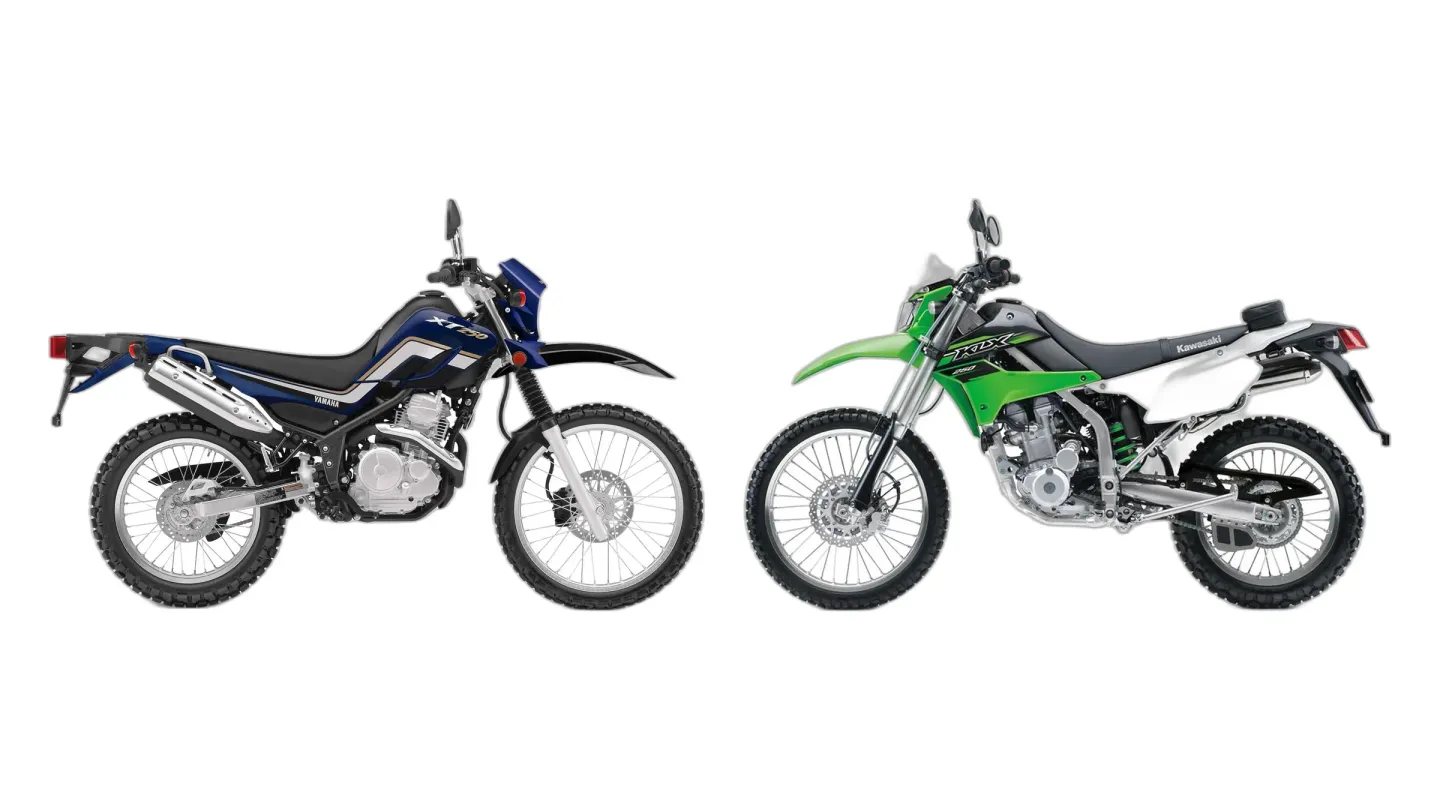
Yamaha XT250 (DG17J) vs Kawasaki KLX 250 (KLX250-MY2009)
Yamaha XT250 vs Kawasaki KLX 250: two dirt bikes, one choice. Here's how to make it.
Rolling away from a stoplight, the Yamaha XT250's engine pulls smoothly and doesn't spook you. Off that same light, the Kawasaki KLX 250 pulls with an engine that isn't detuned for noise or emissions rules. Every rated horse reaches the rear tire.
So which one do you buy?
The KLX 250 has the edge if…
Daily commuting & city riding
Nose ahead: KLX 250
Day in, day out, the KLX 250 nudges ahead in traffic. Most of that is easier everyday riding. It isn't a big enough gap to plan around.
A confidence-building first motorcycle
By a nose: KLX 250
For a learner on a small bike, the KLX 250 is a touch easier to get along with. Sit on both anyway.
Which one's the smarter buy
Money won't decide it
Neither bike is the clear better buy at these used prices. The Kawasaki KLX 250 costs less, but that doesn't make it the smarter spend.
What makes each one tick
XT250
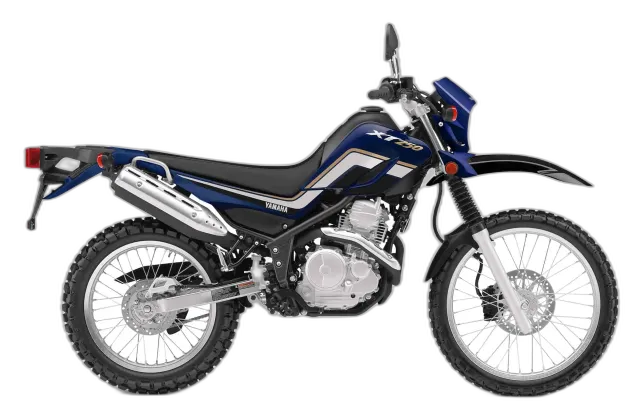
Tight trails and stalled traffic shrink around the XT250, which flicks through gaps and won't fight you when it's time to pick it up after a fall. With 291 lb (132 kg) to steer and a 32.0 in (813 mm) seat, the bike's easy to handle on narrow singletrack and in city traffic. On the Arizona Backcountry Discovery Route, a twist of the throttle brings the single in soft and even, and there's enough torque to amble along at a lazy pace. The air-cooled single keeps clocking miles.
KLX 250
Ruts and small surface breaks don't knock the KLX 250 off the line you've picked. Get speed up on the trail and the bike starts floating rather than fighting. The brake lever bites firm on pavement and comes on gradually in loose dirt. The chassis speaks up when an obstacle's too big.
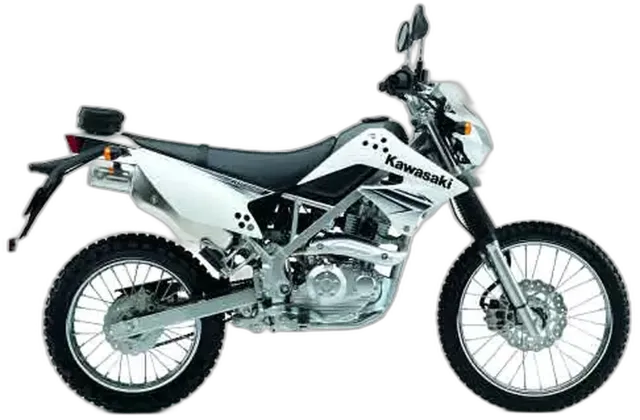
Nils rode the KLX 250 in 2009 (NastyNils Testride).
The Voice of Experience

What actually separates them
- The XT250 has the lower seat: 32.0 in (813 mm) vs 35.0 in (890 mm).
- The XT250 has the lower wet weight: 291 lb (132 kg) vs 304 lb (138 kg).
- The KLX 250 makes more peak power: 22 hp (16 kW) vs 19 hp (14 kW).
Which one for the way you ride
Real off-road capability
Not suited: XT250
The XT250 gets no off-road call here. Gravel roads are about as far as it should go.
Sporty riding on twisty roads
Not built for this
For back-road fun, both fall short. There are sharper tools for that job.
For running costs, you won't find daylight between them. Let the test ride settle it.
Who each one is built for
What's good, and what you'll live with
XT250
What owners say
Strengths
- Lightweight and maneuverable
- New-rider-friendly power delivery
KLX 250
From Nils' own saddle time
Strengths
- Survives a full enduro loop
- Planted where racers twitch
- Quiet enough to go unnoticed
- Street-legal kit that earns its keep
- Easy company in the city
Trade-offs
- Stock tires suit neither surface
- Needs momentum to climb
- Highway is hostile ground
- Fussy cold starts
Known problems to check before you buy
XT250
- Lean carburetor jetting from factory (2008-2012 models) Carbureted XT250s leave the factory with very lean jetting, causing rough idle, hesitation, and low-speed surging. The issue is present from new and widely resolved by rejetting or adding an aftermarket jet kit.
KLX 250
- Front brake line kinking Improper routing of the front brake line from the factory can cause it to kink when the fork compresses, leading to a locked front brake and crashes.
- Carbureted cold‑start hard‑starting The CV carburetor is notoriously finicky in cold weather, requiring a precise choke/throttle ritual and extended warm‑up before the bike will idle cleanly.
What they cost used
These prices compare a 9-year-old XT250 with a 9-year-old KLX 250.
- XT250
- about $3,200
- KLX 250
- about $2,900
At nine years old, the Yamaha XT250 runs about $3,200 while the Kawasaki KLX 250 sits near $2,900. That's a $300 gap in the KLX 250's favor. These are estimates from the used market, not live listings.
What they share
- Displacement
- 249 cc
- Engine
- Single-cylinder
- Peak power at
- 7,500 rpm
- Final drive
- Chain
Where the spec sheets split
| XT250 | KLX 250 | |
|---|---|---|
| Seat height | 32.0 in (813 mm) | 35.0 in (890 mm) |
| Wet weight | 291 lb (132 kg) | 304 lb (138 kg) |
| XT250 | KLX 250 | |
|---|---|---|
| Cooling | Air-cooled | Liquid-cooled |
| Power | 19 hp (14 kW) | 22 hp (16 kW) |
| Torque | 14 lb-ft (19 Nm) | 15 lb-ft (20 Nm) |
| Peak torque at | 6,500 rpm | 7,000 rpm |
| Top speed | 75 mph (121 km/h) | 70 mph (113 km/h) |
| XT250 | KLX 250 | |
|---|---|---|
| Fuel economy | 73 mpg (US) / 3.22 L/100 km | 60 mpg (US) / 3.9 L/100 km |
| Fuel capacity | 2.5 US gal (9.6 L) | 2.0 US gal (7.5 L) |
| XT250 | KLX 250 | |
|---|---|---|
| Gearbox | 5-speed | 6-speed |
| Fork | Telescopic | Upside-down (USD) |
| Front tire | 2.75-21 | 80/100-21 |
| Rear tire | 120/80-18 | 100/100-18 |
| Ground clearance | 11.2 in (284 mm) | 11.6 in (295 mm) |
| Front travel | 8.9 in (226 mm) | 10.0 in (254 mm) |
| Rear travel | 7.1 in (180 mm) | 9.1 in (231 mm) |
What comes fitted, what costs extra
| XT250 | KLX 250 | |
|---|---|---|
| Manually Adjustable Front Suspension | Not offered | Standard |
Head to head, area by area
Both bikes on the same scale, one area at a time.