By NastyNils·
Motorcycle comparison · Enduro
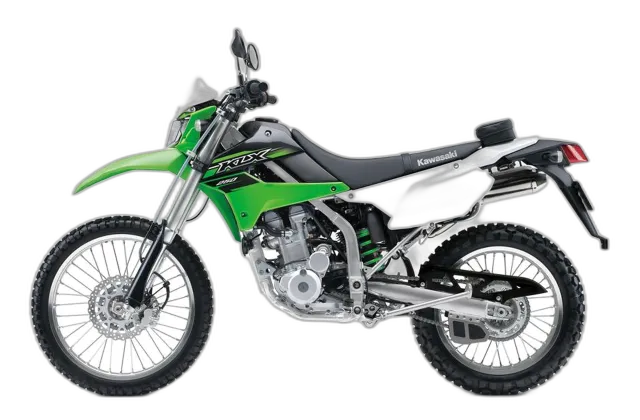
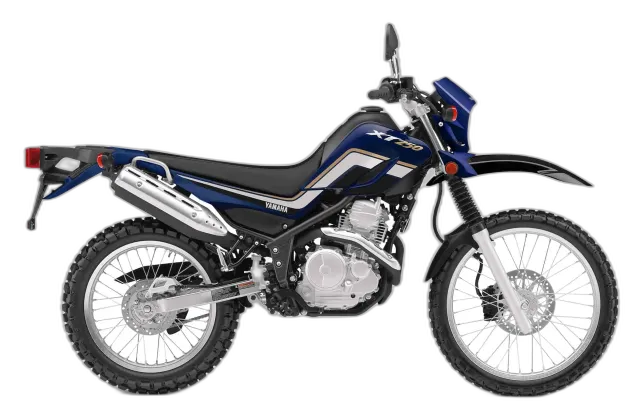
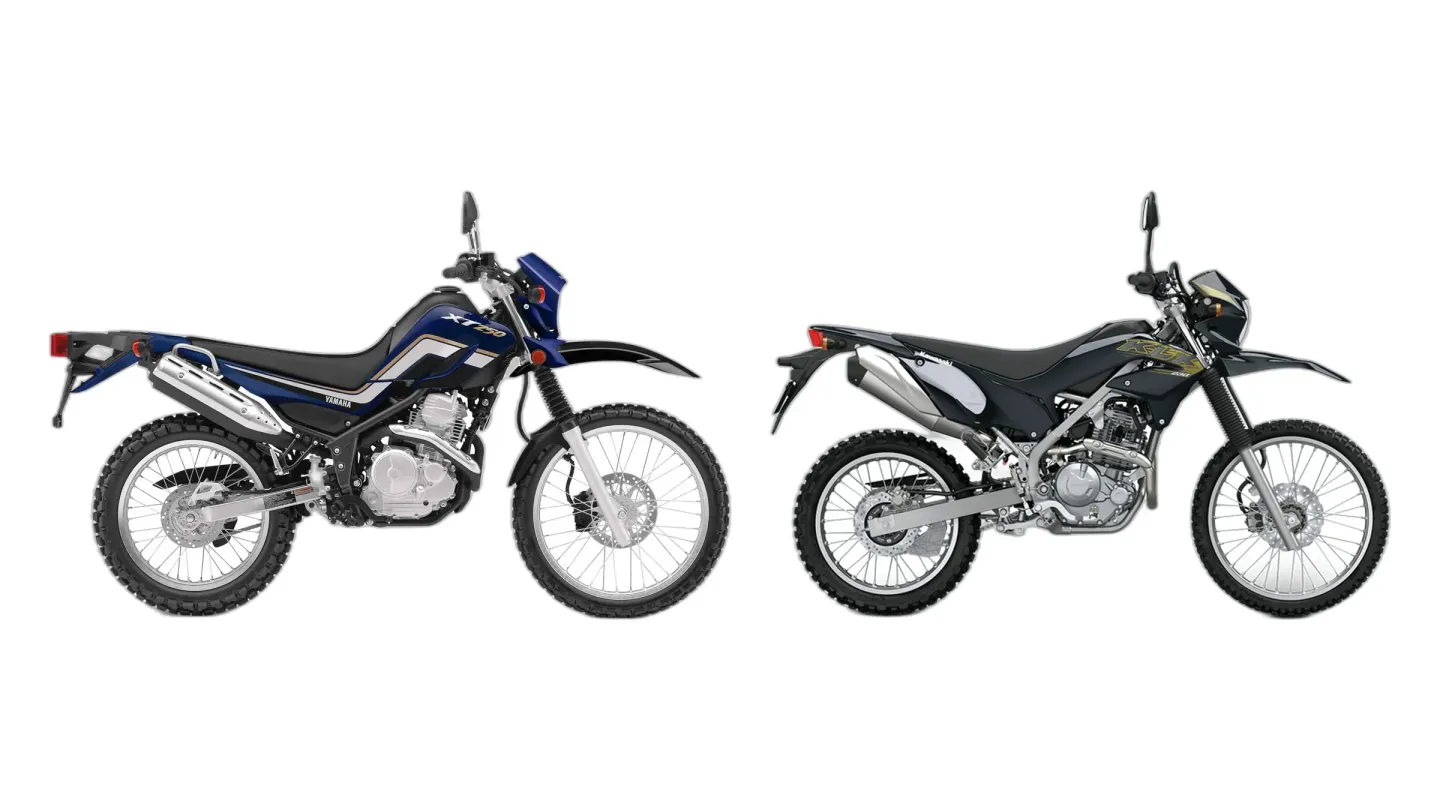
Yamaha XT250 (DG17J) vs Kawasaki KLX 230 (MY2020)
Yamaha XT250 vs Kawasaki KLX 230: two dirt bikes, one choice. Here's how to make it.
Ease out of a stop in traffic and the Yamaha XT250 steps off gently, and it's light enough to flick into the next gap. The Kawasaki KLX 230 gathers speed in one even sweep.
So which one do you buy?
The XT250 has the edge if…
Daily commuting & city riding
By a nose: XT250
Day in, day out, the XT250 nudges ahead in traffic. It's down to a smaller footprint. It isn't a big enough gap to plan around.
What makes each one tick
XT250
On tight trails the XT250 changes direction at a nudge of the bar, and its 32.0 in (813 mm) seat keeps your boots close to the dirt. It's easy to pick up, too. The throttle brings an unhurried pull from the air-cooled single, with enough torque behind it for a relaxed trail climb. Its simple air-cooled single keeps piling up trouble-free miles.
KLX 230
There's an almost playful agility to the KLX 230 that tempts you onto ground you'd skip on a heavier bike. Its fuel-injected single builds power in a straight line, with enough punch left over to make a tight trail fun. The fork isn't sprung for a heavier rider or a quick off-road pace, and it bottoms out. Its compact frame holds pavement calmly.
The Voice of Experience

What actually separates them
- The XT250 has the lower seat: 32.0 in (813 mm) vs 34.8 in (885 mm).
- The XT250 makes more peak torque: 14 lb-ft (19 Nm) vs 13 lb-ft (18 Nm).
- The XT250 has the larger engine: 249 cc vs 233 cc.
Which one for the way you ride
Real off-road capability
Off its turf: XT250
Trails aren't the XT250's territory, so it sits this one out.
Don't look for a gap on twisty roads, running costs, and a first bike: there isn't one. Go by how each one fits you.
Who each one is built for
What's good, and what you'll live with
XT250
What owners say
Strengths
- Lightweight and maneuverable
- New-rider-friendly power delivery
KLX 230
What owners say
Strengths
- Smooth and predictable power delivery
Trade-offs
- Soft suspension for aggressive riding
Known problems to check before you buy
XT250
- Lean carburetor jetting from factory (2008-2012 models) Carbureted XT250s leave the factory with very lean jetting, causing rough idle, hesitation, and low-speed surging. The issue is present from new and widely resolved by rejetting or adding an aftermarket jet kit.
KLX 230
- Incorrect front brake disc on ABS models (recall) Recall 22V397000 A smaller-than-specified front brake disc may have been installed, potentially reducing braking performance. Recall MC22-04/22V-397 affects approximately 1,923 units (2020-2022 ABS and S ABS). Dealers replace disc and pads free of charge.
What they share
- Engine
- Single-cylinder
- Cooling
- Air-cooled
- Power
- 19 hp (14 kW)
- Final drive
- Chain
- Front tire
- 2.75-21
Where the spec sheets split
| XT250 | KLX 230 | |
|---|---|---|
| Seat height | 32.0 in (813 mm) | 34.8 in (885 mm) |
| Wet weight | 291 lb (132 kg) | 295 lb (134 kg) |
| XT250 | KLX 230 | |
|---|---|---|
| Displacement | 249 cc | 233 cc |
| Peak power at | 7,500 rpm | 8,000 rpm |
| Torque | 14 lb-ft (19 Nm) | 13 lb-ft (18 Nm) |
| Peak torque at | 6,500 rpm | 6,400 rpm |
| Top speed | 75 mph (121 km/h) | 77 mph (124 km/h) |
| XT250 | KLX 230 | |
|---|---|---|
| Fuel economy | 73 mpg (US) / 3.22 L/100 km | 81 mpg (US) / 2.9 L/100 km |
| Fuel capacity | 2.5 US gal (9.6 L) | 2.0 US gal (7.6 L) |
| XT250 | KLX 230 | |
|---|---|---|
| Gearbox | 5-speed | 6-speed |
| Rear tire | 120/80-18 | 4.10-18 |
| Ground clearance | 11.2 in (284 mm) | 10.4 in (265 mm) |
| Front travel | 8.9 in (226 mm) | 8.7 in (221 mm) |
| Rear travel | 7.1 in (180 mm) | 8.8 in (224 mm) |
Head to head, area by area
Both bikes on the same scale, one area at a time.