By NastyNils·
Motorcycle comparison · Adventure
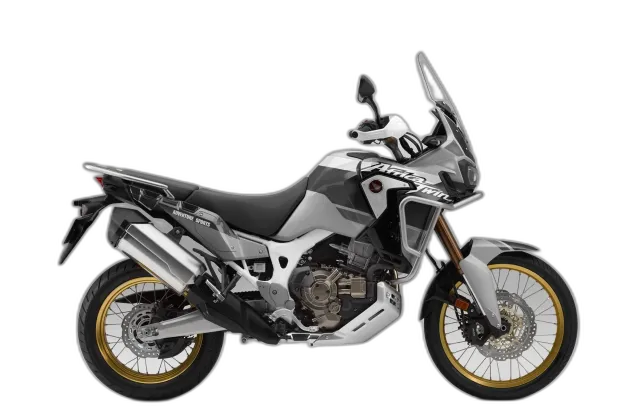
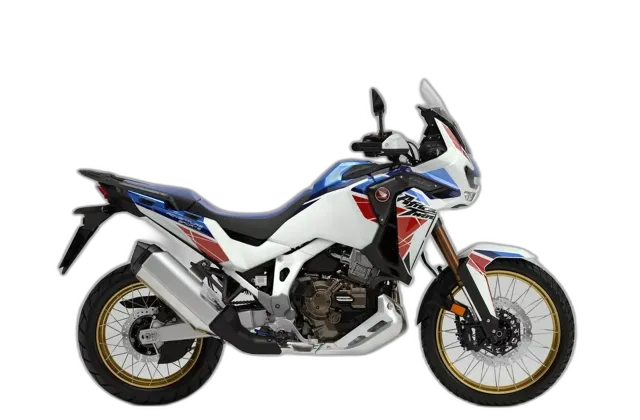
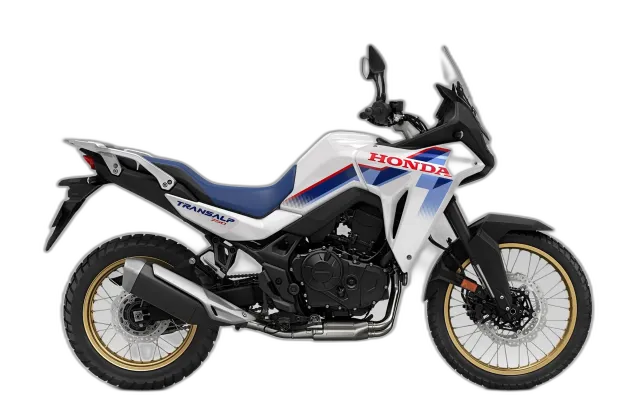
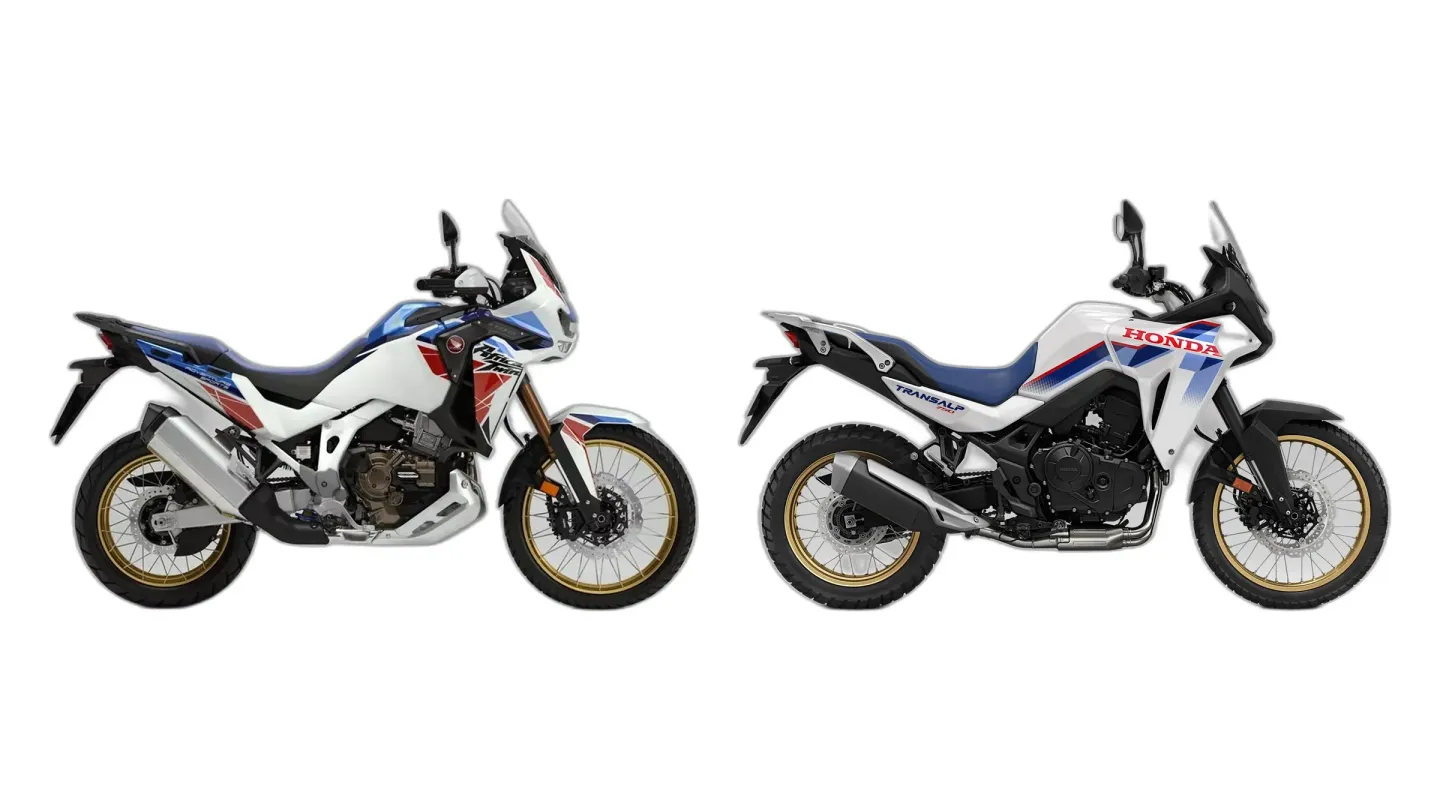
Honda CRF1100L Africa Twin (SD 08-AdventureSportsDCT) vs XL750 Transalp (RD16-3)
Honda CRF1100L Africa Twin vs XL750 Transalp: long days, loaded bags, one choice to make.
You'll feel the Honda CRF1100L Africa Twin's front dip just enough at turn-in, and it's on its line without any drama. The Honda XL750 Transalp's narrow front flicks into the turn.
So which one do you buy?
The CRF1100L Africa Twin has the edge if…
Real off-road capability
Small edge: CRF1100L Africa Twin
On loose ground, the CRF1100L Africa Twin feels a little more sure-footed. That comes from more suspension adjustment and more low-end pull. Small margin, and the right tires matter more.
Comfortable long-distance riding
Narrow edge: CRF1100L Africa Twin
For big miles, the CRF1100L Africa Twin edges it. The reason: more range per tank and better wind protection.
Keeping running costs low
A touch ahead: CRF1100L Africa Twin
The CRF1100L Africa Twin is a touch easier on the wallet to run. Condition still matters more than the model.
Sporty riding on twisty roads
Nose ahead: CRF1100L Africa Twin
The CRF1100L Africa Twin nudges ahead once the pavement starts to wiggle. Most of that is better suspension and a sportier chassis. Don't expect a night-and-day difference.
The XL750 Transalp has the edge if…
Daily commuting & city riding
Slight edge: XL750 Transalp
On the way to work, the XL750 Transalp asks a little less of you. Close enough that the test ride should settle it.
What makes each one tick
CRF1100L Africa Twin
At serious speed the Africa Twin tracks straight without a hint of wander, and its tall windshield and broad fairing carve out a quiet pocket you don't have to fight. In its mildest mode, with engine braking dialed back, the throttle wakes the twin gently enough that city traffic isn't a chore. Tour mode is another animal, with more push from the engine and a bike that's itching to go. The exhaust still sounds like real displacement.
XL750 Transalp
On a tight trail or a twisty back road, the Transalp changes direction off a light push at the bars. Its twin pulls hard low down, and there's still plenty left near the top.
The Voice of Experience

What actually separates them
- The XL750 Transalp has the lower wet weight: 459 lb (208 kg) vs 547 lb (248 kg).
- The CRF1100L Africa Twin makes more peak power: 102 hp (75 kW) vs 92 hp (68 kW).
- The CRF1100L Africa Twin makes more peak torque: 77 lb-ft (105 Nm) vs 55 lb-ft (75 Nm).
Which one for the way you ride
Who each one is built for
What's good, and what you'll live with
CRF1100L Africa Twin
Strengths
- Quiet pocket at highway speed
- Rock-steady at serious speed
- Off-road modes that earn their keep
- DCT picks the right gear
- Screen doubles as your map
Trade-offs
- Electronics hide the mass
- Left switchgear reads like a cockpit
- TFT screen has a history
- Weave when loaded heavy
- Expensive compared to rivals
XL750 Transalp
What owners say
Strengths
- Punchy, characterful parallel-twin engine
- Agile, lightweight handling
- Intuitive ride modes and electronics
Trade-offs
- Lack of cruise control
Known problems to check before you buy
CRF1100L Africa Twin
- TFT display fragility and glitches Some displays are prone to cracking even without impact, and electronic glitches cause freezing or rebooting. Honda extended warranty on TFT to 2033.
XL750 Transalp
- Snatchy low-speed throttle Throttle response can be abrupt on initial opening at low engine speeds, even in Rain mode, making smooth slow-speed riding difficult.
What they share
- Engine
- Parallel twin
- Cooling
- Liquid-cooled
- Gearbox
- 6-speed
- Final drive
- Chain
- Front tire
- 90/90-21
- Rear tire
- 150/70-18
Where the spec sheets split
| CRF1100L Africa Twin | XL750 Transalp | |
|---|---|---|
| Seat height | 33.5 in (850 mm) | 33.7 in (856 mm) |
| Wet weight | 547 lb (248 kg) | 459 lb (208 kg) |
| CRF1100L Africa Twin | XL750 Transalp | |
|---|---|---|
| Displacement | 1084 cc | 755 cc |
| Power | 102 hp (75 kW) | 92 hp (68 kW) |
| Peak power at | 7,500 rpm | 9,500 rpm |
| Torque | 77 lb-ft (105 Nm) | 55 lb-ft (75 Nm) |
| Peak torque at | 6,250 rpm | 7,250 rpm |
| CRF1100L Africa Twin | XL750 Transalp | |
|---|---|---|
| Fuel capacity | 6.6 US gal (25 L) | 4.4 US gal (16.7 L) |
| CRF1100L Africa Twin | XL750 Transalp | |
|---|---|---|
| Fork | Telescopic | Upside-down (USD) |
| Wheelbase | 62.0 in (1575 mm) | 61.5 in (1562 mm) |
| Ground clearance | 9.8 in (250 mm) | 8.3 in (210 mm) |
| Front travel | 9.1 in (230 mm) | 7.9 in (200 mm) |
| Rear travel | 8.7 in (220 mm) | 7.5 in (190 mm) |
What comes fitted, what costs extra
| CRF1100L Africa Twin | XL750 Transalp | |
|---|---|---|
| Cornering ABS | Standard | Not offered |
| Electronic Suspension | Standard | Not offered |
| Cruise Control | Standard | Not offered |
| Quickshifter | Not offered | Option |
| Automatic Shift (DCT / ASA / AMT) | Standard | Not offered |
| Navigation | Not offered | Standard |
| USB Charging Port | Standard | Not offered |
| Heated Grips | Standard | Option |
| Adjustable Seat Height | Standard | Not offered |
Head to head, area by area
Both bikes on the same scale, one area at a time.