Kawasaki Z900 (MY2025-SE) — Naked Bike
Kawasaki press archive

2025 · Naked Bike · A variant of the Z900

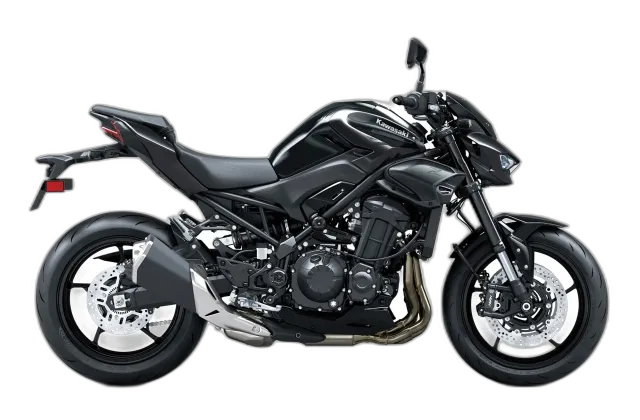
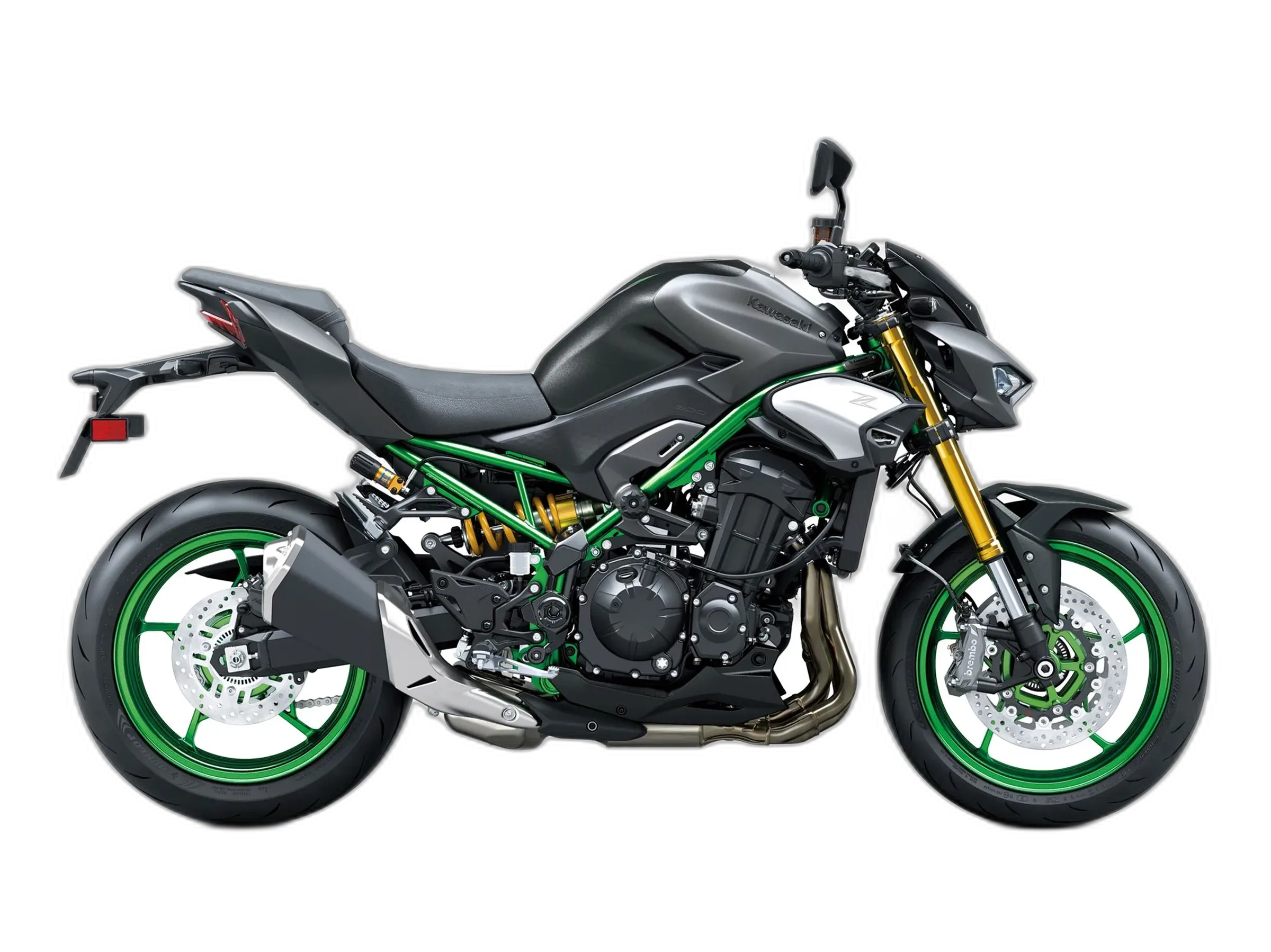
Z900 SE (MY2025-SE)

Differences between the standard Z900 and the SE

4 / 5 NastyNils Rating · against its class

Balanced Speed, Zero Drama

The Machine's Character

The SE sits at the top of the Z900 range, and what it adds is layered onto an already complete motorcycle. The core is a 948 cc liquid-cooled inline-four making 124 hp at 9,500 rpm and 73 lb-ft at 7,700 rpm, carried in a chassis drawn as a naked bike from the ground up rather than adapted from something faired. On top of the shared package of cornering ABS, traction control, four ride modes, cruise control and an up-and-down quickshifter, the SE brings an Öhlins rear shock and radial-mount Brembo monobloc calipers on 300 mm discs. Premium hardware on a recipe that already worked.

On the road it does what Kawasaki's midweight fours have always done: nothing catches you out, and the bike stays useful long after the novelty fades. At 470 lb wet with a 32.7 in seat it carries its weight low enough to stay easy in traffic, and 49 mpg from the 4.5 gal tank keeps range sensible. Reliability is a real strength and aftermarket support runs deep. The honest caveat is that it never pushes back on any axis. Some riders read that as harmony, others finish a long day unsure what the bike was about. Check the fuel tank bracket welds under the seat as it ages, since surface rust shows up there and is worth treating while it is still cosmetic.

Hard Numbers

Spec sheets don't ride bikes, but they set the baseline.

Show full specs & equipment Hide specs & equipment
Key specifications
Power 124 hp (91 kW) @ 9,500 rpm
Torque 73 lb-ft (99 Nm) @ 7,700 rpm
Displacement 948 cc
Engine Inline-four
Cooling Liquid-cooled
Gearbox 6-speed
Final drive Chain
Fork Upside-down (USD)
Front brake 300 mm
Front tire 120/70-17
Rear tire 180/55-17
Wheelbase 57.1 in (1450 mm)
Seat height 32.7 in (830 mm)
Wet weight 470 lb (213 kg)
Fuel capacity 4.5 gal (17 L)
Fuel economy 49 mpg (US)

Equipment check

Chassis

  • Front Suspension Adjustable Standard
  • Rear Suspension Adjustable Standard

Connectivity

  • TFT Display Standard
  • Smartphone Connectivity Standard

Drivetrain

  • Quickshifter Standard
  • Slipper Clutch Standard

Lighting

  • LED Headlight Standard

Safety

  • ABS Standard
  • Traction Control Standard
  • Ride Modes Standard

The Voice of Experience

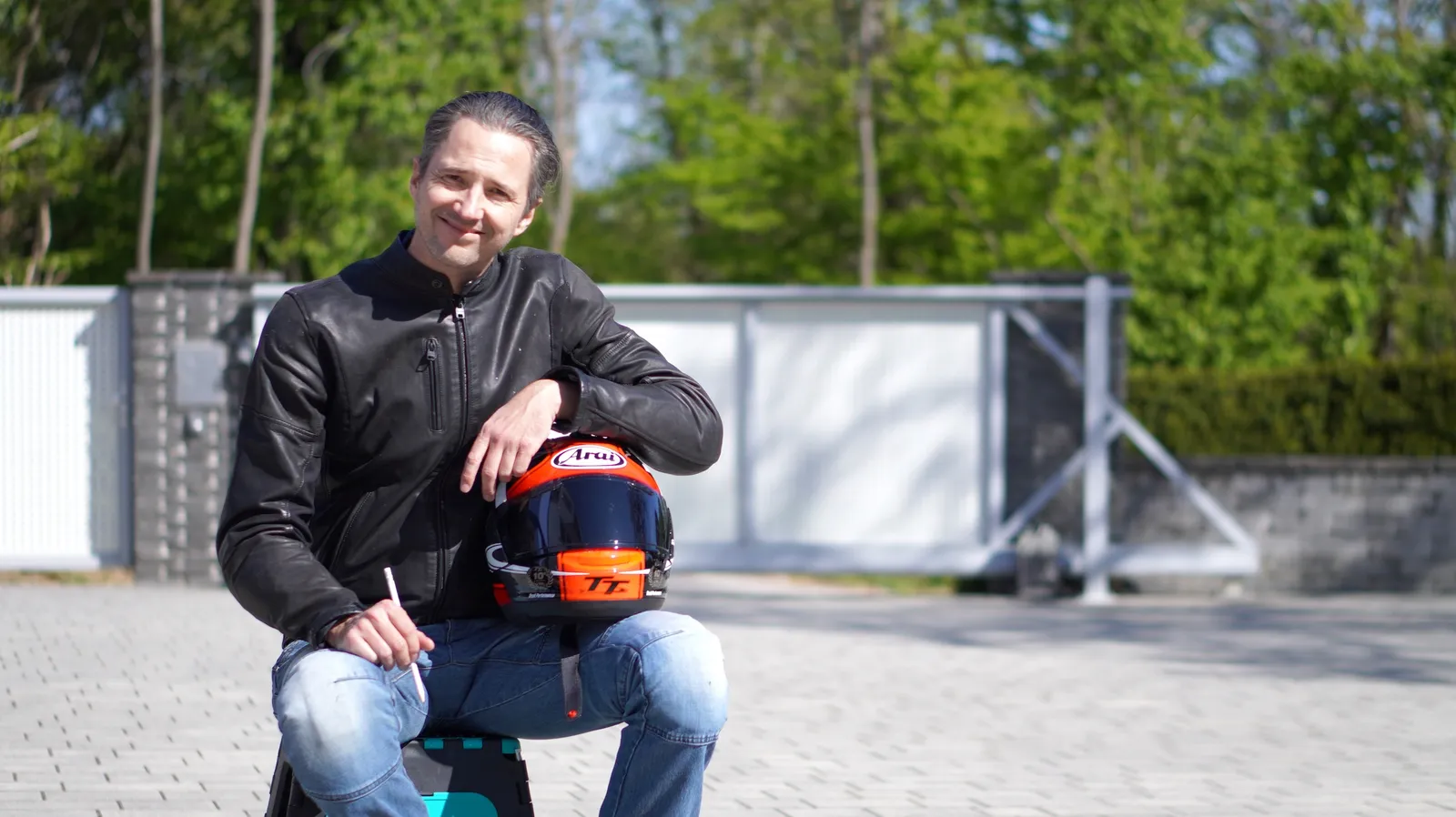
Portrait of NastyNils

The test ride

Thumb the starter and it settles into a deep, throaty growl you feel in your chest more than hear. Vibration is essentially absent across the rev range, which is what decades of incremental development buys you. The riding triangle asks for a slight forward lean and a natural reach to the bars, sporty without demanding more of your body than you signed up for, and there is enough room to shift your weight and load the outside peg through a fast sequence. The one part your hands argue with is the handlebar, narrow for a machine this size. Upshifts land with a weighty, precise click every time. What doesn't keep pace is the exhaust note: present, never offensive, just softer than the engine underneath deserves. And the green rims collect brake dust the moment you look at them.

What the Z900 SE Adds — Differences vs the Standard Z900

The Z900 SE (MY2025-SE) builds on the standard Z900: the upgraded hardware, the key spec changes and where its character shifts. The full ride, specs, scoring and verdict are all right here on this page.

Hard spec differences

SpecStandard Z900SEΔ
Seat height 31.9 in 32.7 in +0.8 in

Rated point by point — where it earns its keep

My own 0–100 score for this bike against the class, area by area — the marker on each bar is the class average.

What the SE's rear end does for me shows up exactly where the softer setup starts giving ground. There's reserve left at the limit, so the back stays settled when I'm leaning on it instead of sinking through its stroke, and that reserve is what buys me a later brake release and an earlier crack of throttle on the way out. The front asks for almost nothing in return. I set the lean angle, commit to the arc, and the chassis holds it there without a second input from me. No push wide, no wandering, no correcting. The one hard stop is ground clearance. Ride it at real pace and something will eventually touch down. That's the shape of a naked bike built like this one, so it isn't a surprise, but the limit is real and it turns up before the chassis has run out of ideas.

The hardware here is set up for riders who actually use it. I can carry the brakes well past the turn-in point and the front stays planted while I do it, with the calipers biting hard enough to shorten a straight properly. Braided lines and a radial master cylinder are why the lever answers the same on the tenth stop as on the first, which is what makes trail braking repeatable instead of a gamble. What's missing is the final layer of definition at the lever. Fine on the road, obvious against pricier machinery on track.

Ridden hard on ground I know well, the SE has the uncommon quality of arriving everywhere slightly ahead of me. Braking, the middle of the corner and the drive out stop being three separate jobs and turn into one continuous movement, and I ended up steering the bike rather than operating it. I put that down to the whole machine being conceived as a naked from the first line on the page instead of assembled out of parts that used to be something else. You feel that coherence in how little of it needs managing. My reservation is the flip side of the same coin. Nothing stands out, in either direction, and after a long day at pace I still couldn't tell you what this bike wants to be remembered for. The exhaust doesn't help its case either, staying polite where the engine underneath is anything but.

The character I keep coming back to is the swell. Nothing arrives in a step anywhere. Drive builds from low in the range and keeps stacking, with enough flywheel weight behind it that the whole thing feels settled rather than snatched at. It isn't a motor that begs to be wrung out at the top, and I never found myself asking it to. What it gives instead is authority, a deep and unhurried pull with no coarseness I could find at any point on the dial. The other thing this delivery buys you is precision. It's smooth and dosable enough to work as a control input, not just a way of making speed, so a gentle roll of the throttle at corner exit tightens or opens my line by exactly the amount I asked for. That's a rarer skill in a four than an extra thousand rpm.

The geometry from the saddle is judged rather than borrowed. A slight forward lean, a natural reach to the bars, sporty enough to feel intentional without demanding more of your body than you bargained for. It doesn't sit as hard as the most committed nakeds you can buy, and for a machine that has to work in Monday traffic as well as on Sunday's best road, I think that's the correct call. Nothing about it costs you anything in the corners either, since there's enough freedom to move around and put real weight through the outside peg when the pace picks up. The rider aids deserve credit in the same breath, because badly judged electronics ruin a ride the way a bad seat never quite manages. Traction control, ABS and the ride modes are all calibrated with restraint, Sport included. The bar is the exception, too narrow for the class, and it's the one part I'd change first.

Living with it turns up two irritations, and neither one concerns how it goes down a road. The dash puts too much on screen at once, so pulling a single number off it while moving takes more concentration than a display has any right to ask for. Then the green rims, which look genuinely striking for about one ride before brake dust claims them. Keep a rag in the garage if the look matters to you. Set against that, the shifter is the component I stopped registering altogether, which is exactly its job.

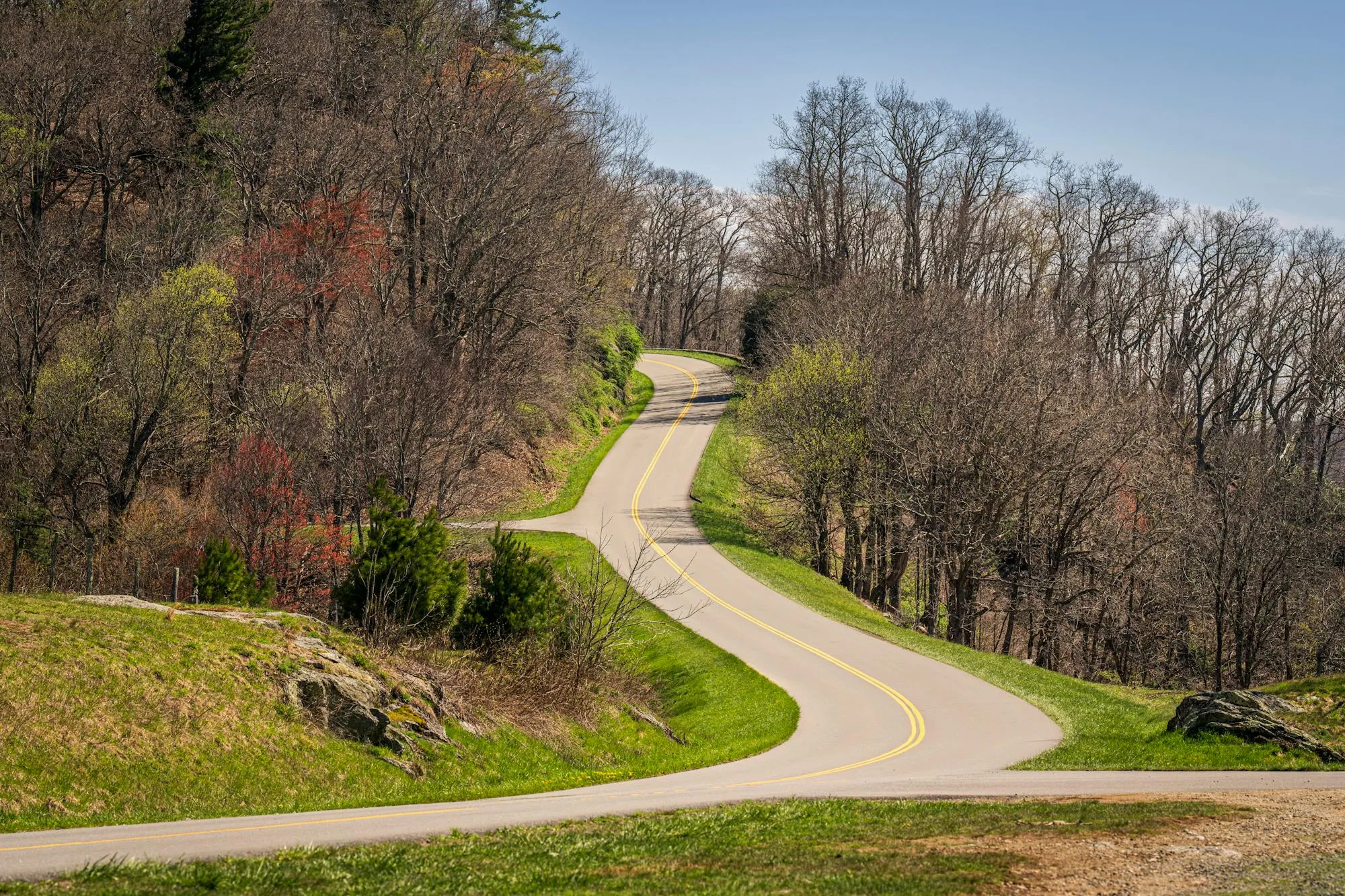
A winding asphalt road descending through the Appalachian Mountains, likely the famous Tail of the Dragon section in Tennessee and North Carolina. Multiple technical right-hand and left-hand curves are visible in this aerial perspective, surrounded by deciduous forest in spring foliage. Clear sunny conditions, well-maintained asphalt with yellow center lines marking the curves.
Mark Stebnicki / Pexels

The Truth on the Street

What follows is not my verdict but the community's. It comes out of years of listening: talk in parking lots after a ride, conversations at bike nights and fuel stops, and the mail riders send me once they have a season behind them. On this one the accounts line up more tightly than most. Commuters and weekend riders describe the same machine, and their frustrations sit somewhere entirely different from their praise.

Where the agreement is loudest

Three things surface in nearly every conversation. The first is how little effort it takes to steer, with owners describing a bike that carries itself as though it weighed less than it does, settled through a corner and pointing where it is asked without argument. The second is the engine. Riders call it flexible rather than fussy, strong through the middle, content to be short-shifted instead of revved out. The third is money. For ride-by-wire, a quickshifter, cruise control, cornering ABS and a color display, owners say they paid less than the machines they cross-shopped. Those who know the standard bike add that the Ohlins shock and Brembo front end tighten up what the chassis tells them and how hard it bites, without punishing them on ordinary roads. Riders coming from the older generation point instead at the lean-angle-aware aids, which their previous bike had no version of.

What wears on owners day to day

Owners are just as united on what annoys them. The dash draws the most of it. They describe the switchgear and menu structure as something you learn rather than intuit, with routine tasks like selecting a ride mode buried behind presses nobody stumbles on by accident. Taller riders raise the second point, saying the gap between saddle and pegs leaves their knees folded on long days regardless of how low the seat sits. The third is sound: they want more voice from a bike that looks the way this one does, and many change the muffler before touching anything else. Riders arriving from lighter triples also note the extra mass the steel frame carries.

Known issues

  • Rust on fuel tank bracket welds

    bodywork occasional

    Some owners report surface rust developing on the welded joints of the fuel tank mounting brackets beneath the seat. The issue appears cosmetic but could worsen if left untreated.

The Expert Benchmark

Where this Kawasaki Z900 pulls ahead of — or falls behind — its rivals on the numbers, and the typical bike in its class on character.

What kind of bike this is — character vs. the class

This bike Class average

The shape of the Kawasaki Z900 — numbers and character vs. the average Naked Bike

Head-to-head: Kawasaki Z900 vs. its rivals

The 'Should I Buy It?' Score

Forget spec-sheet bragging. Here's who the Z900 is actually built for.

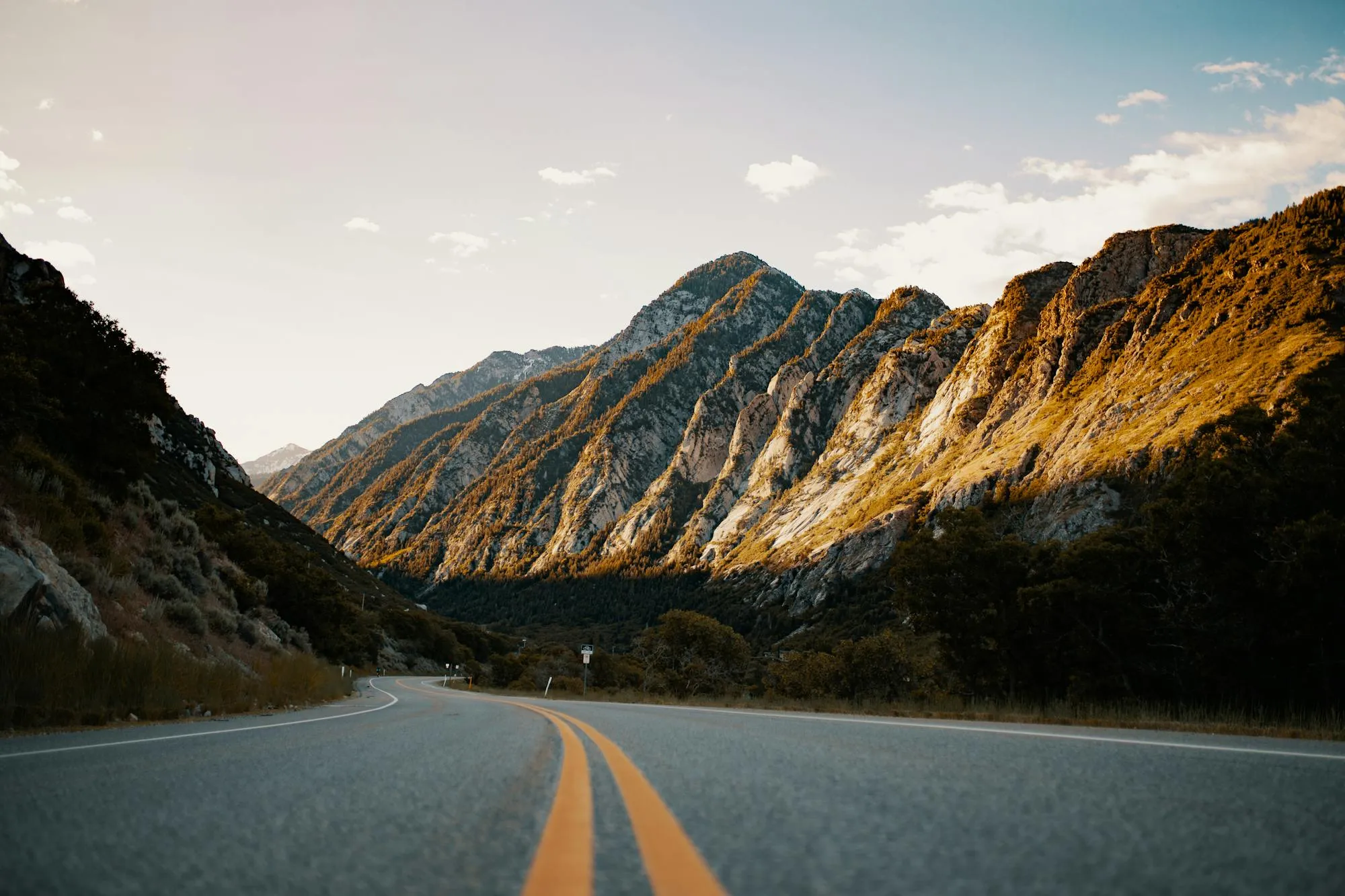
A scenic view of Angeles Crest Highway winding through rugged Southern California canyon terrain. Rocky mountainsides with golden earth tones frame the asphalt road with tight sweeping curves. Double yellow center line visible, sparse vegetation along the shoulders, clear blue sky with white clouds. Daylight, dry conditions. Iconic location for canyon-road enthusiasts.
Josh Sorenson / Pexels

Best motorcycle for Angeles Crest?

Right on the money for Angeles Crest weekends. Light steering, brakes that stay consistent lap after lap of the same road, and a riding position that survives LA traffic on the way there and back.

Made for Angeles Crest Highway · Coronado Trail / US 191 · Highway 1 / Big Sur
Best motorcycle for Tail of the Dragon?

If you go to the Dragon or the Blue Ridge to sharpen technique rather than chase numbers, this suits you. Set a line and it holds it, and a gentle roll-on fixes a corner you entered slightly wrong.

Made for Back of the Dragon · Blue Ridge Parkway · Cherohala Skyway

Best motorcycle for Laguna Seca?

It flows beautifully on a closed course and the Öhlins rear gives you genuine reserve at the limit. Ground clearance and brake lever feel are where you will meet the ceiling first.

Made for Barber Motorsports Park · WeatherTech Raceway Laguna Seca · Circuit of the Americas

Alternatives to the Kawasaki Z900

If this one isn't quite the fit, these are the bikes worth riding back-to-back against it.

Any price note compares both bikes at the same age — the youngest age both have on the used market — against this Kawasaki Z900. “cheaper/pricier” is what that bike costs second-hand, not how worn it is.