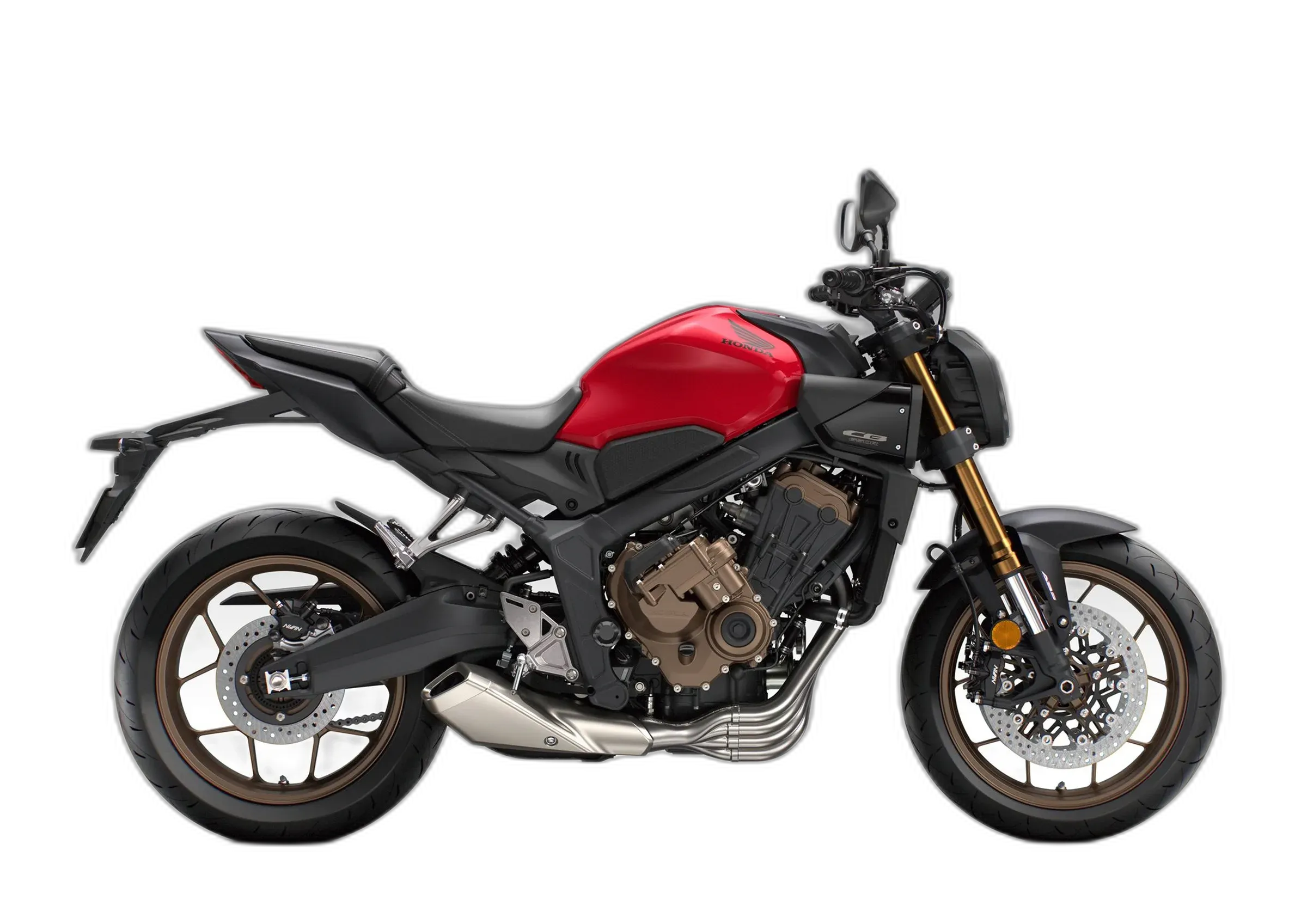

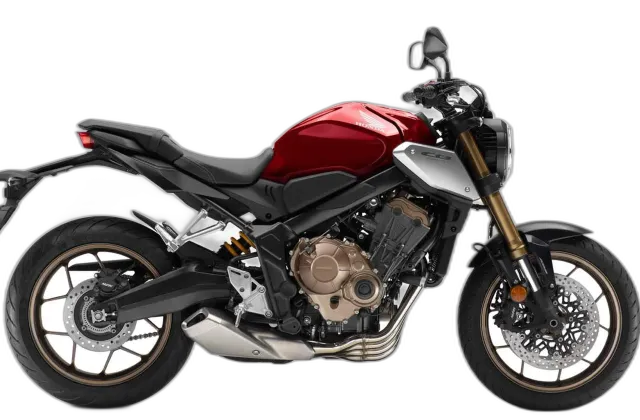
Honda CB650R (RH03-E_Clutch) — Naked Bike
Honda press archive

2024 · Naked Bike · A variant of the CB650R

CB650R E-Clutch (RH03-E_Clutch)

Differences between the standard CB650R and the E-Clutch

4 / 5 NastyNils Rating · against its class

Smooth Four, Zero Clutch Drama

The Machine's Character

This CB650R is built around one idea: the Honda E-Clutch. Two electric motors and a control unit read throttle, shift load, gear position and engine speed, then work the clutch for you when you pull away, stop and shift. The lever stays on the bar if you want it. Underneath is a 649 cc liquid-cooled inline-four with 95 hp and 46 lb-ft in a steel tube frame. You also get ABS, traction control and a 5-inch color TFT with Honda RoadSync. Nobody puts an automated clutch on their wish list. After a few weeks I didn't want to give it back.

On the road it's approachable rather than intimidating. It weighs 456 lb (207 kg) wet, the seat sits at 31.9 in (810 mm), and the upright position suits short and tall riders alike. It ages the Honda way, too: weeks of daily use left nothing broken or rattling. It's for the rider who fights heavy traffic all week and wants a refined four for weekend back roads. Newcomers and old hands get on with it equally well. The honest caveat: it isn't the sharpest middleweight when you really push. The stock tires take their time, and at genuine pace the chassis runs short of composure. Know that going in.

Hard Numbers

Spec sheets don't ride bikes, but they set the baseline.

Show full specs & equipment Hide specs & equipment
Key specifications
Power 95 hp (70 kW)
Torque 46 lb-ft (63 Nm)
Displacement 649 cc
Engine Inline-four
Cooling Liquid-cooled
Gearbox 6-speed
Fork Upside-down (USD)
Front tire 120/70-17
Rear tire 180/55-17
Wheelbase 57.1 in (1450 mm)
Seat height 31.9 in (810 mm)
Wet weight 456 lb (207 kg)
Fuel capacity 4.1 gal (15.4 L)

Equipment check

Chassis

  • Rear Suspension Adjustable Standard

Connectivity

  • TFT Display Standard
  • Smartphone Connectivity Standard
  • USB Charging Port Standard

Drivetrain

  • Automated Clutch (E-Clutch / auto clutch) Honda E-Clutch Clutchless ridingStall free low speed Standard
  • Quickshifter Standard
  • Slipper Clutch Standard

Lighting

  • LED Headlight Standard

Safety

  • ABS Standard
  • Traction Control Standard

The Voice of Experience

Portrait of NastyNils

The test ride

Thumb the starter and the first thing you notice is how little you notice. At low revs the four barely makes its presence felt through the bar. Then you let it breathe, and that classic inline-four howl builds as the revs climb. It keeps asking you to hold the gear a little longer. Your left hand is the strange part. For the first hour it hovers over a lever it doesn't need. By the next day it rests on the grip in traffic like it always has. The seat puts you upright and natural, the controls fall where your hands expect them, and the display shows what you need without hunting. Wind it right out and a fine tingle reaches the seat and pegs. It's there, but it never spoils the ride. Easy company!

What the CB650R E-Clutch Adds — Differences vs the Standard CB650R

The CB650R E-Clutch (RH03-E_Clutch) builds on the standard CB650R: the upgraded hardware, the key spec changes and where its character shifts. The full ride, specs, scoring and verdict are all right here on this page.

Equipment the E-Clutch adds vs the standard CB650R

Added
NavigationSmartphone ConnectivityUSB Charging Port
Now standard
ABSAutomated Clutch (E-Clutch / auto clutch)

Premium hardware the E-Clutch brings

  • Transmission Quickshifter Down An up-and-down quickshifter for clutchless downshifts; the standard blips on upshifts only.
  • Display TFT Display A full-colour TFT instrument display in place of the standard's simpler dash.
  • Transmission Quickshifter Up A quickshifter for clutchless upshifts the standard goes without.

Hard spec differences

SpecStandard CB650RE-ClutchΔ
Wet weight 445 lb 456 lb +11 lb

Rated point by point — where it earns its keep

My own 0–100 score for this bike against the class, area by area — the marker on each bar is the class average.

This is where the CB650R gave ground in my group comparison: across the test field, its handling landed below average. I put part of that on the stock rubber. It takes a long time to reach temperature, and until it does you don't get a clear picture of what the front is doing. A sportier set is one of the easier wins on this bike and makes a real difference. Tires aren't the whole story, though. At genuine pace the chassis itself gets ragged, and the ABS and traction control hit their ceiling earlier than the IMU-equipped systems on the competition. What does help is the E-Clutch: upshifts go through cleanly, so the bike stays settled when you're leaned over. Polished, not sharp.

I watched the E-Clutch closely over several weeks of real-world riding. It showed no sign of immaturity and performed exactly as designed, every time. The whole machine gives off a dependable, well-assembled impression. My criticism is purely visual: in this model year the system is visibly retrofitted to the engine instead of integrated from the ground up. Future versions of this motor will almost certainly fix that. Function first.

I never had to think about the brakes, and that's the compliment. You get fine control over how much stopping you ask for, so a newer rider won't be caught out, and there's real power in reserve when you squeeze harder. The ABS works reliably and only shows up when it's actually needed. Nothing to learn here.

The sound isn't engineered theater. It's simply what this configuration does when you let it breathe, and that's exactly why you keep revving it. The E-Clutch works the other way around: it's quiet, it's unspectacular, and at some point it stops being a feature at all. Then you ride something else and miss it. Sneaky good!

In a direct comparison of ten bikes, the CB650R topped the rankings wherever shifting was involved: gearbox feel, clutch, shift action, even switch quality. The engine fits that picture. Power comes on linear and clean through the whole rev range, with nothing harsh and nothing peaky about it. You don't have to learn this motor. Smooth operator!

Tall riders and shorter ones both find a position that works on this bike. You sit upright, the controls are logically placed, and the display gives you what you need without hunting for it. Longer rides don't turn into a chore. The E-Clutch belongs in this chapter too. I had twelve testers on it, and every one of them came away impressed, regardless of riding background. It's smooth, it's intuitive, and the weight it adds is minimal. The one complaint came from the top of the rev range: most of the group would've preferred to do without the vibration up there. If you're regularly winding it out, it registers. Otherwise it's very easy to live with.

Beginners get to skip the whole coordination puzzle, and experienced riders can put that mental bandwidth somewhere more useful. What surprised me more: the sporty riders in my group came in skeptical and left convinced, because nobody found a disadvantage once the road opened up. The system costs you nothing at pace. Just go gently at walking speed on a cold start, where the take-up is sharper than the situation calls for. Small price.

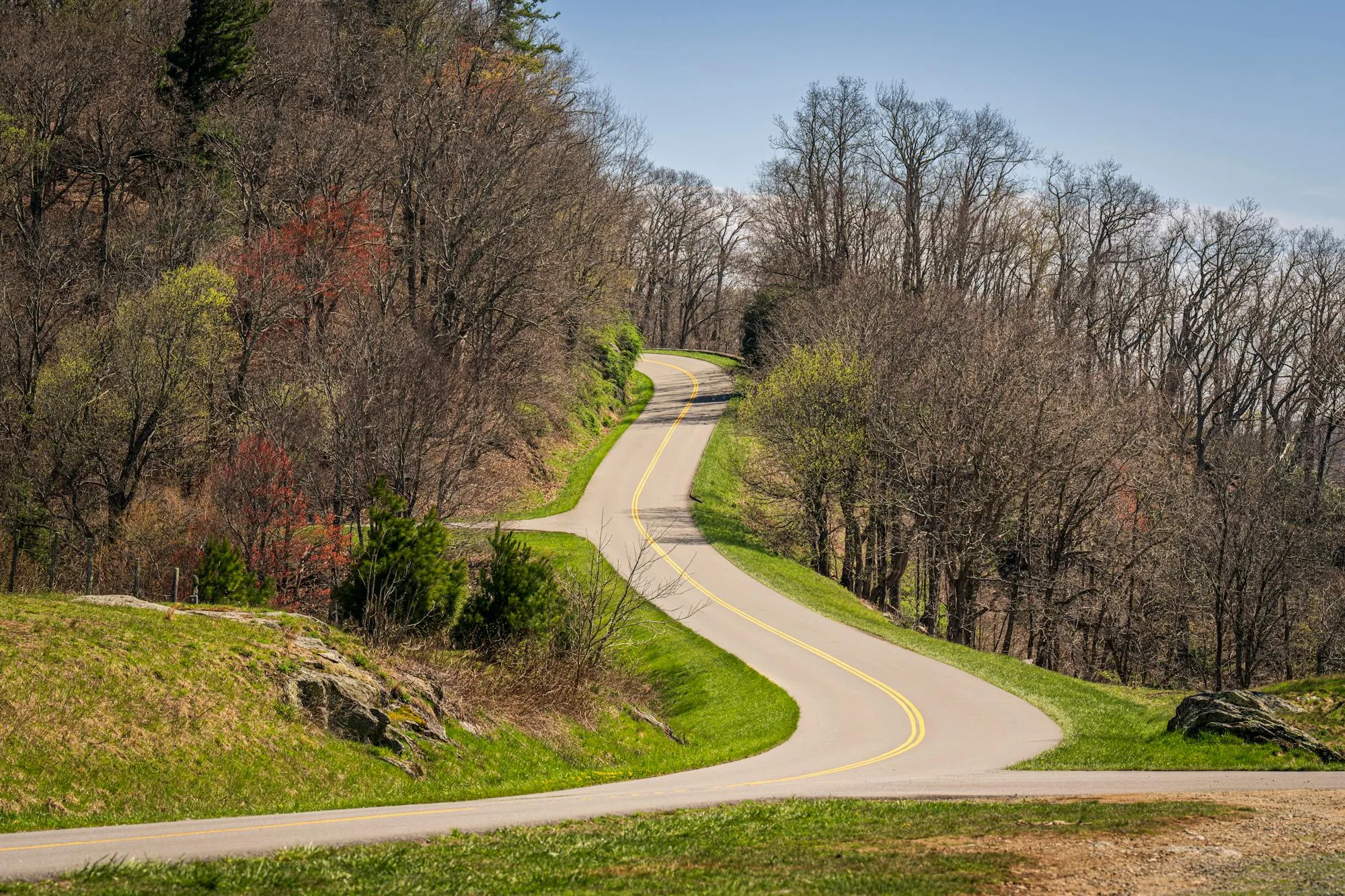
A winding asphalt road descending through the Appalachian Mountains, likely the famous Tail of the Dragon section in Tennessee and North Carolina. Multiple technical right-hand and left-hand curves are visible in this aerial perspective, surrounded by deciduous forest in spring foliage. Clear sunny conditions, well-maintained asphalt with yellow center lines marking the curves.
Mark Stebnicki / Pexels

The Truth on the Street

For years I've listened to what riders tell me: in the paddock, on club nights, in owner chats, and in the emails and messages that land in my inbox. For the CB650R, the picture is unusually consistent. People buy it for the four-cylinder, they keep it because it gives them no trouble, and they complain about the seat.

The four-cylinder is the reason

Ask owners why they chose this bike and the answer is almost always the engine. It's the only affordable four-cylinder among the middleweights, and that's the purchase motive riders name most often. They describe smooth, high-revving power delivery, an intake roar they like, and an exhaust note that changes character above 8,000 rpm. Next to the parallel twins in the class, they say, it simply feels different. The same riders are just as clear about the other side. Below 6,000 rpm the engine feels flat to many of them, and overtaking means dropping a gear or two first. That comes up often, usually in direct comparison with twin-cylinder rivals. You have to rev it.

High miles, low bills, clean finish

The second big theme is dependability. High-mileage owners report roughly 38,500 to 46,600 miles (62,000 to 75,000 km) without major problems, and one fleet bike reached about 20,000 miles with no oil consumption and no mechanical issues. Running costs get described as moderate: parts are easy to find, the dealer network is dense, and fuel consumption is efficient. Riders also keep coming back to the finish. Paint, fit and the solid overall feel are regularly rated above what the class usually offers, and the look gets a lot of love: bronze wheels, blacked-out engine, round LED headlight, sculpted tank, compact tail. On the road, owners call it light and nimble in town, stable and confidence-inspiring in corners, with brakes they describe as strong and progressive. Not much drama here.

Hard seat, wind blast, short range

The loudest complaint by a clear margin is the seat. Owners consistently call it too hard, with discomfort setting in after about 50 to 90 minutes, and the passenger pad gets described as even smaller and thinner. An aftermarket seat is the fix riders recommend to each other most. Wind is the next one: there's no screen from the factory, and fast highway stretches wear people out. Touring riders add the tank to the list. At 4.1 gal (15.4 L) it holds less than the 4.6 gal (17.3 L) of the CB650F before it, and owners report around 155 to 185 miles (250 to 300 km) between fill-ups. The old gripe about a display you couldn't read in direct sunlight belongs to the earlier years, and riders consider it solved with the TFT. A few lone voices concern the E-Clutch: some experienced riders say the missing lever feel at low speed takes getting used to, and the odd one finds the bike a touch portly next to lighter rivals. The seat comes up every time.

Known issues

  • Gear shift arm fasteners may loosen and detach

    drivetrain rare Recall

    Fasteners securing the gear shift arm to the stroke sensor assembly may loosen and fall off due to a manufacturing defect. If this occurs, the rider becomes unable to shift gears while riding, creating a crash risk. Recall issued March 2025 (NHTSA 25V-107 / Honda KR7), affecting approximately 507 units of 2024 CB650R and CBR650R motorcycles.

  • E-Clutch disabled by loose battery terminal

    electrics rare

    The E-Clutch system can cease to function due to a loose battery terminal. Re-tightening the connection restores normal operation.

  • LCD instrument cluster unreadable in direct sunlight

    electrics very common

    The round LCD display on 2019–2023 models becomes virtually unreadable in direct sunlight. The 2021 update improved the situation with negative backlight but did not fully resolve it. Anti-reflective screen protectors (aftermarket) provide partial relief. The 2024 TFT upgrade eliminated the problem.

  • Noticeable vibrations at sustained highway speeds

    engine occasional

    Perceptible high-frequency vibrations through handlebars, footpegs, and seat in the 6,000–9,000 rpm range — corresponding to typical highway cruising speeds. Inherent to the inline four-cylinder configuration at this displacement. Some individual bikes exhibit more pronounced vibrations, potentially linked to engine mount bolt torque. Honda added a central engine mount element (vs. CB650F) to reduce vibrations, but the issue is not fully eliminated.

  • Turn signal relay moisture sensitivity

    electrics occasional

    The indicator flasher relay, located behind the tank under the bodywork, is poorly sealed against water. After rain or washing, the relay can malfunction — causing indicators to flash erratically or activate hazard mode spontaneously. The problem appears specific to the CB650R (naked) and not the fully faired CBR650R sibling.

  • Abrupt throttle response in low RPM range

    fuel system occasional

    In the lower RPM range (particularly in 1st and 2nd gear, urban riding), the fuel injection responds abruptly to small throttle inputs — described as "snatch" or "jerky" by owners. Likely caused by FI mapping characteristics and/or insufficient throttle cable free play.

  • Surface corrosion on exhaust headers and footpegs

    exhaust occasional

    Bikes ridden year-round or stored outdoors develop surface oxidation/discoloration on exhaust header pipes, pillion footpegs, and uncoated weld seams on the frame. The exhaust material is stainless steel (no structural risk), but heat cycling combined with road salt causes visible tarnishing. Not a structural defect.

The Expert Benchmark

Where this Honda CB650R pulls ahead of — or falls behind — its rivals on the numbers, and the typical bike in its class on character.

What kind of bike this is — character vs. the class

This bike Class average

The shape of the Honda CB650R — numbers and character vs. the average Naked Bike

Head-to-head: Honda CB650R vs. its rivals

The 'Should I Buy It?' Score

Forget spec-sheet bragging. Here's who the CB650R is actually built for.

A scenic view of Angeles Crest Highway winding through rugged Southern California canyon terrain. Rocky mountainsides with golden earth tones frame the asphalt road with tight sweeping curves. Double yellow center line visible, sparse vegetation along the shoulders, clear blue sky with white clouds. Daylight, dry conditions. Iconic location for canyon-road enthusiasts.
Josh Sorenson / Pexels

Best motorcycle for Angeles Crest?

You'll love the inline-four howl and the clean shifts on a canyon run, and the E-Clutch makes the LA traffic in between painless. If precision is your thing, budget for sportier tires first.

Made for Angeles Crest Highway · Coronado Trail / US 191 · Highway 1 / Big Sur
Best motorcycle for Tail of the Dragon?

On repeat runs through tight East Coast twisties, the smooth four and the settled mid-corner shifts help. Just know that the stock tires and the lack of lean-angle sensing set a ceiling when you push.

Made for Tail of the Dragon · Back of the Dragon · Blue Ridge Parkway

Best motorcycle for Bay Area?

The E-Clutch takes the grind out of city commuting, RoadSync links your phone, and the neo-café look fits right in at the ridge-road meetup. It's a solid fit for weekday and weekend riding.

Made for Bay Area Ridge Roads · San Francisco / Bay Area · Skyline Boulevard / Alice's Restaurant

What's new versus the previous generation

If you're cross-shopping the older generation, here's what changed.

Honda CB650R (RH03)

Previous generation · 2019–2024

Honda CB650R (RH03)

Four Cylinders That Just Work

Compare to the previous model →