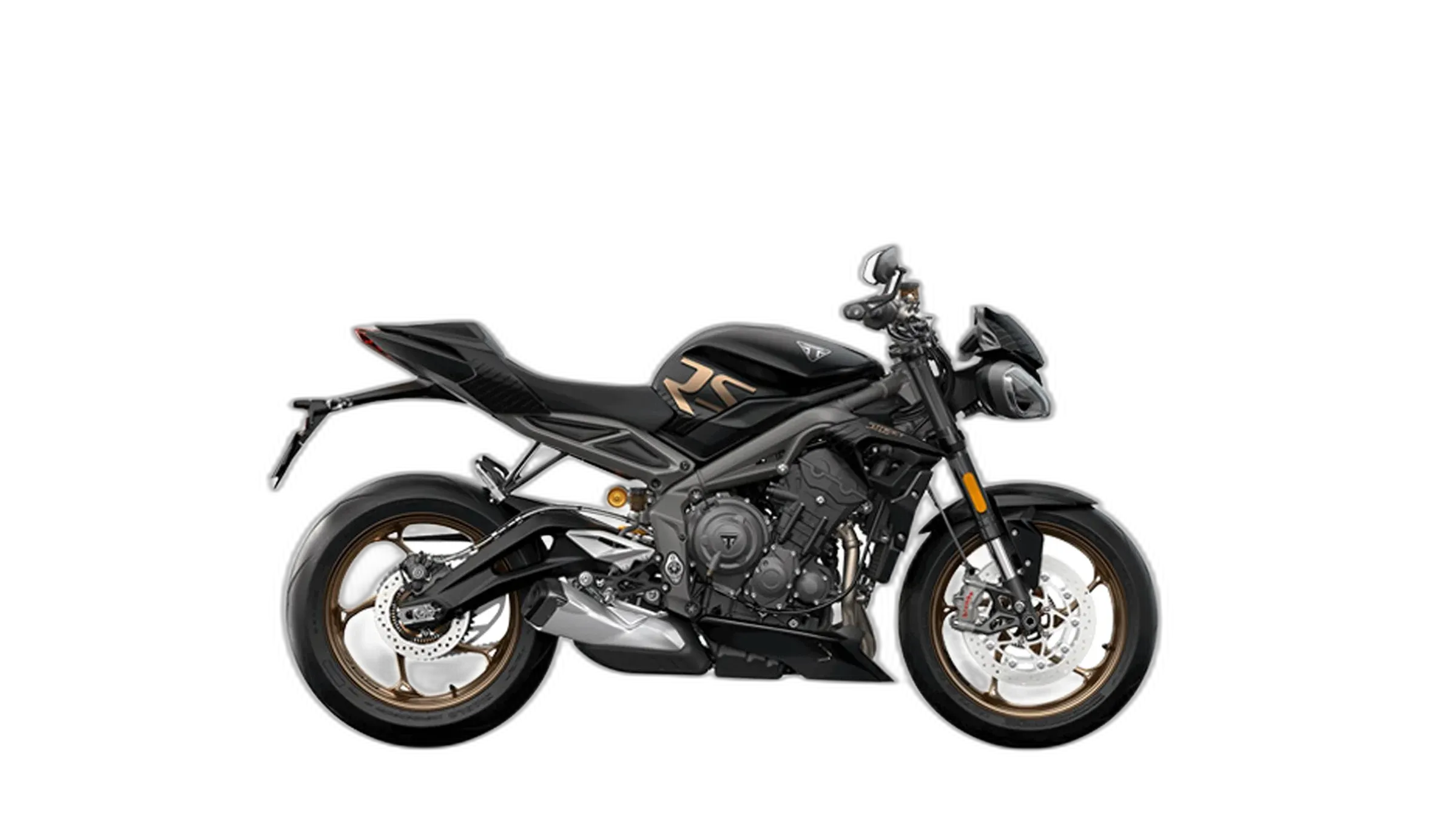

Triumph Street Triple 765 RS (MY2023) — Naked Bike
NastyNils / Triumph press archive

2023–2025 · Naked Bike · Buyer's Guide

Street Triple 765 RS (MY2023)

Triple That Earns Its Grin

The Machine's Character

The Street Triple 765 RS sits at the sharp end of the mid-size naked class, built around a Moto2-derived inline-three that makes 128 hp and 59 lb-ft from 765 cc. This is the premium, track-leaning trim: Brembo Stylema calipers, a firm Showa-and-Öhlins setup, and a full IMU electronics package with cornering ABS, traction control, ride modes and wheelie control all standard. The gearing is short, and the ratios feel matched to the power delivery on both road and track. It reads as a finished, ambitious machine in its detail work rather than one merely assembled, and it aims squarely at the top of its segment.

On the road the triple pulls from low in the range without demanding a specific rev window, so it hooks up and goes even when you are a gear too high in traffic. The chassis, though, is built for speed. Below a genuine pace the suspension feels underworked and doesn't inspire the same confidence it does when you push. This is a bike for riders who actually use canyon roads and the occasional track day, not someone after a soft weekend cruiser. The build quality holds up as genuinely premium over time. The honest catch: ride it hard and your fuel range drops off noticeably.

Hard Numbers

Spec sheets don't ride bikes, but they set the baseline.

Show full specs & equipment Hide specs & equipment
Key specifications
Power 128 hp (96 kW) @ 12,000 rpm
Torque 59 lb-ft (80 Nm) @ 9,500 rpm
Displacement 765 cc
Engine Inline-three
Cooling Liquid-cooled
Gearbox 6-speed
Final drive Chain
Front brake 310 mm
Front tire 120/70 ZR17 — Pirelli Diablo Supercorsa SP V3 fitted as OE
Rear tire 180/55 ZR17 — Pirelli Diablo Supercorsa SP V3 fitted as OE
Wheelbase 55.1 in (1399 mm)
Seat height 32.9 in (836 mm)
Wet weight 414 lb (188 kg)
Fuel capacity 4.0 gal (15 L)
Top speed 150 mph (241 km/h)
Fuel economy 44 mpg (US)

Equipment check

Chassis

  • Front Suspension Adjustable Standard
  • Rear Suspension Adjustable Standard

Connectivity

  • TFT Display Standard
  • Smartphone Connectivity Standard

Drivetrain

  • Quickshifter Standard
  • Slipper Clutch Standard

Lighting

  • LED Headlight Standard

Safety

  • ABS Standard
  • Traction Control Standard
  • Ride Modes Triumph Ride-by-Wire Throttle Maps Selectable ride modesRefined throttle response Standard

Signature Tech

The named systems that set this bike apart — and what each one does for you.

Braking

  • Brembo Stylema CaliperStandard
    • Stronger consistent braking
    • Brake fade resistance
    • Firm brake lever feel
    • Agile weight reduction

The Voice of Experience

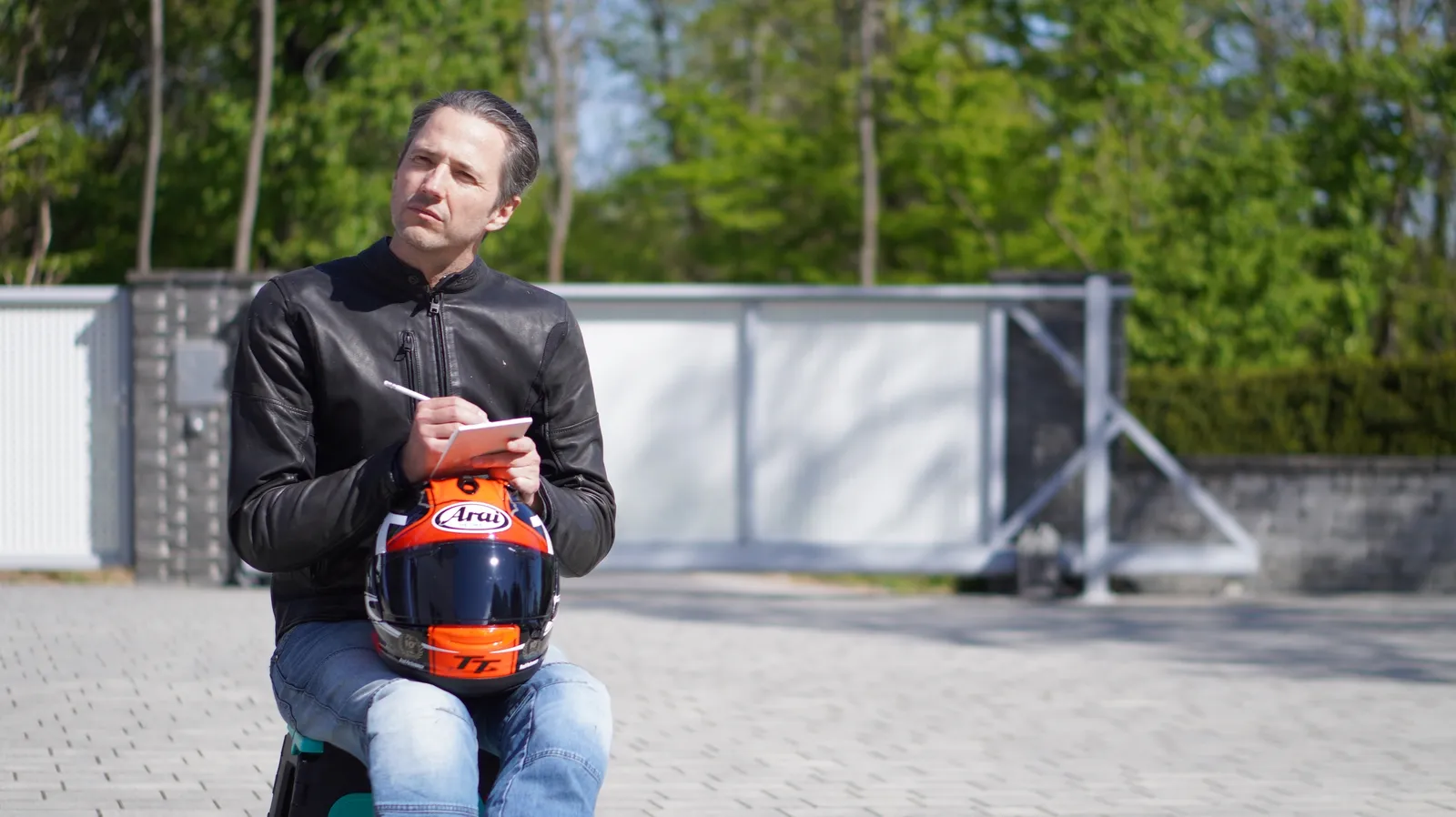
Portrait of NastyNils

The test ride

Swing a leg over and the 32.9-in seat is approachable, the bar noticeably wide, and the riding position tips you forward so you sit right over the front wheel and feel what the contact patch is doing. The seat itself is genuinely soft, an odd but welcome contrast against the stiff suspension out on the road. Wind it out and the exhaust note turns raw and mechanical at the top of the range, an honest voice that rewards using the revs rather than one tuned to flatter itself. The blipper quickshifter never missed a shift I asked of it, up or down, so on a hard run through the hills you almost never break rhythm. One gripe from the saddle: the left bar-end joystick for the menus is fiddly enough that you learn to set things while stopped.

Rated point by point — where it earns its keep

My own 0–100 score for this bike against the class, area by area — the marker on each bar is the class average.

Give the RS a fast, flowing bend and it settles into exactly what it was built for. The firm Showa and Öhlins tune holds a high-speed line with a steadiness that lets me read the surface and lean on it with confidence. Direction changes cost almost nothing. A small nudge sets it leaning and the bike leads itself into the turn rather than resisting the input, and the front end speaks up about the contact patch with noticeably more clarity than the standard model manages. The catch is that all of this scales with speed. Potter along and the chassis feels lightly loaded and less reassuring than it is once you commit, and the fitted tires want a warm-up before they'll reward a hard lean. Take it to a circuit and it stays easy to place, though nailing the precise apex is a job for firm, deliberate pressure rather than a bike that finds the inside line on its own.

What stays with me is how capable the bike makes the rider feel once you string a demanding road together. The blipper handles every up-and-down change so cleanly that a hard charge through a set of hills never loses its rhythm between bends. And when you carve a corner well and drive out hard past the apex, the reward lands as your own doing rather than the aids quietly cleaning up behind you. The competence is genuine, and it reads as earned.

The brakes give me total confidence to run in deep. There's real bite at the lever and the kind of honest feedback that tells me exactly what the front is doing as I load it, sharp response with none of that nervous, grabby edge. Lean on them lap after lap and nothing fades. The pull stays consistent and the IMU-managed ABS keeps everything settled through the stop, so braking late becomes a decision rather than a gamble.

The heart of this bike is a triple with genuine breadth, and the way it doles out its muscle is what I keep coming back to. Down low there's enough usable torque that I never found myself stirring the box in traffic just to keep things moving, and the same motor keeps pulling with real intent as the tach climbs, so it feels motivated whether I'm loafing along or pinning it. That elasticity is the trait I'd sell it on. It takes the pressure off gear choice and lets a rider settle in fast, which is why anyone new to a three-cylinder tends to find their feet within a session. If I'm honest about the flip side, the delivery carries so much low-gear grunt that a tight corner taken in second can hand the rear tire more drive than it's ready for. It never turns nasty and the rider aids keep it composed, but the shove is real and worth knowing about.

Over the whole test the finish quality kept catching my eye. The cable routing, the way the parts meet, the small detailing all read as properly premium, the sense of a machine that was built rather than bolted together. The one ownership honesty I'll add sits with fuel. Ride it with intent and consumption jumps above what you'd like, and with the tank it carries, a spirited run has you planning refills sooner than you'd expect.

For a machine with this much sporting intent, the place you sit is friendlier than you'd guess. The stance is upright in the traditional naked sense, yet the geometry leans you toward the bars into a sportier posture that matches how the bike wants to be ridden. The seat is the surprise. It's genuinely padded and soft, an odd but welcome counterpoint to the stiff springs underneath. Getting a foot down is easy for a broad span of riders, and if it still sits tall a dealer can fit a lower accessory perch. The bar is meaningfully wider than the old bike, and that width hands you leverage and a planted, in-command feel at the controls. Two gripes stop it short of ideal. The bar-end joystick that runs the menus is imprecise enough that I learned to change settings at a standstill, and on track that soft saddle stops holding you in place, leaving you bracing against it when you'd rather be working the corner.

The everyday news here is the clutch. Its take-up is progressive enough at crawling speeds that the bike genuinely works as a commuter and not just a Sunday weapon, which isn't a given on something this focused. The honest gap is weather protection. The fender does so little that rain and road grime come straight up at you, a familiar naked-bike tax, but one worth weighing before you head out in the wet.

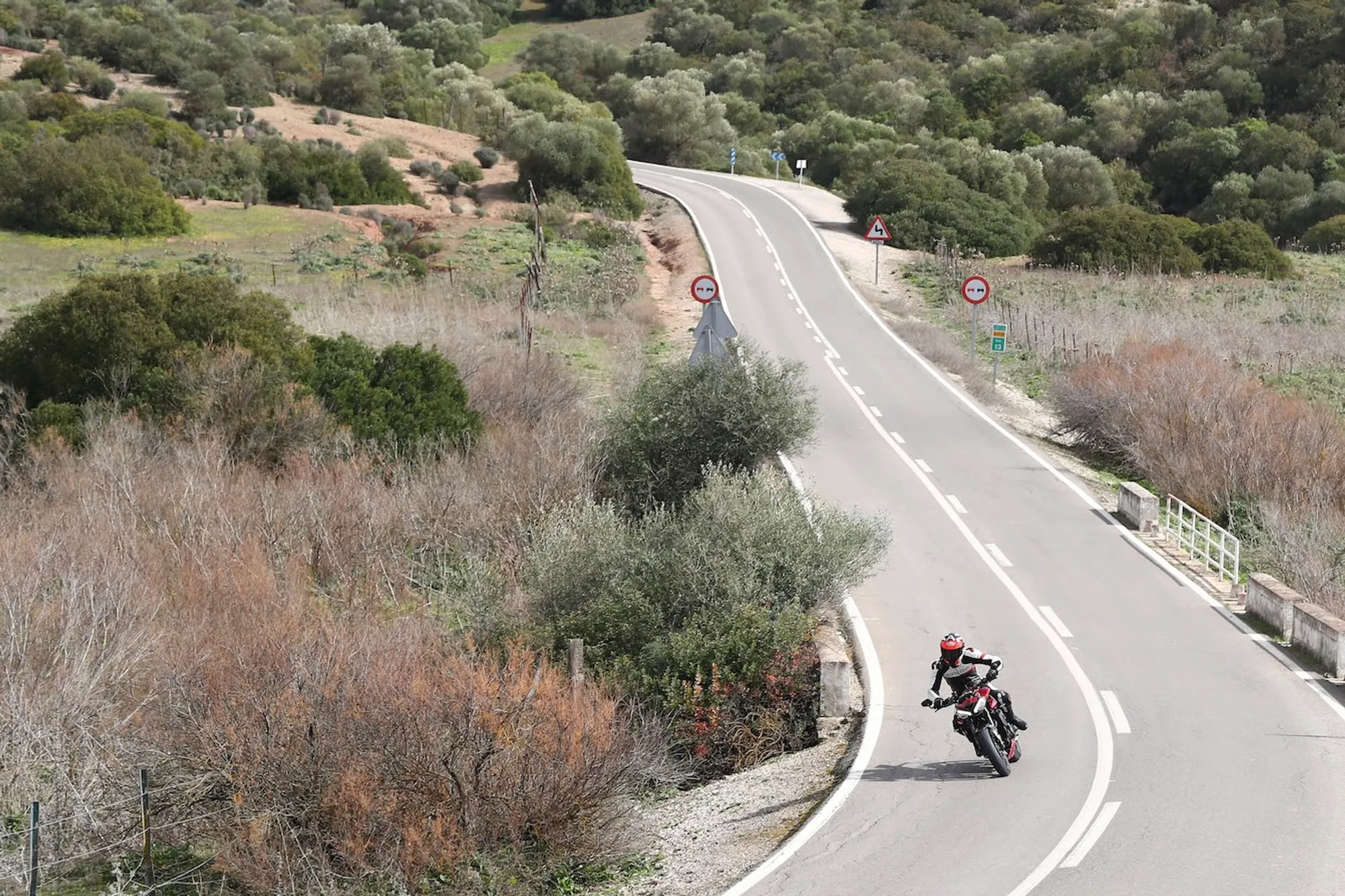
NastyNils riding a Triumph Street Triple RS through a winding Mediterranean country road, leaning deeply through a sweeping left-hander. Rolling hills with sparse olive trees and scrub vegetation frame the scene. Clear daylight, dry asphalt, rider in black leathers and full-face helmet. Guardrails and road signage visible ahead on the rising curve.
Nils Mueller
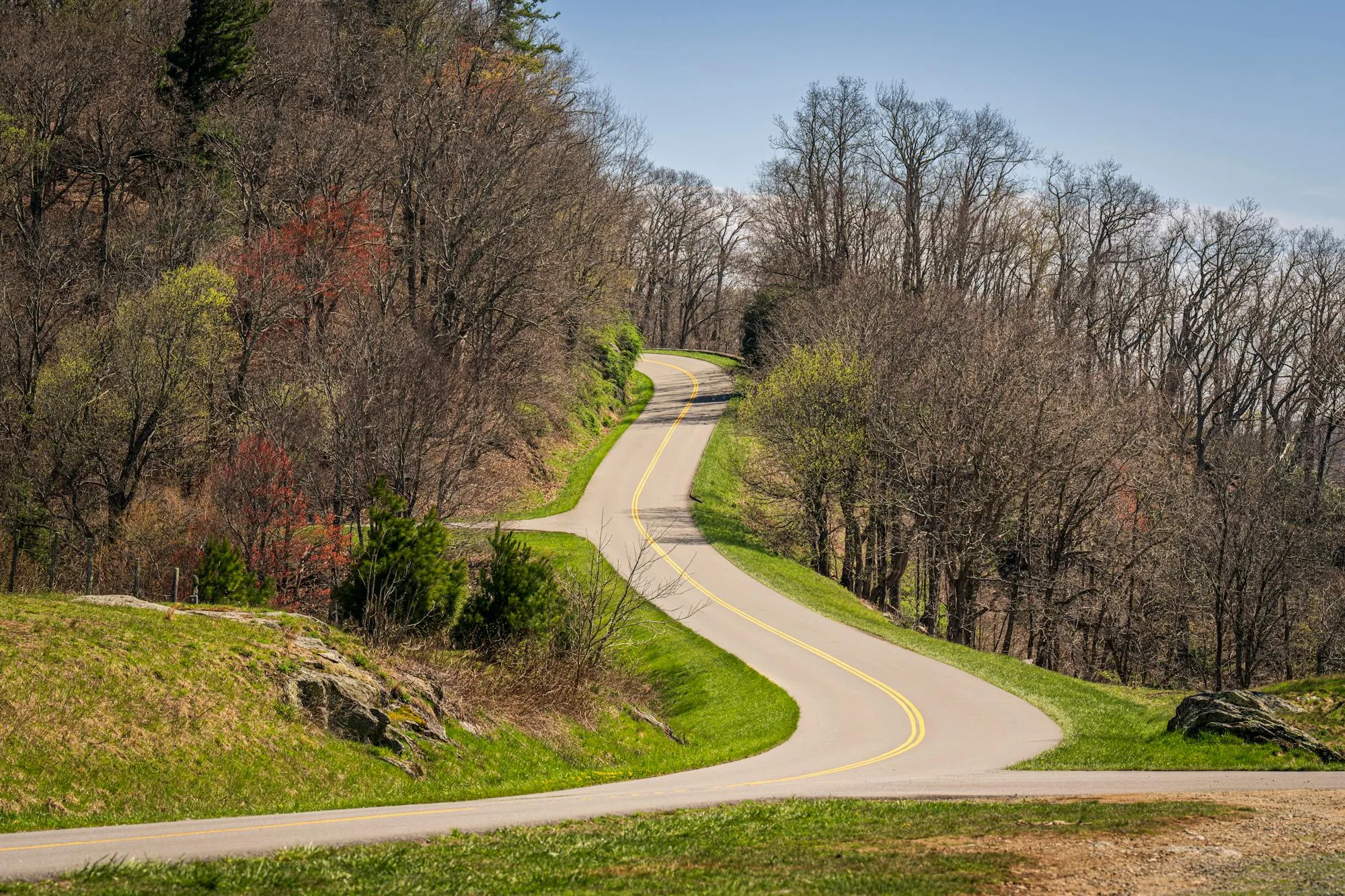
A winding asphalt road descending through the Appalachian Mountains, likely the famous Tail of the Dragon section in Tennessee and North Carolina. Multiple technical right-hand and left-hand curves are visible in this aerial perspective, surrounded by deciduous forest in spring foliage. Clear sunny conditions, well-maintained asphalt with yellow center lines marking the curves.
Mark Stebnicki / Pexels

The Truth on the Street

What follows isn't a spec sheet or a launch verdict. It's what I've assembled from riders themselves over the years: threads traded back and forth, talk in the paddock once the leathers come off, and the steady flow of notes owners send me after the bike is theirs. For the Street Triple 765 RS, the sentiment lands in a familiar shape. Warm, near-unanimous praise for how it rides, trailed by a short list of gripes that are mostly about living with it.

What riders keep coming back to

The engine is the point riders raise first and most often. They single out the triple's strong top end and the muscle it carries through the mid-range, and owners stepping up from the older RS note how much cleaner the throttle now meters its power. Close behind sits the way it turns. The sharper geometry and wide bar draw repeated praise for quick, light steering that flatters the rest of the class. The front brakes earn their own steady mention, read as a clear lift over the previous setup in both bite and feel. Underpinning all of it, owners rate the fit and finish near the top of the segment, and many see the electronics and suspension hardware as unusually generous for the money.

The short list of gripes

The complaint that surfaces most is cruise control. It can be ordered, but only as a chargeable factory add-on rather than fitted equipment, and buyers paying this much notice its absence from the base bike. Fuel range is the next recurring theme. The low-fuel light comes on early, and owners put usable range at roughly 155 to 175 miles, enough to factor into how a long day gets planned. On longer rides a few say the spot where the frame meets the seat presses on the inner knee. A pair of owners feel the upshift takes a beat longer to cut unless the bike is in its most track-focused mode, and in ones and twos, riders mention a light, nervous front over broken pavement with the throttle pinned.

Known issues

  • Valve spring retainer / collet replacement service action

    engineoccasional

    Triumph issued a dealer-mandatory service action for MY2023 and MY2024 Street Triple 765 (R and RS) requiring replacement of valve spring retainers. Dealers were instructed not to release affected bikes for delivery without the work being completed; bikes already in customer hands are to have the work performed at next dealer visit. The job requires engine removal and cylinder head removal. The action follows real-world catastrophic engine failures (valve drop, cylinder damage) reported by owners — including one MY2024 R at ~2,800 miles and one MY2023 RS at ~16,352 miles.

  • Quickshifter / shift-linkage sensor failure on early MY2024 builds

    electricsoccasional

    Early-production MY2024 Street Triple 765 RS units shipped with a quickshifter / shift-linkage sensor that failed in-service, often early in life (reports from ~1,500 miles). Triumph revised the sensor in production during 2024; warranty replacements on early units were delayed by parts backlog. The clutch and gearbox themselves remain unaffected — owners can continue to ride using the clutch lever during the wait.

  • TFT instrument cluster white-wash, heat-correlated

    electricsoccasional

    Owners report intermittent white-out of the 5-inch TFT instrument cluster, often correlated with warmer ambient temperatures. Some events self-recover; permanent failure requires a dealer-installed cluster replacement paired to the existing ECU. Reported on MY2024 specifically; further data needed to characterise frequency on MY2023 / MY2025.

The Expert Benchmark

Where this Triumph Street Triple 765 RS pulls ahead of — or falls behind — its rivals on the numbers, and the typical bike in its class on character.

What kind of bike this is — character vs. the class

This bike Class average

The shape of the Triumph Street Triple 765 RS — numbers and character vs. the average Naked Bike

Head-to-head: Triumph Street Triple 765 RS vs. its rivals

The 'Should I Buy It?' Score

Forget spec-sheet bragging. Here's who the Street Triple 765 RS is actually built for.

A scenic view of Angeles Crest Highway winding through rugged Southern California canyon terrain. Rocky mountainsides with golden earth tones frame the asphalt road with tight sweeping curves. Double yellow center line visible, sparse vegetation along the shoulders, clear blue sky with white clouds. Daylight, dry conditions. Iconic location for canyon-road enthusiasts.
Josh Sorenson / Pexels

Best motorcycle for Angeles Crest?

This is your bike. It steers with one input, holds a line at speed, and the brakes never fade on a full canyon run. Just warm the tires and commit; it truly comes alive when you push.

Made for Angeles Crest Highway · Coronado Trail / US 191 · Highway 1 / Big Sur
Best motorcycle for Tail of the Dragon?

For tight Dragon-style corners it's light and easy to hustle, but it won't find the apex for you. Hit the line with deliberate pressure and it rewards the effort. Second-gear corners can serve up more torque than the tire wants.

Made for Back of the Dragon · Blue Ridge Parkway · Cherohala Skyway

Best motorcycle for Bay Area?

It handles the city-to-Skyline mix well: progressive clutch in traffic, a soft seat, and premium looks that photograph well. Heads up, the minimal fender lets wet mornings through, and hard pace drops your range.

Made for Bay Area Ridge Roads · San Francisco / Bay Area · Skyline Boulevard / Alice's Restaurant

What's new versus the previous generation

If you're cross-shopping the older generation, here's what changed.

Triumph Street Triple 765 RS (MY2017)

Previous generation · 2017–2022

Triumph Street Triple 765 RS (MY2017)

Triple-Cylinder Handling Precision

Compare to the previous model →

Alternatives to the Triumph Street Triple 765 RS

If this one isn't quite the fit, these are the bikes worth riding back-to-back against it.

Any price note compares both bikes at the same age — the youngest age both have on the used market — against this Triumph Street Triple 765 RS. “cheaper/pricier” is what that bike costs second-hand, not how worn it is.