-
TFT display total failure or partial failure
electrics occasional
The TFT instrument cluster can fail completely with a dead screen, or fail partially with white patches, dead pixels or flickering. Because the cluster is part of the immobilizer handshake, a total failure can stop the bike from starting. The cluster housing is bonded shut, so it can't be repaired at component level and the whole unit has to be replaced. Earlier model years of this generation are more prone to total failure. Later model years more often show partial white-patch failures. Known triggers include battery replacement or disconnection, moisture getting into the housing, and age. The manufacturer has replaced some units as a goodwill gesture but has not acknowledged a systemic defect.
-
Catastrophic inlet valve head detachment
engine occasional
TWO separate test bikes suffered identical catastrophic engine failures. In both cases, an inlet valve head detached from its stem, fell into the combustion chamber, and destroyed the piston and cylinder bore. First failure at 12,000 mi (19,680 km) (right inlet valve, middle cylinder). Second failure at 18,000 mi (29,035 km) on a replacement bike (different cylinder). Triumph investigated four engines from different production batches with metallurgical analysis and extreme dyno testing — "no abnormalities could explain the damage." Triumph states the worldwide valve-train complaint rate is below 0.02%. While extremely rare in the broader fleet, the occurrence of two identical failures on two successive test bikes is significant.
-
Engine cutting out randomly while riding
electrics rare
Multiple owners report the engine cutting out randomly while riding — including at constant speed, during braking, and after acceleration. Display stays on and no error codes are stored, making diagnosis difficult. Confirmed root causes across different cases include: faulty stator/pickup coil, dislodged fuel pump seal causing intermittent fuel delivery, and ECU map issues (resolved by dealer reflash). Affects primarily 2020 and 2022 models based on forum reports.
-
Premature headlight bulb failure
electrics rare
On the halogen-headlight versions of this generation, the low-beam bulbs can burn out prematurely, and some owners experience repeated failures of both bulbs over a short period. Symptoms are the loss of one or both low beams, often noticed only at a service inspection because the LED daytime running lights remain lit. In severe repeat cases the suspected root cause is unstable charging voltage from the regulator/rectifier, which overstresses the bulb filaments.
-
Front brake disc warping or pad deposit causing pulsation
brakes occasional
Some owners report pulsation through the front brake lever, particularly during hard braking at higher speeds. Can be caused by actual disc warping or by uneven brake pad material deposits on the disc surface (more common). Cleaning discs and pads with acetone and a re-bedding procedure often resolves deposit-related pulsation. Some owners have had discs replaced under warranty.
-
Quickshifter intermittent failure and false neutrals
drivetrain occasional
The Triumph Shift Assist (TSA) quickshifter can exhibit intermittent failures, particularly on the 1st-to-2nd upshift, resulting in false neutrals or missed gears. Some units had a faulty quickshifter sensor that Triumph revised during production. Known remedies: ECU reset (battery disconnect + cycling through all gears), software reflash, and sensor replacement. The first oil change (from factory fill to service oil) reportedly improves shifting behaviour.
-
Clutch damper springs loosening, causing grinding/rattling noise
drivetrain rare
At around 15,000 mi (24,659 km), unusual grinding noises from the clutch area when cold. Three of six clutch damper springs were found to be too loose. Required clutch basket replacement (covered under warranty). Some owners also report a generally noisy clutch that Triumph considers within normal operating parameters for a wet clutch.
-
Stock bar-end mirrors vibrate excessively at speed
bodywork very common
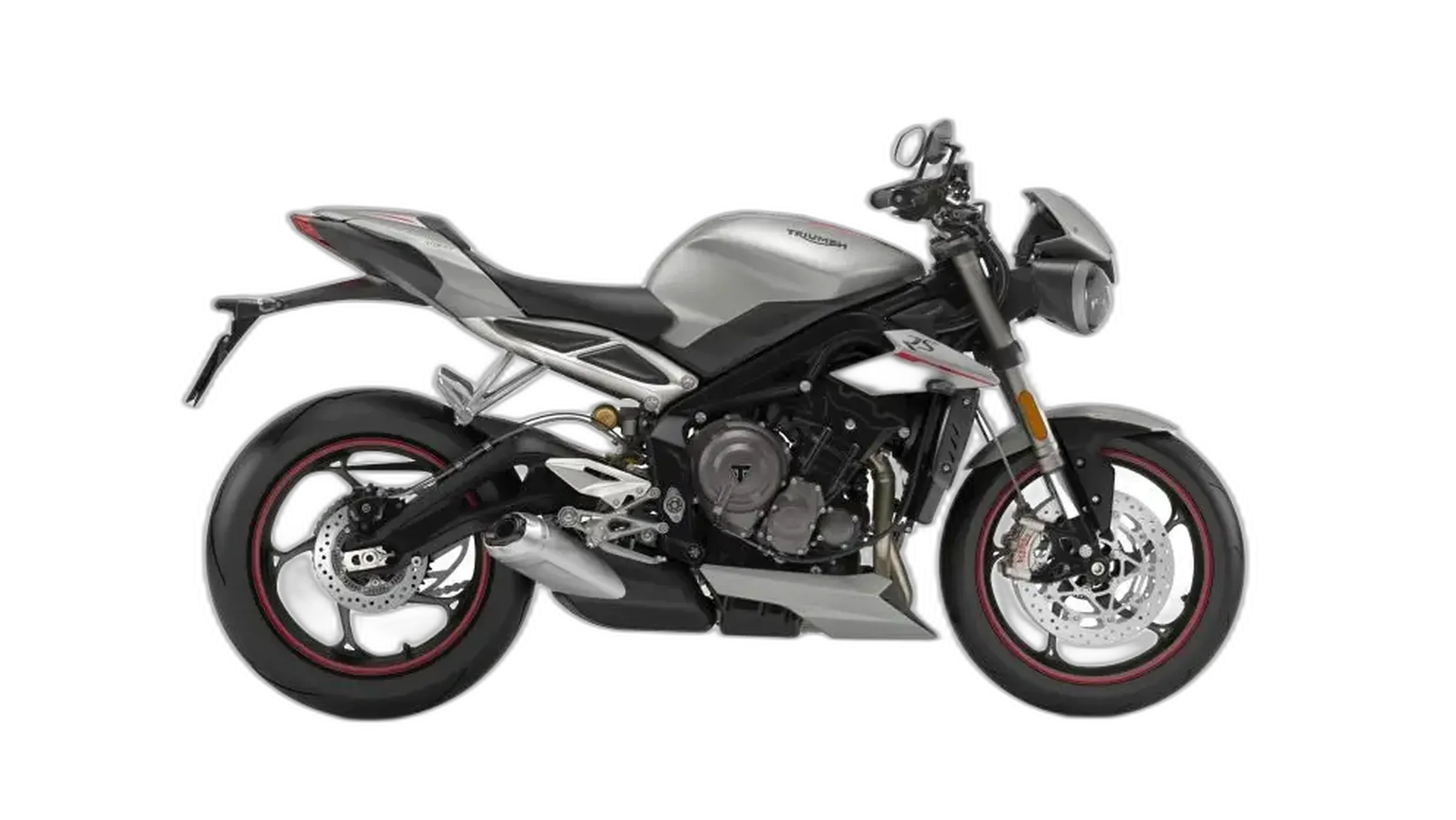
The OEM bar-end mirrors on the RS model vibrate significantly at most engine speeds, rendering rearward visibility poor at higher speeds. This is one of the most commonly cited owner complaints and a near-universal first modification. Most owners replace them with aftermarket units (Rizoma, CRG, etc.). Note: this is an RS-specific issue — the R model uses conventional stalk mirrors that do not exhibit this problem.
-
Jerky throttle response at low RPM and small throttle openings
fuel system very common
A well-documented characteristic of Triumph's ride-by-wire fuel-injected triples: the throttle produces a jerky on/off transition in the 0–5% throttle range at low RPM (idle to ~5,500 rpm). Particularly noticeable in stop-and-go traffic and parking manoeuvres. "Road" mode is smoother than "Sport" but the issue persists. Aftermarket solutions include G2 Throttle Tamer tubes, ECU remapping (TuneECU), and throttle cable free-play adjustment. A professional dyno tune is considered the only complete fix. Some owners consider this a design characteristic rather than a defect.
-
Oil weeping from alternator cover gasket
engine common
Minor oil weeping from the alternator cover gasket is a widely reported issue. Dealers confirm "it happens on a lot of these bikes." Root cause is frequently undertorqued bolts from the factory — mechanics report bikes arriving for the first service with alternator cover bolts at a lower torque than specified. The leak is typically a slow weep (one drop after each ride) rather than a heavy drip. Oil levels usually remain stable. Retorquing the bolts to specification resolves the issue in most cases; some bikes require gasket replacement. Affects all trim levels (S/R/RS).
-
Cam chain rattle/slap on cold startup
engine occasional
The hydraulic cam chain tensioner can bleed down after the bike sits for extended periods (overnight or longer), causing a noticeable chain rattle on cold startup until oil pressure builds. Common to many Triumph triple engines. Aftermarket manual cam chain tensioners available as a permanent fix. Dealers report that many 765 engines develop tight exhaust valves, which can exacerbate perceived engine noise.