
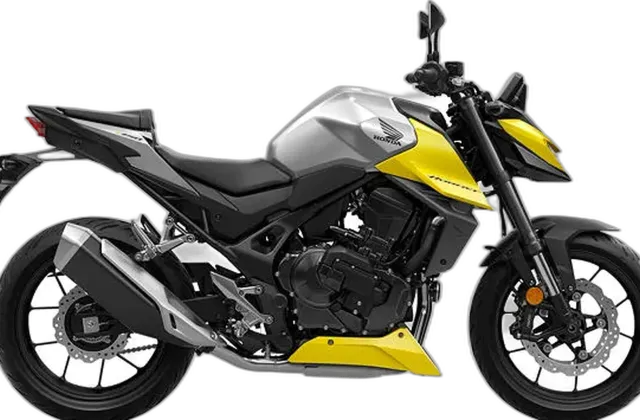
Honda CB750 Hornet (RH12-E_Clutch) — Naked Bike
Honda Press

2026 · Naked Bike · A variant of the CB750 Hornet

CB750 Hornet E-Clutch (RH12-E_Clutch)

Differences between the standard CB750 Hornet and the E-Clutch

4 / 5 NastyNils Rating · against its class

The Clutch-Free Everyday Hornet

The Machine's Character

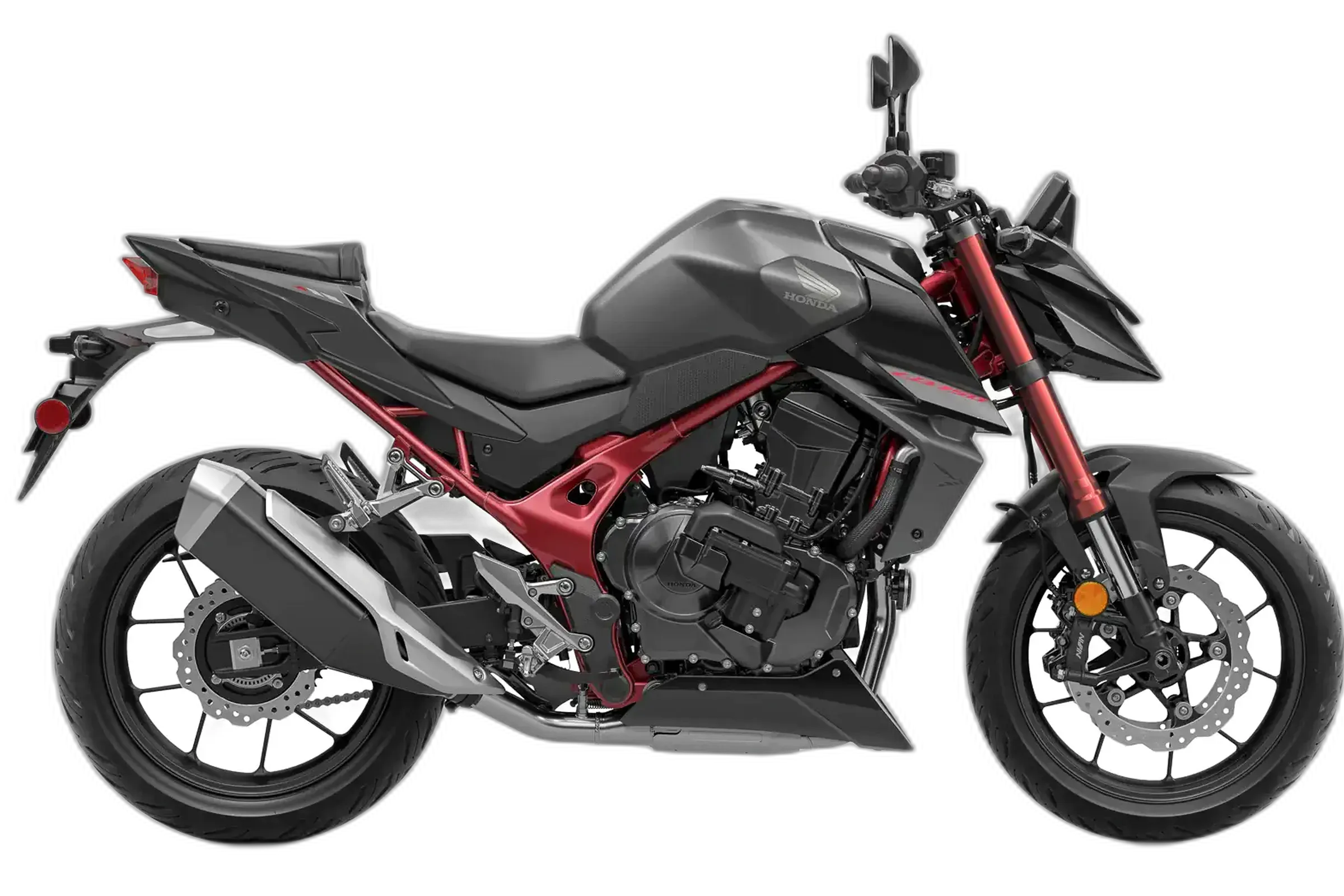
The CB750 Hornet is Honda's middleweight naked, built around a 755 cc liquid-cooled parallel twin with a 270° crank. It makes 92 hp at 9,500 rpm and 55 lb-ft at 7,250 rpm. The engine sits in a steel tube frame with a USD fork, and the bike weighs 432 lb (196 kg) wet. What sets this trim apart is the Honda E-Clutch: it handles the clutch from a standstill and through every shift, with rev-matched downshifts, and the lever stays on the bar for when you want it. It keeps the standard bike's ABS, traction control, ride modes, TFT dash and navigation. Smart, not showy.

So what's this hardware built for? On paper, it's built for the riding most people actually do: traffic on weekdays, back roads on weekends. The 31.3 in (795 mm) seat and 4.0 gal (15.2 L) tank put it within reach of a wide range of riders. Honda says the bike balances sporty enjoyment with a comfortable upright riding position, and that the E-Clutch adds practicality in urban environments. That points to a rider who wants 92 hp from a light twin and doesn't want to work a clutch lever through every stop-and-go jam. It's a clean, well-judged package. Sensible, not sober.

Hard Numbers

Spec sheets don't ride bikes, but they set the baseline.

Show full specs & equipment Hide specs & equipment
Key specifications
Power 92 hp (68 kW) @ 9,500 rpm
Torque 55 lb-ft (75 Nm) @ 7,250 rpm
Displacement 755 cc
Engine Parallel twin
Cooling Liquid-cooled
Gearbox 6-speed
Final drive Chain
Fork Upside-down (USD)
Front tire 120/70-17
Rear tire 160/60-17
Seat height 31.3 in (795 mm)
Wet weight 432 lb (196 kg)
Fuel capacity 4.0 gal (15.2 L)

Equipment check

Chassis

  • Rear Suspension Adjustable Standard

Connectivity

  • TFT Display Standard
  • Smartphone Connectivity Standard
  • USB Charging Port Standard

Drivetrain

  • Automated Clutch (E-Clutch / auto clutch) Honda E-Clutch Clutchless ridingStall free low speed Standard
  • Quickshifter Standard
  • Slipper Clutch Standard

Lighting

  • LED Headlight Standard

Safety

  • ABS Standard
  • Traction Control Standard
  • Ride Modes Standard

What the CB750 Hornet E-Clutch Adds — Differences vs the Standard CB750 Hornet

The CB750 Hornet E-Clutch (RH12-E_Clutch) builds on the standard CB750 Hornet: the upgraded hardware, the key spec changes and where its character shifts. The full ride, specs, scoring and verdict are all right here on this page.

Equipment the E-Clutch adds vs the standard CB750 Hornet

Added
USB Charging Port

Premium hardware the E-Clutch brings

  • Transmission Quickshifter Down An up-and-down quickshifter for clutchless downshifts; the standard blips on upshifts only.
  • Transmission Quickshifter Up A quickshifter for clutchless upshifts the standard goes without.

Hard spec differences

SpecStandard CB750 HornetE-ClutchΔ
Wet weight 419 lb 432 lb +13 lb
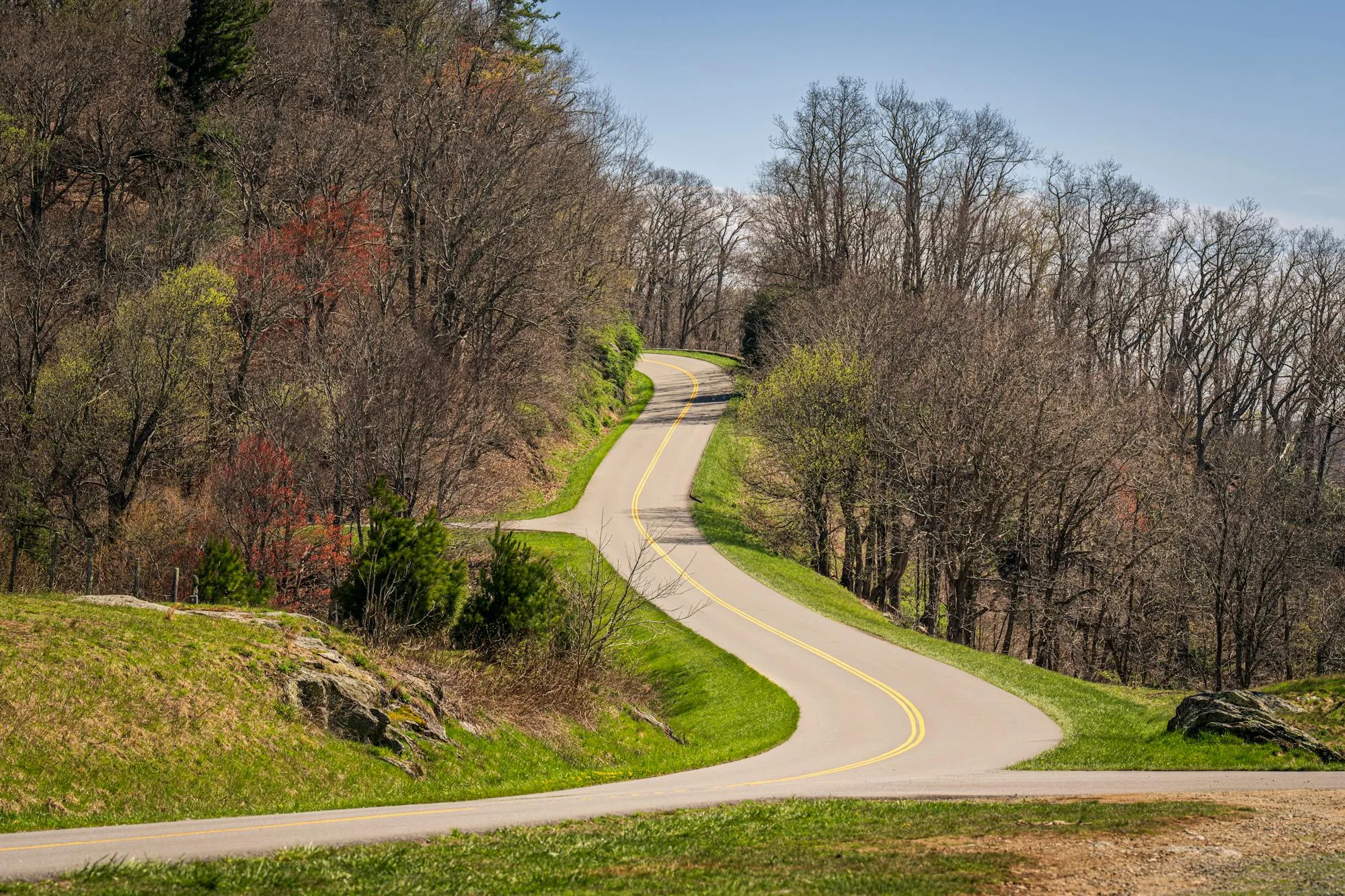
A winding asphalt road descending through the Appalachian Mountains, likely the famous Tail of the Dragon section in Tennessee and North Carolina. Multiple technical right-hand and left-hand curves are visible in this aerial perspective, surrounded by deciduous forest in spring foliage. Clear sunny conditions, well-maintained asphalt with yellow center lines marking the curves.
Mark Stebnicki / Pexels

The Truth on the Street

This isn't my test ride. It's what I've collected over years of listening: paddock talk, owners collaring me at club nights, and the emails and messages riders send once they've lived with a bike. On the CB750 Hornet the pattern is clear. Owners rave about the engine and the steering, and grumble most about a snatchy throttle and basic suspension.

The twin owners bring up first

Ask an owner what defines this bike and the answer is almost always the engine. Riders consistently describe pull from low revs, a strong midrange and a lively top end, all carried on that uneven 270° beat. The deep stock exhaust note gets singled out repeatedly, and plenty mention the induction howl. The chassis earns nearly as much praise: light and agile for its size, easy to filter, easy to flick side to side, and confidence-inspiring at low speed. The steering is quick. Some owners needed a few rides to adjust, then rated it a strength. Riders also count the equipment as strong for the money, the E-Clutch as convenience that costs no control, and the accessory quickshifter as clean-shifting where fitted. That's the love.

Where the throttle and shocks fall short

The loudest complaint is the throttle. Riders report a jerky on-off response in first and second gear at city speeds, and at part throttle low in the revs. Some owners say Honda has since revised the mapping to address it. Suspension comes next. The fork has no rider adjustment, the rear shock adjusts for preload only, and owners describe the setup as soft and comfort-biased. Heavier riders and those who push the pace report oscillation on rebound, and an aftermarket shock is a common fix. Basic, they say.

Tall riders, loose gravel, cheap metal

Taller owners report a cramped knee bend that ends in knee cramp on longer stints, and several find the seat hard on long rides. On loose surfaces, riders say the ABS can be over-sensitive, and it can't be switched off. There's no cornering ABS either, which limits the bike on gravel roads. The last gripe is cosmetic: the steel box-section swingarm looks low-rent next to pricier rivals. It keeps coming up.

Known issues

  • Soft suspension setup, limited adjustability

    suspension occasional

    The Showa SFF-BP USD fork is non-adjustable on the standard model; the Pro-Link rear shock offers preload only (7-step). Heavier riders and brisk-paced riders report rebound oscillation, bouncing on bigger bumps, and a setup biased toward comfort over control. Aftermarket shock upgrades (Wilbers and similar) resolve this for owners pursuing sporty pace. Honda revised the fork damping for 25YM, but the adjustability did not change.

  • Jerky on-off throttle at low rpm and urban speeds

    fuel system common

    The ride-by-wire throttle calibration is abrupt during transitions between closed and small-throttle openings, particularly in 1st and 2nd gear at urban speeds and at part-throttle below approximately 5,500 rpm. Multiple owners report a TPS reset procedure provides limited improvement; Honda is reported to have improved the calibration for model year 2025.

  • ABS cannot be switched off, no cornering ABS

    brakes occasional

    The 2-channel ABS system is fixed and non-defeatable, with no IMU and therefore no cornering ABS. Reviewers report the ABS can intervene aggressively on loose surfaces. This is a spec design choice rather than a fault, but it is a documented limitation for owners using the bike on gravel or for back-track riding.

  • HSTC traction-control setting resets to default on every key-on

    electrics occasional

    Owners and reviewers note that the bike does not retain the rider's HSTC setting across a key cycle; it returns to the default level whenever the ignition is turned off and on again. An annoyance for riders who routinely run a non-default HSTC level.

  • Stock mirrors mounted close to the bar centerline

    bodywork occasional

    The stock mirrors are mounted inboard such that riders see their own forearms more than the road behind. Bar-end mirror replacements are a popular owner modification.

The Expert Benchmark

Where this Honda CB750 Hornet pulls ahead of — or falls behind — its rivals on the numbers, and the typical bike in its class on character.

What kind of bike this is — character vs. the class

This bike Class average

The shape of the Honda CB750 Hornet — numbers and character vs. the average Naked Bike

Head-to-head: Honda CB750 Hornet vs. its rivals

The 'Should I Buy It?' Score

Forget spec-sheet bragging. Here's who the CB750 Hornet is actually built for.

A scenic view of Angeles Crest Highway winding through rugged Southern California canyon terrain. Rocky mountainsides with golden earth tones frame the asphalt road with tight sweeping curves. Double yellow center line visible, sparse vegetation along the shoulders, clear blue sky with white clouds. Daylight, dry conditions. Iconic location for canyon-road enthusiasts.
Josh Sorenson / Pexels

Best motorcycle for Bay Area?

You're the best match here: the E-Clutch takes the clutch work out of San Francisco stop-and-go, and a 432 lb chassis with a modern TFT dash is built for the weekend Skyline run.

Made for Bay Area Ridge Roads · San Francisco / Bay Area · Skyline Boulevard / Alice's Restaurant
Best motorcycle for Angeles Crest?

A solid fit if precision matters more to you than peak power: 92 hp in a light steel frame suits tight canyon roads. If you're heavy or ride hard, note the fork isn't adjustable and plan on suspension upgrades.

Made for Angeles Crest Highway · Coronado Trail / US 191 · Highway 1 / Big Sur

Best motorcycle for Tail of the Dragon?

A good match if you're honing technique on Blue Ridge and Dragon-style corners: accessible handling, a 31.3 in seat and clutch-free shifts keep your mind on your lines, not on levers.

Made for Tail of the Dragon · Back of the Dragon · Blue Ridge Parkway

What's new versus the previous generation

If you're cross-shopping the older generation, here's what changed.

Honda CB750 Hornet (RH12)

Previous generation · 2023

Honda CB750 Hornet (RH12)

Light Hands, Genuine Grin

Compare to the previous model →