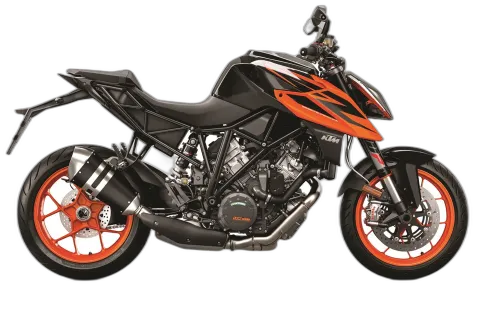
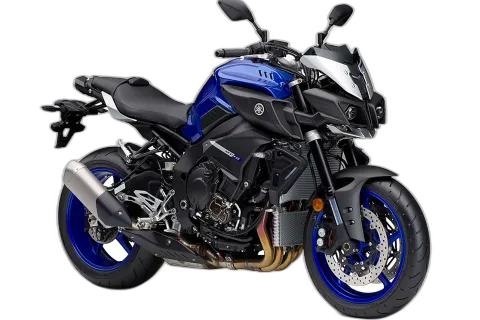
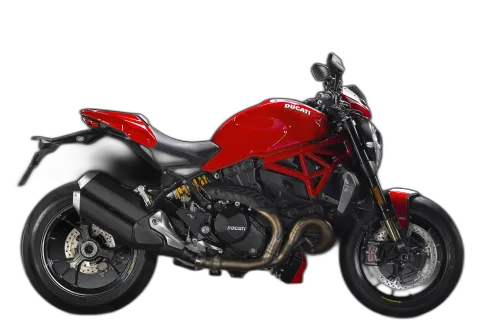
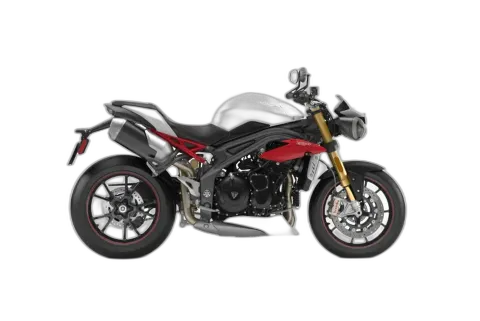
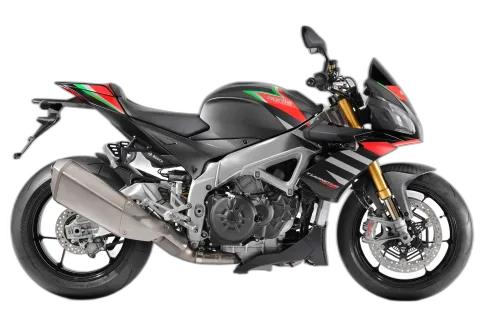
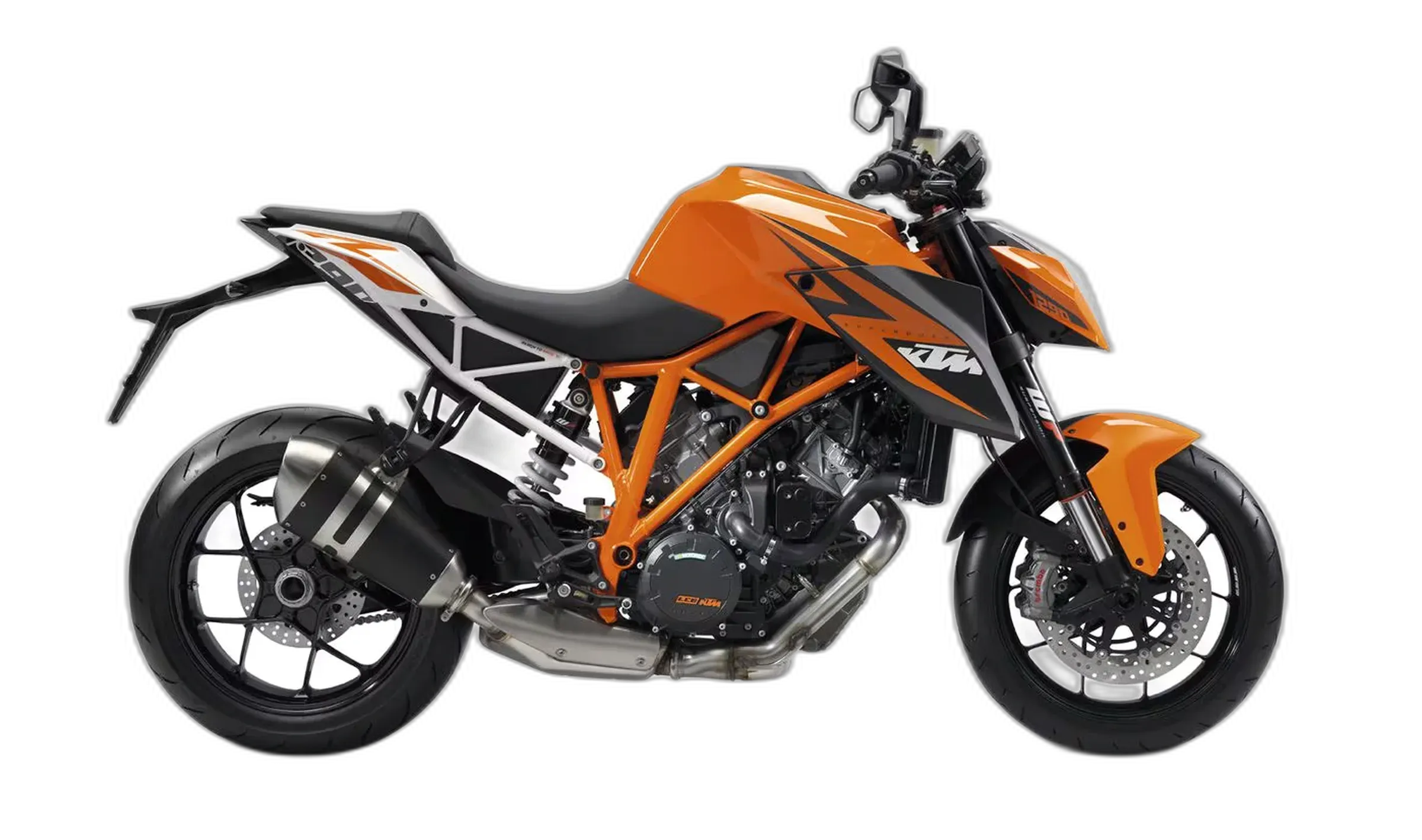
KTM 1290 Super Duke R (MY2014) — Hyper Naked
KTM press archive

2014–2019 · Hyper Naked · Buyer's Guide

1290 Super Duke R (MY2014)

The Beast That Actually Works

The Machine's Character

KTM built this one around a single idea: put the biggest V-twin it could manage into the lightest street chassis it could get away with. The 1301 cc 75-degree twin makes 179 hp and 106 lb-ft at 6,500 rpm, and the configuration makes it feel bigger than that on the road. Roll it on and it hits harder than any dyno sheet would lead you to expect. Ride-by-wire engine maps, KTM Motorcycle Traction Control, wheelie control and ABS are standard, along with a steering damper, slipper clutch, TPMS and adjustable suspension at both ends. None of it is decoration. Without that suite this motor would be a handful in the wrong way.

On the road it sits you upright and roomy, wide bar, 32.9 in (835 mm) seat, with actual space for legs and torso if you are tall. The torque does the work, so you short-shift and let the midrange carry you instead of chasing revs. Reliability is no longer the open question it once was for this badge; I have seen enough high-mileage examples hold together to say that plainly. The honest catch: public roads never let you use the top half of it, insurance quotes hit younger buyers hard, and the Gen 1 swingarm, clutch slave cylinder and cam chain tensioner all have known weak points worth checking before you sign anything.

Hard Numbers

Spec sheets don't ride bikes, but they set the baseline.

Show full specs & equipment Hide specs & equipment
Key specifications
Power 179 hp (132 kW) @ 8,870 rpm
Torque 106 lb-ft (144 Nm) @ 6,500 rpm
Displacement 1301 cc
Engine 75° V-twin
Cooling Liquid-cooled
Gearbox 6-speed
Final drive Chain
Front brake 320 mm
Front tire 120/70-17
Rear tire 190/55-17
Wheelbase 58.3 in (1482 mm)
Seat height 32.9 in (835 mm)
Fuel capacity 4.8 gal (18 L)
Top speed 180 mph (290 km/h)
Fuel economy 31 mpg (US)

Equipment check

Chassis

  • Front Suspension Adjustable Standard
  • Rear Suspension Adjustable Standard
  • Steering Damper Standard

Comfort

  • Heated Grips Optional

Connectivity

  • Tire Pressure Monitoring (TPMS) Standard

Drivetrain

  • Slipper Clutch Standard

Safety

  • ABS Standard
  • Traction Control KTM Motorcycle Traction Control (MTC) Lean sensitive tractionSelectable ride modes Standard
  • Ride Modes KTM Ride-by-Wire (engine maps) Selectable ride modesRefined throttle response Standard
  • Wheelie Control Standard

The Voice of Experience

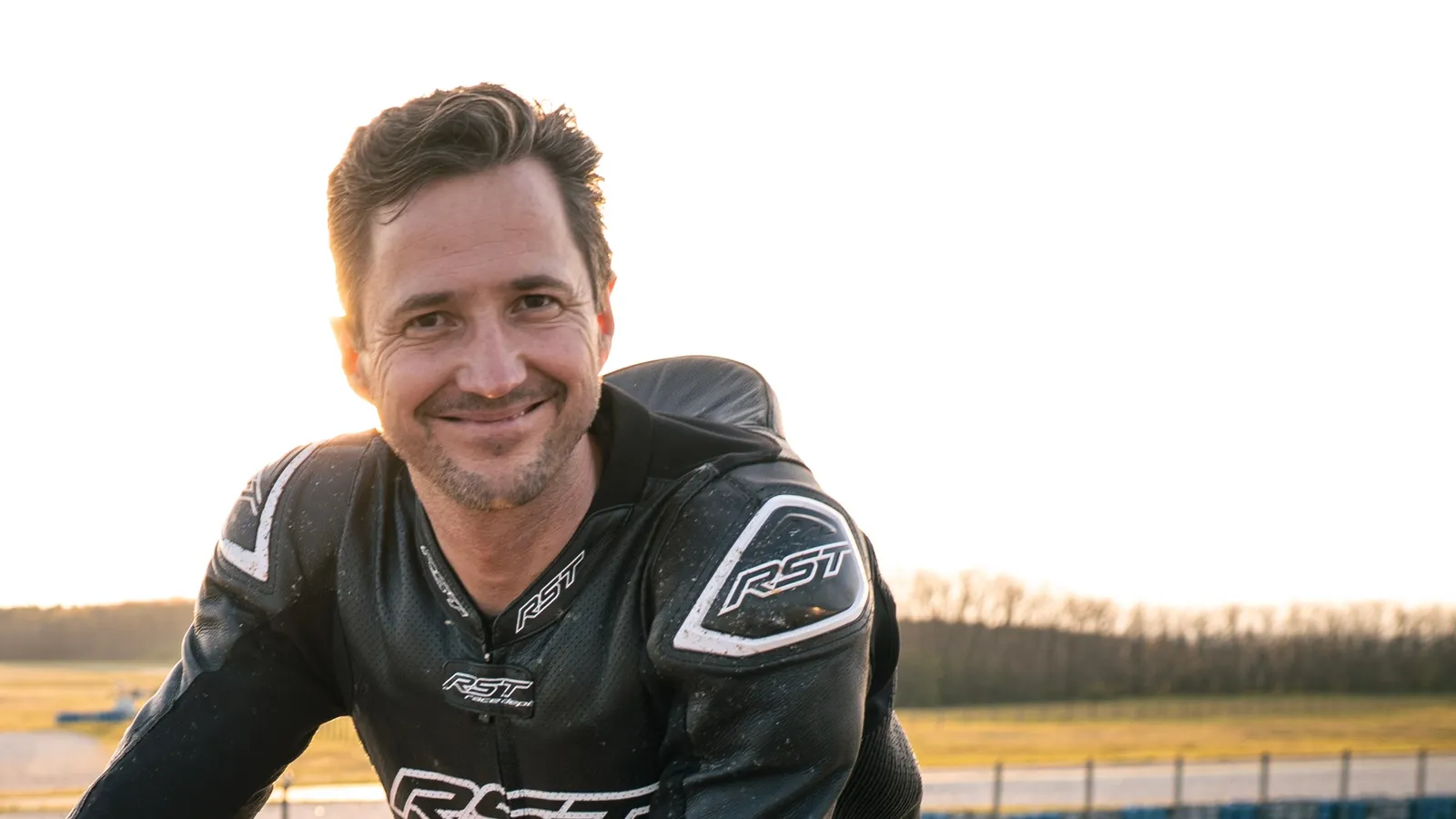
Portrait of NastyNils

The test ride

The first thing you register is space. The bar is wide and set forward, the pegs sit high and keep hold of your boot even over curbs, and nothing pinches a tall rider anywhere. Underneath you the twin works through the frame and into the tank and the pegs, mechanical and busy, never numb. What leaves the stock pipe is the letdown: Euro 4 emissions work has muted it, so the engine is putting on a show and the exhaust tells you almost nothing about it. At highway pace there is no protection at all, so your chest takes the full airstream and a long slab section becomes work. In town it never quite settles either. You always feel the motor asking why you are going this slowly. After dark, the lights are genuinely excellent.

Rated point by point — where it earns its keep

My own 0–100 score for this bike against the class, area by area — the marker on each bar is the class average.

The 2017 chassis work was a real fix rather than a press cycle. Stiffer springs and sportier damping went in specifically to answer the high-speed instability people had been complaining about, and it landed. Track testers at Losail felt it, and owners with serious miles on the clock told me the same thing independently. That the complaint existed at all tells you where this platform started. Fit the full race suspension and it sharpens again, superbike-precise when you want to be neat about it, still perfectly happy to be shoved into a corner with raw force when you don't. The tunable damping matters less than the spec sheet suggests. What actually lets you commit is the geometry underneath. Two completely different ways of riding, one chassis, and it answers to both.

Roll the throttle in first or second and the front comes up. No technique required, no clutch, nothing but your right hand. Then you keep accelerating, seamlessly, until you glance at the dash and understand exactly how much trouble you're in. What keeps that from being reckless is traction control I stopped noticing entirely. I rode a full hard track session on it and only remembered the system existed when somebody asked me about it in the pits afterward. In the acceleration zones it lets a power wheelie run. Out of tight corners it trims just enough to save the tire without flattening the fun. Jeremy McWilliams, who dialed in the Race Kit calibration himself, said he'd run that setting in actual competition; his one objection was that it won't let you hold a victory wheelie down the front straight. The Akrapovic full system adds power on top, though less than owners hope. What it really changes is the noise and the look.

Put slicks under it and the bike stops apologizing for anything. No compromise at the contact patch, no compromise in the suspension, and the precision and agility that arrive at that point are the reason I keep going back to it. On a circuit it doesn't need excuses against superbikes, not down long straights and certainly not through corners, which surprises people who read the word naked as a limitation. What I still can't fully explain is the compulsion. No other motorcycle I've ridden generates the same urge to get back on the gas at every corner exit. Nothing is doing the work for you and nothing needs to. It satisfies through mechanical stimulation alone, and I have never climbed off it without a stupid grin on my face.

The 2017 bar rework is the change I felt most. KTM widened the bars, dropped them, then pushed them forward, and the result is a riding triangle that finally suits somebody actually working the bike rather than perching on it. The racing pegs are the other half of that. They hold your boot at full lean and stay put when you hammer over a curb, which counts for more than any padding spec. Slow speed took real engineering too. Revised cylinder heads and reworked electronics turned crawling pace from something I genuinely dreaded into something I merely put up with. That is progress and I'll credit it, but the bike never fully relaxes at walking speed. It tolerates the commute. It doesn't enjoy it.

The genuinely expensive pieces here are the full exhaust and the race suspension, and neither one is required. I've run the stock suspension stiff with the rear jacked up, fitted adjustable pegs, and had a fast track bike with room to lean on it hard, none of the premium hardware involved. That the standard components take that kind of abuse without complaint tells you more about this generation than any brochure line does.

KTM thought the exhaust side through properly. Fit the Akrapovic system and there is a factory fuel map to go with it, so no Power Commander, no dyno afternoon, no chasing a flat spot that shouldn't exist in the first place. The Trackpack is the box I'd tick. Its electronically adjustable engine braking pays off twice in the same day: it smooths the deceleration phases on track, then pulls the jerkiness out of filtering through stop-and-go traffic on the ride home. The accessory logic isn't equally clean everywhere. A race-kitted bike won't simply accept a shifter off the catalog page, and sorting that out means spending beyond what the kit already cost you. From a company that gets the fueling right out of the box, that gap is an odd one to leave open.

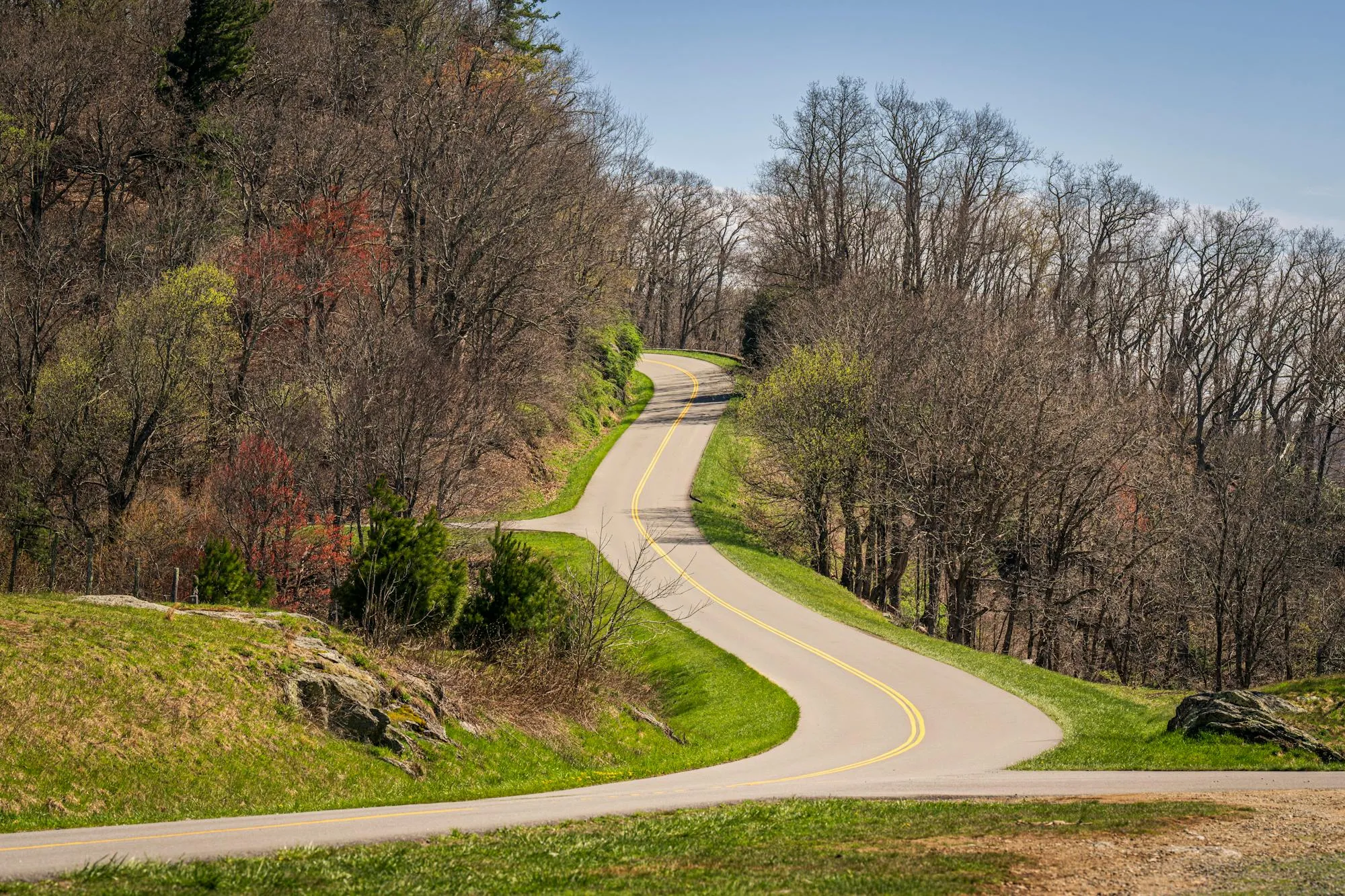
A winding asphalt road descending through the Appalachian Mountains, likely the famous Tail of the Dragon section in Tennessee and North Carolina. Multiple technical right-hand and left-hand curves are visible in this aerial perspective, surrounded by deciduous forest in spring foliage. Clear sunny conditions, well-maintained asphalt with yellow center lines marking the curves.
Mark Stebnicki / Pexels

The Truth on the Street

Two decades of paddock conversations, club-night talk, owner chats at fuel stops and the messages riders send me directly have built up a fairly consistent file on this bike. The pattern in that chatter is easy to state. The parts that make it go and the parts that stop it draw almost no argument, and nearly all of the criticism sits on the other side of the ledger, in what the bike asks of the rider once the road stops being smooth or short.

Brakes and steering riders trust

Stopping power comes up as often as anything else. Across the whole generation, riders rate the front brakes among the strongest packages fitted as standard to anything in this class, and that view barely shifts between road riders and track regulars. Steering earns similar praise with one condition attached: get the suspension set to your weight and your pace first. Owners who have done that work describe a chassis that turns in accurately and stays agile. The ones who haven't tend to describe something rather different. The 75-degree twin gets singled out just as consistently, less for numbers than for its pulse and the character that comes with it, and that emotional side shows up in owner accounts again and again.

Where owners run out of patience

The most common complaint is what the riding position costs over distance. Riders enjoy the upright supermoto stance for an hour or two, then it starts collecting objections on anything resembling a real trip. Rough pavement is the other recurring theme. Owners of the early bikes call the stock suspension harsh, and several describe the chassis as nervous at speed once the surface deteriorates. Even after the mid-generation revision to internals and springs, the ride still gets called firm. Reliability accounts split hard. Engine internals hold up, with high-mileage strip-downs showing minimal wear and no oil consumption, but a meaningful number of owners report electrical and ancillary trouble. Some describe years without a fault, others a string of dealer visits. Range closes the list. At roughly 31 mpg, riders plan on about 145 to 170 miles between fills and consider that short for how much road this bike can cover.

Known issues

  • Brembo radial master cylinder plastic piston cracking — recall

    brakes occasional

    The plastic (PPS polymer) piston in the front master cylinder could crack or break under heavy load, hard ABS engagement, or after a tip-over, leading to loss of front-brake function. Remedy: dealer replaces the plastic piston with an aluminum piston.

  • Fuel tank threaded-insert leak — recall

    fuel system occasional

    Threaded inserts at the rear of the plastic fuel tank could leak fuel due to a coating-process irregularity in tank manufacture. Risk of fuel ignition if combined with an ignition source. KTM notified affected owners; remedy was inspection and sealing of the inserts, or tank replacement where an existing leak was found.

  • Clutch slave cylinder rubber-seal swelling and air ingress

    drivetrain occasional

    The OEM clutch slave cylinder rubber seal swells over time, causing internal corrosion and air ingress in the hydraulic line. Symptoms: milky or dark clutch fluid, hard-to-find neutral, hot-clutch fade, repeated bleeding required. Re-sealing rarely lasts; owners typically replace with billet aftermarket units (Oberon, Rottweiler).

  • Radiator top-rail seam splitting

    cooling occasional

    The top-right (sometimes top-left) seam of the radiator splits along the upper rail. Owners attribute the failure to radiator-mount design and stress transfer from the freely-rotating exhaust clamp. Symptom: visible coolant weep from the upper radiator seam, eventual coolant loss and overheating risk.

  • Hydraulic cam chain tensioner loses pressure

    engine occasional

    OEM hydraulic cam chain tensioner can lose oil pressure, producing a ticking noise at idle and slack timing chain. Aftermarket manual / ratcheting tensioners are widely sold (Dirt Tricks). This is best documented as a cross-generational LC8 platform pattern (950 / 990 / 1090 / 1190 / 1290) rather than a 1290-SDR-Gen-1-specific defect.

  • Rear wheel bearing failure due to swingarm water ingress

    drivetrain occasional

    The Gen 1 single-sided swingarm has no internal drain hole. Water collects inside the swingarm, corroding the rear wheel hub bearings. Symptoms: vague "steering" feel from the rear wheel under on/off throttle. Owners frequently find a half-cup of water when removing the axle adjuster. KTM addressed this on the Gen 2 swingarm by adding a drain hole — a tacit confirmation of the Gen 1 design defect.

  • Fuel pump failure — low fuel pressure, stalling, no-start

    fuel system occasional

    "Fuel Pump Failure" warning, bike cuts out, hangs at approximately 5,500 rpm, will not restart. KTM identified the fuel filter and/or pump motor as the cause of low fuel pressure; a replacement kit (seals, gaskets, filters, motor) is supplied by the dealer.

  • Side-stand sensor failure — no-start or stalling

    electrics occasional

    Side-stand sensor fails — often a magnet-related fault contaminated by chain-area debris. Bike will not start or stalls when in gear. The 1290 sensor uses a 50% duty-cycle pulse, so a simple bypass requires a dedicated dongle (Rottweiler, Vanasche).

  • Jerky on/off throttle transition at low rpm

    fuel system occasional

    Snatchy on/off transition at 2,500–3,500 rpm, particularly noticeable in Rain mode. Stock fueling is lean for emissions compliance. Many owners install aftermarket fueling modules (Rottweiler, Power Commander) or apply ECU updates from the dealer; outcomes vary.

  • Front fork seals develop weeping / "tide marks"

    suspension occasional

    WP USD fork seals develop visible "tide marks" / weeping on the lower fork tubes. Dealer responses report a warranty rule of <1,000 miles = defect, >1,000 miles = wear. Reseal kits are common. (The original-gen 1290 SDR uses WP USD open-cartridge forks, **not** WP "4CS" — that designation belongs to other, smaller-displacement KTMs.)

  • Front brake light switch error / brake light stuck on

    electrics occasional

    Omron switch on the Brembo master cylinder fails. "Front Brake Switch" error appears on the dash; brake light may be stuck on, or a fault code is logged. Wire-routing strain at the master cylinder is the documented cause. Some owners report MTC (traction control) faults as a downstream side effect.

The Expert Benchmark

Where this KTM 1290 Super Duke R pulls ahead of — or falls behind — its rivals on the numbers, and the typical bike in its class on character.

What kind of bike this is — character vs. the class

This bike Class average

The shape of the KTM 1290 Super Duke R — numbers and character vs. the average Hyper Naked

Head-to-head: KTM 1290 Super Duke R vs. its rivals

The Handshake Score

Forget spec-sheet bragging. Here's who the 1290 Super Duke R is actually built for.

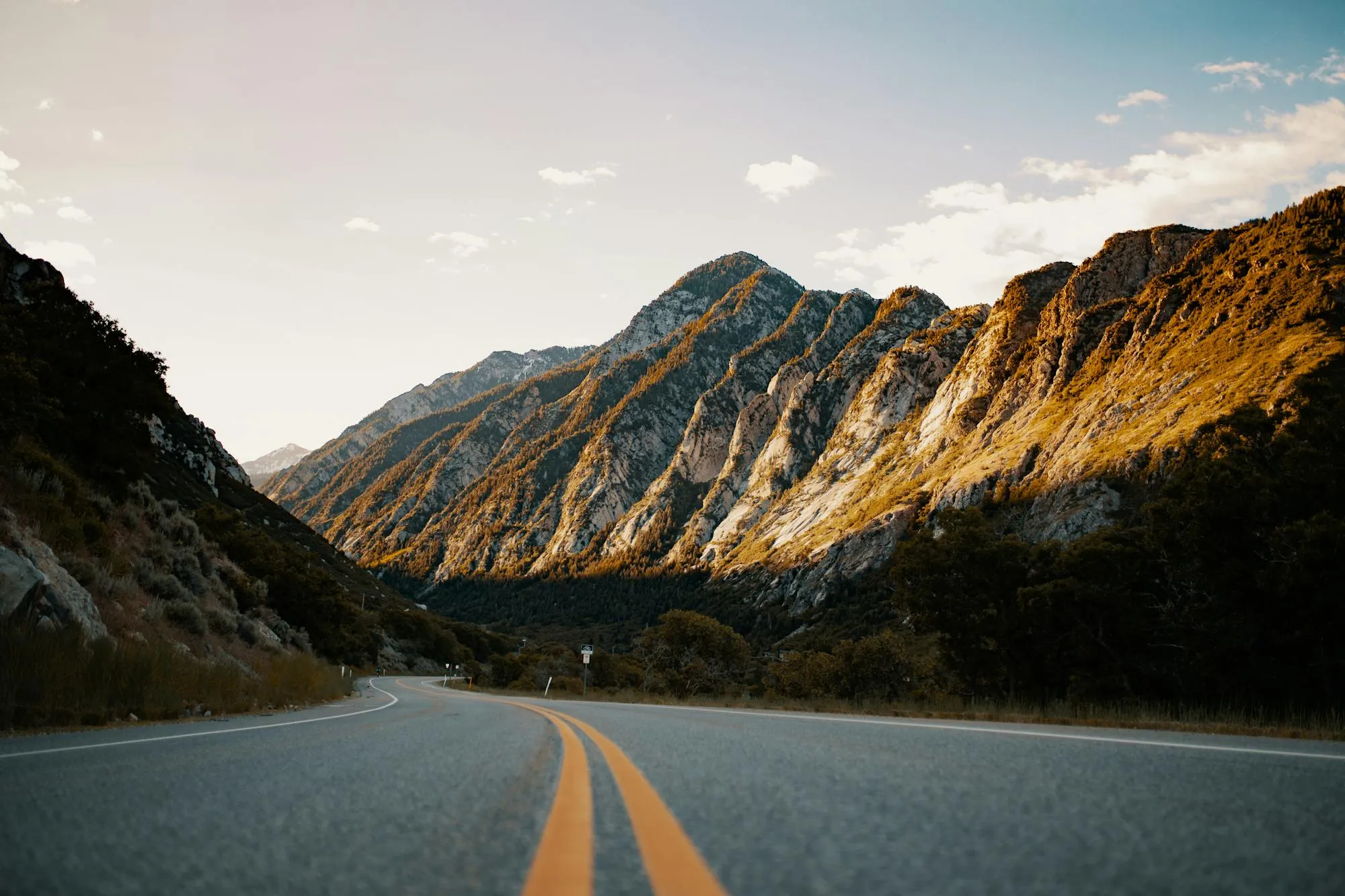
A scenic view of Angeles Crest Highway winding through rugged Southern California canyon terrain. Rocky mountainsides with golden earth tones frame the asphalt road with tight sweeping curves. Double yellow center line visible, sparse vegetation along the shoulders, clear blue sky with white clouds. Daylight, dry conditions. Iconic location for canyon-road enthusiasts.
Josh Sorenson / Pexels

Best motorcycle for Angeles Crest?

Tight canyon work is where this makes sense: hard drive out of corners, more lean clearance than you will use, and a position that keeps you over the front. Bring good tires and it will not be the limit.

Made for Angeles Crest Highway · Coronado Trail / US 191 · Highway 1 / Big Sur

Best motorcycle for Laguna Seca?

On a closed circuit it needs no excuses, in the corners as much as on the straights, and that is the only place you use all of it. Spend on suspension setup and sticky rubber before power parts.

Made for Barber Motorsports Park · WeatherTech Raceway Laguna Seca · Circuit of the Americas

Best motorcycle for Texas Hill Country?

Hill Country pace suits it perfectly: short-shift, ride the midrange, enjoy the day. The catch is the highway getting there, with zero wind protection and 31 mpg out of a 4.8 gal tank.

Made for Austin / Texas Hill Country · Twisted Sisters · Austin / Handbuilt Motorcycle Show

Alternatives to the KTM 1290 Super Duke R

If this one isn't quite the fit, these are the bikes worth riding back-to-back against it.

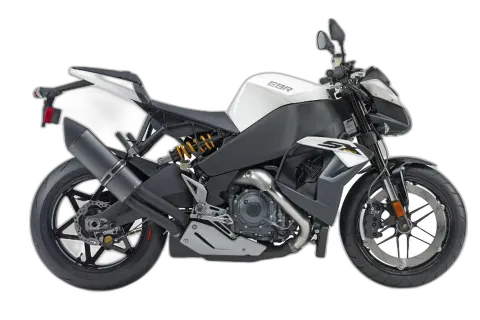
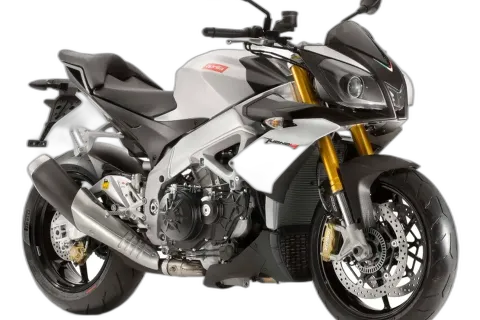
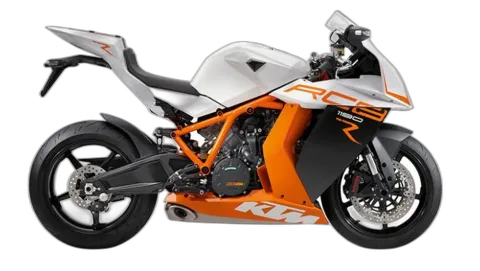
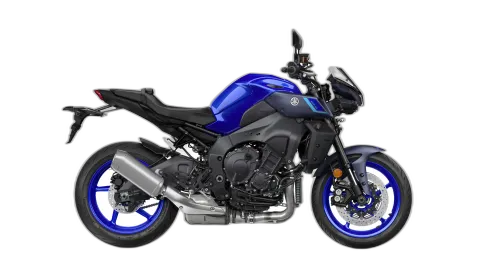
Any price note compares both bikes at the same age — the youngest age both have on the used market — against this KTM 1290 Super Duke R. “cheaper/pricier” is what that bike costs second-hand, not how worn it is.