
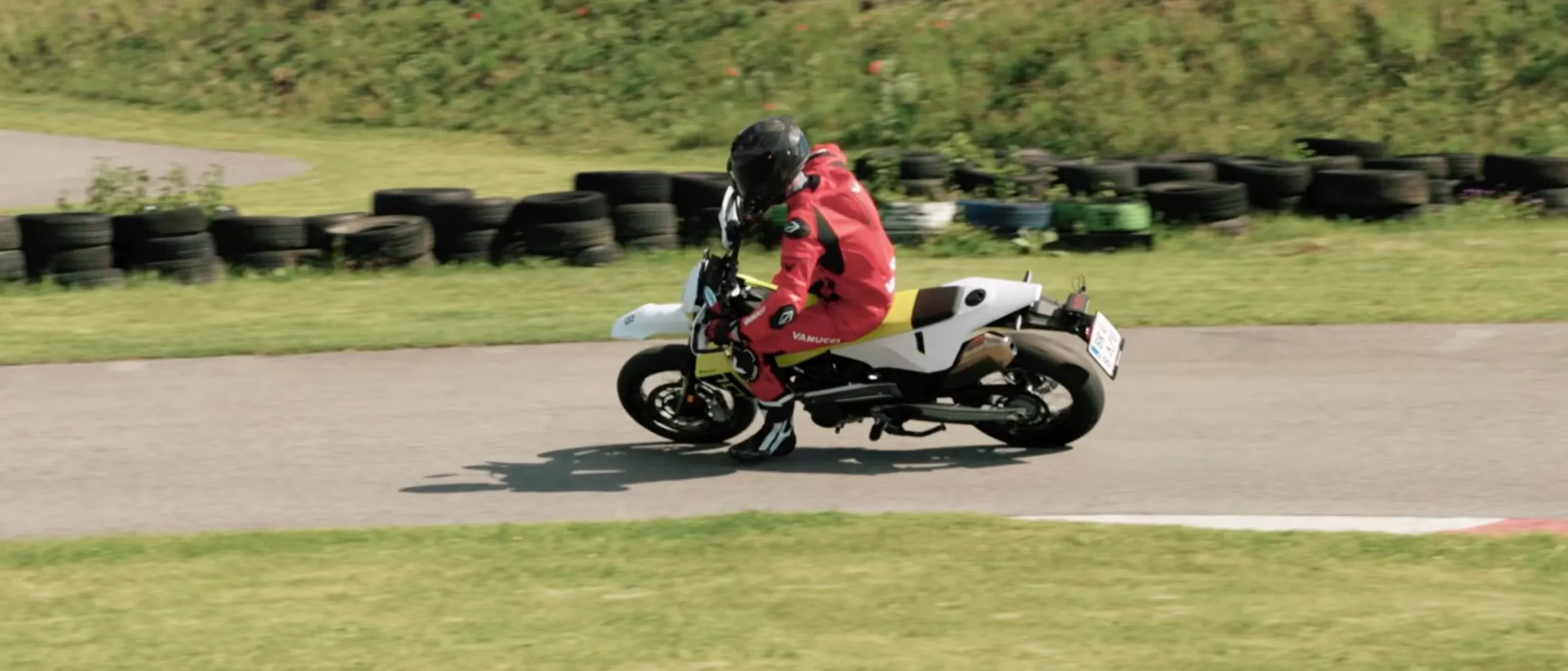
You throw a leg over a supermoto and the first thing that hits you is how little is there. No fairing to hide behind, no bodywork doing you any favors. Just a tall, narrow machine, an enormous handlebar, and you.
That’s the Husqvarna 701 Supermoto, and I got to feel that pull all over again on our tight Austrian test circuit. 79 hp from one cylinder, 338 pounds dry, a Continental ContiAttack SM 2 underneath, and 82 degrees F of asphalt. On paper that’s about the most obvious combination you could bring to a course made entirely of hairpins.
That single cylinder is the whole point
Husqvarna’s been building this engine a long time, and the faithful are genuinely attached to it. My brother-in-law still has a Euro 3 bike, I think. It sits in his shed like a gold bar and it is never, ever leaving. Prices on those old ones climb faster than Nvidia stock, and honestly, I get it.
For years the 701 has been the one carrying the flag for a big, charismatic thumper in a segment almost nobody else bothers with. But enough about the market. What this thing does on a tight circuit has nothing to do with collector value.
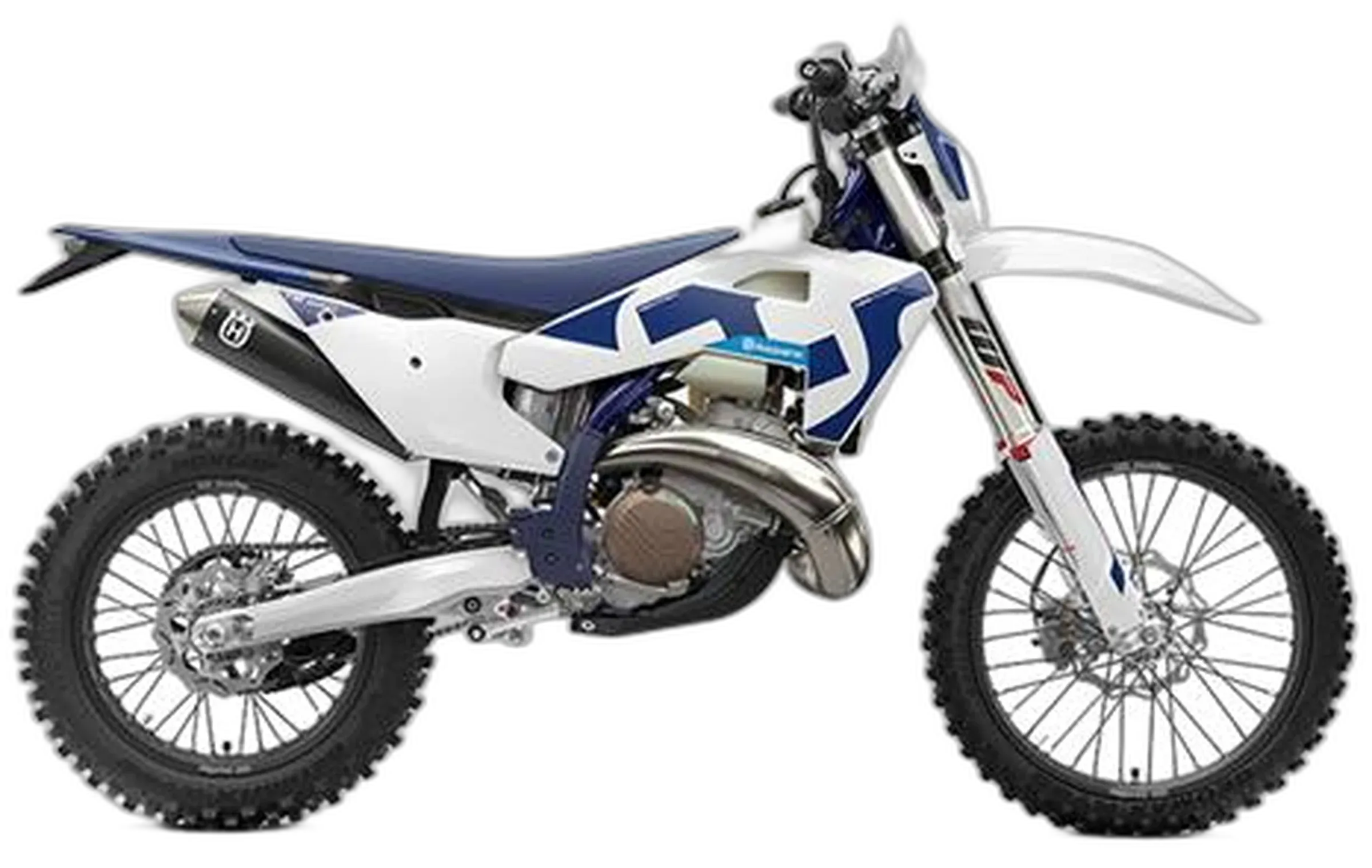
Strip everything away and this is what’s left
Everything here is pared back to what matters. You get that huge, wide bar and a seat that leaves you every option there is. Slide way forward, slide way back, there’s room wherever you want to be.
What you also feel is how many development cycles this bike has behind it. It’s in the small stuff: nothing catches on you anywhere, no edge digs in, no corner of the tank fights your knee. It’s shaped by people who’ve spent a lot of time in that seat. Pared back doesn’t mean crude here. It means somebody made decisions.
A few corners in, it’s you and the front wheel
You sit up on this rolling bonfire and you conduct two wheels around the course with what amounts to a baton. Three or four corners in and it’s just you and that front tire, nothing else in the conversation.
Front-end feel is something Husqvarna nails. Part of that’s the rubber. The ContiAttack SM 2 is street legal but functions like a race tire out here, and it works without warmers, which matters when you’ve got ten laps and that’s it. You always know exactly where the front is loaded. You never have to guess. On a tight course that’s the whole difference between going along for the ride and actually riding.
Sharp without being twitchy
Then it clicks: this isn’t a race bike. It’s not featherweight and it’s not vicious. What it gives you is a precise, direct feel without any of the nervousness a real race supermoto throws at you.
That’s the trick, and it’s a hard one to pull off. You can pull a genuinely huge amount out of the corners in a way that doesn’t demand you be a hero, and it happens fast. She looks radical, she sounds like she might bite, and yet a rider who isn’t especially sharp will find trust in that front wheel quickly and start stringing corners together. On a timed lap that matters more than the ceiling does. How high the limit sits is one thing. How fast you’ll go looking for it is another.
Two generations of sorting it out
That’s a real break from the older bikes, and it’s held for two model generations now. This motor is dialed, on the brakes and on the gas both. The torque is genuinely usable rather than something you manage.
Younger riders have no idea how good they’ve got it. Go find an older used one, or an old LC4, and try that instead. You get truly awkward moments under braking, a rear wheel that hops and chatters, hard on-off driveline snatch. None of that here. It’s developed to a high standard, approachable, and somehow still not boring. That combination is the bike’s real achievement.
Cool and usable in the same package
She looks fantastic. Wild, radical, unapologetic. And she’s still civil enough to ride around normally, which sets her apart from most of what’s near her.
Not many bikes manage both. Really it’s just the Ducati and the KTM operating at this level, and they cost the same or more, the Ducati more still. Anything more extreme than this, a converted XC bike for instance, stops being usable in any practical sense. Anything mellower doesn’t have a tenth of the attitude. The 701 sits right in the middle of a very narrow ridge.
What long-term miles taught me about this motor
I’ve run several long-term bikes with this engine generation and the ones before it, including some long highway hauls. So my trust here isn’t theoretical.
This isn’t a race unit like the 450s, where the service intervals come at you fast. It’s a normal engine with normal intervals, and it feels like the maximum you can reasonably hand a regular customer. You still have to break it in properly and get real heat into it, which matters with a sporting single so the oil thins out and reaches everything. Do that and it behaves like any other bike, however aggressive it looks parked.
The only real complaint is the sticker
Downsides? I’m struggling, honestly. It’s expensive, that’s the one. Then again the components are good, the frame, the swingarm, and you can feel where the money went.
You’re supposed to find something to complain about or people accuse you of writing a brochure. So: maybe the white and that pale yellow stop looking quite so sharp once you’ve scuffed some leather down them. Beyond that it’s just the price. And everything cheap is, well, cheap.
Where the time landed
The 701 ran a 1:07.343 on the ContiAttack SM 2 at 82 degrees F. Five bikes from our database for context. Above it: the 2024 KTM 690 SMC R on the same ContiAttack SM 2 at 108 degrees F, at 1:05.6, and the 2024 BMW R 1300 GS on Bridgestone A41 at 88 degrees F, at 1:07.2. Right there with it: the 2021 Ducati Multistrada V4 S on Pirelli Scorpion Trail II at 86 degrees F, at 1:07.3. Below it: the 2021 Kawasaki Z650 on Bridgestone S22 at 70 degrees F, at 1:07.4, and the 2025 CFMOTO 675 NK on CST Ride Migra at 111 degrees F, at 1:07.676. Read every one of those next to its tire and its asphalt temperature, because both move the number more than you’d expect.
About the track and how we run it
It’s a compact supermoto circuit in Austria. Hairpins, direction changes, short straights, deliberately not a big racetrack. It stands in for city streets, alpine passes and narrow back roads, which is where a bike actually has to earn its keep.
The procedure never changes. Ten warm-up laps, then one flying lap from a dead stop twenty meters before the line. Clutch control and traction off the line feed straight into the result, and so does how quickly you’ve made friends with the thing. I wasn’t feeling superhuman that day, for what it’s worth. No great surge of adrenaline, just a decent effort on a bike that made it easy to give one.