By NastyNils·
Motorcycle comparison · Supersport
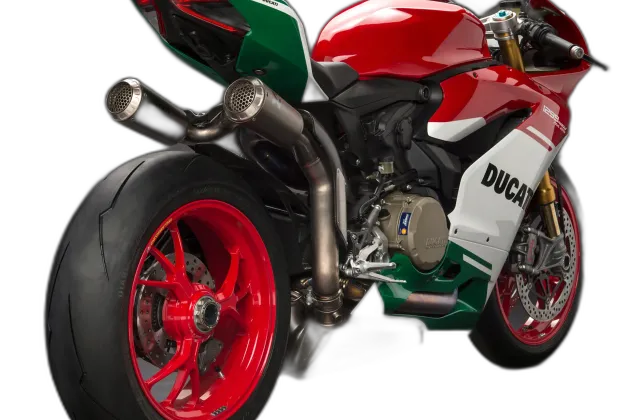
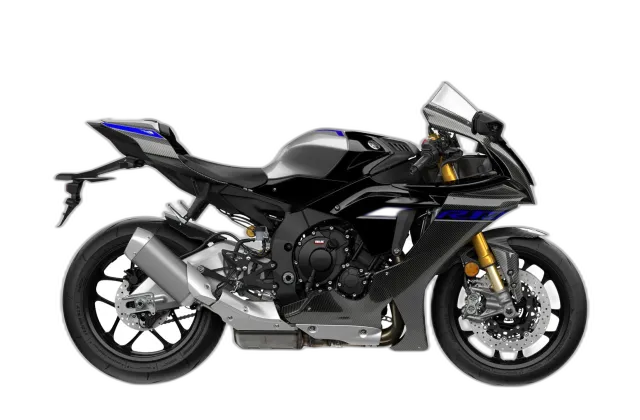
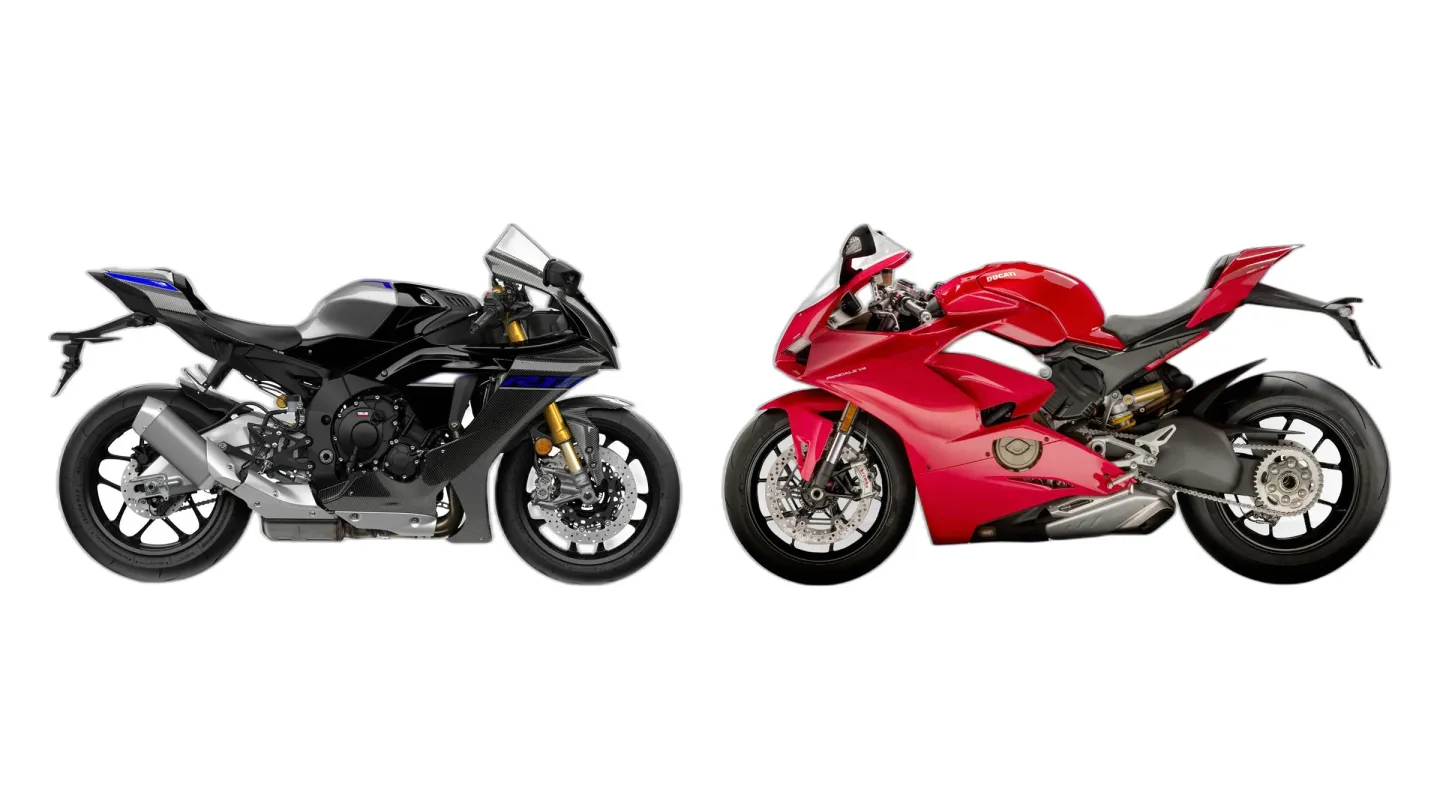
Yamaha YZF-R1M (RN49M) vs Ducati Panigale V4 (MY2018)
Yamaha YZF-R1M vs Ducati Panigale V4: one garage spot. Here's what should decide it.
You'll find the Yamaha YZF-R1M won't turn in until you hang off and load the front, and then it reads each tire back to you. The Ducati Panigale V4's counter-rotating crank fights less of that gyroscopic pull at the bars. Its nose drops into the turn sooner.
So which one do you buy?
The YZF-R1M has the edge if…
Racetrack use
Nose ahead: YZF-R1M
Track days lean slightly toward the YZF-R1M. Count it as a small bonus.
Sporty riding on twisty roads
By a nose: YZF-R1M
The YZF-R1M nudges ahead once the pavement starts to wiggle. Don't expect a night-and-day difference.
Which one's the smarter buy
Money won't decide it
The lower sticker price on the Panigale V4 doesn't settle which one is the better buy. Neither is the clear better buy for the money.
What makes each one tick
YZF-R1M
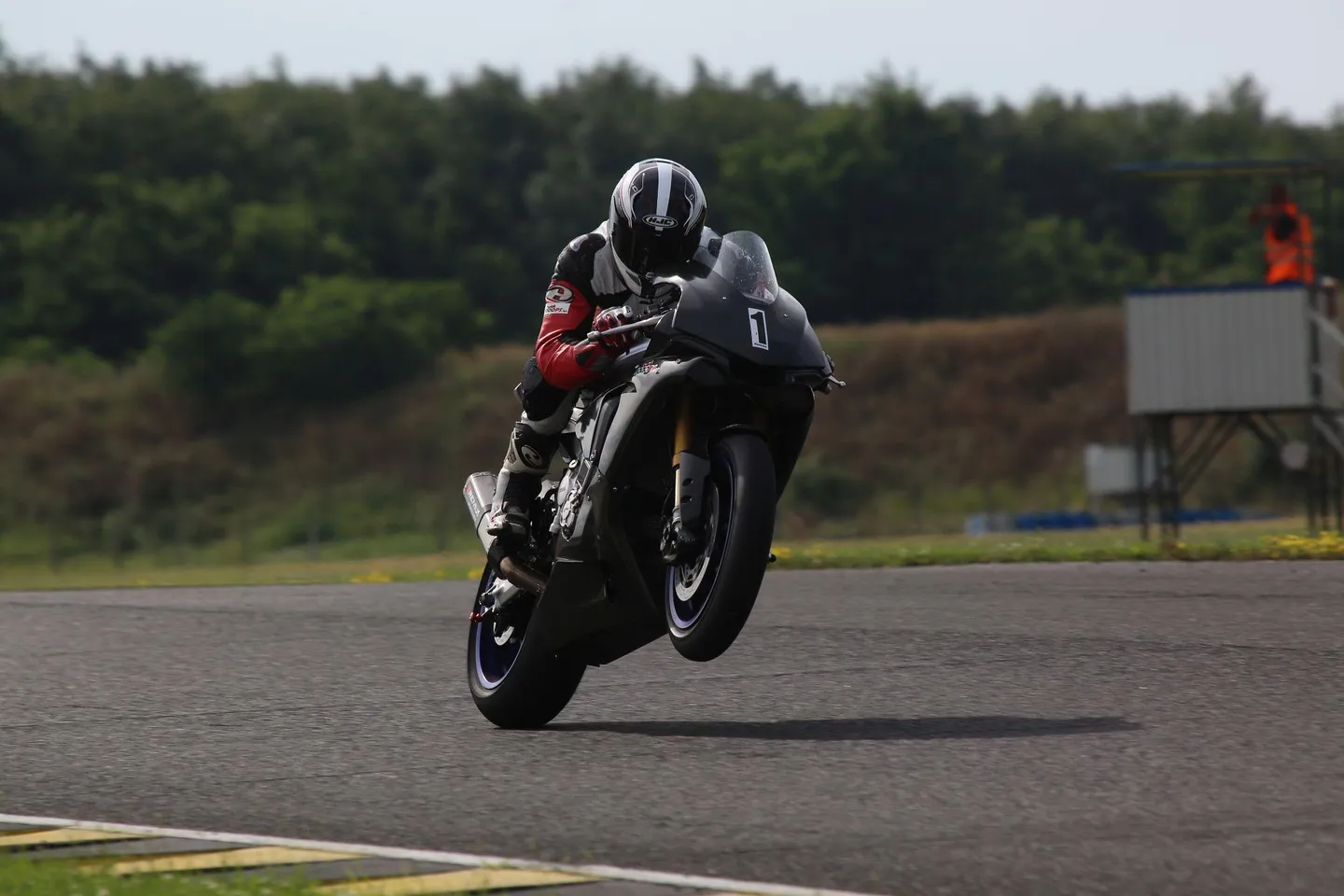
A few menu inputs change the YZF-R1M's whole personality on a racetrack, and you don't need a single wrench to get there. The throttle's got no dead zone. The inline-four doesn't hesitate the instant it's asked. Both contact patches keep talking through the chassis.
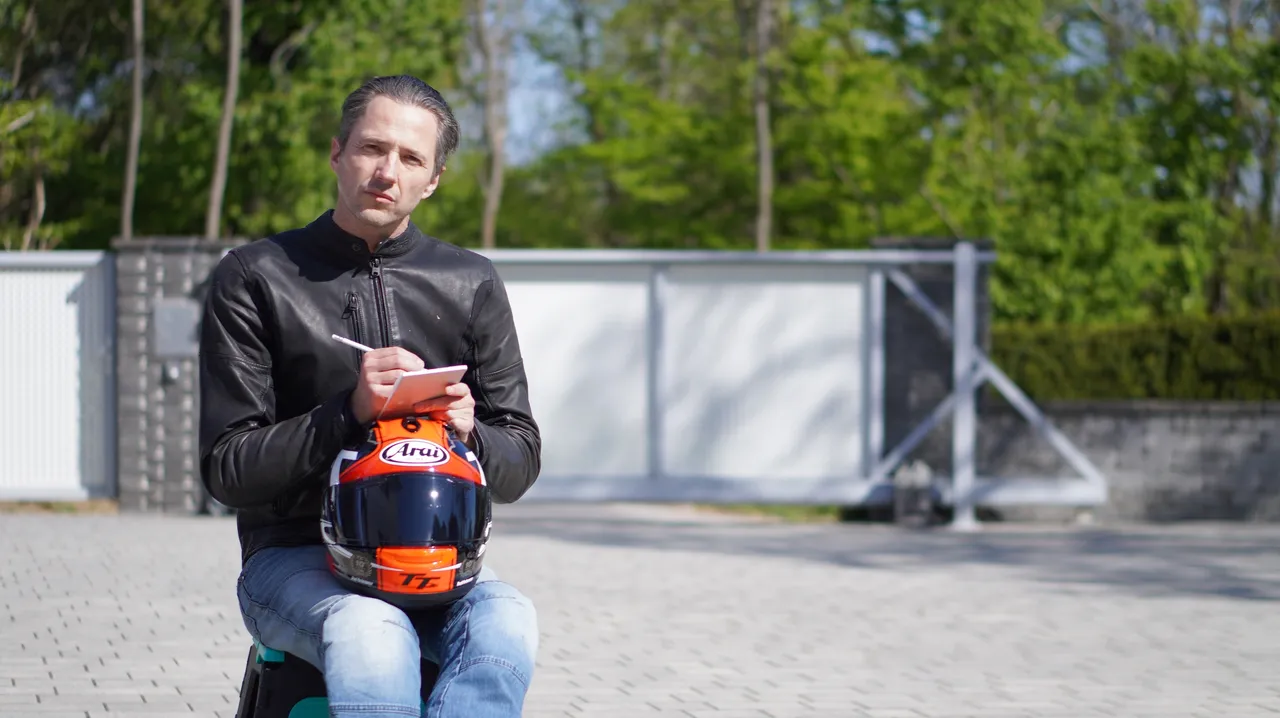
Nils rode the YZF-R1M in 2017 and 2018 (NastyNils Testride).
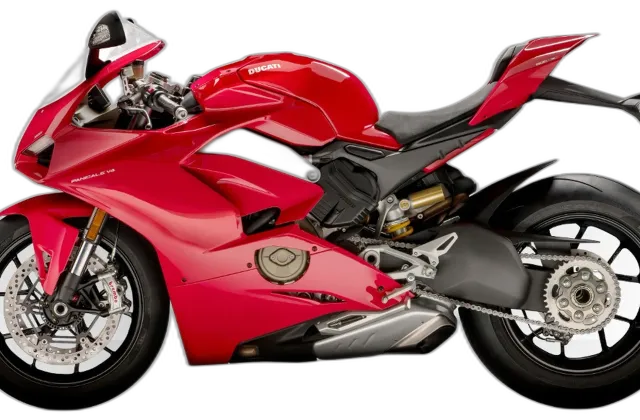
Panigale V4
There's no touring concession anywhere in the Panigale V4's geometry or seating position. The brake lever stops the bike through electronics that don't lose track of lean angle. Full power in Race mode wants deliberate inputs, yet the leading wheel stays closer to the asphalt as the drive builds. Its crankshaft spins against the wheels.
Nils rode the Panigale V4 in Spain in 2018 (NastyNils Testride).
The Voice of Experience
What actually separates them
- The Panigale V4 has the lower seat: 32.7 in (830 mm) vs 33.7 in (855 mm).
- The Panigale V4 makes more peak power: 214 hp (158 kW) vs 200 hp (147 kW).
- The Panigale V4 makes more peak torque: 91 lb-ft (124 Nm) vs 83 lb-ft (112 Nm).
Which one for the way you ride
Comfortable long-distance riding
Look elsewhere
Long-haul comfort is a weak spot for both. If you tour, shop with that in mind.
Count commuting and running costs as a draw. The deal on the table and the condition of the bike matter more here.
Who each one is built for
What's good, and what you'll live with
YZF-R1M
Strengths
- Direct throttle, exceptional traction feedback
- Menu-driven character change, no tools required
- Mild mode works from lap one, cold and wet
- Settled, familiar identity carries through the update
- Powerful and characterful crossplane engine
Trade-offs
- Demands hang-off and physical commitment
- Display is merely average
- Fast riders will find the actuators a bit slow
- Front discs aren't fully floating
- Midrange could use more punch on track
Panigale V4
What owners say
Strengths
- Cornering-aware electronics suite is comprehensive at this trim level
- Counter-rotating crankshaft aids agility and tames wheelies
Trade-offs
- Heat from rear cylinders at standstill / low speed
- Demanding throttle response at full power
- Track-only ergonomics — limited road comfort
Known problems to check before you buy
YZF-R1M
No confirmed faults on file yet. That's not the same as fault-free.
Panigale V4
- Rear-cylinder thermal load — leg/thigh heat at standstill The rear cylinder bank sits directly beneath the rider's seat, so at a standstill in traffic, at stop lights, or at idle, hot air vents through the seat area and outward onto the rider's inner thighs and calves. Riders report significant discomfort on hot days or in prolonged low-speed running, and in extreme cases skin blistering. Ducati addressed it with a rear-cylinder deactivation strategy that shuts the rear bank down when the bike is stationary and in neutral or with the clutch pulled once coolant temperature is high, delivered as a dealer software update early in the production run and fitted as standard for later model years. It reduces the heat load but does not eliminate it.
- Quickshifter "DQS-Err" after warm-up — early MY2018 batch Early MY2018 production units (predominantly February-built) are reported to lose quickshifter functionality after approximately 20 minutes of riding once the bike reaches operating temperature; functionality returns after cool-down. The DQS sensor sits near the exhaust, suggesting thermal failure mode. April-onward production units are reported to be largely unaffected. Resolved via dealer warranty replacement.
What they cost used
These prices compare a 7-year-old YZF-R1M with a 7-year-old Panigale V4.
- YZF-R1M
- about $20,400
- Panigale V4
- about $12,300
At seven years old, the Yamaha YZF-R1M sits around $20,400 while the Ducati Panigale V4 lands near $12,300. That's an $8,100 gap in the Panigale V4's favor. These are estimates from earlier US market records, not live listings.
What they share
- Cooling
- Liquid-cooled
- Gearbox
- 6-speed
- Final drive
- Chain
- Fork
- Upside-down (USD)
- Front tire
- 120/70-17
Where the spec sheets split
| YZF-R1M | Panigale V4 | |
|---|---|---|
| Seat height | 33.7 in (855 mm) | 32.7 in (830 mm) |
| Wet weight | 441 lb (200 kg) | 437 lb (198 kg) |
| YZF-R1M | Panigale V4 | |
|---|---|---|
| Displacement | 998 cc | 1103 cc |
| Engine | Inline-four | V4 |
| Power | 200 hp (147 kW) | 214 hp (158 kW) |
| Peak power at | 13,500 rpm | 13,000 rpm |
| Torque | 83 lb-ft (112 Nm) | 91 lb-ft (124 Nm) |
| Peak torque at | 11,500 rpm | 10,000 rpm |
| YZF-R1M | Panigale V4 | |
|---|---|---|
| Fuel economy | 35 mpg (US) / 6.8 L/100 km | 36 mpg (US) / 6.5 L/100 km |
| Fuel capacity | 4.5 US gal (17 L) | 4.2 US gal (16 L) |
| YZF-R1M | Panigale V4 | |
|---|---|---|
| Rear tire | 200/55-17 | 200/60-17 |
| Wheelbase | 55.3 in (1405 mm) | 57.8 in (1469 mm) |
What comes fitted, what costs extra
| YZF-R1M | Panigale V4 | |
|---|---|---|
| Quickshifter | Not offered | Standard |
Head to head, area by area
Both bikes on the same scale, one area at a time.