By NastyNils· ·
Motorcycle comparison · Supersport
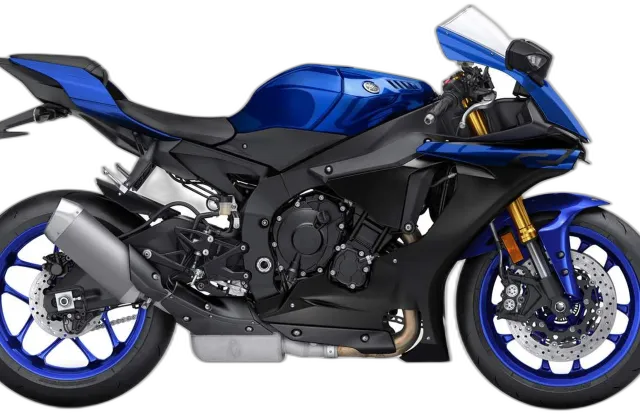
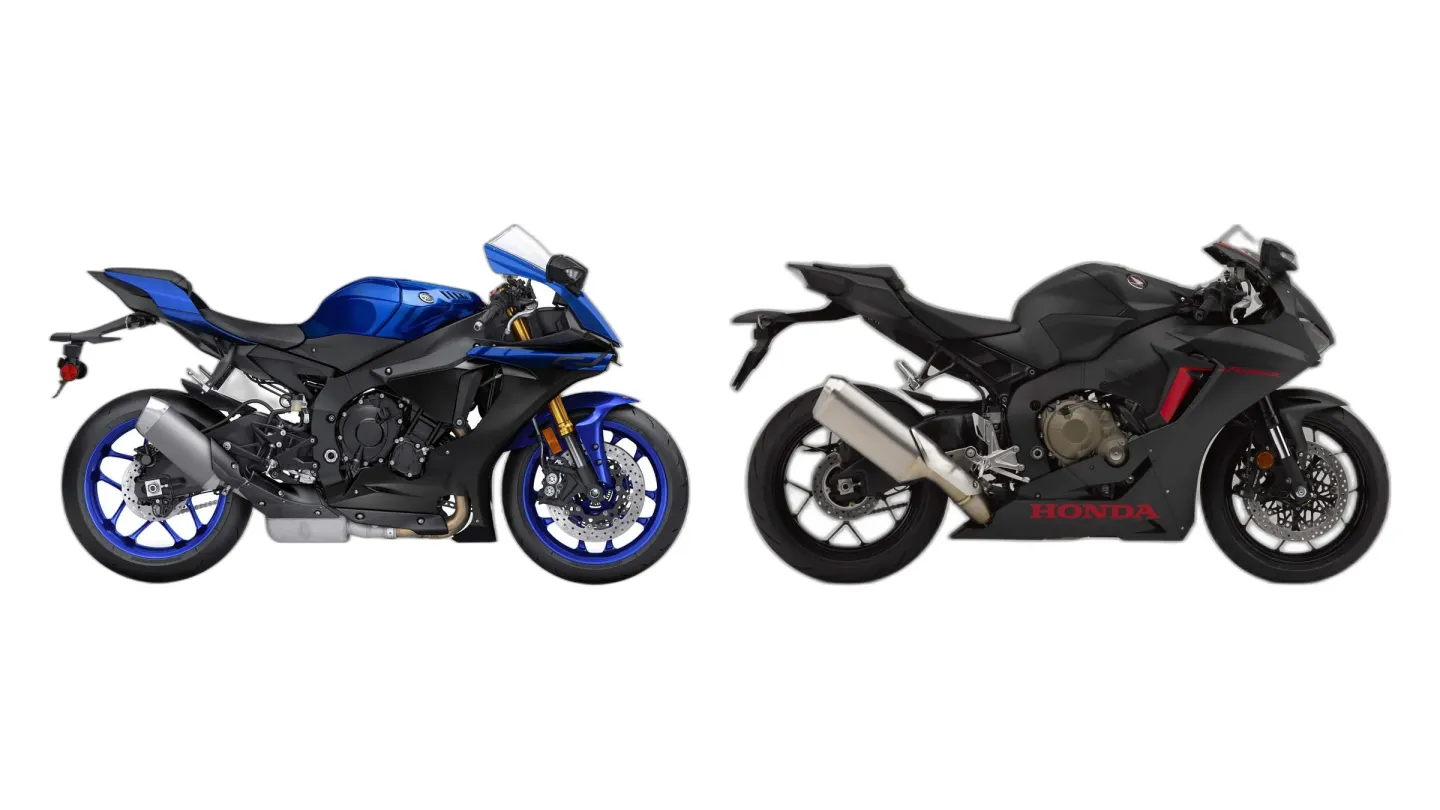
Yamaha YZF-R1 (RN49) vs Honda CBR1000RR Fireblade (SC 77)
Yamaha YZF-R1 vs Honda CBR1000RR Fireblade: one garage spot. Here's what should decide it.
You'll feel these two part ways at turn-in, where the Yamaha YZF-R1's front end bites and stays put as the lean keeps building. The Honda CBR1000RR Fireblade flicks in like a much smaller bike. It's on its line before you've settled in.
So which one do you buy?
The YZF-R1 has the edge if…
Racetrack use
Edges it: YZF-R1
For track days, the YZF-R1 comes out a touch ahead. It's down to more suspension adjustment. Your setup and tires matter just as much.
Sporty riding on twisty roads
Inches ahead: YZF-R1
On a twisty road, the YZF-R1 edges ahead. Thank harder acceleration for that. Not by enough to settle it alone.
Which one's the smarter buy
Money won't decide it
The CBR1000RR Fireblade costs less, but that doesn't make it the better buy. Neither is the clear winner on value alone. Your choice depends on what you want the bike to do.
What makes each one tick
YZF-R1
Out of the YZF-R1's crossplane four comes an uneven bark that doesn't sound or feel like any other inline-four. The throttle saves its hardest answer for high revs, where the engine piles on a huge rush. Deep in a corner, the chassis won't wander, and it keeps reporting what the tires are doing. The bark keeps calling for revs.
Nils rode the YZF-R1 in 2017, and in Switzerland in 2020 (NastyNils Testride).
CBR1000RR Fireblade
Every nuance of the pavement comes up through the CBR1000RR Fireblade's frame while the bike changes direction like a 600. The engine pulls hard from low revs, and there's no sudden hit waiting further up. At the brake lever, the bike sheds speed while the cornering ABS doesn't intrude. Each shift snicks home cleanly.
Nils rode the CBR1000RR Fireblade in Portugal and Qatar in 2017 (NastyNils Testride).
The Voice of Experience

What actually separates them
- The CBR1000RR Fireblade has the lower seat: 32.8 in (832 mm) vs 33.7 in (855 mm).
- The CBR1000RR Fireblade has the lower wet weight: 432 lb (196 kg) vs 441 lb (200 kg).
- The YZF-R1 has the larger fuel tank: 4.5 US gal (17 L) vs 4.2 US gal (16 L).
Which one for the way you ride
Comfortable long-distance riding
Both miss here
Long-haul comfort is a weak spot for both. If you tour, shop with that in mind.
They come out level on commuting and running costs. The better-kept used example is the smarter money.
Who each one is built for
What's good, and what you'll live with
YZF-R1
What owners say
Strengths
- Addictive, charismatic engine
- Outstanding cornering precision
Trade-offs
- Tall seat height
CBR1000RR Fireblade
What owners say
Strengths
- Light, agile handling
- Smooth and tractable inline-four engine
- Excellent electronics package
- Slick gearbox and optional quickshifter
Known problems to check before you buy
YZF-R1
- Brake lever sponginess, weak initial bite, accelerated rotor glazing under track use The Advics 4-piston front calipers are competent, but the OEM pads, master cylinder, and rotor thickness are consistently identified as the system's weakness. ABS-induced lever sponginess is widely reported. Under sustained track use, rotors glaze and bite drops further. On 2018–2019 models, the linked-brake system draws criticism: the rear brake feels loose under heavy braking and can produce a tyre-squealing fishtail on track. Common owner remedy: replacement pads (HH compounds), braided lines, ABS-bypass for track-only bikes.
- Wafer-thin OEM seat causes acute discomfort on rides over approx. 60 minutes The OEM seat is universally described as "wafer-thin" and "torture after a couple of hours." Combined with high pegs, narrow tank, and aggressive bar position, road comfort is sub-class for use cases beyond track days and short fast-road rides. This is a deliberate design choice (track-bias positioning) rather than a defect, but it is consistently raised as a primary practical limitation of the bike.
- Auto-blipper requires excessive lever pressure at low rpm, or quickshifter sensor fails outright The MY2018+ auto-blipper (clutchless downshift) requires noticeably more lever pressure at low rpm according to riders. The quickshifter sensor itself can short out without warning, leaving both upshift and downshift functions inoperative until replacement.
CBR1000RR Fireblade
- Fuel tank cap seal recall Recall 17V681000 NHTSA campaign 17V-681: the fuel cap seal may swell, creating emission leaks and risk of water ingress or fuel spillage. Honda issued a safety and emission recall to replace the fuel cap assembly on 2017 models.
- Timing chain tensioner rattle A small number of owners have reported premature timing chain tensioner failure causing a metallic rattle in the midrange.
What they cost used
These prices compare a 7-year-old YZF-R1 with a 7-year-old CBR1000RR Fireblade.
- YZF-R1
- about $14,500
- CBR1000RR Fireblade
- about $11,300
At seven years old, the Yamaha YZF-R1 sits around $14,500 while the Honda CBR1000RR Fireblade lands near $11,300. That's a $3,200 gap in the Fireblade's favor. These are US market estimates, not live listings.
What they share
- Engine
- Inline-four
- Cooling
- Liquid-cooled
- Gearbox
- 6-speed
- Final drive
- Chain
- Front tire
- 120/70-17
Where the spec sheets split
| YZF-R1 | CBR1000RR Fireblade | |
|---|---|---|
| Seat height | 33.7 in (855 mm) | 32.8 in (832 mm) |
| Wet weight | 441 lb (200 kg) | 432 lb (196 kg) |
| YZF-R1 | CBR1000RR Fireblade | |
|---|---|---|
| Displacement | 998 cc | 999 cc |
| Power | 200 hp (147 kW) | 192 hp (141 kW) |
| Torque | 83 lb-ft (112 Nm) | 84 lb-ft (114 Nm) |
| YZF-R1 | CBR1000RR Fireblade | |
|---|---|---|
| Fuel capacity | 4.5 US gal (17 L) | 4.2 US gal (16 L) |
| YZF-R1 | CBR1000RR Fireblade | |
|---|---|---|
| Rear tire | 190/55-17 | 190/50-17 |
What comes fitted, what costs extra
| YZF-R1 | CBR1000RR Fireblade | |
|---|---|---|
| Quickshifter | Standard | Option |
Head to head, area by area
Both bikes on the same scale, one area at a time.