By NastyNils·
Motorcycle comparison · Supersport
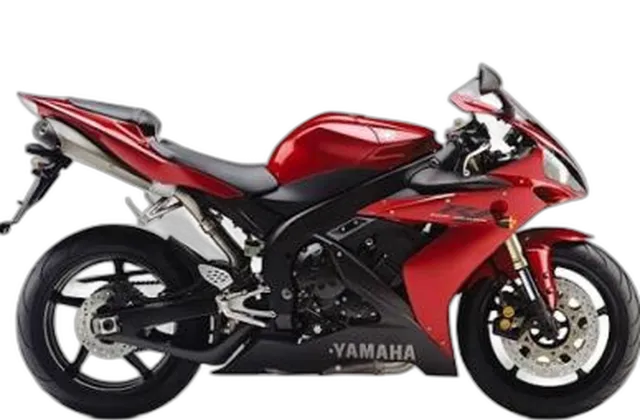
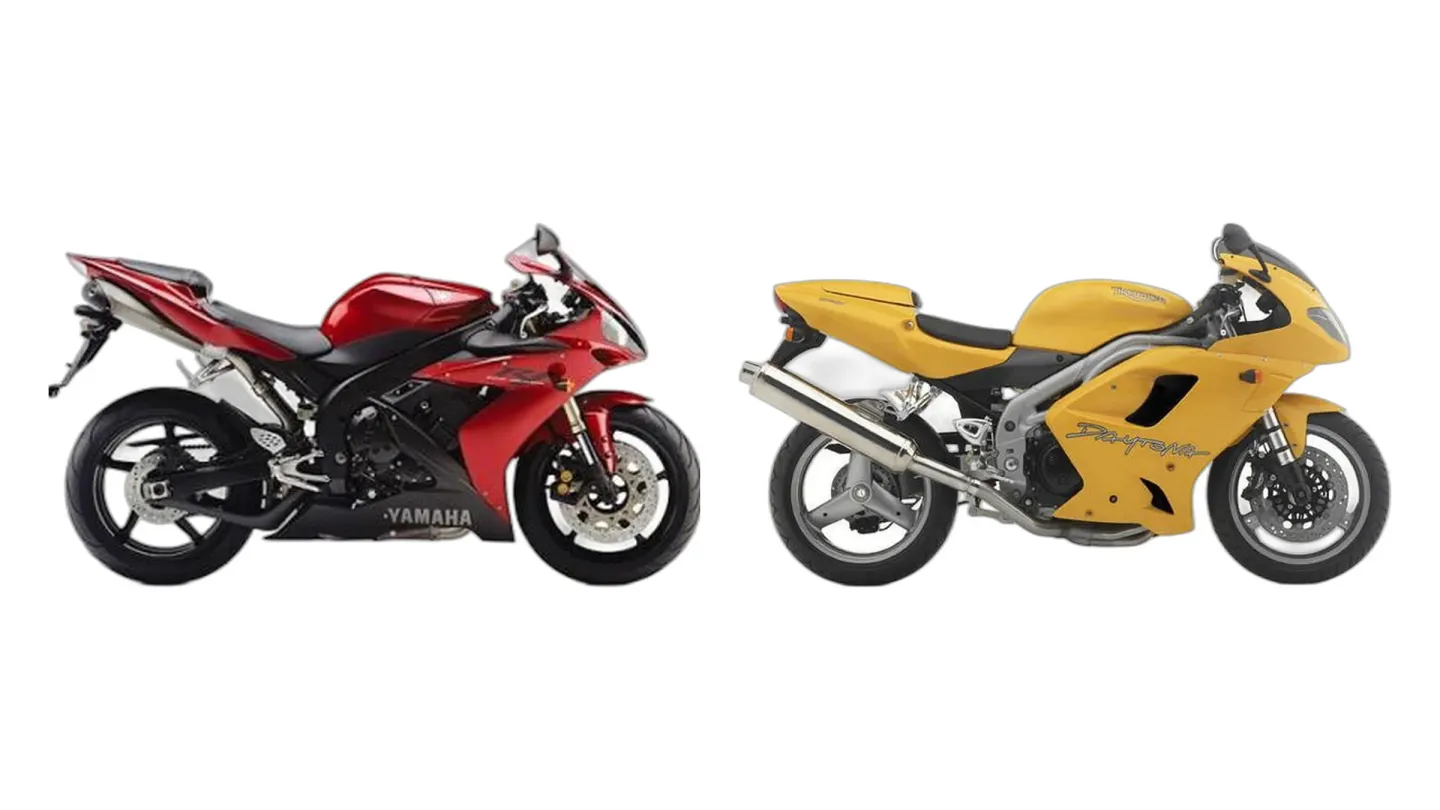
Yamaha YZF-R1 (RN12) vs Triumph Daytona 955i (MY2005)
Yamaha YZF-R1 vs Triumph Daytona 955i: which one to buy for the riding you do.
Out of a tight exit at full throttle, the Yamaha YZF-R1's rear hooks up and the front's already lifting. The Triumph Daytona 955i's triple rumbles and pulls from anywhere.
So which one do you buy?
Buy the YZF-R1 if…
Racetrack use
The pick: YZF-R1
If you'd rather be at the track than anywhere else, the YZF-R1 is the one. It's down to a sportier chassis and more suspension adjustment.
The YZF-R1 has the edge if…
Sporty riding on twisty roads
Edges it: YZF-R1
In the twisties, the YZF-R1 asks a bit less of you to go quickly. Credit better suspension and more feel through the bars. Call it a modest edge.
Keeping running costs low
Nose ahead: YZF-R1
Running costs lean slightly toward the YZF-R1. A well-kept example of either matters more.
Daily commuting & city riding
Inches ahead: YZF-R1
For the ride to work, the YZF-R1 noses ahead. The reason: simpler maintenance. Don't let that alone make the call.
What makes each one tick
YZF-R1
Before you've committed to a bend, the YZF-R1's front is itching to dive in, yet the chassis never turns nervous. The front brake is ferocious. A lazy body under hard braking earns a push-up off the bars, and it'll have your muscles screaming early. The motor still digs in a gear too high.
Nils rode the YZF-R1 in Andalusia in 2004 (NastyNils Testride).
Daytona 955i
An offbeat growl leaves the Daytona 955i's exhaust, and the torque spreads so wide the tach needle doesn't need to climb. The aluminum frame then holds the bike on its line.
The Voice of Experience

What actually separates them
- The Daytona 955i has the lower seat: 32.1 in (815 mm) vs 32.9 in (835 mm).
- The YZF-R1 has the lower wet weight: 425 lb (193 kg) vs 463 lb (210 kg).
- The YZF-R1 makes more peak power: 172 hp (127 kW) vs 147 hp (110 kW).
Which one for the way you ride
Comfortable long-distance riding
Wrong job for both
For all-day comfort, both fall short. Keep the rides short and you'll get on fine with either.
Who each one is built for
What's good, and what you'll live with
YZF-R1
Strengths
- Front Brake With Real Bite
- Corner Exit Grip That Sticks
- Razor Turn-In, Never Nervous
- Track Focus, Road Manners Intact
- Strong long-term reliability
Trade-offs
- Jitter Off Closed Throttle
- Punishes A Lazy Body
Daytona 955i
What owners say
Strengths
- Characterful inline-three engine
- Surprisingly comfortable for a sport bike
Trade-offs
- Electrical system reliability concerns
- Heavier and less agile than Japanese rivals
- Limited and expensive parts availability
Known problems to check before you buy
YZF-R1
- Throttle position sensor recall (stalling risk) Recall 06V371000 The RN12 R1 was recalled (NHTSA campaign 06V371000) for an improperly designed throttle position sensor that could cause an intermittently unstable idle and stalling at low speed or when stopped, risking a momentary rear-wheel slip if the clutch was abruptly re-engaged in a low gear. A separate 2005-only campaign (09V360000) covered the same sensor failure.
- Clutch wear from tall first gear The very high first gear forces the clutch to absorb excessive energy during take-off, leading to accelerated wear, slippage, and judder. Worse in heavy traffic.
- Stator failure Some bikes suffer from premature stator failure, resulting in charging system problems and eventual battery drain.
Daytona 955i
- Regulator/rectifier overheating and failure The OEM reg/rec is prone to overheating, leading to charging system failure, dead battery, and stalling. Upgraded aftermarket units are commonly fitted.
- Wiring loom and fuse box melting High resistance in the charging circuit generates excessive heat, melting wiring looms and fuse boxes. Proper maintenance and upgraded components are necessary.
- Starter clutch failure The starter clutch (sprag clutch) can fail, causing a loud grinding noise during starting and preventing the engine from firing. Replacement is expensive.
- Fuel tank swelling from ethanol fuel The plastic fuel tank can swell, distort, and cause paint blistering when left with ethanol-blended fuel. Draining the tank during storage is advised.
What they share
- Cooling
- Liquid-cooled
- Gearbox
- 6-speed
- Final drive
- Chain
- Front brake
- 320 mm
- Front tire
- 120/70-17
- Rear tire
- 190/50-17
Where the spec sheets split
| YZF-R1 | Daytona 955i | |
|---|---|---|
| Seat height | 32.9 in (835 mm) | 32.1 in (815 mm) |
| Wet weight | 425 lb (193 kg) | 463 lb (210 kg) |
| YZF-R1 | Daytona 955i | |
|---|---|---|
| Displacement | 998 cc | 955 cc |
| Engine | Inline-four | Inline-three |
| Power | 172 hp (127 kW) | 147 hp (110 kW) |
| Peak power at | 12,500 rpm | 10,700 rpm |
| Torque | 79 lb-ft (107 Nm) | 74 lb-ft (100 Nm) |
| Peak torque at | 10,500 rpm | 8,200 rpm |
| YZF-R1 | Daytona 955i | |
|---|---|---|
| Fuel capacity | 4.8 US gal (18 L) | 5.5 US gal (21 L) |
| YZF-R1 | Daytona 955i | |
|---|---|---|
| Fork | Upside-down (USD) | Telescopic |
Head to head, area by area
Both bikes on the same scale, one area at a time.