By NastyNils·
Motorcycle comparison · Supersport
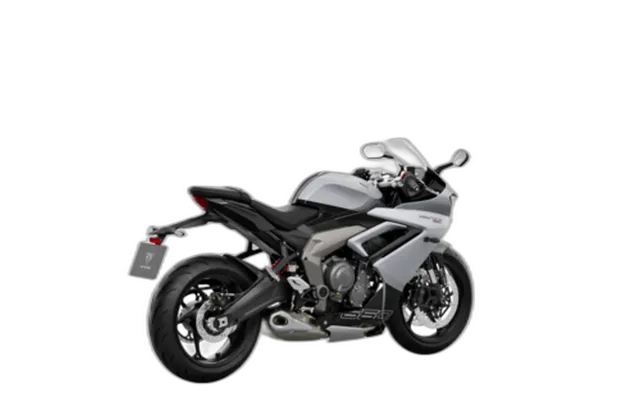
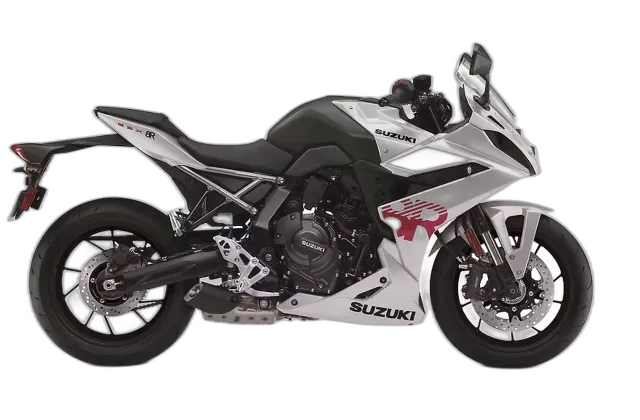
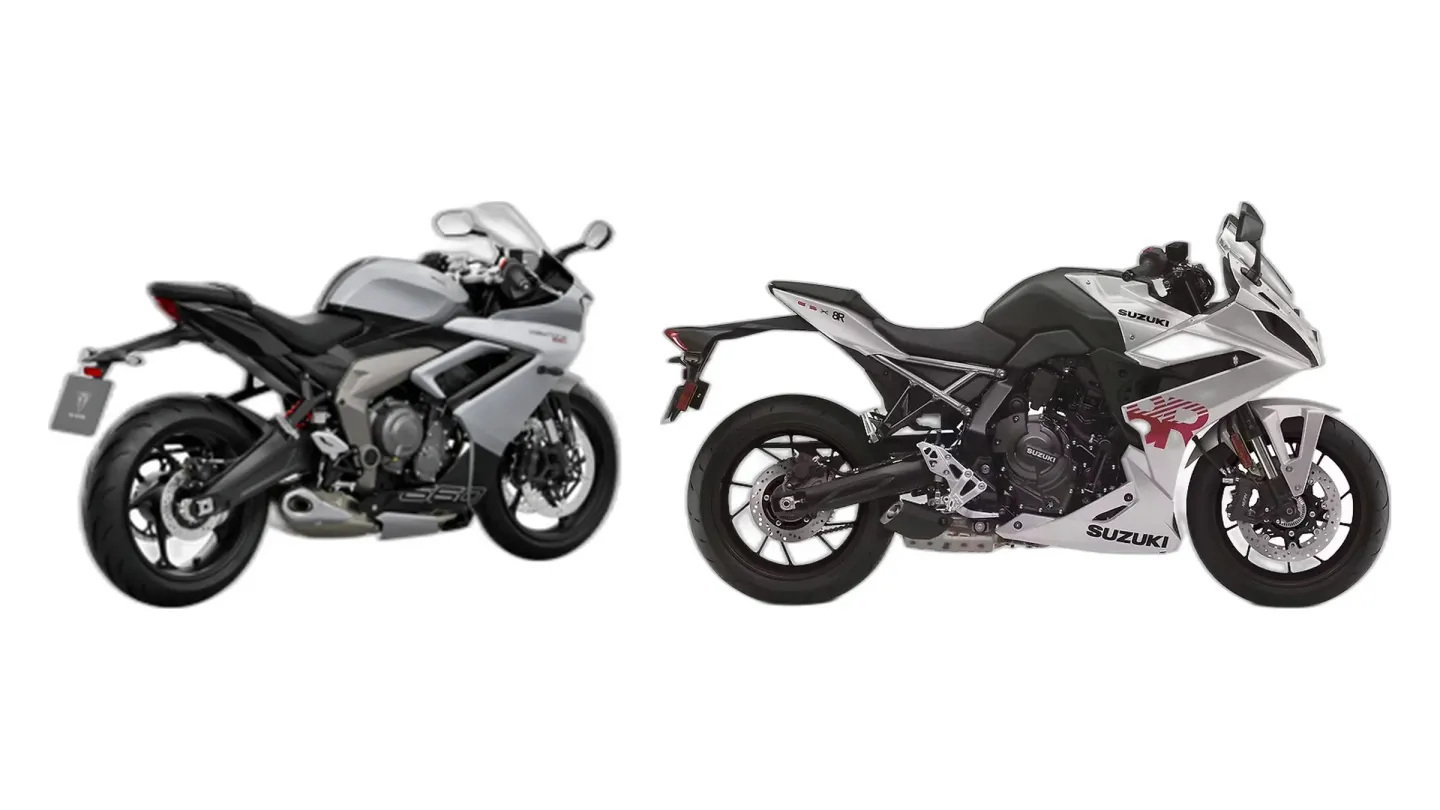
Triumph Daytona 660 (MY2024) vs Suzuki GSX-8R (MY2024)
Triumph Daytona 660 vs Suzuki GSX-8R: fast is a given. What sets them apart isn't.
Roll the throttle open on the Triumph Daytona 660 and its triple doesn't sign off early but howls all the way to the redline. The Suzuki GSX-8R's thrust lands low, with a lumpy thump.
So which one do you buy?
The GSX-8R has the edge if…
Keeping running costs low
Narrow edge: GSX-8R
On running costs, the GSX-8R edges it. Not by enough to bank on.
Daily commuting & city riding
Inches ahead: GSX-8R
The GSX-8R makes slightly more sense as a commuter. The difference is simpler maintenance. Don't read much into a gap this small.
Which one's the smarter buy
Money won't decide it
The Daytona 660 costs less, but that gap doesn't make it the clear better buy. Neither bike wins on value alone.
What makes each one tick
Daytona 660
The Daytona 660's engine pulls hard from low revs and keeps spinning freely higher up. A sharp bump at a brisk pace pushes the soft fork deep into its travel as the front end goes vague. The damping can't keep up. The plush seat's still soft at the last fuel stop.
GSX-8R
The GSX-8R's twin digs in cleanly and steadily from low revs. It's out of breath up top, and short-shifting keeps the pull coming. Feel through the front brake lever isn't easy to read as the bike slows. High clip-ons keep the wrists light.
The Voice of Experience

What actually separates them
- The Daytona 660 makes more peak power: 94 hp (70 kW) vs 82 hp (60 kW).
- The GSX-8R makes more peak torque: 58 lb-ft (78 Nm) vs 51 lb-ft (69 Nm).
- The GSX-8R has the larger engine: 776 cc vs 660 cc.
Which one for the way you ride
Comfortable long-distance riding
Neither one fits
Neither of these is a mile-muncher. If big days are the plan, keep looking.
Look at track days and twisty roads and you'll find two bikes doing the same job equally well. Fit is what breaks the tie.
Who each one is built for
What's good, and what you'll live with
Daytona 660
What owners say
Strengths
- Characterful triple-cylinder engine
- Comfortable and all-day friendly ergonomics
- Excellent value for money
Trade-offs
- Soft, underdamped suspension
GSX-8R
What owners say
Strengths
- Strong low-mid torque from the 270° parallel-twin
- Easy-going ergonomics for a fully-faired sport bike
- 5-inch TFT display quality
Trade-offs
- Fork is fully non-adjustable, rear shock preload-only
- Limited ground clearance under sport riding
- OEM Dunlop Roadsport 2 tires criticized for grip and rapid rear wear
- Soft top-end engine response
- Wind buffeting at sustained highway speed
Known problems to check before you buy
Daytona 660
No confirmed faults on file yet. That's not the same as fault-free.
GSX-8R
- Front fork fully non-adjustable; rear shock adjustable for preload only The Showa SFF-BP fork has no compression, rebound, or preload adjustment from the factory. The link-mounted Showa rear shock is preload-adjustable only. Heavier riders, two-up riders, and trackday users describe this as a meaningful limitation. Aftermarket fork-internal kits (e.g., Andreani, Matris) and full shock replacements are common upgrade paths.
What they cost used
Both bikes priced used at the same age: 1 year old.
- Daytona 660
- $7,500
- GSX-8R
- $9,000
At one year old, the Triumph Daytona 660 sits around $7,500 while the Suzuki GSX-8R runs about $9,000. That's a $1,500 gap in the Daytona's favor. They're pulled from earlier market records, not live listings.
What they share
- Seat height
- 31.9 in (810 mm)
- Cooling
- Liquid-cooled
- Fuel capacity
- 3.7 US gal (14 L)
- Gearbox
- 6-speed
- Front tire
- 120/70-17
- Rear tire
- 180/55-17
Where the spec sheets split
| Daytona 660 | GSX-8R | |
|---|---|---|
| Wet weight | 443 lb (201 kg) | 452 lb (205 kg) |
| Daytona 660 | GSX-8R | |
|---|---|---|
| Displacement | 660 cc | 776 cc |
| Engine | Inline-three | Parallel twin |
| Power | 94 hp (70 kW) | 82 hp (60 kW) |
| Peak power at | 11,250 rpm | 8,500 rpm |
| Torque | 51 lb-ft (69 Nm) | 58 lb-ft (78 Nm) |
| Peak torque at | 8,250 rpm | 6,800 rpm |
| Daytona 660 | GSX-8R | |
|---|---|---|
| Fuel economy | 48 mpg (US) / 4.9 L/100 km | 56 mpg (US) / 4.2 L/100 km |
| Daytona 660 | GSX-8R | |
|---|---|---|
| Wheelbase | 56.1 in (1425 mm) | 57.7 in (1465 mm) |
What comes fitted, what costs extra
| Daytona 660 | GSX-8R | |
|---|---|---|
| Manually Adjustable Front Suspension | Not offered | Standard |
| Quickshifter | Option | Standard |
| Smartphone Connectivity | Option | Standard |
Head to head, area by area
Both bikes on the same scale, one area at a time.