By NastyNils·
Motorcycle comparison · Supersport
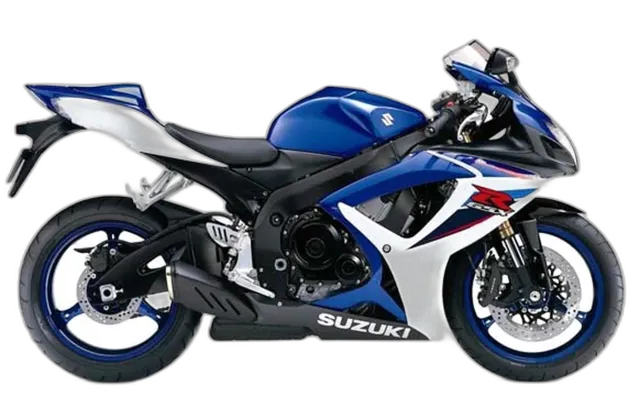
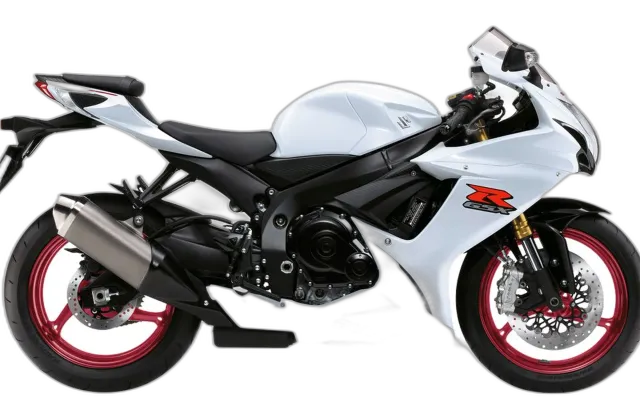
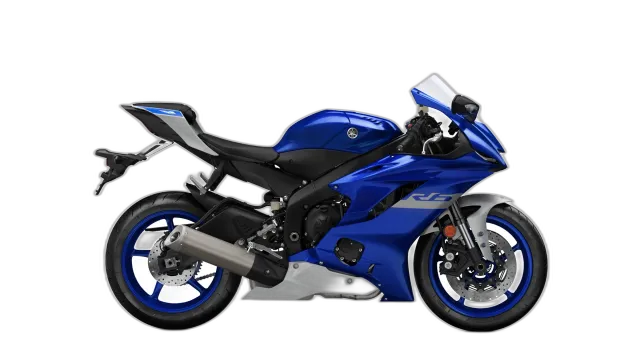
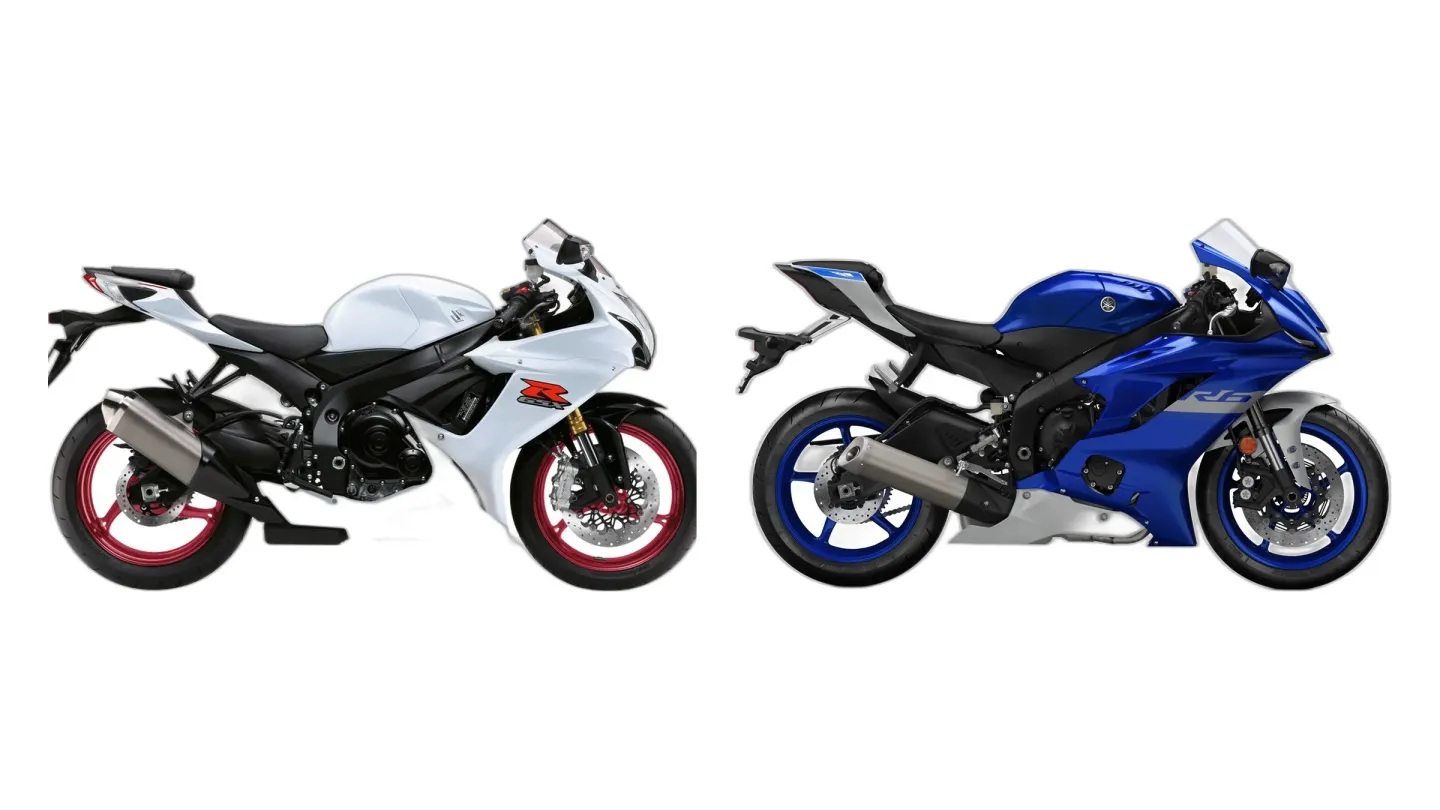
Suzuki GSX-R 750 (L1) vs Yamaha YZF-R6 (RJ 11)
Suzuki GSX-R 750 vs Yamaha YZF-R6: one garage spot. Here's what should decide it.
Tip the Suzuki GSX-R 750 into a corner and it doesn't flinch, every downshift snapping home clean. The Yamaha YZF-R6's slipper clutch holds the rear quiet through those same downshifts, and you're free to commit to the line without minding the back end. Its stiffer front end reports every bit of grip.
So which one do you buy?
The GSX-R 750 has the edge if…
Racetrack use
Slight edge: GSX-R 750
For track days, the GSX-R 750 comes out a touch ahead. Your setup and tires matter just as much.
Sporty riding on twisty roads
Small edge: GSX-R 750
The GSX-R 750 nudges ahead once the pavement starts to wiggle. Thank harder acceleration for that. Don't expect a night-and-day difference.
Keeping running costs low
By a nose: GSX-R 750
The GSX-R 750 should be a little cheaper to keep on the road. It's a small gap.
Daily commuting & city riding
Narrow edge: GSX-R 750
Your daily ride leans slightly toward the GSX-R 750. Fit and price can easily outweigh that.
What makes each one tick
GSX-R 750
Eager but never angry, the GSX-R 750's four answers the throttle crisply down low and pulls with real intent past the midrange. Up top, the intake howls. Around Barber Motorsports Park, the slightly upright reach to the bars favors smooth, patient inputs, and there's energy left for the final laps. Lap after lap, the chassis doesn't put a foot wrong.
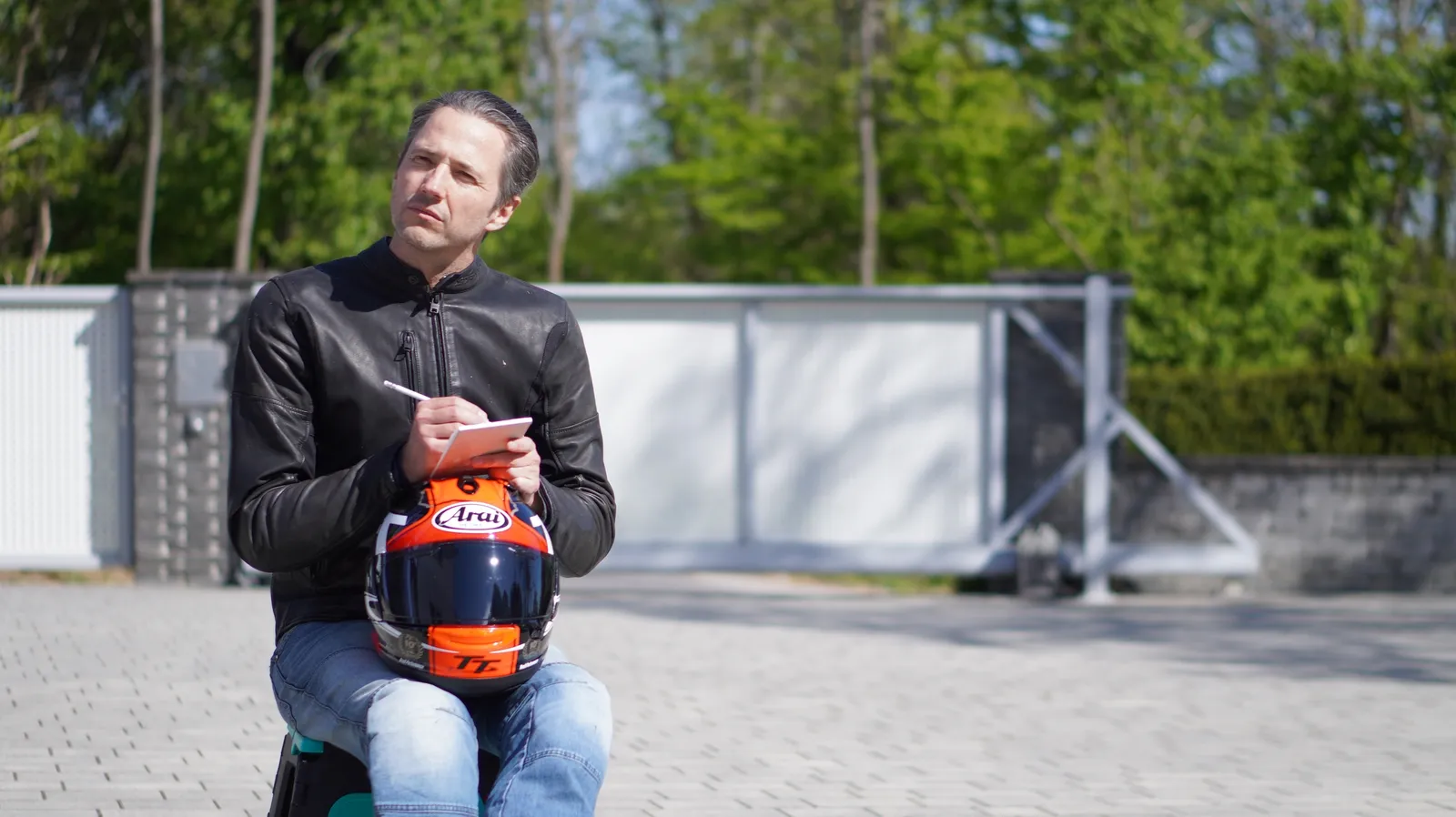
Nils rode the GSX-R 750 in the Eifel in 2015, and in Andalusia in 2025 (NastyNils Testride).
YZF-R6
The YZF-R6's pegs, bars and suspension tune all aim at a lap timer, and the street's just the way to the paddock. Yamaha mentioned it handles daily traffic, and technically it does. Even with the throttle snapped wide in the bottom gear, the frame's tuned flex keeps the bars calm without a steering damper. The brake lever's equally happy hauling the bike down hard or easing it gently toward the apex. Down on the clip-ons, you're racing.
Nils rode the YZF-R6 in 2006, and in Hungary in 2007 (NastyNils Testride).
The Voice of Experience
What actually separates them
- The GSX-R 750 has the lower seat: 31.9 in (810 mm) vs 33.5 in (850 mm).
- The YZF-R6 has the lower wet weight: 401 lb (182 kg) vs 419 lb (190 kg).
- The GSX-R 750 makes more peak power: 150 hp (110 kW) vs 124 hp (91 kW).
Which one for the way you ride
Comfortable long-distance riding
Neither is a natural fit
Hours in the saddle won't flatter either of these. They're happier on shorter runs.
Who each one is built for
What's good, and what you'll live with
GSX-R 750
Strengths
- Eager, never angry
- Commits on a light push
- Gearbox that just works
- Built for long, hard laps
- Bristling, free-revving engine character
Trade-offs
- Geared a notch too tall
- Stock brakes fade when hot
- Minimal electronic aids
- Firm suspension for road riding
YZF-R6
Strengths
- Planted without a damper
- Sharp front-end feedback
- Standard slipper clutch
- Brakes dialed both ways
- Makes you feel the part
Trade-offs
- No steering damper stock
- Cramped for taller riders
- Street use in name only
- Weak low‑end torque
- High oil consumption on track
Known problems to check before you buy
GSX-R 750
- Mirror caps falling off The plastic mirror caps are held by fragile tabs that can break, causing the cap to detach while riding. Suzuki later supplied caps with longer tabs to fix the issue.
YZF-R6
- Rod bearing / oil starvation failure Several reports from owners and racers indicate that the 2006‑2007 R6 can suffer from oil starvation at idle and low oil pressure, leading to spun rod bearings and catastrophic engine failure. This seems more prevalent on bikes used hard on track or with long straight‑away sections. Upgraded oil pumps and careful oil level checks are recommended.
What they share
- Engine
- Inline-four
- Cooling
- Liquid-cooled
- Gearbox
- 6-speed
- Final drive
- Chain
- Front brake
- 310 mm
- Front tire
- 120/70-17
- Rear tire
- 180/55-17
Where the spec sheets split
| GSX-R 750 | YZF-R6 | |
|---|---|---|
| Seat height | 31.9 in (810 mm) | 33.5 in (850 mm) |
| Wet weight | 419 lb (190 kg) | 401 lb (182 kg) |
| GSX-R 750 | YZF-R6 | |
|---|---|---|
| Displacement | 749 cc | 599 cc |
| Power | 150 hp (110 kW) | 124 hp (91 kW) |
| Torque | 64 lb-ft (87 Nm) | 48 lb-ft (66 Nm) |
| Top speed | 170 mph (274 km/h) | 165 mph (266 km/h) |
| GSX-R 750 | YZF-R6 | |
|---|---|---|
| Fuel economy | 44 mpg (US) / 5.35 L/100 km | 32 mpg (US) / 7.4 L/100 km |
| Fuel capacity | 4.5 US gal (17 L) | 4.6 US gal (17.5 L) |
What comes fitted, what costs extra
| GSX-R 750 | YZF-R6 | |
|---|---|---|
| Ride Modes | Standard | Not offered |
Head to head, area by area
Both bikes on the same scale, one area at a time.