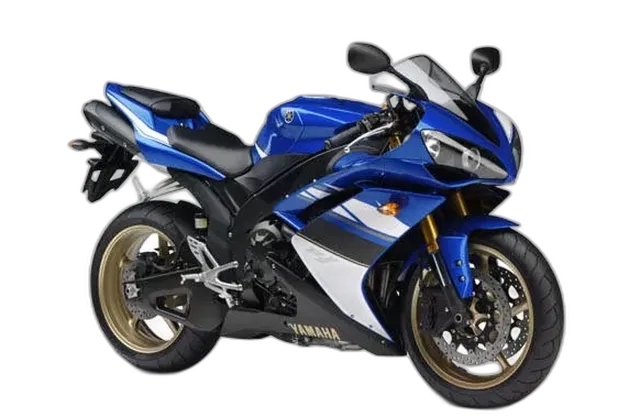
By NastyNils·
Motorcycle comparison · Supersport
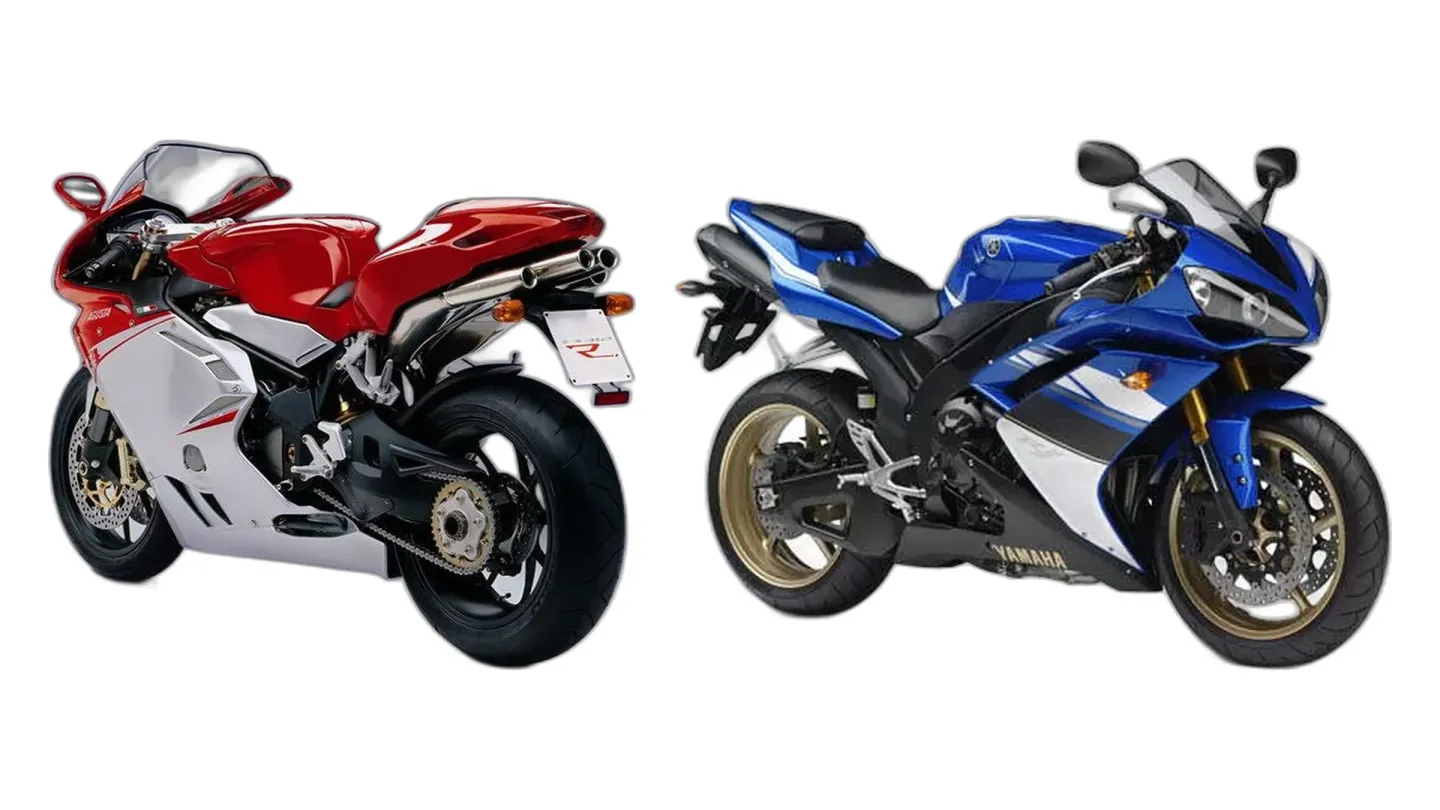
MV Agusta F4 1000 R (MY2007) vs Yamaha YZF-R1 (RN19)
MV Agusta F4 1000 R vs Yamaha YZF-R1: one garage spot. Here's what should decide it.
You'll feel every edge of a broken patch of pavement through the MV Agusta F4 1000 R, yet it's still sitting planted on its line. The Yamaha YZF-R1 sends that same hit up to your hands as clear feedback. Its front stays light enough to flick straight on.
So which one do you buy?
The YZF-R1 has the edge if…
Racetrack use
Narrow edge: YZF-R1
For a day at the track, the YZF-R1 makes slightly more sense. What tips it: more suspension adjustment.
Keeping running costs low
Small edge: YZF-R1
The YZF-R1 comes out a little ahead on upkeep. Only a little.
Daily commuting & city riding
A touch ahead: YZF-R1
Your daily ride leans slightly toward the YZF-R1. Thank easier maneuvering in tight spots and simpler maintenance for that. Fit and price can easily outweigh that.
What makes each one tick
F4 1000 R
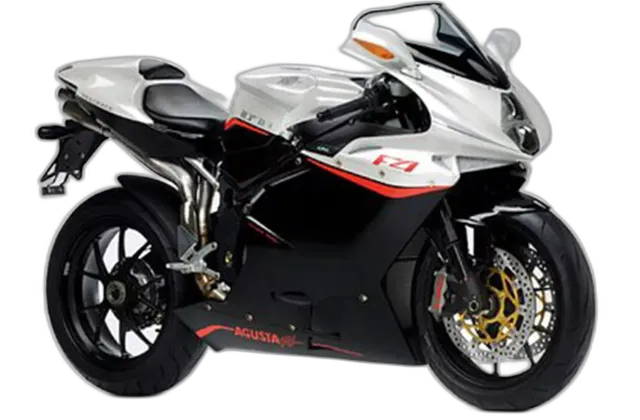
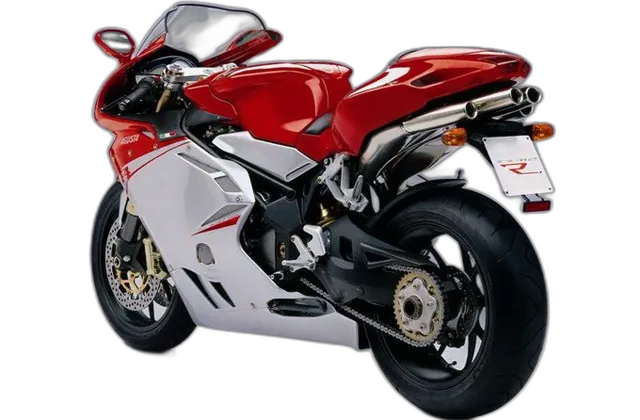
Past the middle of the tach, the F4 1000 R's radial-valve four keeps pulling harder with an exhaust note that's all its own. Down low, the throttle snaps. At corner entry, the fork sets the bike into the turn precisely, and it doesn't drift off the arc you've picked. The trellis frame talks all the way to the apex.
YZF-R1
Low in the revs, the YZF-R1's four doesn't have much grunt, but it erupts into a ferocious rush once the tach climbs high. The tach has to stay high. The brake lever works radial-mount calipers that bite the discs and haul all that speed back down. Up top, the engine sings and won't let up.
Nils rode the YZF-R1 in Qatar in 2006 (NastyNils Testride).
The Voice of Experience

What actually separates them
- The F4 1000 R has the lower seat: 31.9 in (810 mm) vs 32.9 in (835 mm).
- The F4 1000 R has the larger fuel tank: 5.5 US gal (21 L) vs 4.8 US gal (18 L).
- Slipper Clutch: standard on the YZF-R1, not offered on the F4 1000 R.
Which one for the way you ride
Comfortable long-distance riding
Wrong job for both
Both of these get tiring on a long day. A proper tourer will treat you better on big miles.
Call it even on twisty roads. Choose on fit, price and the one that makes you grin.
Who each one is built for
What's good, and what you'll live with
F4 1000 R
What owners say
Strengths
- Breathtaking Tamburini styling
- Exhilarating inline-four engine
- Superb handling and chassis feedback
Trade-offs
- Abrupt low-RPM throttle response
YZF-R1
What owners say
Strengths
- Explosive top-end power
- Sharp, communicative handling
Trade-offs
- Power delivery too focused on high rpm
Known problems to check before you buy
F4 1000 R
- Jerky low-speed fuelling Throttle response is abrupt and inconsistent up to 4000 rpm, causing snatchy on/off transitions. Can be mitigated with a custom ECU remap.
- Overheating risk Engine temperature rises quickly when stationary or in slow traffic; the stock plastic fan blades can fail, increasing risk.
YZF-R1
No confirmed faults on file yet. That's not the same as fault-free.
What they share
- Displacement
- 998 cc
- Engine
- Inline-four
- Cooling
- Liquid-cooled
- Peak torque at
- 10,000 rpm
- Gearbox
- 6-speed
- Final drive
- Chain
- Fork
- Upside-down (USD)
- Front tire
- 120/70-17
Where the spec sheets split
| F4 1000 R | YZF-R1 | |
|---|---|---|
| Seat height | 31.9 in (810 mm) | 32.9 in (835 mm) |
| F4 1000 R | YZF-R1 | |
|---|---|---|
| Power | 174 hp (128 kW) | 180 hp (132 kW) |
| Peak power at | 11,900 rpm | 12,500 rpm |
| Torque | 82 lb-ft (111 Nm) | 83 lb-ft (113 Nm) |
| F4 1000 R | YZF-R1 | |
|---|---|---|
| Fuel economy | 33 mpg (US) / 7.1 L/100 km | 32 mpg (US) / 7.24 L/100 km |
| Fuel capacity | 5.5 US gal (21 L) | 4.8 US gal (18 L) |
| F4 1000 R | YZF-R1 | |
|---|---|---|
| Front brake | 320 mm | 310 mm |
| Rear tire | 190/55-17 | 190/50-17 |
What comes fitted, what costs extra
| F4 1000 R | YZF-R1 | |
|---|---|---|
| Slipper Clutch | Not offered | Standard |
Head to head, area by area
Both bikes on the same scale, one area at a time.