By NastyNils·
Motorcycle comparison · Supersport
Kawasaki Ninja 250R (EX250J-MY2008) vs Ninja 250 SL (NINJA250SL-MY2015)
Kawasaki Ninja 250R vs Ninja 250 SL: which one to buy for the riding you do.
You'll keep the Kawasaki Ninja 250R's twin spinning, and it's happiest howling near redline. The Kawasaki Ninja 250 SL's single revs without a buzz.
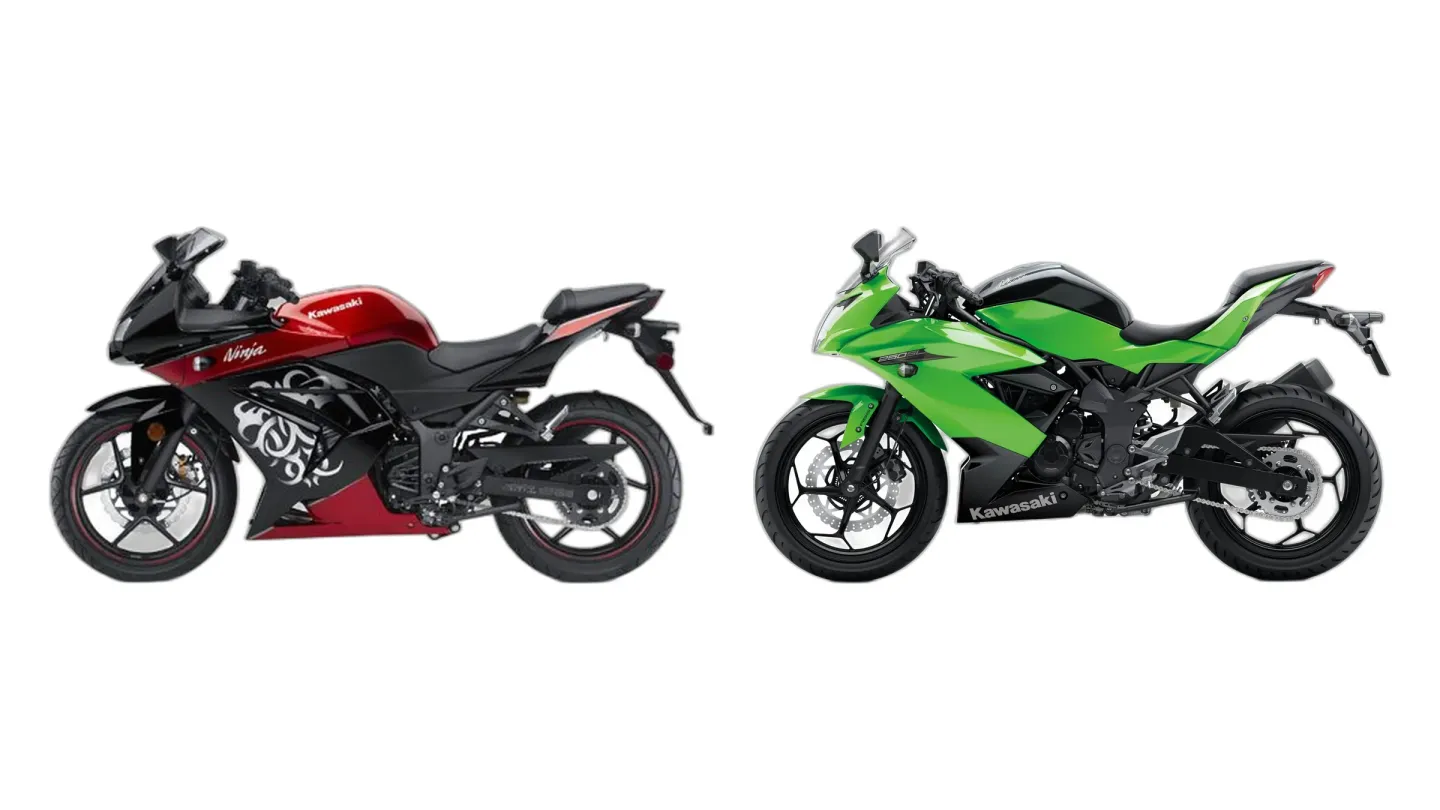
So which one do you buy?
The Ninja 250R has the edge if…
Daily commuting & city riding
Narrow edge: Ninja 250R
Your daily ride leans slightly toward the Ninja 250R. Fit and price can easily outweigh that.
The Ninja 250 SL has the edge if…
Racetrack use
Slight edge: Ninja 250 SL
For track days, the Ninja 250 SL comes out a touch ahead. Thank more feel through the bars and a sportier chassis for that. Your setup and tires matter just as much.
Sporty riding on twisty roads
Edges it: Ninja 250 SL
The Ninja 250 SL nudges ahead once the pavement starts to wiggle. The reason: lighter steering. Don't expect a night-and-day difference.
What makes each one tick
Ninja 250R
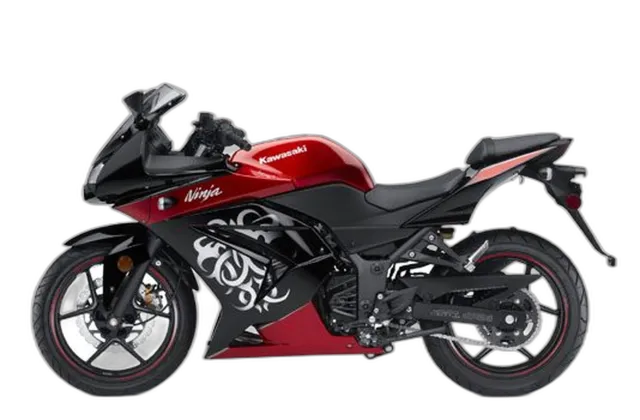
Wide bars and a low 30.5 in (775 mm) seat put the Ninja 250R's rider upright, and the bike doesn't ask for a sportbike crouch on the commute. Low down, there's little pull. Up top, the exhaust shrieks without shaking the pegs.
Ninja 250 SL
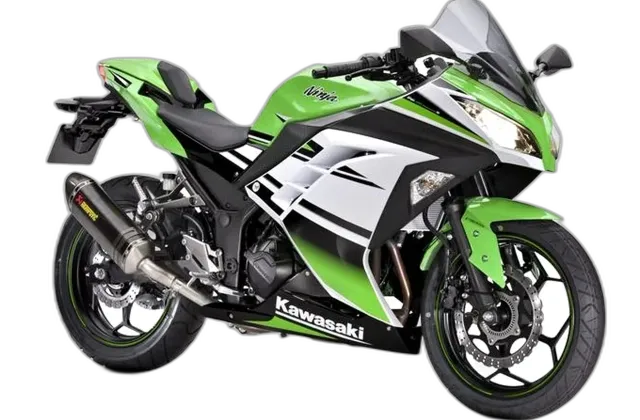
Narrow through the frame and quick to swing its bars to full lock, the Ninja 250 SL slips through stalled city traffic. Its gearbox clicks home every time, and there's a balancer shaft keeping the grips still. At the brake lever, the 290 mm front brake's only got 335 lb (152 kg) to haul down. Twisty roads wake the willing engine.
The Voice of Experience

What actually separates them
- The Ninja 250 SL has the lower wet weight: 335 lb (152 kg) vs 375 lb (170 kg).
- The Ninja 250R makes more peak power: 33 hp (24 kW) vs 28 hp (21 kW).
- The Ninja 250R has the larger fuel tank: 4.8 US gal (18 L) vs 2.9 US gal (11 L).
Which one for the way you ride
Comfortable long-distance riding
Both fall short
Long days aren't what these two do best. Plan shorter legs and plenty of stops.
Look at running costs and you'll find two bikes doing the same job equally well. Fit is what breaks the tie.
Who each one is built for
What's good, and what you'll live with
Ninja 250R
What owners say
Strengths
- Excellent beginner-friendly ergonomics
- Rev-happy, smooth twin engine
- Outstanding fuel economy
Trade-offs
- Needs high revs to make power
- Budget suspension limits sport potential
- Expensive to repair bodywork
- Unstable at highway speeds in wind
Ninja 250 SL
What owners say
Strengths
- Slick gearbox and refined engine
Known problems to check before you buy
Ninja 250R
- Front brake hose damage (2008 recall) Recall 08V115000 The front brake hose can deflect forward during suspension travel and contact the front fork outer tube; over time this can damage the hose, leak brake fluid and cut front brake performance. Kawasaki replaced the front brake hose bracket under recall (NHTSA 08V115000).
- Engine crankcase vent blockage / oil leak (2008 recall) Recall 08V158000 A blocked crankcase vent hole in the airbox can build pressure inside the engine, failing the cylinder head cover gasket and leaking oil that could reach the rear tire. Kawasaki inspected and repaired the airbox under recall (NHTSA 08V158000).
- Tail light bulb premature failure (2008 recall) Recall 08V052000 On 532 MY2008 units the tail light bulb can fail prematurely, cutting rear visibility and raising crash risk. Kawasaki replaced the tail light bulb free of charge under recall (NHTSA 08V052000).
Ninja 250 SL
No confirmed faults on file yet. That's not the same as fault-free.
What they share
- Displacement
- 249 cc
- Cooling
- Liquid-cooled
- Peak torque at
- 8,200 rpm
- Gearbox
- 6-speed
- Final drive
- Chain
- Fork
- Telescopic
- Front brake
- 290 mm
- Rear tire
- 130/70-17
Where the spec sheets split
| Ninja 250R | Ninja 250 SL | |
|---|---|---|
| Seat height | 30.5 in (775 mm) | 30.7 in (780 mm) |
| Wet weight | 375 lb (170 kg) | 335 lb (152 kg) |
| Ninja 250R | Ninja 250 SL | |
|---|---|---|
| Engine | Parallel twin | Single-cylinder |
| Power | 33 hp (24 kW) | 28 hp (21 kW) |
| Peak power at | 11,000 rpm | 9,700 rpm |
| Torque | 16 lb-ft (22 Nm) | 17 lb-ft (23 Nm) |
| Ninja 250R | Ninja 250 SL | |
|---|---|---|
| Fuel economy | 65 mpg (US) / 3.6 L/100 km | 64 mpg (US) / 3.7 L/100 km |
| Fuel capacity | 4.8 US gal (18 L) | 2.9 US gal (11 L) |
| Ninja 250R | Ninja 250 SL | |
|---|---|---|
| Front tire | 110/70-17 | 100/80-17 |
What comes fitted, what costs extra
| Ninja 250R | Ninja 250 SL | |
|---|---|---|
| ABS | Not offered | Option |
Head to head, area by area
Both bikes on the same scale, one area at a time.