By NastyNils·
Motorcycle comparison · Supersport
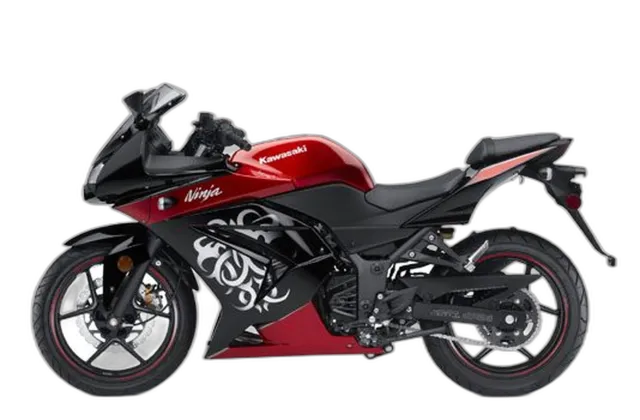
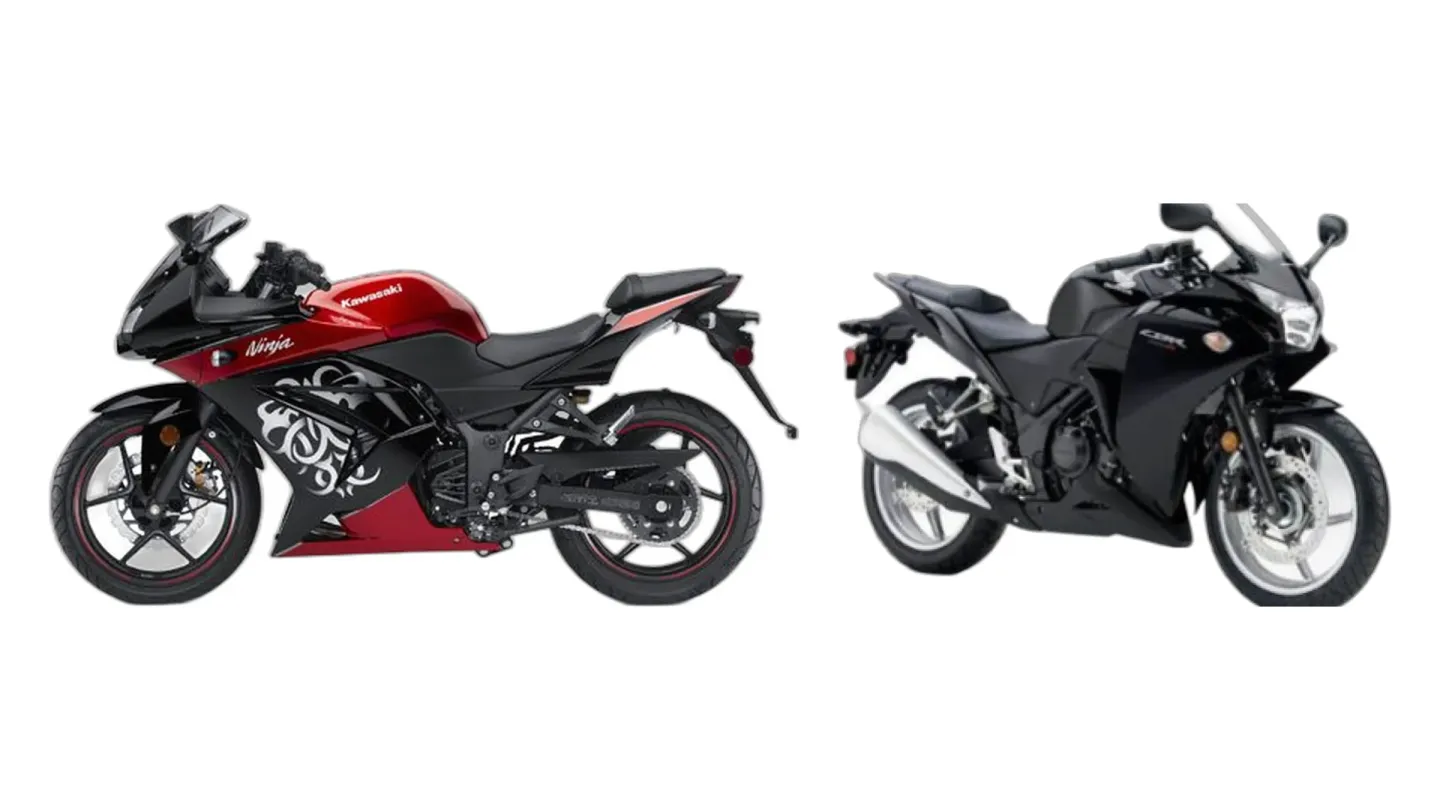
Kawasaki Ninja 250R (EX250J-MY2008) vs Honda CBR 250 R (CBR250R 1st Gen)
Kawasaki Ninja 250R vs Honda CBR 250 R: which one to buy for the riding you do.
Roll on the Kawasaki Ninja 250R's throttle and its twin spins up eagerly, and it's happiest howling near redline. The Honda CBR 250 R's single doesn't rush at the grip; its modest pull stays mild and easy to meter. Only a faint buzz creeps in up high.
So which one do you buy?
The CBR 250 R has the edge if…
Racetrack use
By a nose: CBR 250 R
The CBR 250 R nudges ahead once you're on a closed course. Credit more feel through the bars. Hardly a big enough gap to bank on.
Sporty riding on twisty roads
Inches ahead: CBR 250 R
Once the road starts to bend, the CBR 250 R noses ahead. It's down to lighter steering. Your own skill counts for more than a gap this size.
Which one's the smarter buy
Money won't decide it
The Ninja 250R costs more, but that gap doesn't make it the better buy. Neither bike is the clear winner on value.
What makes each one tick
Ninja 250R
Behind wide bars, the Ninja 250R sits you upright on a seat set at 30.5 in (775 mm). Over broken pavement, the basic fork and rear shock turn harsh, and they don't hold a line the way a dedicated sportbike's would.
CBR 250 R
There's room to stretch out on the CBR 250 R, whose spacious riding triangle fits a taller frame and keeps fatigue down on longer rides. The liquid-cooled engine doesn't hammer the pegs through a long highway stint. It forgives a clumsy line.
The Voice of Experience

What actually separates them
- The CBR 250 R has the lower wet weight: 355 lb (161 kg) vs 375 lb (170 kg).
- The Ninja 250R makes more peak power: 33 hp (24 kW) vs 26 hp (19 kW).
- The Ninja 250R has the larger fuel tank: 4.8 US gal (18 L) vs 3.4 US gal (13 L).
Which one for the way you ride
Comfortable long-distance riding
Wrong job for both
Both of these get tiring on a long day. A proper tourer will treat you better on big miles.
Count commuting and running costs as a draw. The deal on the table and the condition of the bike matter more here.
Who each one is built for
What's good, and what you'll live with
Ninja 250R
What owners say
Strengths
- Excellent beginner-friendly ergonomics
- Rev-happy, smooth twin engine
- Outstanding fuel economy
Trade-offs
- Needs high revs to make power
- Budget suspension limits sport potential
- Expensive to repair bodywork
- Unstable at highway speeds in wind
CBR 250 R
What owners say
Strengths
- Newbie-friendly power delivery and forgiving handling
- Roomier ergonomics than the Kawasaki Ninja 250R
- Smooth, vibe-free engine for a single-cylinder
Known problems to check before you buy
Ninja 250R
- Front brake hose damage (2008 recall) Recall 08V115000 The front brake hose can deflect forward during suspension travel and contact the front fork outer tube; over time this can damage the hose, leak brake fluid and cut front brake performance. Kawasaki replaced the front brake hose bracket under recall (NHTSA 08V115000).
- Engine crankcase vent blockage / oil leak (2008 recall) Recall 08V158000 A blocked crankcase vent hole in the airbox can build pressure inside the engine, failing the cylinder head cover gasket and leaking oil that could reach the rear tire. Kawasaki inspected and repaired the airbox under recall (NHTSA 08V158000).
- Tail light bulb premature failure (2008 recall) Recall 08V052000 On 532 MY2008 units the tail light bulb can fail prematurely, cutting rear visibility and raising crash risk. Kawasaki replaced the tail light bulb free of charge under recall (NHTSA 08V052000).
CBR 250 R
- Intermittent engine stalling Certain early production motorcycles experience intermittent engine stalling when coming to a stop or operating at low engine speeds, typically related to factory engine management mapping.
- Cam chain tensioner rattle Some owners report a distinct rattle or ticking noise from the cam chain area, particularly across the midrange engine speed band.
What they cost used
These prices compare a 14-year-old Ninja 250R with a 14-year-old CBR 250 R.
- Ninja 250R
- about $3,000
- CBR 250 R
- about $2,600
At 14 years old, the Kawasaki Ninja 250R sits around $3,000 while the Honda CBR 250 R lands near $2,600. That's a $400 gap in the Honda's favor. These are US market estimates, not live listings.
What they share
- Displacement
- 249 cc
- Cooling
- Liquid-cooled
- Gearbox
- 6-speed
- Final drive
- Chain
- Fork
- Telescopic
- Front tire
- 110/70-17
Where the spec sheets split
| Ninja 250R | CBR 250 R | |
|---|---|---|
| Seat height | 30.5 in (775 mm) | 30.7 in (780 mm) |
| Wet weight | 375 lb (170 kg) | 355 lb (161 kg) |
| Ninja 250R | CBR 250 R | |
|---|---|---|
| Engine | Parallel twin | Single-cylinder |
| Power | 33 hp (24 kW) | 26 hp (19 kW) |
| Top speed | 99 mph (160 km/h) | 95 mph (153 km/h) |
| Ninja 250R | CBR 250 R | |
|---|---|---|
| Fuel capacity | 4.8 US gal (18 L) | 3.4 US gal (13 L) |
| Ninja 250R | CBR 250 R | |
|---|---|---|
| Front brake | 290 mm | 296 mm |
| Rear tire | 130/70-17 | 140/70-17 |
What comes fitted, what costs extra
| Ninja 250R | CBR 250 R | |
|---|---|---|
| ABS | Not offered | Option |
Head to head, area by area
Both bikes on the same scale, one area at a time.