By NastyNils·
Motorcycle comparison · Supersport
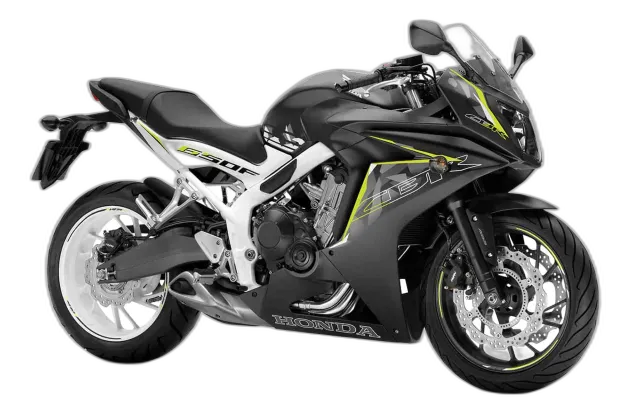
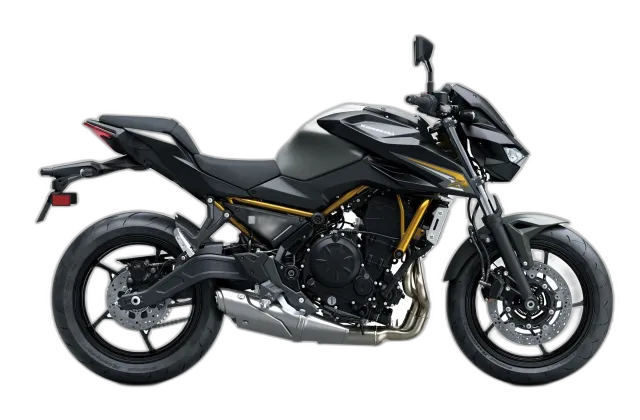
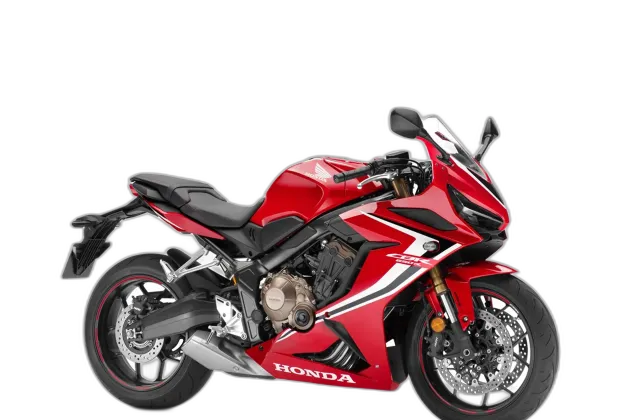
Honda CBR650R (RH01) vs Kawasaki Ninja 650 (EX650M)
Honda CBR650R vs Kawasaki Ninja 650: fast is a given. What sets them apart isn't.
Lean the Honda CBR650R into a bend and it's light at the bars, then planted on your line. The Kawasaki Ninja 650 drops in and flicks straight back.
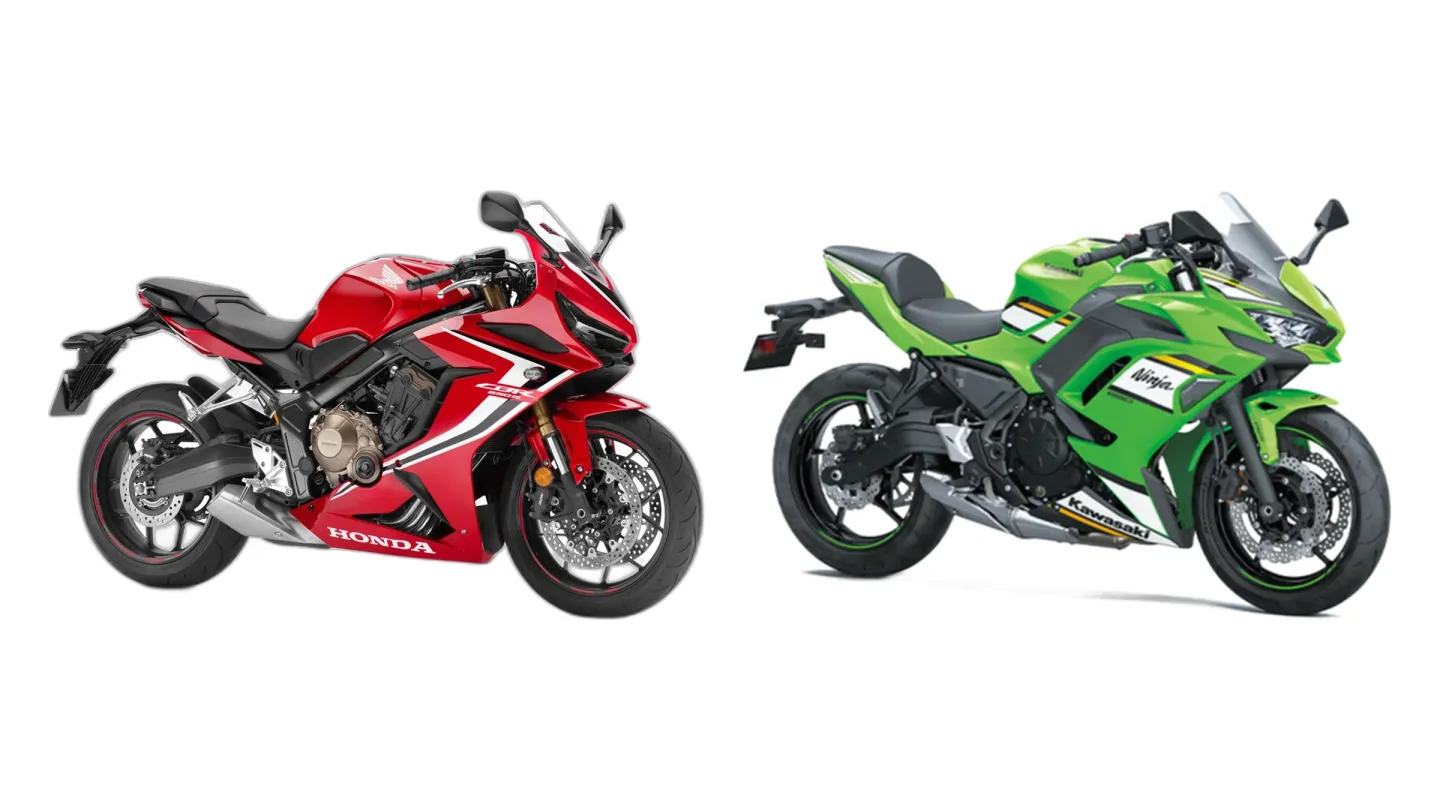
So which one do you buy?
The CBR650R has the edge if…
Racetrack use
Edges it: CBR650R
Lap after lap, the CBR650R noses ahead. Your own riding will make a bigger difference than this gap.
The Ninja 650 has the edge if…
Keeping running costs low
Nose ahead: Ninja 650
On upkeep, the Ninja 650 asks a bit less of your wallet. The difference won't change your life.
Daily commuting & city riding
Small edge: Ninja 650
Through rush hour, the Ninja 650 is a little easier to live with. Only a little.
Which one's the smarter buy
Money won't decide it
The Ninja 650 costs less, but that gap doesn't make it the better buy. Neither bike is the clear winner on value.
What makes each one tick
CBR650R
Down low, the CBR650R's inline-four pulls without fuss, but it doesn't wake up until the needle swings well up the tach. Past that point the throttle finds a different engine, and the four's top end builds in one long, even rush toward its peak at 12,000 rpm. Highway speeds bring a high-frequency buzz. The front brake bites hard and builds its grip progressively.
Ninja 650
From the bottom of the tach, the Ninja 650's parallel twin pulls cleanly and keeps revving happily on a flat torque curve. The throttle won't catch you out. The exhaust's note carries a rich edge.
The Voice of Experience

What actually separates them
- The Ninja 650 has the lower seat: 31.1 in (790 mm) vs 31.9 in (810 mm).
- The Ninja 650 has the lower wet weight: 425 lb (193 kg) vs 456 lb (207 kg).
- The CBR650R makes more peak power: 95 hp (70 kW) vs 68 hp (50 kW).
Which one for the way you ride
Comfortable long-distance riding
Look elsewhere
Neither one is built for long-haul comfort. For big miles, look at a proper tourer or sport tourer.
They come out level on twisty roads. The better-kept used example is the smarter money.
Who each one is built for
What's good, and what you'll live with
CBR650R
What owners say
Strengths
- Smooth, flexible inline-four engine
- Strong, progressive brakes
Trade-offs
- Needs revs for excitement
- Noticeable vibration at highway speeds
Ninja 650
What owners say
Strengths
- Excellent reliability and low maintenance
- Light and agile handling
- Eager, rev-happy parallel-twin engine
What they cost used
These prices compare a 5-year-old CBR650R with a 5-year-old Ninja 650.
- CBR650R
- about $8,900
- Ninja 650
- about $7,100
At five years old, the Honda CBR650R sits around $8,900 while the Kawasaki Ninja 650 lands near $7,100. That's an $1,800 gap in the Ninja 650's favor. These are US market estimates, not live listings.
What they share
- Displacement
- 649 cc
- Cooling
- Liquid-cooled
- Torque
- 47 lb-ft (64 Nm)
- Gearbox
- 6-speed
- Final drive
- Chain
- Front tire
- 120/70-17
Where the spec sheets split
| CBR650R | Ninja 650 | |
|---|---|---|
| Seat height | 31.9 in (810 mm) | 31.1 in (790 mm) |
| Wet weight | 456 lb (207 kg) | 425 lb (193 kg) |
| CBR650R | Ninja 650 | |
|---|---|---|
| Engine | Inline-four | Parallel twin |
| Power | 95 hp (70 kW) | 68 hp (50 kW) |
| Peak power at | 12,000 rpm | 8,000 rpm |
| Peak torque at | 8,500 rpm | 6,700 rpm |
| CBR650R | Ninja 650 | |
|---|---|---|
| Fuel capacity | 4.1 US gal (15.4 L) | 4.0 US gal (15 L) |
| CBR650R | Ninja 650 | |
|---|---|---|
| Fork | Upside-down (USD) | Telescopic |
| Front brake | 310 mm | 300 mm |
| Rear tire | 180/55-17 | 160/60-17 |
| Wheelbase | 57.1 in (1450 mm) | 55.5 in (1410 mm) |
What comes fitted, what costs extra
| CBR650R | Ninja 650 | |
|---|---|---|
| ABS | Standard | Option |
| TFT Display | Not offered | Standard |
| Smartphone Connectivity | Not offered | Standard |
Head to head, area by area
Both bikes on the same scale, one area at a time.