By NastyNils·
Motorcycle comparison · Supersport
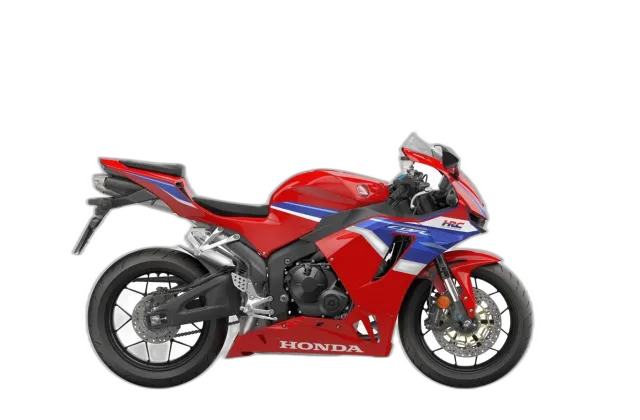
Honda CBR600RR (2BL-PC 40) vs Kawasaki Ninja ZX-6R (MY2019)
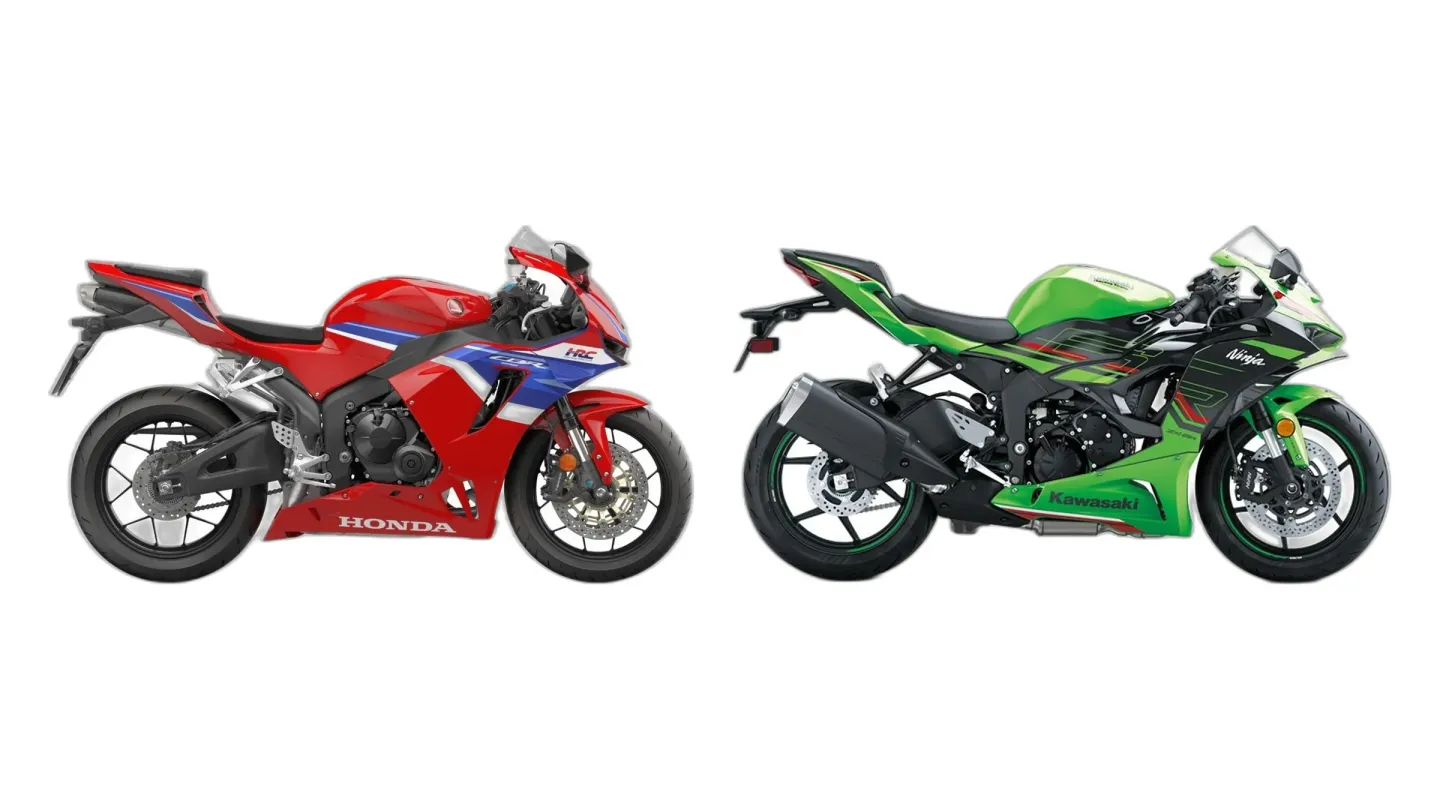
Honda CBR600RR vs Kawasaki Ninja ZX-6R: one garage spot. Here's what should decide it.
Roll the Honda CBR600RR's throttle open and it doesn't lunge: the engine climbs through the revs in one unbroken line. The Kawasaki Ninja ZX-6R pulls hard the instant it's opened.
So which one do you buy?
Which one's the smarter buy
Depends what you want it for
Neither is the clear better buy for the money.
What makes each one tick
CBR600RR
The CBR600RR comes alive high on the tach, where the four-cylinder spins smooth and keeps building toward a top-end rush that's worth chasing. At corner entry the front tucks in with real precision, and it doesn't get nervous once it's leaned over. The low clip-ons fold you over the tank, which isn't kind on a long street ride. Feedback flows up through the bar.
Ninja ZX-6R
Shorter gearing lets the Ninja ZX-6R find real drive early on a corner exit, and it doesn't make you wait for the motor to wake up. There's no fuss when the stock dampers meet a bump on the street or at a casual track day. Serious racing finds their ceiling. Under trail braking the rear stays settled to the apex.
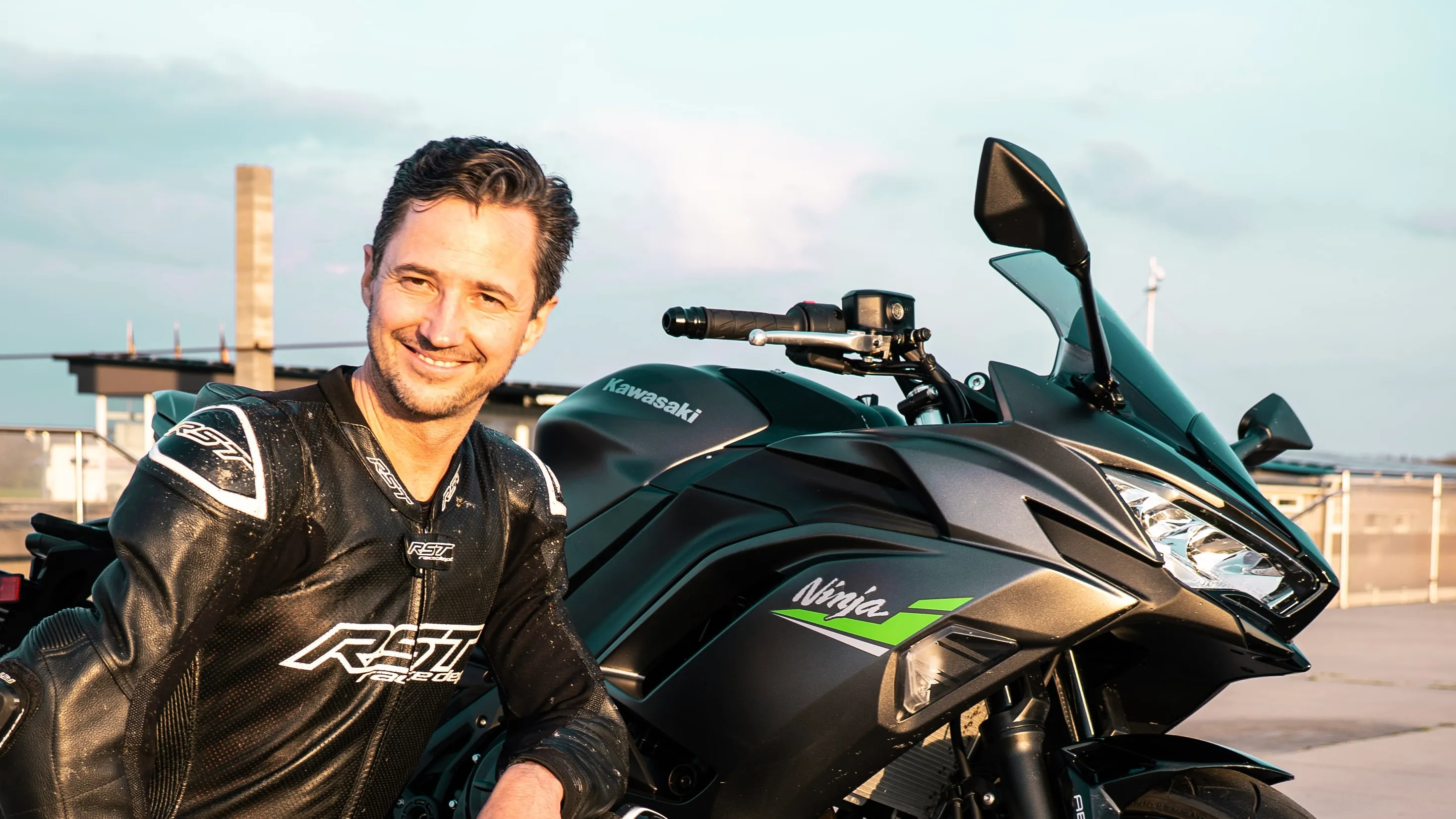
Nils rode the Ninja ZX-6R in Spain in 2019 (NastyNils Testride).
The Voice of Experience

What actually separates them
- The Ninja ZX-6R makes more peak power: 130 hp (96 kW) vs 119 hp (88 kW).
- The Ninja ZX-6R makes more peak torque: 52 lb-ft (71 Nm) vs 47 lb-ft (64 Nm).
- The Ninja ZX-6R has the larger engine: 636 cc vs 599 cc.
Which one for the way you ride
Comfortable long-distance riding
Neither is a natural fit
Long days aren't what these two do best. Plan shorter legs and plenty of stops.
There's no real gap on track days, commuting, twisty roads, and running costs. Sit on both and let fit and price decide.
Who each one is built for
What's good, and what you'll live with
CBR600RR
What owners say
Strengths
- Legendary Honda reliability
- Smooth, high-revving engine
Ninja ZX-6R
Strengths
- Composed at any speed
- A top end worth chasing
- Nimbler than any liter bike
- Suspension that answers back
- Power you use, not manage
Trade-offs
- Traction control without an IMU
- Quickshifter goes up only
- Not a commuter or a tourer
- Used ones need a history
- Difficult maintenance access
Known problems to check before you buy
CBR600RR
- Valve clearance check required every 15,200 mi (24,000 km) The ZX-6R 636 (2013-2023) requires valve clearance inspection every 15,200 mi (24,000 km) per the Kawasaki periodic maintenance schedule - a normal interval for the class, comparable to the Honda CBR600RR. Because of the shim-under-bucket design, an out-of-spec check means removing the cams to swap shims, and access requires taking off the tank, fairings and seat. Note: Kawasaki halved this interval to 7,600 mi (12,000 km) only on the updated 2024+ ZX-6R.
Ninja ZX-6R
- Valve clearance check required every 15,200 mi (24,000 km) The ZX-6R 636 (2013-2023) requires valve clearance inspection every 15,200 mi (24,000 km) per the Kawasaki periodic maintenance schedule - a normal interval for the class, comparable to the Honda CBR600RR. Because of the shim-under-bucket design, an out-of-spec check means removing the cams to swap shims, and access requires taking off the tank, fairings and seat. Note: Kawasaki halved this interval to 7,600 mi (12,000 km) only on the updated 2024+ ZX-6R.
What they cost used
These prices compare a 5-year-old CBR600RR with a 5-year-old Ninja ZX-6R.
- CBR600RR
- about $10,500
- Ninja ZX-6R
- about $8,600
At five years old, the Honda CBR600RR sits around $10,500 while the Kawasaki Ninja ZX-6R lands near $8,600. That's a $1,900 gap in the Ninja ZX-6R's favor. These are estimates from the used market, not live listings.
What they share
- Engine
- Inline-four
- Cooling
- Liquid-cooled
- Gearbox
- 6-speed
Where the spec sheets split
| CBR600RR | Ninja ZX-6R | |
|---|---|---|
| Seat height | 32.3 in (820 mm) | 32.7 in (830 mm) |
| Wet weight | 428 lb (194 kg) | 432 lb (196 kg) |
| CBR600RR | Ninja ZX-6R | |
|---|---|---|
| Displacement | 599 cc | 636 cc |
| Power | 119 hp (88 kW) | 130 hp (96 kW) |
| Torque | 47 lb-ft (64 Nm) | 52 lb-ft (71 Nm) |
| CBR600RR | Ninja ZX-6R | |
|---|---|---|
| Fuel capacity | 4.8 US gal (18.2 L) | 4.5 US gal (17 L) |
| CBR600RR | Ninja ZX-6R | |
|---|---|---|
| Front tire | 120/70-17 | 120/70 ZR17 (OEM: Bridgestone Battlax Hypersport S22) |
| Rear tire | 180/55-17 | 180/55 ZR17 (OEM: Bridgestone Battlax Hypersport S22) |
What comes fitted, what costs extra
| CBR600RR | Ninja ZX-6R | |
|---|---|---|
| ABS | Standard | Option |
| Cornering ABS | Standard | Not offered |
| Ride Modes | Standard | Not offered |
| Wheelie Control | Standard | Not offered |
| TFT Display | Standard | Not offered |
Head to head, area by area
Both bikes on the same scale, one area at a time.