By NastyNils·
Motorcycle comparison · Supersport
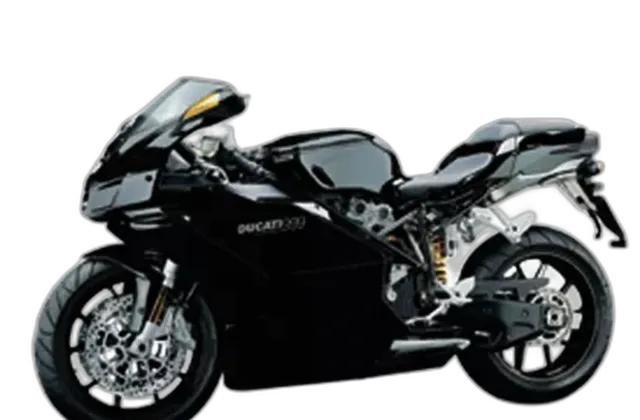
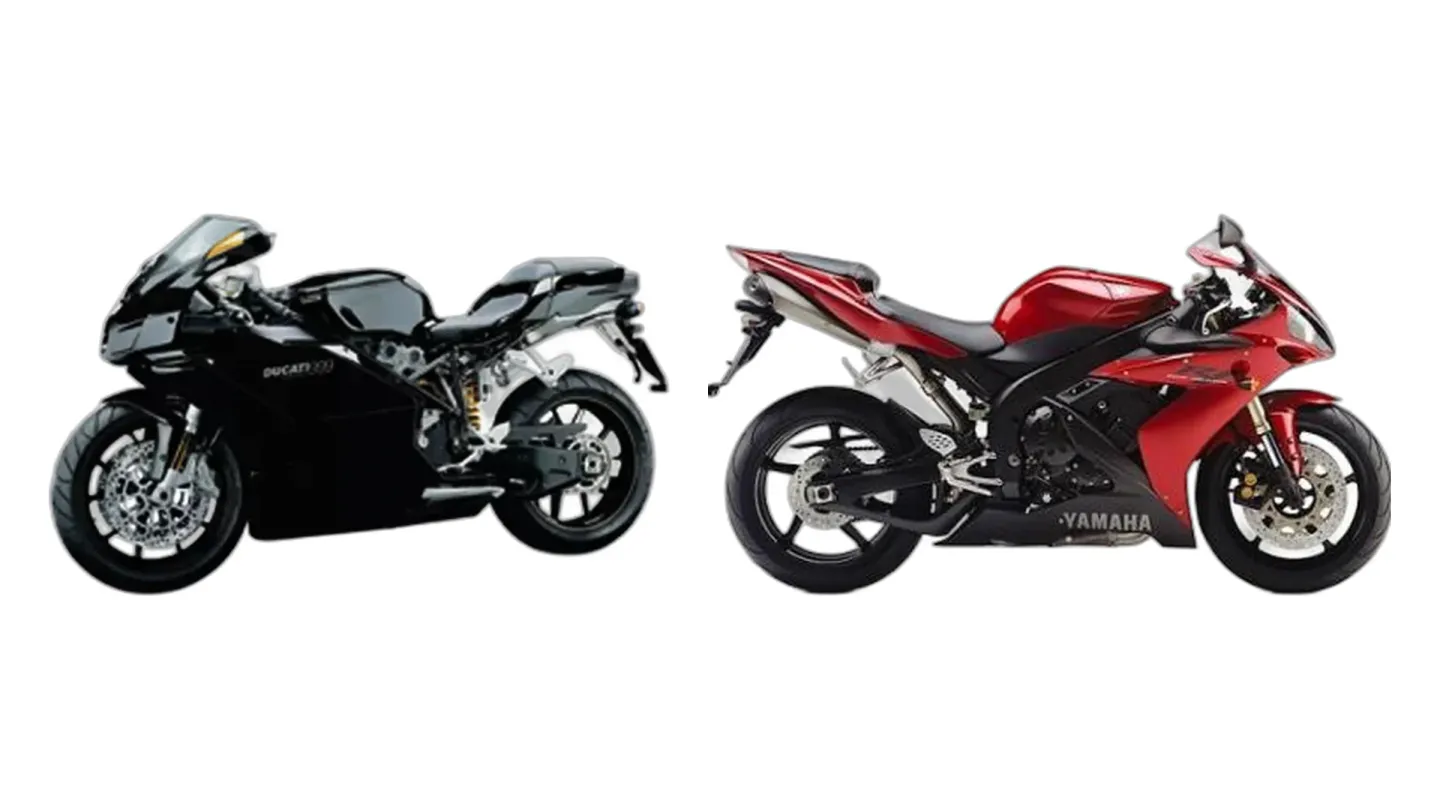
Ducati 999 (MY2005) vs Yamaha YZF-R1 (RN12)
Ducati 999 vs Yamaha YZF-R1: which one to buy for the riding you do.
Roll on the Ducati 999's throttle and the V-twin's punch hits hard in the middle, then it's a fiery rush up top. The Yamaha YZF-R1's rear tire hooks up, and you're back on the throttle earlier. Its front lifts, and the damper's already caught it.
So which one do you buy?
The YZF-R1 has the edge if…
Keeping running costs low
Slight edge: YZF-R1
Over a year of riding, the YZF-R1 noses ahead on running costs. A neglected example would wipe that out.
Racetrack use
Edges it: YZF-R1
For track days, the YZF-R1 comes out a touch ahead. Thank better suspension for that. Your setup and tires matter just as much.
Daily commuting & city riding
Small edge: YZF-R1
On the way to work, the YZF-R1 asks a little less of you. The reason: simpler maintenance and a smaller footprint. Close enough that the test ride should settle it.
What makes each one tick
999
Through a long sweeper, the Ducati's chassis stays taut, and there's never a quiet moment through the bars. The stiff suspension skips across broken pavement. The pegs and bars don't fold you into a knot. The Brembos' bite builds evenly as the lever comes back.
YZF-R1
From the braking marker to the exit, the YZF-R1 keeps you working in the saddle. The seat accommodates different positions depending on the phase of the corner, but the bike won't let you slack off. At turn-in, the front wants to flick toward the apex before you've committed. It never gets nervous. The inline-four pulls cleanly from wherever the needle sits.
Nils rode the YZF-R1 in Andalusia in 2004 (NastyNils Testride).
The Voice of Experience

What actually separates them
- The 999 has the lower seat: 30.7 in (780 mm) vs 32.9 in (835 mm).
- The YZF-R1 has the lower wet weight: 425 lb (193 kg) vs 439 lb (199 kg).
- The YZF-R1 makes more peak power: 172 hp (127 kW) vs 140 hp (103 kW).
Which one for the way you ride
Comfortable long-distance riding
Not built for this
For all-day comfort, both fall short. Keep the rides short and you'll get on fine with either.
On twisty roads, these two are a wash. That's where your budget and your inseam get the final say.
Who each one is built for
What's good, and what you'll live with
999
What owners say
Strengths
- Exceptional handling and feedback
- Thrilling, characterful V-twin engine
- Surprisingly comfortable for a sportbike
Trade-offs
- Expensive, frequent servicing
- Quirky, unreliable electrics
- Unforgiving ride quality on bumpy roads
YZF-R1
Strengths
- Front Brake With Real Bite
- Corner Exit Grip That Sticks
- Razor Turn-In, Never Nervous
- Track Focus, Road Manners Intact
- Strong long-term reliability
Trade-offs
- Jitter Off Closed Throttle
- Punishes A Lazy Body
Known problems to check before you buy
999
- Fuel pump relay failure The relay, located in the same vulnerable area as the harness, frequently fails, cutting fuel delivery and causing the engine to stall.
- Front ignition coil corrosion Road spray and dampness corrode the front coil, leading to misfiring and poor running.
- Fuel filter clogging from internal tank rust Rust flakes form inside the steel fuel tank and lodge in the filter, causing a progressive loss of power and potential fuel starvation.
- Wiring harness corrosion near battery box Heat and water ingress cause the wiring harness around the battery to corrode, leading to intermittent electrical faults and potential non‑starts.
YZF-R1
- Throttle position sensor recall (stalling risk) Recall 06V371000 The RN12 R1 was recalled (NHTSA campaign 06V371000) for an improperly designed throttle position sensor that could cause an intermittently unstable idle and stalling at low speed or when stopped, risking a momentary rear-wheel slip if the clutch was abruptly re-engaged in a low gear. A separate 2005-only campaign (09V360000) covered the same sensor failure.
- Clutch wear from tall first gear The very high first gear forces the clutch to absorb excessive energy during take-off, leading to accelerated wear, slippage, and judder. Worse in heavy traffic.
- Stator failure Some bikes suffer from premature stator failure, resulting in charging system problems and eventual battery drain.
What they share
- Displacement
- 998 cc
- Cooling
- Liquid-cooled
- Gearbox
- 6-speed
- Final drive
- Chain
- Fork
- Upside-down (USD)
- Front brake
- 320 mm
- Front tire
- 120/70-17
- Rear tire
- 190/50-17
Where the spec sheets split
| 999 | YZF-R1 | |
|---|---|---|
| Seat height | 30.7 in (780 mm) | 32.9 in (835 mm) |
| Wet weight | 439 lb (199 kg) | 425 lb (193 kg) |
| 999 | YZF-R1 | |
|---|---|---|
| Engine | L-twin | Inline-four |
| Power | 140 hp (103 kW) | 172 hp (127 kW) |
| Peak power at | 9,750 rpm | 12,500 rpm |
| Torque | 80 lb-ft (108 Nm) | 79 lb-ft (107 Nm) |
| Peak torque at | 8,000 rpm | 10,500 rpm |
| 999 | YZF-R1 | |
|---|---|---|
| Fuel economy | 29 mpg (US) / 8.07 L/100 km | 32 mpg (US) / 7.43 L/100 km |
| Fuel capacity | 4.1 US gal (15.5 L) | 4.8 US gal (18 L) |
Head to head, area by area
Both bikes on the same scale, one area at a time.