By NastyNils·
Motorcycle comparison · Supersport
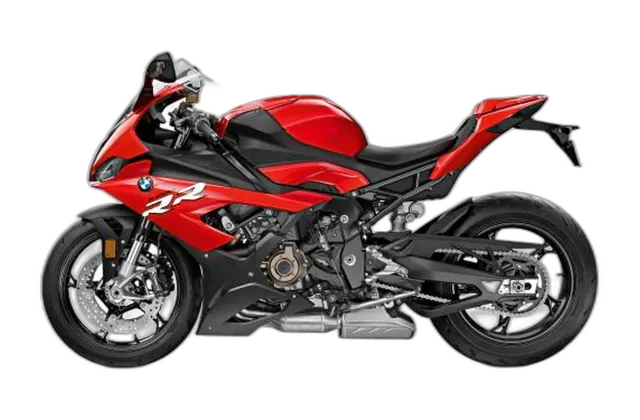
BMW S 1000 RR (K67) vs Suzuki GSX-R 1000 (MY2017-R)
BMW S 1000 RR vs Suzuki GSX-R 1000: fast is a given. What sets them apart isn't.
You'll find the BMW S 1000 RR's engine already pulling hard at road speeds, where a peakier literbike's still waiting for revs. On the Suzuki GSX-R 1000, the throttle's best moment comes at corner exit, where engine, suspension and geometry work together. The rear hooks up and the chassis doesn't squirm.
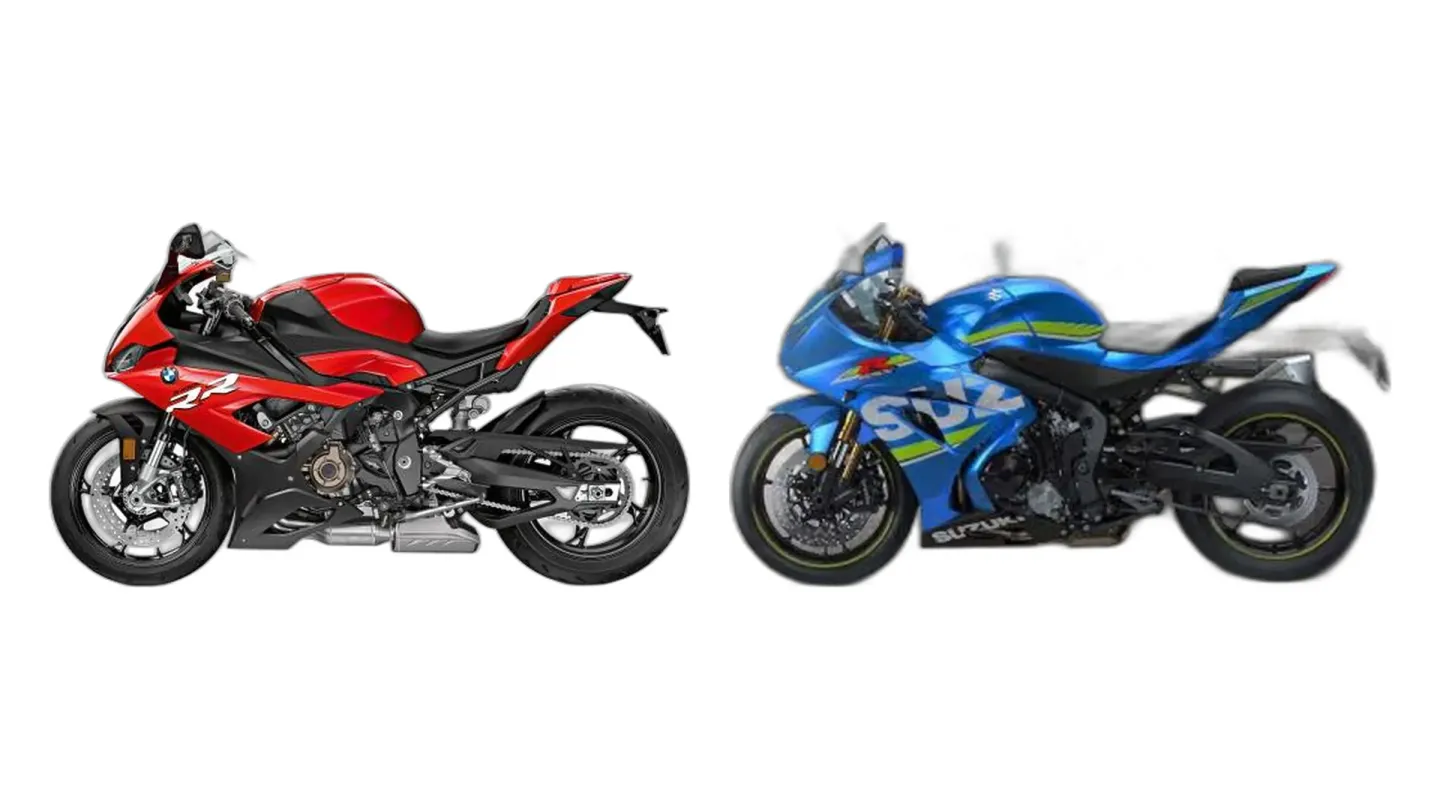
So which one do you buy?
The S 1000 RR has the edge if…
Daily commuting & city riding
Inches ahead: S 1000 RR
Through rush hour, the S 1000 RR is a little easier to live with. Only a little.
Racetrack use
By a nose: S 1000 RR
Between the curbs, the S 1000 RR asks a bit less of you at speed. Credit more suspension adjustment. It's a fine margin, nothing more.
Which one's the smarter buy
No clear winner on value
The S 1000 RR costs less, but that gap doesn't make it the clear better buy. Neither bike wins on value alone.
What makes each one tick
S 1000 RR
The bars barely need a nudge to drop the S 1000 RR into a turn, and it stays predictable once it's leaned over. At the brake lever, the light bike stops with cornering ABS still reading the lean angle. Off idle in Dynamic or Race mode, the throttle's snatchy in stop-and-go traffic. Its ShiftCam midrange shoves early.
Nils rode the S 1000 RR in Andalusia in 2019 (NastyNils Testride).
GSX-R 1000
A fast sweeper suits the GSX-R 1000, which won't steer itself in and wants a firm push on the bar before it locks onto a quick arc. There's no dip in the four from the middle of the tach up, and the throttle loads it cleanly every time.
Nils rode the GSX-R 1000 in Australia in 2017 (NastyNils Testride).
The Voice of Experience

What actually separates them
- The S 1000 RR has the lower wet weight: 434 lb (197 kg) vs 448 lb (203 kg).
- Launch Control: standard on the GSX-R 1000, option on the S 1000 RR.
- TFT Display: standard on the S 1000 RR, not offered on the GSX-R 1000.
Which one for the way you ride
Comfortable long-distance riding
Neither one fits
Neither one is built for long-haul comfort. For big miles, look at a proper tourer or sport tourer.
On twisty roads and running costs, these two are a wash. That's where your budget and your inseam get the final say.
Who each one is built for
What's good, and what you'll live with
S 1000 RR
What owners say
Strengths
- Broad, ShiftCam-flattened powerband
- Comprehensive IMU-based electronics package
- Flickable, neutral chassis
- Modern, high-resolution TFT dashboard
Trade-offs
- Cramped ergonomics for taller riders
- Fueling abruptness at very low rpm in Dynamic/Race modes
- Mirror visibility is limited
- Optional equipment can quickly inflate the price
- Heat from underslung exhaust at low speed
GSX-R 1000
Strengths
- Relentless top-end surge
- Corner exit stays planted
- Track-ready Brembo brakes
- Traction control gives real choices
- Torquey, broad-powerband engine
Trade-offs
- Turn-in needs deliberate effort
- Wheelie and TC share one dial
- Two safety recalls to verify
Known problems to check before you buy
S 1000 RR
- Brake recall — front brake caliper fluid leak (NHTSA 20V-476) Recall 20V476000 BMW recalled certain 2020 S 1000 RR units because the front brake calipers could leak brake fluid when parked, lowering reservoir volume and reducing braking performance; dealers replaced the affected calipers under warranty.
- Cam chain tensioner noise / wear on early MY2019–2020 units Some early K67 units exhibit a rattling noise at cold start and intermittent during operation, traced to the cam chain tensioner. BMW issued updated tensioner parts in service campaigns.
- Sidestand switch failure causing intermittent no-start The sidestand safety switch can fail or get fouled, leading to the bike refusing to start or cutting out at idle. Replacement of the switch resolves the issue.
- Chain adjuster bolt corrosion / seizing Owners in wet climates report the chain tensioner bolts corroding and becoming difficult to adjust without heat or penetrating lubricant.
- TFT display brightness / readability complaints in direct sunlight Some owners report the 6.5-inch TFT becoming difficult to read in direct sunlight at certain viewing angles, particularly on earlier MY units before software updates.
GSX-R 1000
- Gearshift double-click between 4th-5th and 5th-6th Shifting between higher gears can feel notchy, with a double-click sensation; adjustment does not always fix it.
What they cost used
These prices compare a 4-year-old S 1000 RR with a 4-year-old GSX-R 1000.
- S 1000 RR
- about $12,800
- GSX-R 1000
- about $16,000
At four years old, the BMW S 1000 RR sits around $12,800 while the Suzuki GSX-R 1000 holds near $16,000. That's a $3,200 gap in the BMW's favor. These are estimates from earlier market records, not live listings.
What they share
- Engine
- Inline-four
- Cooling
- Liquid-cooled
- Gearbox
- 6-speed
- Final drive
- Chain
- Fork
- Upside-down (USD)
- Front brake
- 320 mm
- Front tire
- 120/70-17
- Rear tire
- 190/55-17
Where the spec sheets split
| S 1000 RR | GSX-R 1000 | |
|---|---|---|
| Seat height | 32.4 in (824 mm) | 32.5 in (825 mm) |
| Wet weight | 434 lb (197 kg) | 448 lb (203 kg) |
| S 1000 RR | GSX-R 1000 | |
|---|---|---|
| Displacement | 999 cc | 1000 cc |
| Power | 207 hp (152 kW) | 203 hp (149 kW) |
| Peak power at | 13,500 rpm | 13,200 rpm |
| Torque | 83 lb-ft (113 Nm) | 87 lb-ft (118 Nm) |
| Peak torque at | 11,000 rpm | 10,800 rpm |
| S 1000 RR | GSX-R 1000 | |
|---|---|---|
| Fuel economy | 37 mpg (US) / 6.4 L/100 km | 35 mpg (US) / 6.8 L/100 km |
| Fuel capacity | 4.4 US gal (16.5 L) | 4.2 US gal (16 L) |
| S 1000 RR | GSX-R 1000 | |
|---|---|---|
| Wheelbase | 57.4 in (1457 mm) | 56.1 in (1425 mm) |
What comes fitted, what costs extra
| S 1000 RR | GSX-R 1000 | |
|---|---|---|
| Launch Control | Option | Standard |
| TFT Display | Standard | Not offered |
| Smartphone Connectivity | Standard | Not offered |
Head to head, area by area
Both bikes on the same scale, one area at a time.