By NastyNils·
Motorcycle comparison · Sport Tourer
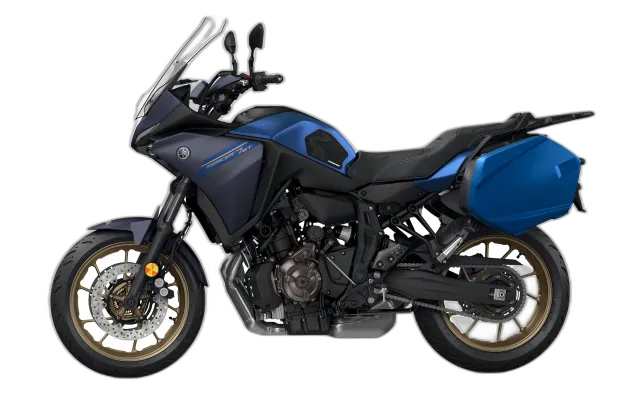
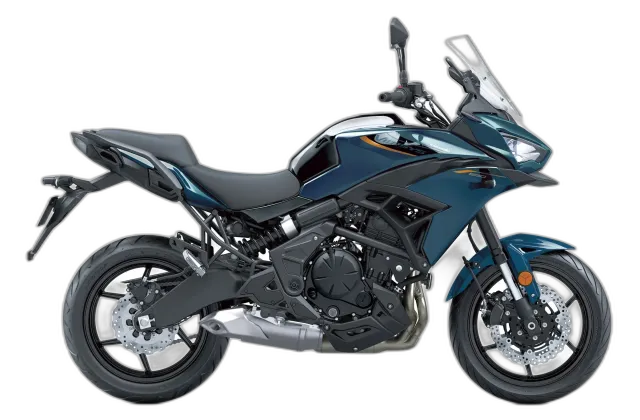
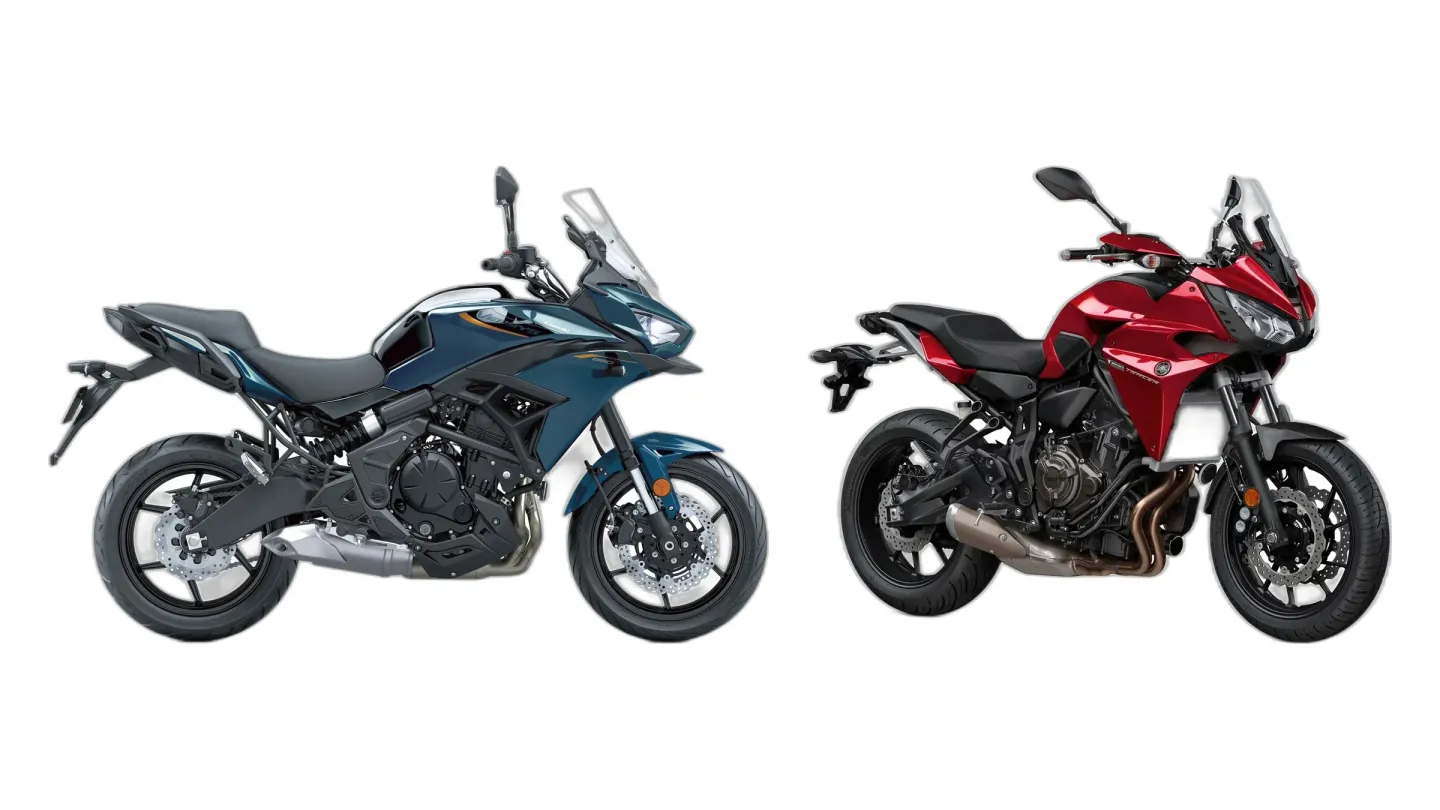
Kawasaki Versys 650 (LE E) vs Yamaha Tracer 700 (MY2016)
Kawasaki Versys 650 vs Yamaha Tracer 700: long days, loaded bags, one choice to make.
Throttle cracked open at low revs, the Kawasaki Versys 650 pulls clean and doesn't buzz on its way up. The Yamaha Tracer 700 punches hard on a lively beat.
So which one do you buy?
The Versys 650 has the edge if…
Keeping running costs low
Narrow edge: Versys 650
The Versys 650 should be a little cheaper to keep on the road. It's a small gap.
The Tracer 700 has the edge if…
Sporty riding on twisty roads
By a nose: Tracer 700
The Tracer 700 nudges ahead once the pavement starts to wiggle. It's down to harder acceleration. Don't expect a night-and-day difference.
What makes each one tick
Versys 650
Whole days of riding slip by on the Versys, since the upright bars and the plush seat don't wear you down. There's barely a tingle in the grips from its twin, and it spins up smoothly to the top. Then the chassis holds its arc.
Nils rode the Versys 650 in the Canary Islands in 2020 (NastyNils Testride).
Tracer 700
The Tracer feels toy-sized between your knees and flicks side to side with barely a push on the bar. The brake lever's first squeeze doesn't bite much, and the ABS steps in early on a firm stop. The high bars sit you upright. There's torque on tap before the tach needle climbs.
The Voice of Experience

What actually separates them
- The Tracer 700 has the lower wet weight: 432 lb (196 kg) vs 476 lb (216 kg).
- The Tracer 700 makes more peak power: 73 hp (54 kW) vs 69 hp (51 kW).
- The Tracer 700 makes more peak torque: 50 lb-ft (68 Nm) vs 47 lb-ft (64 Nm).
Which one for the way you ride
On commuting, long days, and a first bike, these two are a wash. That's where your budget and your inseam get the final say.
Who each one is built for
What's good, and what you'll live with
Versys 650
What owners say
Strengths
- Agile, neutral handling
- Butter‑smooth power delivery
Tracer 700
What owners say
Strengths
- Punchy, characterful engine
Trade-offs
- Basic non-adjustable suspension
- Ineffective screen and buffeting
- Limited electronic aids
- Numb front end and early ABS intervention
What they share
- Engine
- Parallel twin
- Cooling
- Liquid-cooled
- Gearbox
- 6-speed
- Final drive
- Chain
- Front tire
- 120/70-17
Where the spec sheets split
| Versys 650 | Tracer 700 | |
|---|---|---|
| Seat height | 33.1 in (840 mm) | 32.9 in (835 mm) |
| Wet weight | 476 lb (216 kg) | 432 lb (196 kg) |
| Versys 650 | Tracer 700 | |
|---|---|---|
| Displacement | 649 cc | 689 cc |
| Power | 69 hp (51 kW) | 73 hp (54 kW) |
| Torque | 47 lb-ft (64 Nm) | 50 lb-ft (68 Nm) |
| Versys 650 | Tracer 700 | |
|---|---|---|
| Fuel economy | 47 mpg (US) / 5.04 L/100 km | 45 mpg (US) / 5.2 L/100 km |
| Fuel capacity | 5.5 US gal (21 L) | 4.5 US gal (17 L) |
| Versys 650 | Tracer 700 | |
|---|---|---|
| Fork | Upside-down (USD) | Telescopic |
| Front brake | 300 mm | 282 mm |
| Rear tire | 160/60-17 | 180/55-17 |
What comes fitted, what costs extra
| Versys 650 | Tracer 700 | |
|---|---|---|
| Manually Adjustable Front Suspension | Standard | Not offered |
| Luggage System | Option | Not offered |
Head to head, area by area
Both bikes on the same scale, one area at a time.