By NastyNils·
Motorcycle comparison · Sport Tourer vs Naked Bike
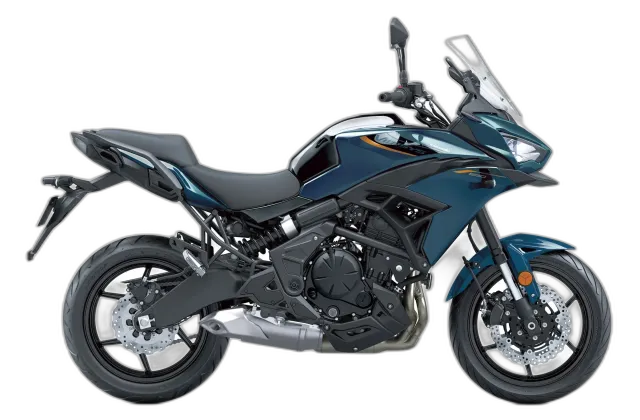
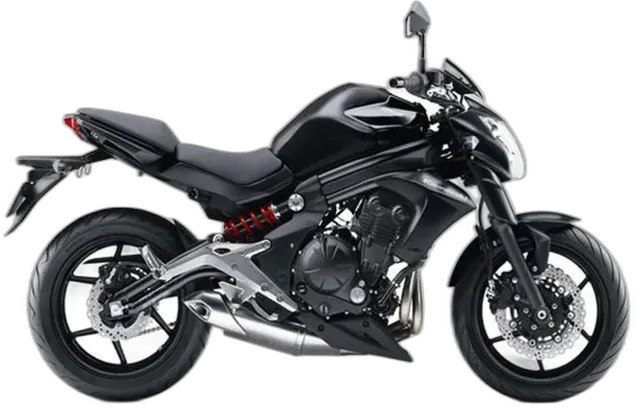
Kawasaki Versys 650 (LE E) vs ER-6n (ER650 E)
Kawasaki Versys 650 vs ER-6n: different classes, one choice. Here's how to make it.
Tip the Kawasaki Versys 650 into a bend and it doesn't argue: the wide bar flicks it in and it holds a neutral line. The slimmer Kawasaki ER-6n needs only a light nudge to fall in. Once it's leaned over, the line just stays put.
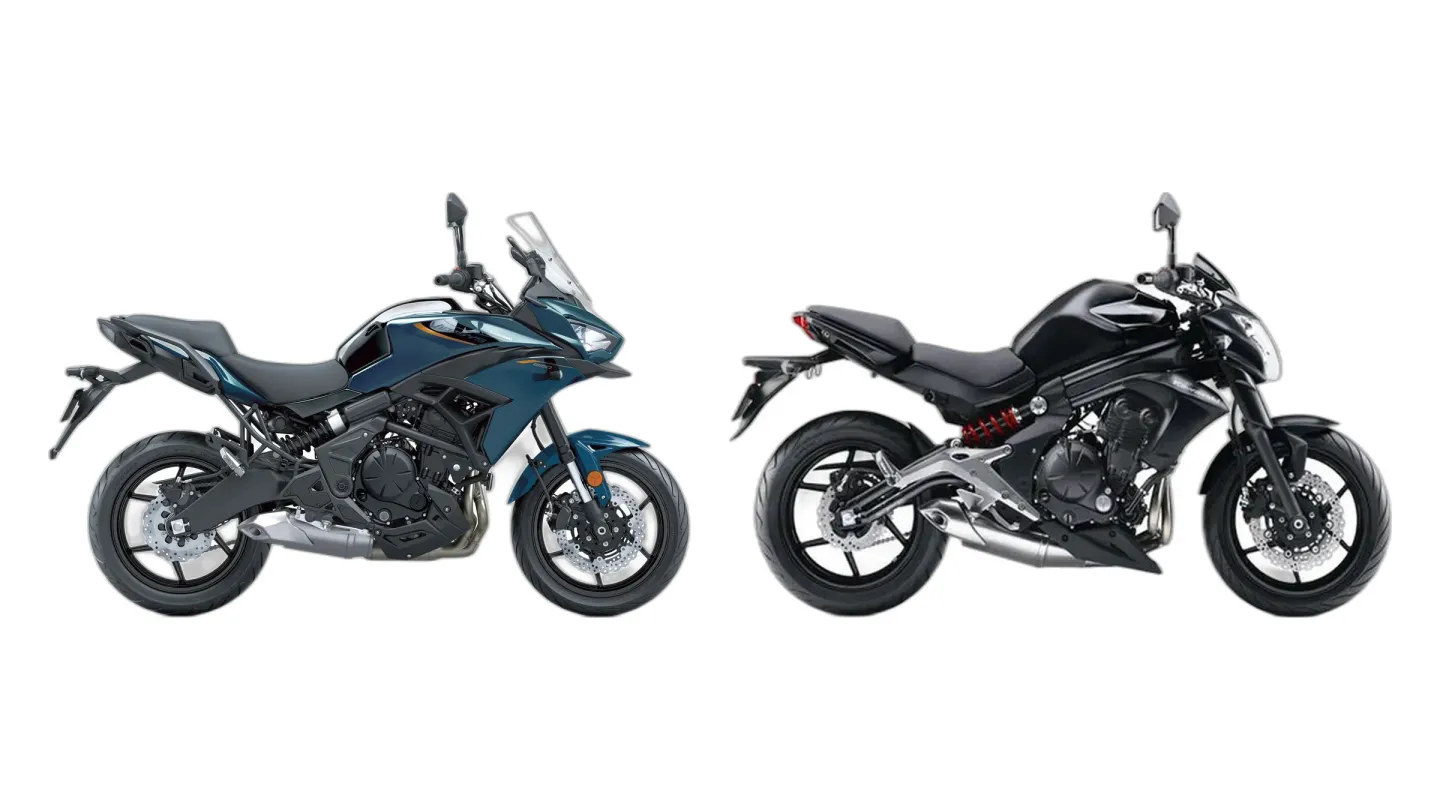
So which one do you buy?
The Versys 650 has the edge if…
Daily commuting & city riding
Small edge: Versys 650
For the ride to work, the Versys 650 noses ahead. Don't let that alone make the call.
The ER-6n has the edge if…
Sporty riding on twisty roads
Narrow edge: ER-6n
On a twisty road, the ER-6n edges ahead. Not by enough to settle it alone.
What makes each one tick
Versys 650
Hours into a long day, the Versys keeps buzz out of the bars and pegs, and its twin doesn't stumble pulling from low revs. It's steady at highway pace, where the brake lever hauls it down through a 300 mm front brake. Its seat won't wear you down. The screen pushes the wind off your chest.
Nils rode the Versys 650 in the Canary Islands in 2020 (NastyNils Testride).
ER-6n
In stop-and-go traffic, the ER-6n's narrow build slips through gaps, and its steering asks little of the bar. Its twin answers the throttle crisply with torque that's spread wide and doesn't spike. A bump meets longer-travel suspension that's got room to move under the steel trellis frame. The engine just keeps going.
The Voice of Experience

What actually separates them
- The ER-6n has the lower seat: 31.7 in (804 mm) vs 33.1 in (840 mm).
- The ER-6n has the lower wet weight: 450 lb (204 kg) vs 476 lb (216 kg).
- The Versys 650 has the larger fuel tank: 5.5 US gal (21 L) vs 4.2 US gal (16 L).
Which one for the way you ride
Comfortable long-distance riding
No verdict: ER-6n
Long days on the highway aren't the ER-6n's job, so there's no verdict for it here.
There's no real gap on running costs and a first bike. Sit on both and let fit and price decide.
Who each one is built for
What's good, and what you'll live with
Versys 650
What owners say
Strengths
- Agile, neutral handling
- Butter‑smooth power delivery
ER-6n
What owners say
Strengths
- Approachable and forgiving power delivery
- Excellent value for money
- Rock-solid engine reliability
What they share
- Displacement
- 649 cc
- Engine
- Parallel twin
- Cooling
- Liquid-cooled
- Torque
- 47 lb-ft (64 Nm)
- Gearbox
- 6-speed
- Final drive
- Chain
- Front brake
- 300 mm
- Front tire
- 120/70-17
- Rear tire
- 160/60-17
Where the spec sheets split
| Versys 650 | ER-6n | |
|---|---|---|
| Seat height | 33.1 in (840 mm) | 31.7 in (804 mm) |
| Wet weight | 476 lb (216 kg) | 450 lb (204 kg) |
| Versys 650 | ER-6n | |
|---|---|---|
| Power | 69 hp (51 kW) | 72 hp (53 kW) |
| Versys 650 | ER-6n | |
|---|---|---|
| Fuel economy | 47 mpg (US) / 5.04 L/100 km | 39 mpg (US) / 6 L/100 km |
| Fuel capacity | 5.5 US gal (21 L) | 4.2 US gal (16 L) |
| Versys 650 | ER-6n | |
|---|---|---|
| Fork | Upside-down (USD) | Telescopic |
What comes fitted, what costs extra
| Versys 650 | ER-6n | |
|---|---|---|
| ABS | Standard | Option |
Head to head, area by area
Both bikes on the same scale, one area at a time.