By NastyNils·
Motorcycle comparison · Sport Tourer vs Adventure
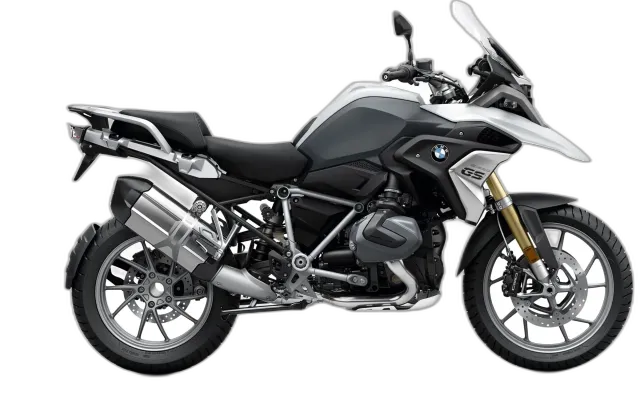
BMW S 1000 XR (K69) vs R 1250 GS (K50)
BMW S 1000 XR vs R 1250 GS: which one's easier to live with on a long trip.
You'll feel every broken seam come up through the BMW S 1000 XR's taut suspension, even in its softer modes. On the BMW R 1250 GS, fatigue's slow to build.
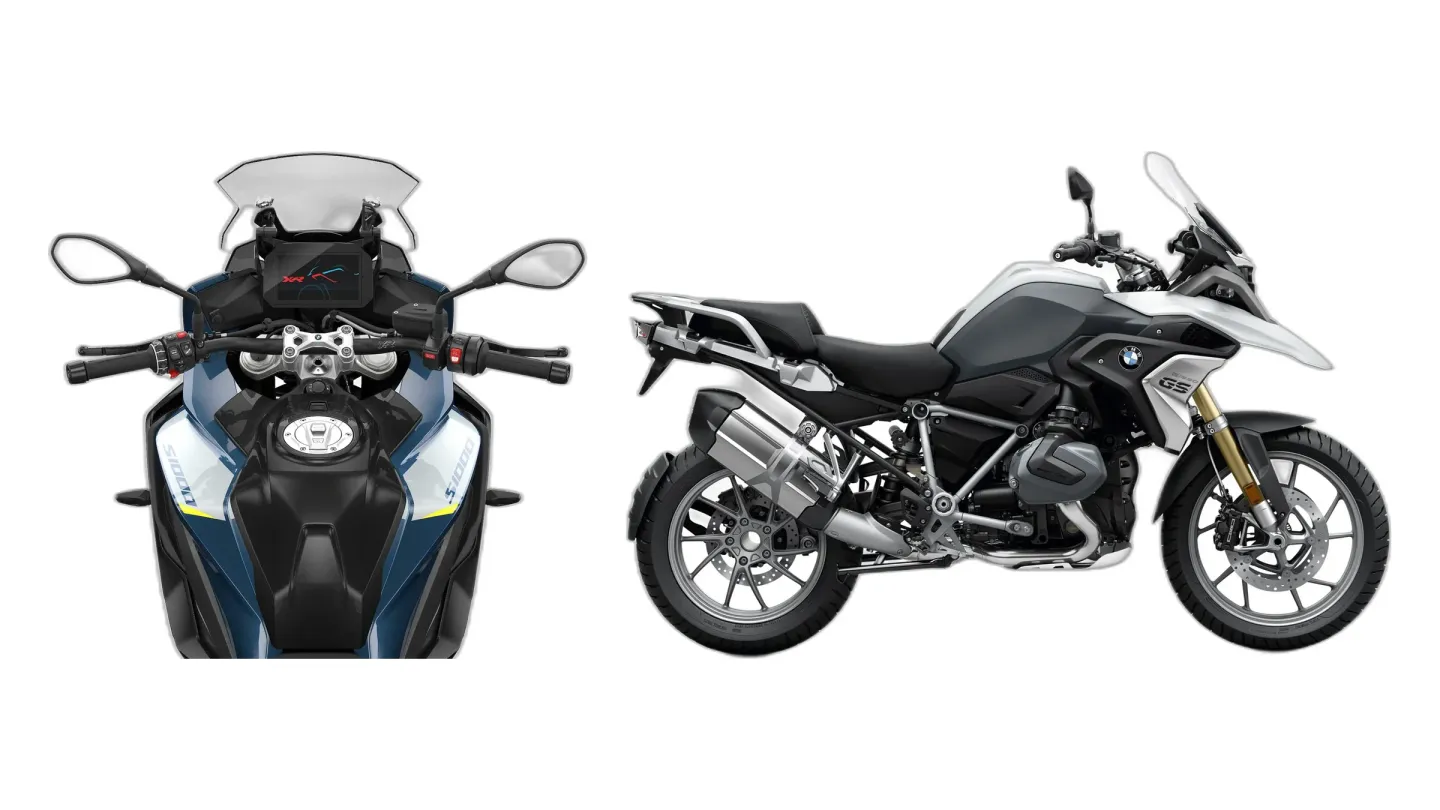
So which one do you buy?
Buy the S 1000 XR if…
Daily commuting & city riding
Clear pick: S 1000 XR
For five days a week in traffic, the S 1000 XR makes far more sense. You'll notice it by the second week.
The S 1000 XR has the edge if…
Sporty riding on twisty roads
By a nose: S 1000 XR
Through a string of corners, the S 1000 XR feels a little more eager. The gap is small, so ride both.
The R 1250 GS has the edge if…
Keeping running costs low
Edges it: R 1250 GS
On running costs, the R 1250 GS edges it. Not by enough to bank on.
Comfortable long-distance riding
Slight edge: R 1250 GS
The R 1250 GS nudges ahead once the miles pile up. It's down to more range per tank. Still, it's a narrow gap.
Which one's the smarter buy
Apples and oranges
The S 1000 XR costs less, but the R 1250 GS serves a different purpose. Neither is the clear better buy for the money.
What makes each one tick
S 1000 XR
Tall as it stands, the S 1000 XR swaps from one lean to the next with barely a push on the bar. The front lever bites hard, yet it still tells you how much stopping you're asking for. Every twist of the throttle draws a clean pull from the inline-four that doesn't let up as the revs climb. Near redline, the four screams.
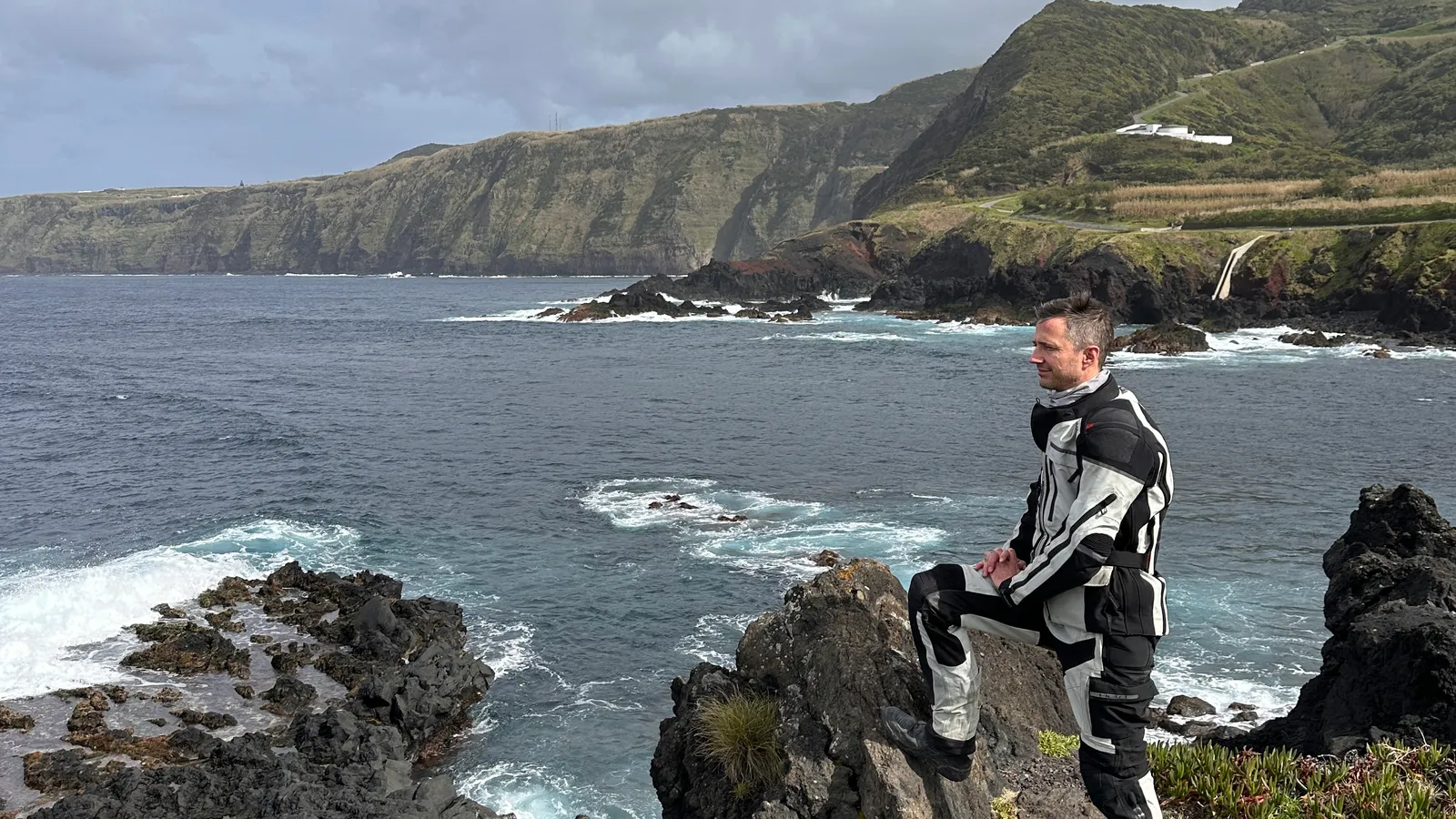
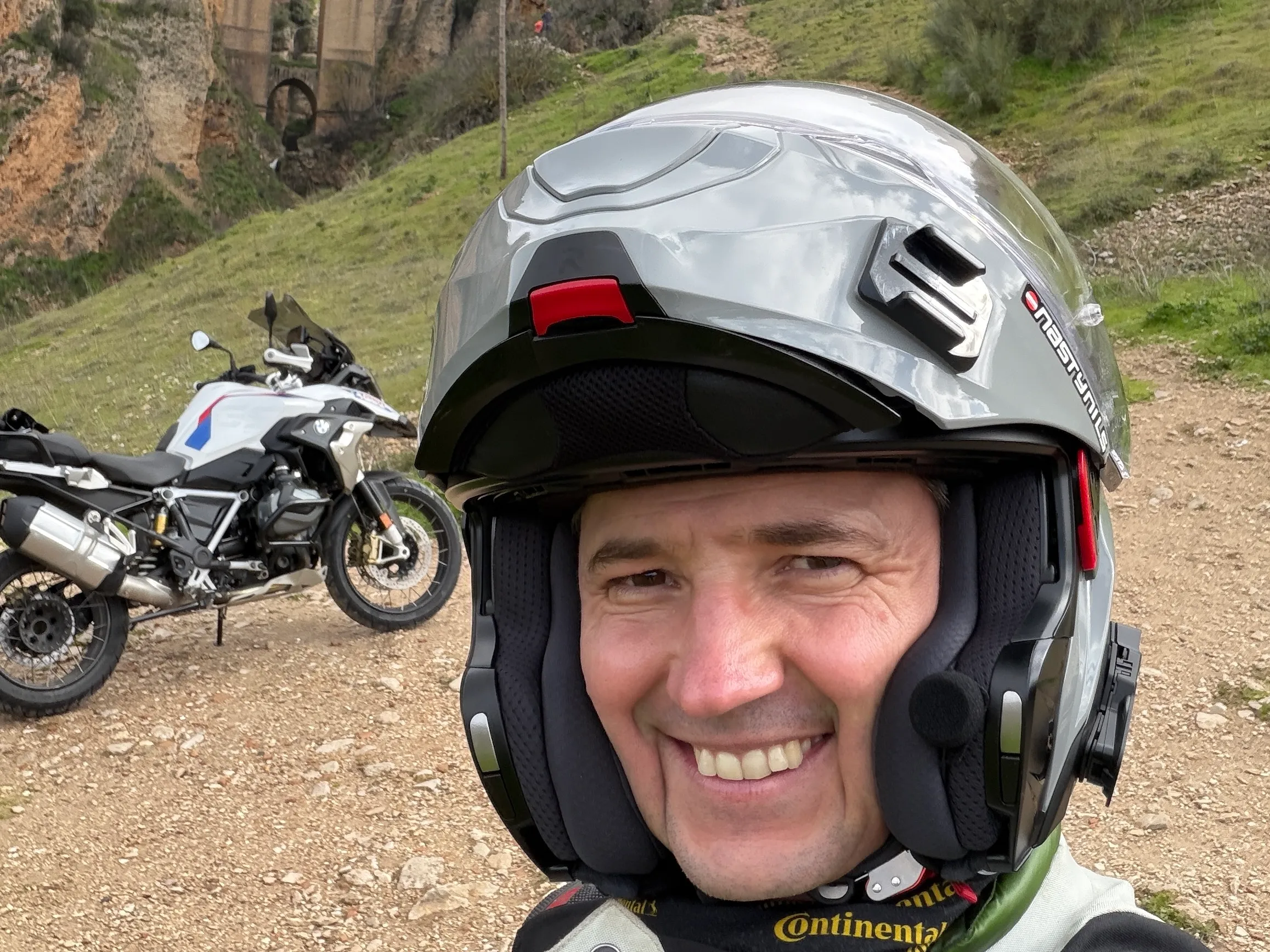
Nils rode the S 1000 XR in 2020, and in Andalusia in 2021 (NastyNils Testride).
R 1250 GS
Once it's rolling, the R 1250 GS carries its boxer crank low in the frame and settles onto its line. Hard on the brake lever, the Telelever front won't let the nose dive. Down a steep descent on the Beartooth Highway, the brakes hold as strong as they do at speed. Wet switchbacks still feel worth riding.
Nils rode the R 1250 GS in 2019, in Andalusia and Spain in 2021, in Austria and the Pyrenees in 2022, and in Andalusia in 2026 (NastyNils Testride).
The Voice of Experience
What actually separates them
- The S 1000 XR has the lower wet weight: 498 lb (226 kg) vs 549 lb (249 kg).
- The S 1000 XR makes more peak power: 165 hp (121 kW) vs 136 hp (100 kW).
- The R 1250 GS makes more peak torque: 105 lb-ft (143 Nm) vs 84 lb-ft (114 Nm).
Which one for the way you ride
A confidence-building first motorcycle
Not built for this
Neither one is where you should learn. Get a season on something gentler first.
Who each one is built for
What's good, and what you'll live with
S 1000 XR
What owners say
Strengths
- Superbike-level engine performance
- Agile and precise handling
- Comprehensive standard electronics
- Powerful and progressive braking
Trade-offs
- Firm suspension even in softer modes
- Ineffective stock wind protection
R 1250 GS
Strengths
- Boxer torque from the bottom
- All-day touring comfort
- Light steering, full luggage
- An engine that just lasts
- Brakes that outlast belief
Trade-offs
- Driveshaft corrosion is real
- Notchy, imprecise gearbox
- Weight kills off-road nerve
- Convenience electronics wear out
- Mass at standstill and during low-speed manoeuvres
Known problems to check before you buy
S 1000 XR
No confirmed faults on file yet. That's not the same as fault-free.
R 1250 GS
- Gearbox input shaft overload risk under repeated rapid speed differentials Recall 23V011000 Under specific operating conditions, repeated rapid speed differentials between engine and final drive can overload the gearbox input shaft, leading to shaft damage or breakage and possible rear-wheel lock-up. BMW issued a worldwide ECU software update (drivetrain protection software) in January 2023. The KBA mandated remedy completion by December 2023 in Germany under threat of operating ban.
- Front brake caliper inner seal incompatibility — fluid weeping while parked Recall 20V476000 Inner seal/seal-groove incompatibility on certain front brake calipers can cause brake fluid to weep while the motorcycle is parked. Reduced reservoir level over time impairs braking performance. Fails FMVSS 122. Affects motorcycles produced 13 September 2018 – 13 March 2020 (NHTSA campaign 20V476000).
- Paralever joint pin material non-conformance — risk of contact with rear wheel spokes (NHTSA Recall 20V-165) Recall 20V165000 Material non-conformance on the Paralever joint pin on a small batch of bikes produced 31 October 2019 – 30 January 2020 (R 1250 GS / GSA / R nineT family). The defective component could contact rear-wheel spokes — potential loss of control. Approximately 440 units affected across DK, IE, UK, IT.
- Condensation in Paralever swingarm corrodes drive shaft splines Condensation collects in the hollow Paralever swingarm and corrodes the drive shaft and U-joint splines, eventually impairing power transfer. BMW issued voluntary worldwide Service Action 0033130000 covering ~440,000 R 1200 / R 1250 GS bikes. Production fix from October 2021 onward; later units carry two vent valves.
- Steady-throttle surge in the 2,500–3,000 rpm cruising window Steady-throttle surging in the 2,500–3,000 rpm window, characteristic of Euro-spec lean fuelling for emissions compliance. Some dealers advise against cruising in that range. Aftermarket fuelling modules (BoosterPlug, AF-Xied) are commonly used to mitigate. The MY2021 Euro 5 recalibration changed fuelling but did not fully eliminate the complaint pattern.
- TFT blank screen, "white box" artifact, Connectivity App pairing failures Reports of the TFT display going blank at startup, displaying a "white box" artifact, or failing to pair reliably with the BMW Motorrad Connected app via Bluetooth. Often correlated with weak/aging battery; usually resolved by software update or battery replacement.
- Audible left-cylinder ticking — undersized cam chain tensioner Audible ticking or rattle from the left cylinder, especially once warmed up. Caused by an undersized left-side cam chain tensioner allowing slack in the cam chain. BMW released an updated tensioner part (P/N 11317108586) with revised internal dimension. Some bikes show the noise as early as 930 mi (1,500 km). Not confirmed to compromise engine longevity, but persistent and a very common owner complaint.
- Exhaust servo-actuated flap valve seizes / fails The servo-actuated exhaust flap (in the collector / front pipe area, present for noise-emissions homologation) seizes or fails, sometimes as early as 4,700–8,000 mi. Triggers warning lights. The bike runs without performance impact if a flap-eliminator module is fitted. Replacement of front pipes has been done under warranty in multiple cases.
- Brake fluid reservoir cap labelling non-compliance Recall 20V166000 The brake fluid reservoir cap may not clearly state the required brake fluid type — risk of incorrect fluid being added during top-up. Replacement label/cap issued.
- Tire pressure / vehicle label adhesion non-compliance (FMVSS 120) Recall 20V495000 Tire pressure / vehicle labels may not remain affixed to the bike, contrary to FMVSS 120 compliance. Replacement labels issued.
What they cost used
These prices compare a 6-year-old S 1000 XR with a 6-year-old R 1250 GS.
- S 1000 XR
- $12,600
- R 1250 GS
- $14,500
At six years old, the BMW S 1000 XR sits around $12,600 while the BMW R 1250 GS runs about $14,500. That's a $1,900 gap in the XR's favor. These are recorded figures from the used market, not live listings.
What they share
- Fuel capacity
- 5.3 US gal (20 L)
- Gearbox
- 6-speed
Where the spec sheets split
| S 1000 XR | R 1250 GS | |
|---|---|---|
| Seat height | 33.1 in (840 mm) | 33.5 in (850 mm) |
| Wet weight | 498 lb (226 kg) | 549 lb (249 kg) |
| S 1000 XR | R 1250 GS | |
|---|---|---|
| Displacement | 999 cc | 1254 cc |
| Engine | Inline-four | Flat-twin (boxer) |
| Cooling | Liquid-cooled | Air/liquid-cooled |
| Power | 165 hp (121 kW) | 136 hp (100 kW) |
| Torque | 84 lb-ft (114 Nm) | 105 lb-ft (143 Nm) |
| S 1000 XR | R 1250 GS | |
|---|---|---|
| Fuel economy | 38 mpg (US) / 6.2 L/100 km | 50 mpg (US) / 4.75 L/100 km |
| S 1000 XR | R 1250 GS | |
|---|---|---|
| Final drive | Chain | Shaft |
| Front brake | 320 mm | 305 mm |
| Front tire | 120/70-17 | 120/70-19 |
| Rear tire | 190/55-17 | 170/60-17 |
| Wheelbase | 61.1 in (1552 mm) | 59.6 in (1514 mm) |
| Front travel | 5.9 in (150 mm) | 7.5 in (190 mm) |
| Rear travel | 5.9 in (150 mm) | 7.9 in (200 mm) |
What comes fitted, what costs extra
| S 1000 XR | R 1250 GS | |
|---|---|---|
| Electronic Suspension | Standard | Option |
| Steering Damper | Standard | Not offered |
| Cruise Control | Option | Standard |
| USB Charging Port | Not offered | Standard |
| Tire Pressure Monitoring (TPMS) | Option | Standard |
Head to head, area by area
Both bikes on the same scale, one area at a time.