By NastyNils·
Motorcycle comparison · Retro Classic vs Naked Bike
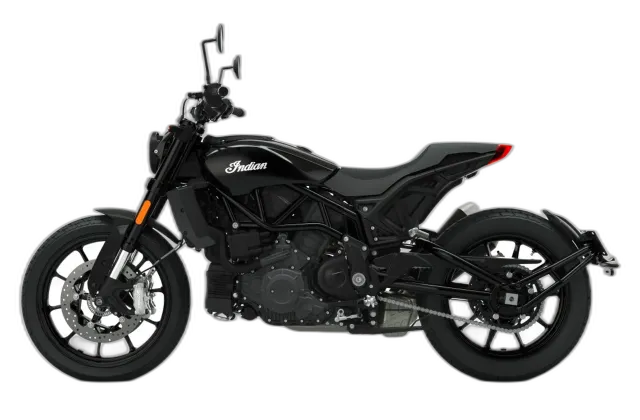
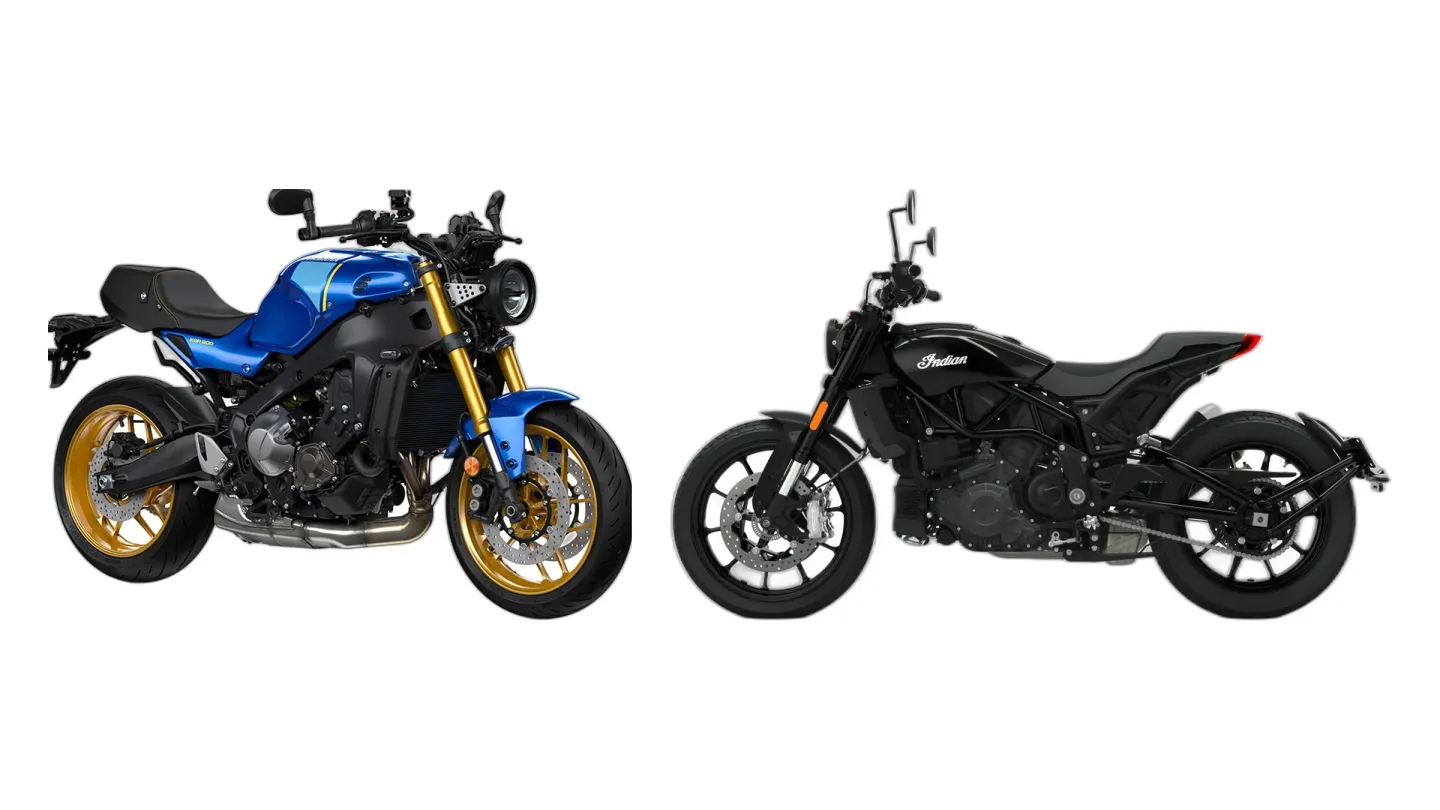
Yamaha XSR900 (RN43) vs Indian FTR (MY2019-S)
Yamaha XSR900 vs Indian FTR: two kinds of bike, and who each one is for.
Right at turn-in, the Yamaha XSR900 doesn't need a shove on its wide bar to flick into the bend. The Indian FTR's steering turns its bulk into a precise carve.
So which one do you buy?
Buy the XSR900 if…
Keeping running costs low
The pick: XSR900
For a rider watching every dollar after the sale, the XSR900 is the clear choice.
The XSR900 has the edge if…
Sporty riding on twisty roads
A touch ahead: XSR900
The XSR900 is a touch more fun when the road starts bending. Put it down to lighter steering and more feel through the bars.
Daily commuting & city riding
Edges it: XSR900
On the way to work, the XSR900 asks a little less of you. What tips it: a smaller footprint and lower running costs. Close enough that the test ride should settle it.
Which one's the smarter buy
Apples and oranges
The XSR900 and FTR do different jobs, so neither is the clear better buy for the money.
What makes each one tick
XSR900
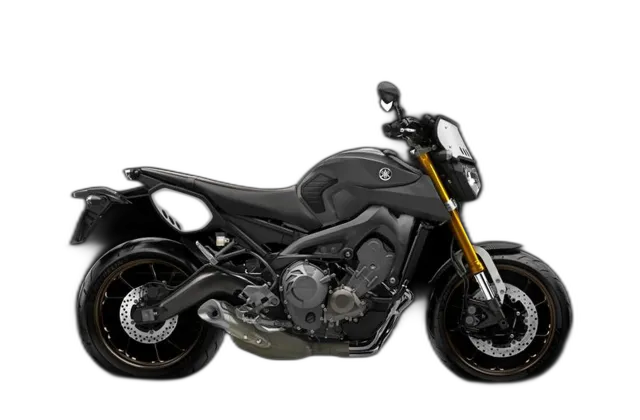
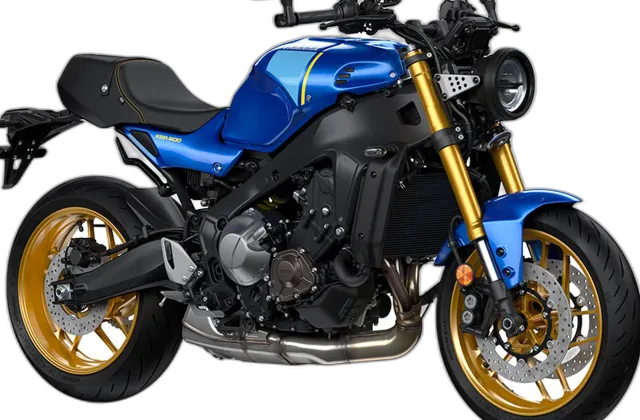
Under that sculpted tank, the XSR900's crossplane triple doesn't wait for high revs to pull hard. Torque's there as soon as the throttle opens, and the triple still won't quit revving all the way out. On the Twisted Sisters, its 430 lb (195 kg) chassis darts between apexes and doesn't get nervous once the pace climbs. The intake howls on every exit.
Nils rode the XSR900 in Styria in 2018 (NastyNils Testride).
FTR
There's instant torque from the FTR's big V-twin, and the rush keeps building at the top. Stock fueling snaps on and off. Built to slide, the stock Dunlop DT3-R tires don't give the brake lever much grip or feel on pavement. Pushed hard, its front end tracks every line.
The Voice of Experience

What actually separates them
- The XSR900 has the lower wet weight: 430 lb (195 kg) vs 508 lb (230 kg).
- The FTR makes more peak power: 125 hp (93 kW) vs 115 hp (85 kW).
- The FTR makes more peak torque: 85 lb-ft (115 Nm) vs 65 lb-ft (88 Nm).
Which one for the way you ride
Comfortable long-distance riding
Both fall short
Long days aren't what these two do best. Plan shorter legs and plenty of stops.
A confidence-building first motorcycle
Neither one fits
Both of these ask too much of a rookie. Spend your first year on something lighter.
Who each one is built for
What's good, and what you'll live with
XSR900
What owners say
Strengths
- Addictive CP3 engine character
- Neo-retro styling with premium materials
- Excellent value for money
Trade-offs
- Suspension is budget-oriented and can be harsh
- Indicator switch placement is awkward
- Mirrors offer poor rearward visibility
FTR
What owners say
Strengths
- Lusty, eager V-twin engine
Trade-offs
- Poor factory fuel mapping
- Stock Dunlop DT3-R tires lack street grip
Known problems to check before you buy
XSR900
- Handlebar holder bolt recall Recall 17V221000 On 2016-2017 models, the lower handlebar holders may not have had sufficient thread-locking agent due to improper painting, allowing bolts to loosen and potentially cause loss of control.
- Cam chain tensioner rattle on cold start The automatic cam chain tensioner on the CP3 triple uses a spring and ratchet plunger with no oil-pressure actuation. Its ratchet can fail to hold the plunger in position and back off. The cam chain then runs slack and slaps its guides, which shows up as a ticking or rattling noise from the cam chain area that is loudest on cold starts. At first it may die down once the engine warms up, but it can get worse until it is constant. If ignored, the slack chain speeds up wear on the chain guides and sliders.
FTR
- ABS brake light software fault Recall 24V069000 The ABS module software may cause inadvertent brake light illumination during certain riding conditions without rider input, increasing crash risk. Addressed via NHTSA recall 24V069000 (Indian I-24-03).
- Coolant junction leak Recall 22V636000 The coolant junction may fail and leak hot coolant onto the rider or rear tire, increasing the risk of injury or crash. This was addressed in NHTSA recall 22V636000 (Indian I-22-04).
- Cold start stalling and erratic fueling Due to the stock ECU mapping, the engine frequently stalls when cold, idles erratically, and suffers from surging and abrupt throttle response. Aftermarket ECU tuning (e.g., Dynojet PV3) resolves most symptoms.
- Gear position sensor failure The gear position sensor may intermittently fail, causing blank or incorrect gear displays on the dash.
What they cost used
These prices compare a 7-year-old XSR900 with a 7-year-old FTR.
- XSR900
- about $7,300
- FTR
- about $9,200
At seven years old, the Yamaha XSR900 sits around $7,300 while the Indian FTR runs about $9,200. That's a $1,900 gap in the XSR900's favor. These are US market estimates, not live listings.
What they share
- Cooling
- Liquid-cooled
- Gearbox
- 6-speed
- Final drive
- Chain
- Fork
- Upside-down (USD)
Where the spec sheets split
| XSR900 | FTR | |
|---|---|---|
| Seat height | 32.7 in (830 mm) | 33.1 in (840 mm) |
| Wet weight | 430 lb (195 kg) | 508 lb (230 kg) |
| XSR900 | FTR | |
|---|---|---|
| Displacement | 847 cc | 1203 cc |
| Engine | Inline-three | 60° V-twin |
| Power | 115 hp (85 kW) | 125 hp (93 kW) |
| Torque | 65 lb-ft (88 Nm) | 85 lb-ft (115 Nm) |
| XSR900 | FTR | |
|---|---|---|
| Fuel capacity | 3.7 US gal (14 L) | 3.4 US gal (12.9 L) |
| XSR900 | FTR | |
|---|---|---|
| Front tire | 120/70-17 | 120/70-19 |
| Rear tire | 180/55-17 | 150/80-18 |
What comes fitted, what costs extra
| XSR900 | FTR | |
|---|---|---|
| Cruise Control | Not offered | Standard |
| TFT Display | Not offered | Standard |
Head to head, area by area
Both bikes on the same scale, one area at a time.