By NastyNils·
Motorcycle comparison · Naked Bike
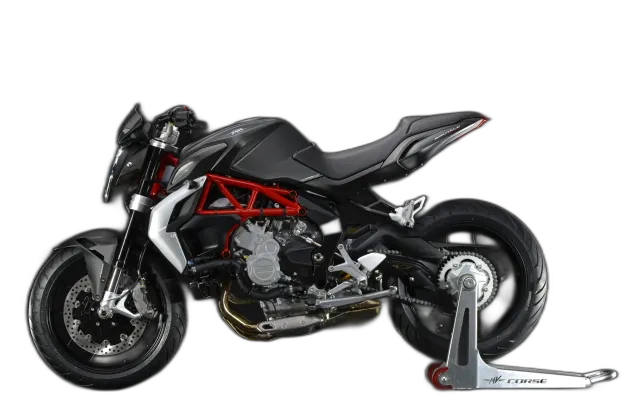
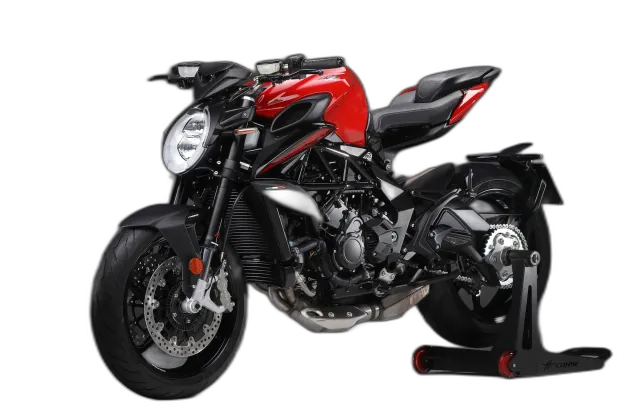
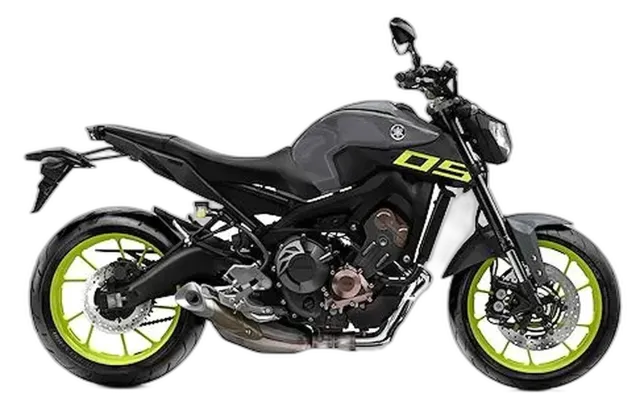
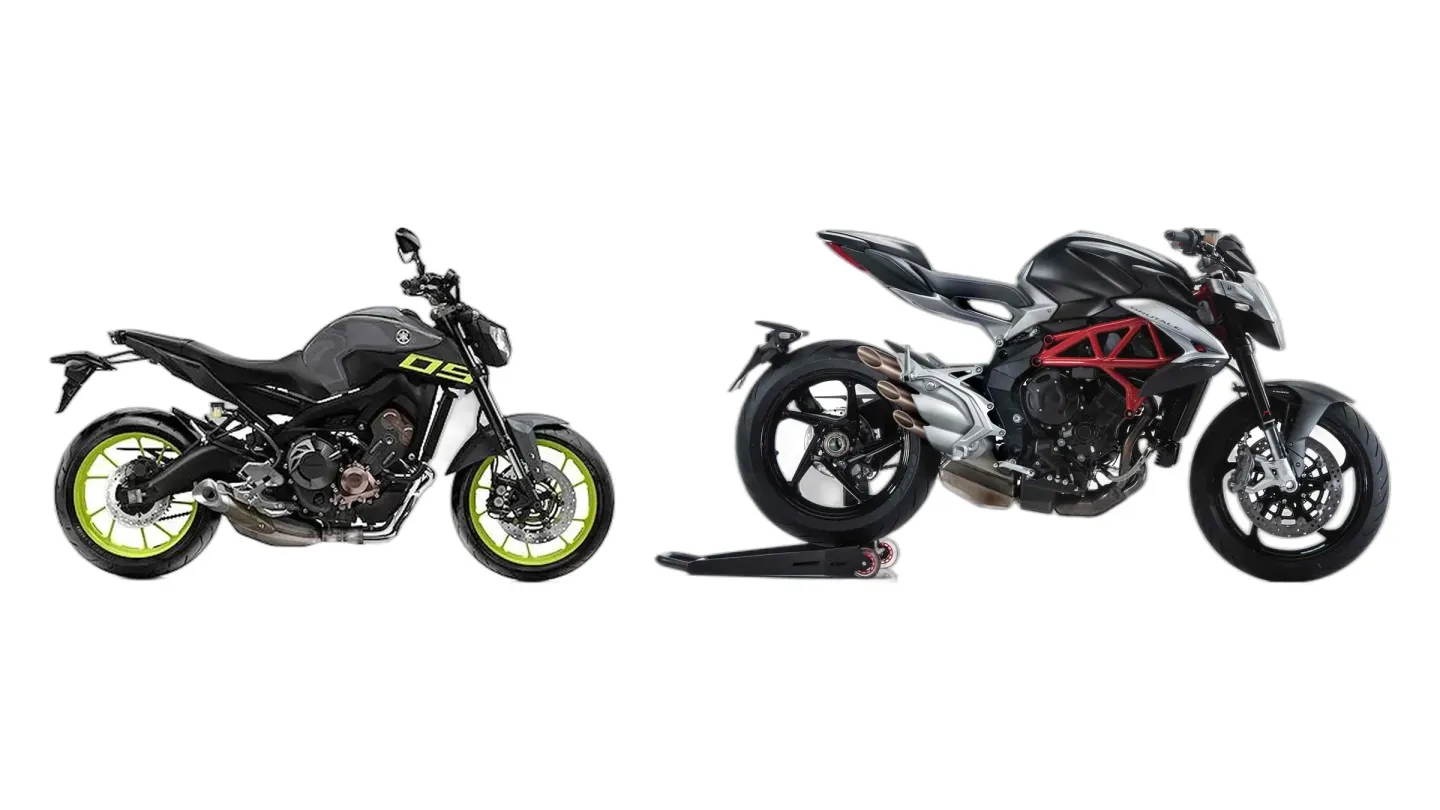
Yamaha MT-09 (RN29) vs MV Agusta Brutale 800 (MY2016)
Yamaha MT-09 vs MV Agusta Brutale 800: which one to buy, and what actually separates them.
You'll roll the Yamaha MT-09's throttle open leaving town, and the speedo's past legal before your head's caught up. There's pull all through the MV Agusta Brutale 800's rev range as you wind it on. Up top, it's all rush and howl.
So which one do you buy?
The MT-09 has the edge if…
Keeping running costs low
Small edge: MT-09
Day to day, the MT-09 works out slightly cheaper to own. The saving is small.
The Brutale 800 has the edge if…
Sporty riding on twisty roads
By a nose: Brutale 800
Once the road starts to bend, the Brutale 800 noses ahead. Most of that is more feel through the bars and a sportier chassis. Your own skill counts for more than a gap this size.
Which one's the smarter buy
Value pick: MT-09
The MT-09 is the better buy at these used prices. Its edge in reliability helps justify the lower cost.
What makes each one tick
MT-09
With a compact seat set close to the front wheel, the MT-09 lives nearer a supermoto than any touring naked. Riders coming off full-fairing bikes hoping for something more livable won't find it here. Once the brake lever has scrubbed off speed, the bike flicks from lean to lean through tight sections, and there's nothing fighting the bar. Speed shows up before you've caught up. The gearbox clicks home on every flat-out upshift.
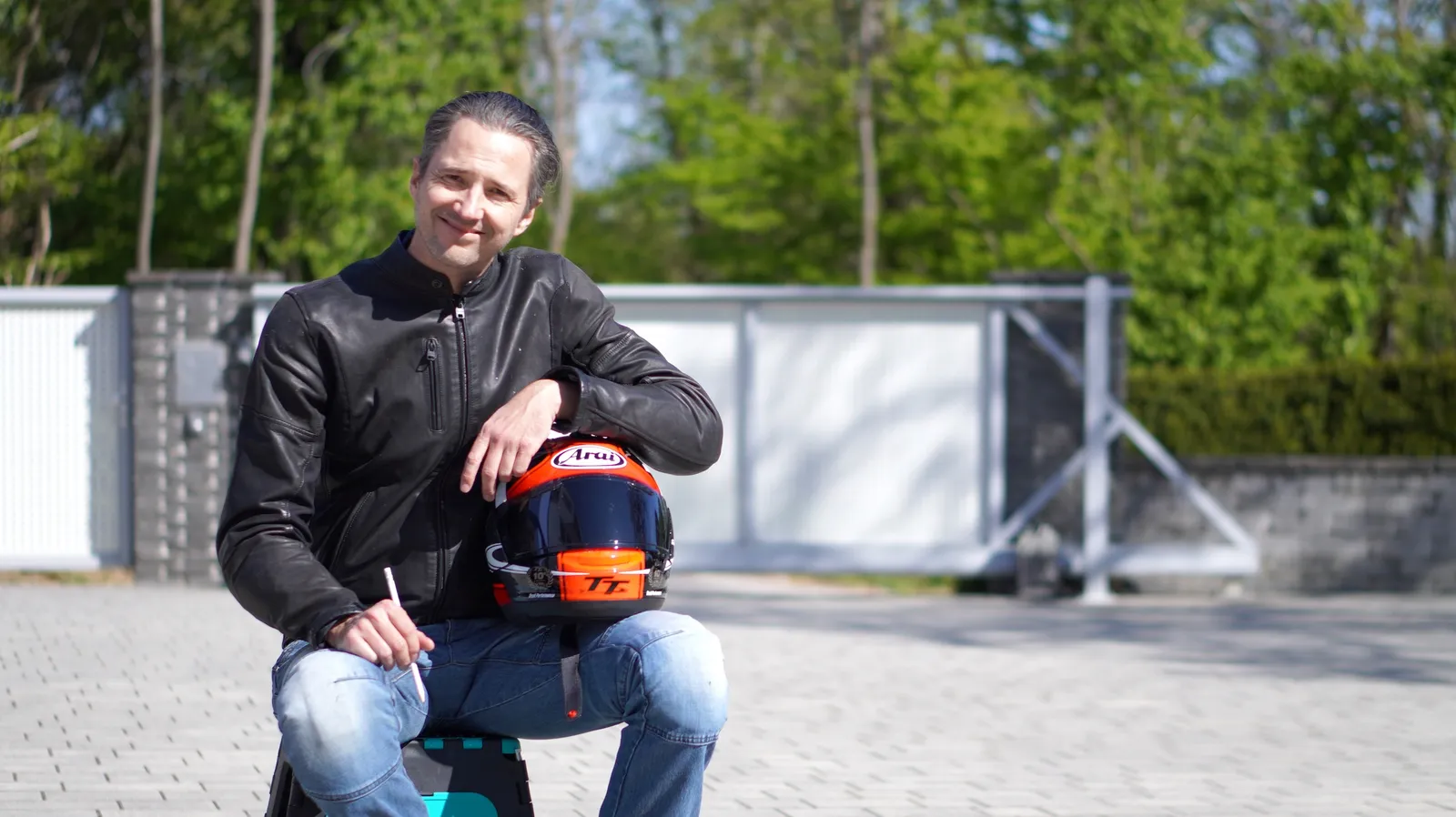
Nils rode the MT-09 in 2016 (NastyNils Testride).
Brutale 800
Spinning backward against the wheels, the Brutale's crankshaft quickens its steering. At corner entry on the Angeles Crest Highway, the bike tips in crisply and holds the line you've picked. On broken pavement, the firm damping doesn't soak much up and sends each hit into the seat. Its Brembo brakes bite hard.
The Voice of Experience
What actually separates them
- The MT-09 has the lower seat: 32.1 in (815 mm) vs 32.7 in (830 mm).
- The MT-09 has the lower wet weight: 414 lb (188 kg) vs 454 lb (206 kg).
- The MT-09 makes more peak torque: 65 lb-ft (88 Nm) vs 61 lb-ft (83 Nm).
Which one for the way you ride
Comfortable long-distance riding
Both fall short
Long days aren't what these two do best. Plan shorter legs and plenty of stops.
A confidence-building first motorcycle
Look elsewhere
For a brand-new rider, both are the wrong place to start. Learn the basics on a smaller bike first.
Count commuting as a draw. The deal on the table and the condition of the bike matter more here.
Who each one is built for
What's good, and what you'll live with
MT-09
Strengths
- Smooth, willing triple
- Serious low-end pull
- Flicks like a supermoto
- Surprising highway composure
- Flawless gearbox and finish
Trade-offs
- Not a comfort upgrade
- Supermoto-level touring comfort
- Nervous in fast sweepers
- Soft, underdamped stock suspension
- Snatchy throttle response
Brutale 800
What owners say
Strengths
- Characterful inline-three engine
- Superb braking performance
- Top-shelf components and finish
Trade-offs
- Firm suspension over rough roads
- High purchase and running costs
- Limited comfort for long rides
- Aggressive throttle response
Known problems to check before you buy
MT-09
- Excessively aggressive throttle response causing jerky on/off transitions The ECU's fuel mapping creates abrupt power delivery during throttle transitions. In A and Standard modes, small throttle movements cause disproportionate power changes. Fuel cut functionality above ~4,500 rpm shuts off injectors during deceleration, then reapplies fuel abruptly when RPM drops — creating a pronounced jerk. Most problematic at low speeds in urban riding. Yamaha partially addressed this with a revised ECU map for 2015, and offered free reflash to 2014 owners. Some 2014 units shipped with improved mapping. Aftermarket ECU flashing (2 Wheel DynoWorks, vcyclenut, Ivan's Performance) available for ~$350 USD.
- Throttle position sensor malfunction causing hesitation, surging, or stalling TPS wiring or connectors may become damaged, loose, or corroded, sending faulty or no signals to the ECU. Symptoms include hesitation, surging, stalling, or poor performance. Can trigger fault codes.
- Intermittent engine cutout at idle and during low-speed deceleration Engine cuts out at traffic lights, during slow maneuvering, or when decelerating to a stop. The ECU reduces fuel supply too aggressively near idle. Related to throttle body synchronization issues in some cases. Problem can worsen in hot weather.
- Stock front fork and rear shock lack adequate damping for performance Front fork too soft in compression and rebound for the bike's power and weight. Rear shock loses damping control under aggressive use. Dive under braking is excessive. Rear end feels unsettled over bumps. Multiple aftermarket suspension companies (K-Tech, Öhlins, YSS, Nitron) offer complete replacement units, indicating strong market demand for upgrades.
- O2 sensor failures when exposed to heavy rain or pressure washing The O2 sensor is vulnerable to water ingress. Heavy rain, deep puddles, or pressure washing can cause sensor failure, triggering engine warning light and poor running. The sensor's position makes it susceptible to road spray. At low constant throttle, O2 sensor cycling between lean/rich creates lumpy engine running. Solutions include O2 sensor eliminator, Power Commander, or ECU flash that disables O2 sensor cycling at low RPM.
Brutale 800
- Electrical gremlins (switches and sensors) Intermittent electrical issues include failing sensors, warning lights, and occasional starting problems. Often linked to poor connections or sensor failure.
What they cost used
These prices compare a 10-year-old MT-09 with a 10-year-old Brutale 800.
- MT-09
- about $6,000
- Brutale 800
- about $10,600
At ten years old, the Yamaha MT-09 sits around $6,000 while the MV Agusta Brutale 800 runs about $10,600. That's a $4,600 gap in the MT-09's favor. These are US market estimates, not live listings.
What they share
- Engine
- Inline-three
- Cooling
- Liquid-cooled
- Gearbox
- 6-speed
- Final drive
- Chain
- Fork
- Upside-down (USD)
- Front tire
- 120/70-17
- Rear tire
- 180/55-17
Where the spec sheets split
| MT-09 | Brutale 800 | |
|---|---|---|
| Seat height | 32.1 in (815 mm) | 32.7 in (830 mm) |
| Wet weight | 414 lb (188 kg) | 454 lb (206 kg) |
| MT-09 | Brutale 800 | |
|---|---|---|
| Displacement | 847 cc | 798 cc |
| Power | 115 hp (85 kW) | 118 hp (86 kW) |
| Peak power at | 10,000 rpm | 11,500 rpm |
| Torque | 65 lb-ft (88 Nm) | 61 lb-ft (83 Nm) |
| Peak torque at | 8,500 rpm | 7,600 rpm |
| Top speed | 130 mph (210 km/h) | 147 mph (237 km/h) |
| MT-09 | Brutale 800 | |
|---|---|---|
| Fuel capacity | 3.7 US gal (14 L) | 4.4 US gal (16.6 L) |
| MT-09 | Brutale 800 | |
|---|---|---|
| Front brake | 298 mm | 320 mm |
What comes fitted, what costs extra
| MT-09 | Brutale 800 | |
|---|---|---|
| ABS | Option | Standard |
| Quickshifter | Not offered | Standard |
| Slipper Clutch | Not offered | Standard |
| LED Headlight | Not offered | Standard |
Head to head, area by area
Both bikes on the same scale, one area at a time.