By NastyNils·
Motorcycle comparison · Naked Bike
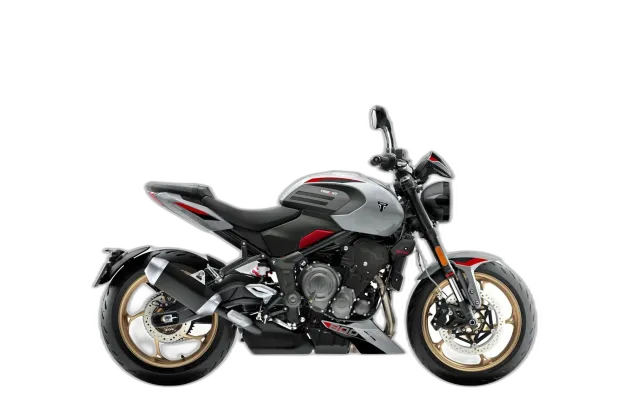
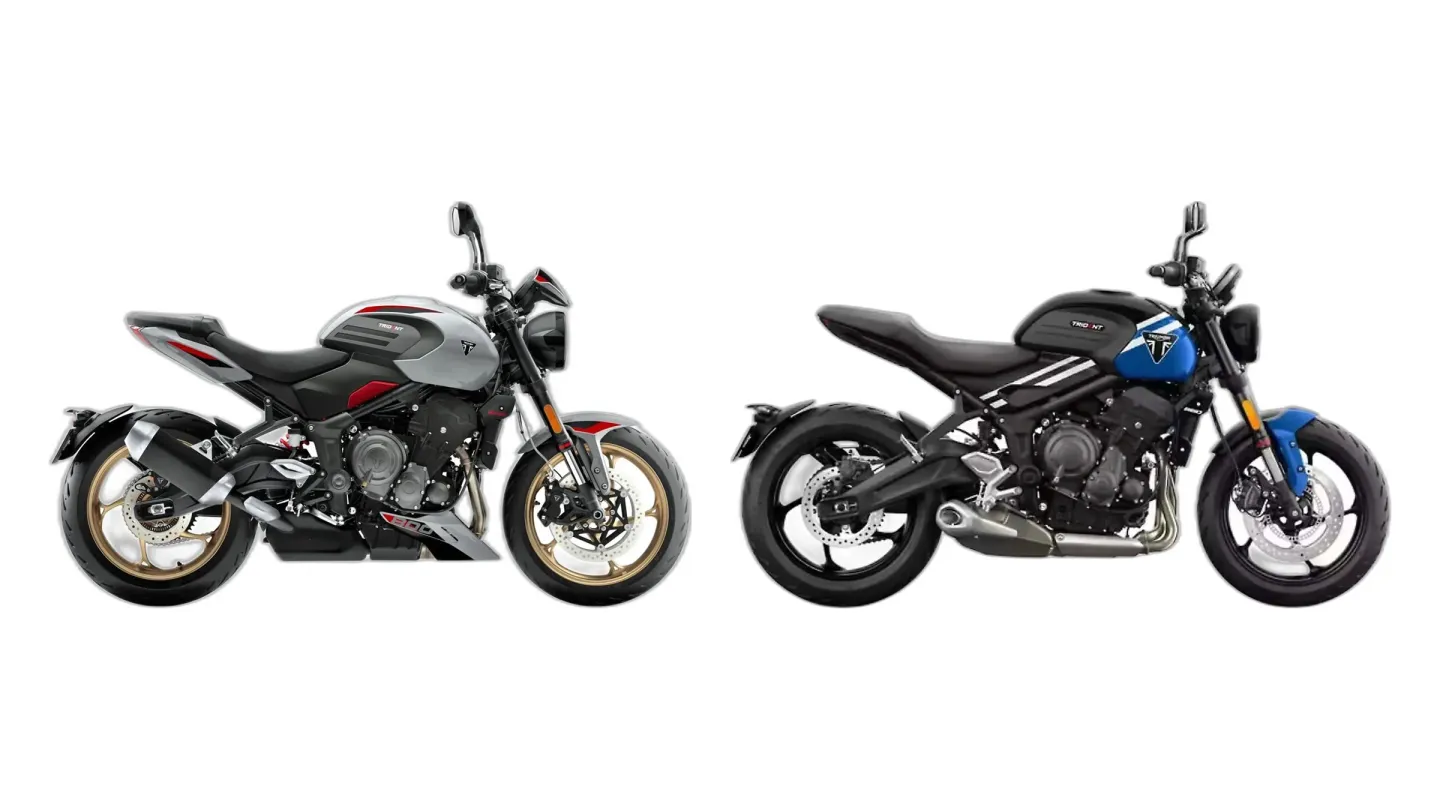
Triumph Trident 800 (MY2026) vs Trident 660 (MY2021)
Triumph Trident 800 vs Trident 660: no fairing, no excuses. Here's how to pick.
You'll feel the Triumph Trident 800 stay planted as you squeeze the brake lever from speed, and it's forgiving if you grab too much. The Triumph Trident 660's lever bites predictably right to the limit.
What makes each one tick
Trident 800
The Trident 800 seats you tall and upright, and there's room to shift around on the seat. Any twist of the throttle draws an even pull from the triple that keeps building until the top end rushes in. The exhaust hums its three-cylinder song.
Trident 660
The Trident 660's fork and shock suit a solo rider of average build on reasonable pavement. Preload is the only suspension adjustment on offer. Snap down through the gears on a heavy braking point and the rear stays composed. A passenger or a heavier rider pushes the setup past what it'll handle. The triple's voice doesn't shout. A tall rider's knees settle at an easy angle.
Nils rode the Trident 660 in 2021 (NastyNils Testride).
The Voice of Experience

What actually separates them
- The Trident 660 has the lower wet weight: 417 lb (189 kg) vs 437 lb (198 kg).
- The Trident 800 makes more peak power: 113 hp (85 kW) vs 80 hp (60 kW).
- The Trident 800 makes more peak torque: 62 lb-ft (84 Nm) vs 47 lb-ft (64 Nm).
Which one for the way you ride
Comfortable long-distance riding
Wrong job for both
Both of these get tiring on a long day. A proper tourer will treat you better on big miles.
A confidence-building first motorcycle
No verdict: Trident 800
The Trident 800 isn't a first bike. Learn on something gentler and come back to it later.
They come out level on commuting, twisty roads, and running costs. The better-kept used example is the smarter money.
Who each one is built for
What's good, and what you'll live with
Trident 800
What owners say
Strengths
- Relaxed, all-day-comfort ergonomics
- Smooth, powerful, and characterful inline-triple engine
Trident 660
From Nils' own saddle time
Strengths
- Linked Corners Come Naturally
- Torque Everywhere, No Dead Spots
- A Triple Note Worth Hearing
- Friendlier Than It Looks For Tall Riders
- Light Clutch, Precise Controls
Trade-offs
- Unsettled On Broken Pavement
- Preload Is Your Only Adjustment
- Rider Aids Play It Safe
- Seat Softens Under You
What they share
- Engine
- Inline-three
- Cooling
- Liquid-cooled
- Gearbox
- 6-speed
- Final drive
- Chain
- Fork
- Upside-down (USD)
- Front brake
- 310 mm
- Front tire
- 120/70-17
- Rear tire
- 180/55-17
Where the spec sheets split
| Trident 800 | Trident 660 | |
|---|---|---|
| Seat height | 31.9 in (810 mm) | 31.7 in (805 mm) |
| Wet weight | 437 lb (198 kg) | 417 lb (189 kg) |
| Trident 800 | Trident 660 | |
|---|---|---|
| Displacement | 798 cc | 660 cc |
| Power | 113 hp (85 kW) | 80 hp (60 kW) |
| Peak power at | 10,750 rpm | 10,250 rpm |
| Torque | 62 lb-ft (84 Nm) | 47 lb-ft (64 Nm) |
| Peak torque at | 8,500 rpm | 6,250 rpm |
| Trident 800 | Trident 660 | |
|---|---|---|
| Fuel capacity | 3.8 US gal (14.3 L) | 3.7 US gal (14 L) |
What comes fitted, what costs extra
| Trident 800 | Trident 660 | |
|---|---|---|
| Manually Adjustable Front Suspension | Standard | Not offered |
| Quickshifter | Standard | Option |
| Smartphone Connectivity | Standard | Option |
Head to head, area by area
Both bikes on the same scale, one area at a time.