By NastyNils·
Motorcycle comparison · Naked Bike
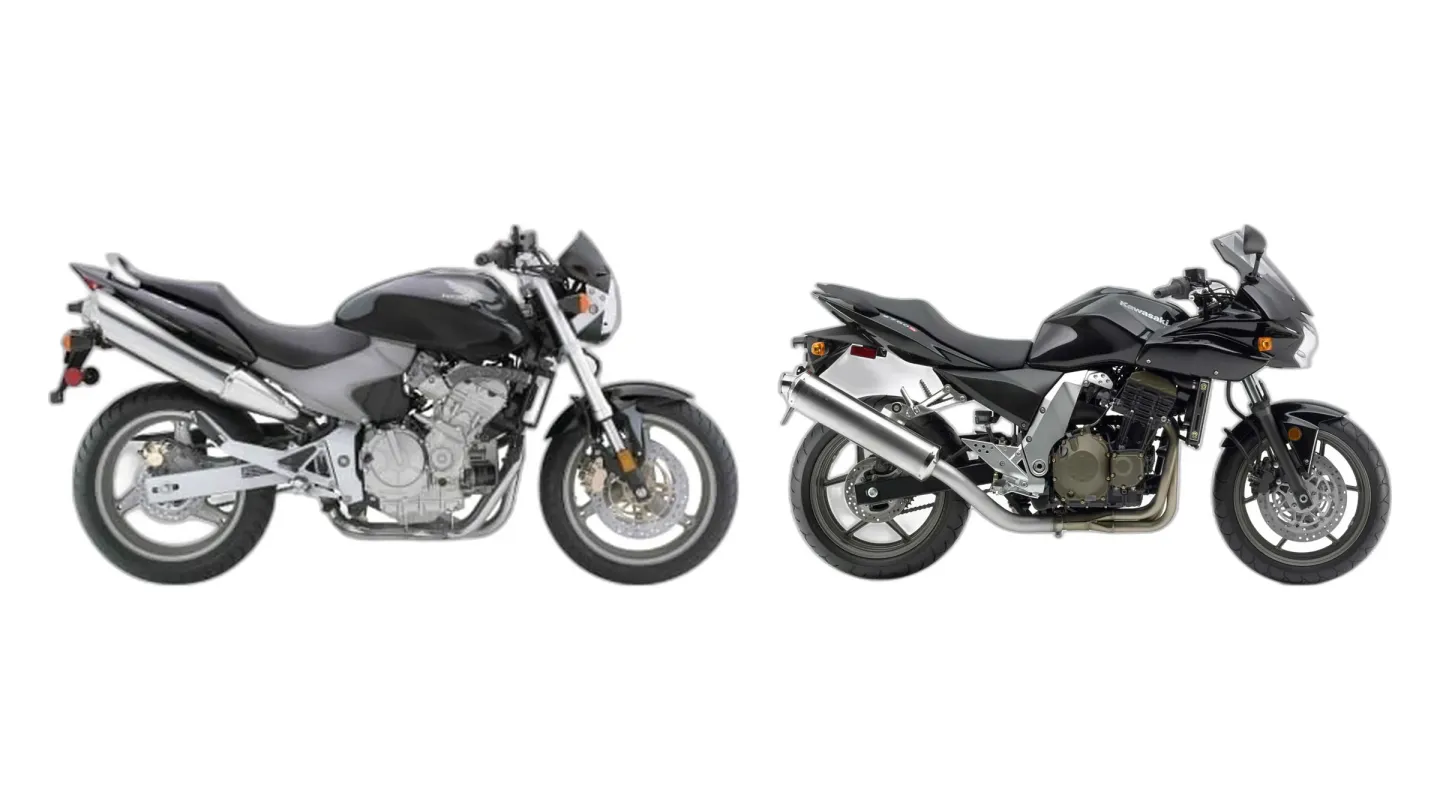
Honda CB600F Hornet (PC 36 USD) vs Kawasaki Z 750S (Z750S-MY2005)
Honda CB600F Hornet vs Kawasaki Z 750S: no fairing, no excuses. Here's how to pick.
Tip the Honda CB600F Hornet into a bend and it's pointing at the apex almost before you've leaned it over. On the Kawasaki Z 750S, the steel frame holds the steering neutral as you add lean. It settles and carves on through the exit.
So which one do you buy?
The CB600F Hornet has the edge if…
Sporty riding on twisty roads
Edges it: CB600F Hornet
On a twisty road, the CB600F Hornet edges ahead. Credit more feel through the bars and stronger brakes. Not by enough to settle it alone.
Daily commuting & city riding
Small edge: CB600F Hornet
Day in, day out, the CB600F Hornet nudges ahead in traffic. Thank friendlier manners and lighter steering for that. It isn't a big enough gap to plan around.
What makes each one tick
CB600F Hornet
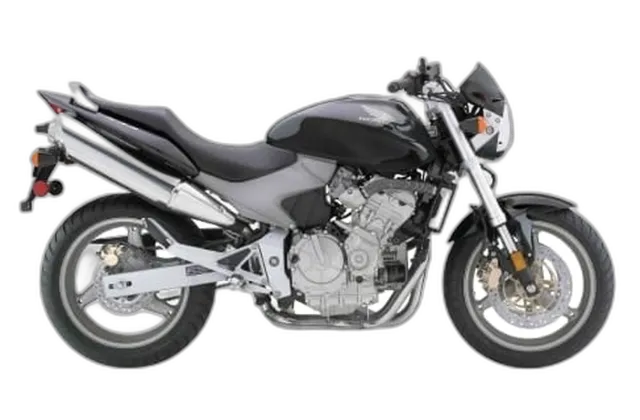
The Hornet's four doesn't really wake up until the tach needle climbs high, where the bars and pegs start to buzz. An upside-down fork meets the bumps up front while the Hornet keeps its line. The four surges right to redline.
Z 750S
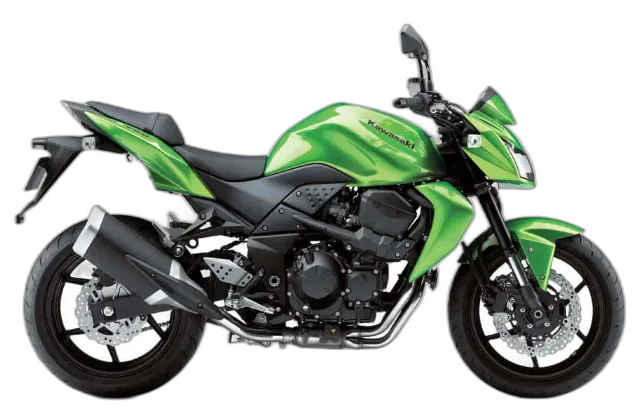
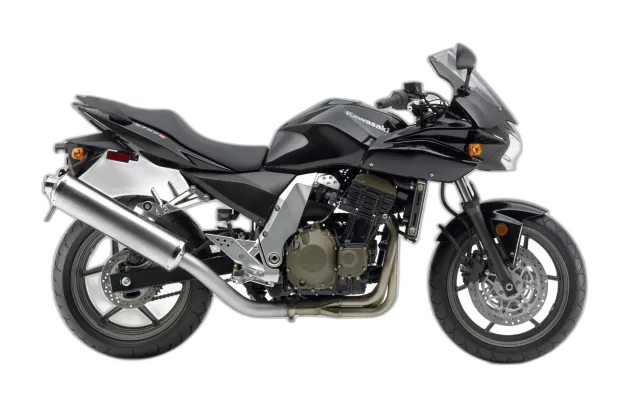
There's real distance in the Z 750S, since its little nose fairing and tall screen lift the windblast clear of the bars. The plain fork goes soft once you're pushing hard, while the rear shock's thin rebound damping thumps over every bump. Corner entry doesn't faze the compact chassis, and the bike drops into the turn quickly. Smooth pavement lets it hunt corners.
The Voice of Experience

What actually separates them
- The CB600F Hornet has the lower seat: 31.1 in (790 mm) vs 32.1 in (815 mm).
- The CB600F Hornet has the lower wet weight: 437 lb (198 kg) vs 483 lb (219 kg).
- The Z 750S makes more peak power: 110 hp (81 kW) vs 97 hp (71 kW).
Which one for the way you ride
Comfortable long-distance riding
Both fall short
Big miles aren't where either one shines. You'll be watching for the next rest stop.
A confidence-building first motorcycle
Not their thing
If this is your first motorcycle, keep looking. Neither one makes learning easy.
On trips with luggage, these two are a wash. That's where your budget and your inseam get the final say.
Who each one is built for
What's good, and what you'll live with
CB600F Hornet
What owners say
Strengths
- Lively and agile handling
- Strong, high-revving engine
- Affordable first big bike
Trade-offs
- Noticeable engine vibration
Z 750S
What owners say
Strengths
- Exceptional value for money
- Sporty yet comfortable high-speed chassis
- Reliable with regular maintenance
Trade-offs
- Budget two-piston front brakes
- Unadjustable, crashy suspension
- Uncomfortable seat and useless mirrors
What they share
- Engine
- Inline-four
- Cooling
- Liquid-cooled
- Gearbox
- 6-speed
- Final drive
- Chain
- Front tire
- 120/70-17
- Rear tire
- 180/55-17
Where the spec sheets split
| CB600F Hornet | Z 750S | |
|---|---|---|
| Seat height | 31.1 in (790 mm) | 32.1 in (815 mm) |
| Wet weight | 437 lb (198 kg) | 483 lb (219 kg) |
| CB600F Hornet | Z 750S | |
|---|---|---|
| Displacement | 599 cc | 748 cc |
| Power | 97 hp (71 kW) | 110 hp (81 kW) |
| Peak power at | 12,000 rpm | 10,750 rpm |
| Torque | 46 lb-ft (63 Nm) | 55 lb-ft (75 Nm) |
| Peak torque at | 10,000 rpm | 8,200 rpm |
| Top speed | 130 mph (210 km/h) | 138 mph (222 km/h) |
| CB600F Hornet | Z 750S | |
|---|---|---|
| Fuel capacity | 4.5 US gal (17 L) | 4.8 US gal (18 L) |
| CB600F Hornet | Z 750S | |
|---|---|---|
| Fork | Upside-down (USD) | Telescopic |
| Front brake | 296 mm | 300 mm |
| Wheelbase | 56.5 in (1435 mm) | 56.3 in (1429 mm) |
Head to head, area by area
Both bikes on the same scale, one area at a time.