By NastyNils·
Motorcycle comparison · Naked Bike vs Hyper Naked
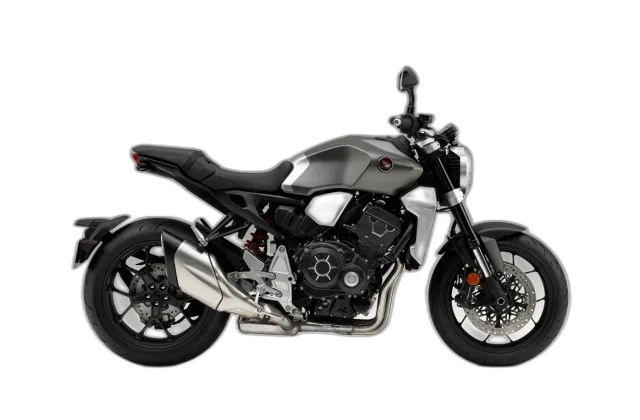
Honda CB1000R (SC80) vs Kawasaki Z1000 (ZZRT00F)
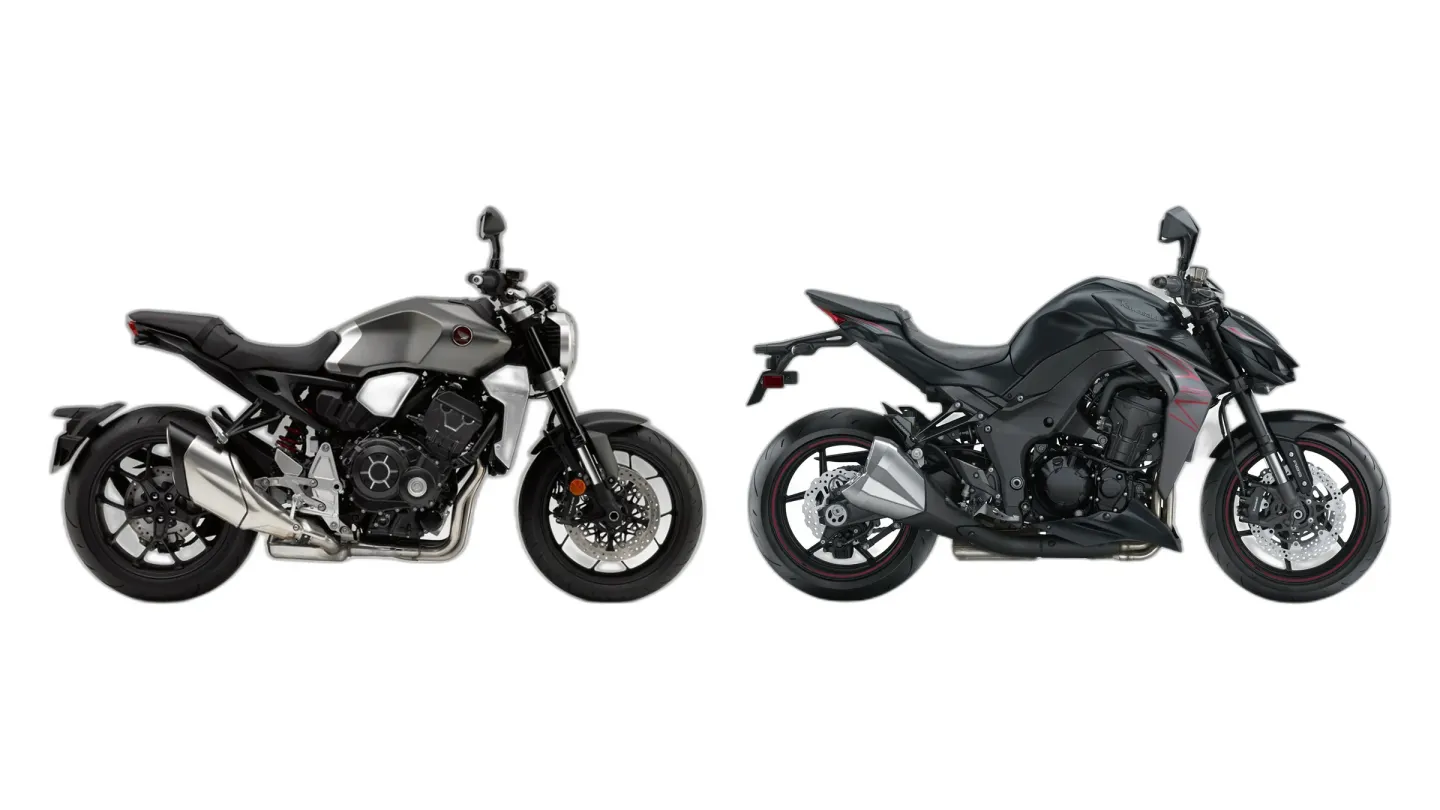
Honda CB1000R vs Kawasaki Z1000: which one to buy, and what actually separates them.
You'll feel the Honda CB1000R's front go light as you wind it out in a low gear, and it'll lift clean off a corner exit. On the Kawasaki Z1000, the throttle spins up a motor that's carrying real flywheel mass. Every blip and downshift lands with physical weight.
So which one do you buy?
The CB1000R has the edge if…
Riding two-up with a passenger
By a nose: CB1000R
Carrying a passenger, the CB1000R noses ahead. That comes from a better reliability record. The person on the back may well disagree.
Daily commuting & city riding
Edges it: CB1000R
For the Monday-to-Friday grind, the CB1000R pulls a nose in front. Your own commute could easily flip it.
The Z1000 has the edge if…
Sporty riding on twisty roads
A touch ahead: Z1000
The Z1000 nudges ahead once the pavement starts to wiggle. Don't expect a night-and-day difference.
Which one's the smarter buy
Apples and oranges
The CB1000R and Z1000 sit in different classes, so value is a trade-off. Neither is the obvious better buy for the money.
What makes each one tick
CB1000R
Through the tight switchbacks of the Angeles Crest Highway, the CB1000R snaps from one lean to the next on a precise line, and the rear doesn't ever threaten to step out. Even at closed-road speed, it doesn't get loose or nervous and simply runs straight. Short gearing keeps it running hard. The stock suspension's calibrated for a full road day.
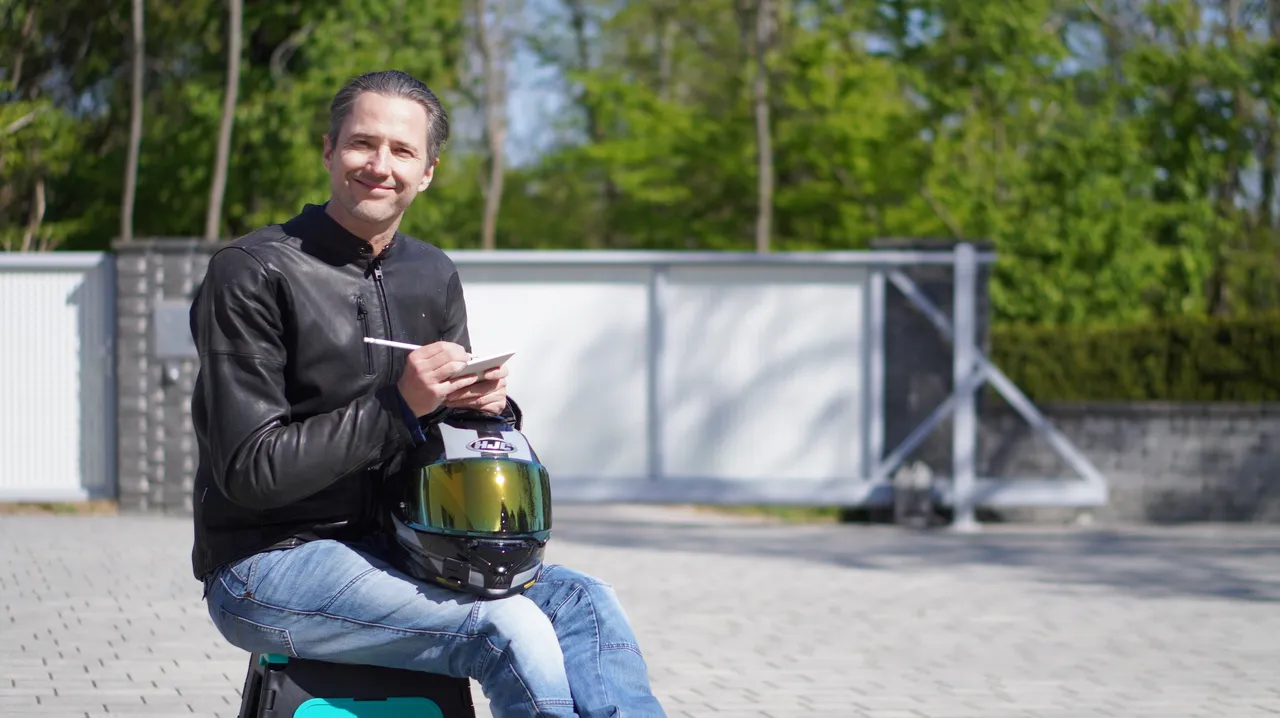
Nils rode the CB1000R in Andalusia in 2018 (NastyNils Testride).
Z1000
There's no performance script running inside the Z1000's inline-four, which answers directly and without artificial drama. A careful roll-on brings a deliberate surge. There's no nervous push-back as the bike turns into a corner. The chassis holds steady right through the hairpins.
Nils rode the Z1000 in 2014 and 2025 (NastyNils Testride).
The Voice of Experience
What actually separates them
- The Z1000 has the lower seat: 32.1 in (815 mm) vs 32.7 in (830 mm).
- The CB1000R has the lower wet weight: 467 lb (212 kg) vs 487 lb (221 kg).
- The Z1000 makes more peak torque: 82 lb-ft (111 Nm) vs 77 lb-ft (104 Nm).
Which one for the way you ride
Comfortable long-distance riding
Not their thing
Hours in the saddle won't flatter either of these. They're happier on shorter runs.
Traveling with luggage
Wrong job for both
Multi-day trips with luggage aren't their thing. Travel light, or travel on something else.
Who each one is built for
What's good, and what you'll live with
CB1000R
Strengths
- Quicker than it looks
- Reliability you can trust
- Planted at high speed
- Electronics that make sense
Trade-offs
- Grip cables run external
- Suspension fades at track pace
- Snatchy Sport-mode throttle
- High footpegs / cramped legroom
- Missing cruise control
Z1000
From Nils' own saddle time
Strengths
- Flywheel Mass You Actually Feel
- Linear, Then Genuinely Raw
- Motor Takes Real Mileage
- Composed Through Tight Corners
- Used Values Hold Up
Trade-offs
- Seat Gets Old In Hours
- No Wind Protection At All
- Stock Suspension Runs Firm
- No Traction Control Or Quickshifter
Known problems to check before you buy
CB1000R
- OEM LED low beam too dim and aimed too high OEM LED low beam reported as too dim and aimed too high. Reflector design limits upgrade options, and replacement optics are expensive. Owners of the later (2021–2025) bikes report improved low-beam illumination (potential unit revision); verify per individual bike.
- OEM rear shock under-damped, lacks compression adjustment The Showa monoshock is too softly damped: pogos on rough roads, bottoms over big bumps, "still goes 'boing' if you're going with gusto." Adjustment range is preload + rebound only — no compression-damping adjustment, which is criticized as mismatched to the fully-adjustable Showa SFF-BP fork up front. Many owners replace it with aftermarket units (Öhlins, K-Tech, Wilbers). Unchanged across both phases.
- Abrupt on/off throttle response in Sport mode at low RPM Pronounced on/off feel in Sport ride mode at lower RPM in 1st and 2nd gear; abruptness when reopening throttle after deceleration fuel cut; pronounced in tight cornering on bumpy roads. It traces to the drive-by-wire calibration on the early (2018–2020) bikes. Honda re-mapped the PGM-FI for Euro 5 in 2021 with optimized fueling for smoother delivery. Residual abruptness in Sport mode is still noted on the later (2021–2025) bikes but is agreed to be significantly improved.
- Thin paint and powder-coat finishes; tank weld-seam rust Engine-sump powder-coat flakes off rapidly (reports as early as approximately 200 miles); soft tank clear coat scratches very easily; rust appearing at tank weld seams under the seat; brackets and clamps going rusty quickly. Owners attribute it to water-based eco-paint regulations. Mainly the early (2018–2020) bikes, with some continuation reported on the later (2021–2025) ones.
Z1000
No confirmed faults on file yet. That's not the same as fault-free.
What they cost used
These prices compare a 7-year-old CB1000R with a 7-year-old Z1000.
- CB1000R
- about $9,000
- Z1000
- about $6,900
At seven years old, the Honda CB1000R sits around $9,000 while the Kawasaki Z1000 lands near $6,900. That's a $2,100 gap in the Z1000's favor. These are US market estimates, not live listings.
What they share
- Engine
- Inline-four
- Cooling
- Liquid-cooled
- Gearbox
- 6-speed
- Final drive
- Chain
- Fork
- Upside-down (USD)
- Front tire
- 120/70-17
- Rear tire
- 190/55-17
Where the spec sheets split
| CB1000R | Z1000 | |
|---|---|---|
| Seat height | 32.7 in (830 mm) | 32.1 in (815 mm) |
| Wet weight | 467 lb (212 kg) | 487 lb (221 kg) |
| CB1000R | Z1000 | |
|---|---|---|
| Displacement | 998 cc | 1043 cc |
| Power | 145 hp (107 kW) | 142 hp (104 kW) |
| Peak power at | 10,500 rpm | 10,000 rpm |
| Torque | 77 lb-ft (104 Nm) | 82 lb-ft (111 Nm) |
| Peak torque at | 8,250 rpm | 7,300 rpm |
| CB1000R | Z1000 | |
|---|---|---|
| Fuel capacity | 4.3 US gal (16.2 L) | 4.5 US gal (17 L) |
| CB1000R | Z1000 | |
|---|---|---|
| Wheelbase | 57.3 in (1455 mm) | 56.5 in (1435 mm) |
What comes fitted, what costs extra
| CB1000R | Z1000 | |
|---|---|---|
| Traction Control | Standard | Not offered |
| Ride Modes | Standard | Not offered |
| Wheelie Control | Standard | Not offered |
| Quickshifter | Option | Not offered |
| TFT Display | Standard | Not offered |
| Smartphone Connectivity | Standard | Not offered |
| USB Charging Port | Standard | Not offered |
| Heated Grips | Option | Not offered |
| LED Headlight | Standard | Standard (from 2017) |
Head to head, area by area
Both bikes on the same scale, one area at a time.