·

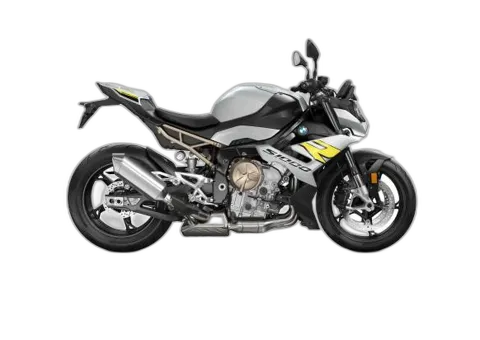
BMW S 1000 R (K47) — Hyper Naked
NastyNils / BMW press archive

2014–2020 · Hyper Naked · Buyer's Guide

S 1000 R (K47)

Superbike Soul, Street Hands

The Machine's Character

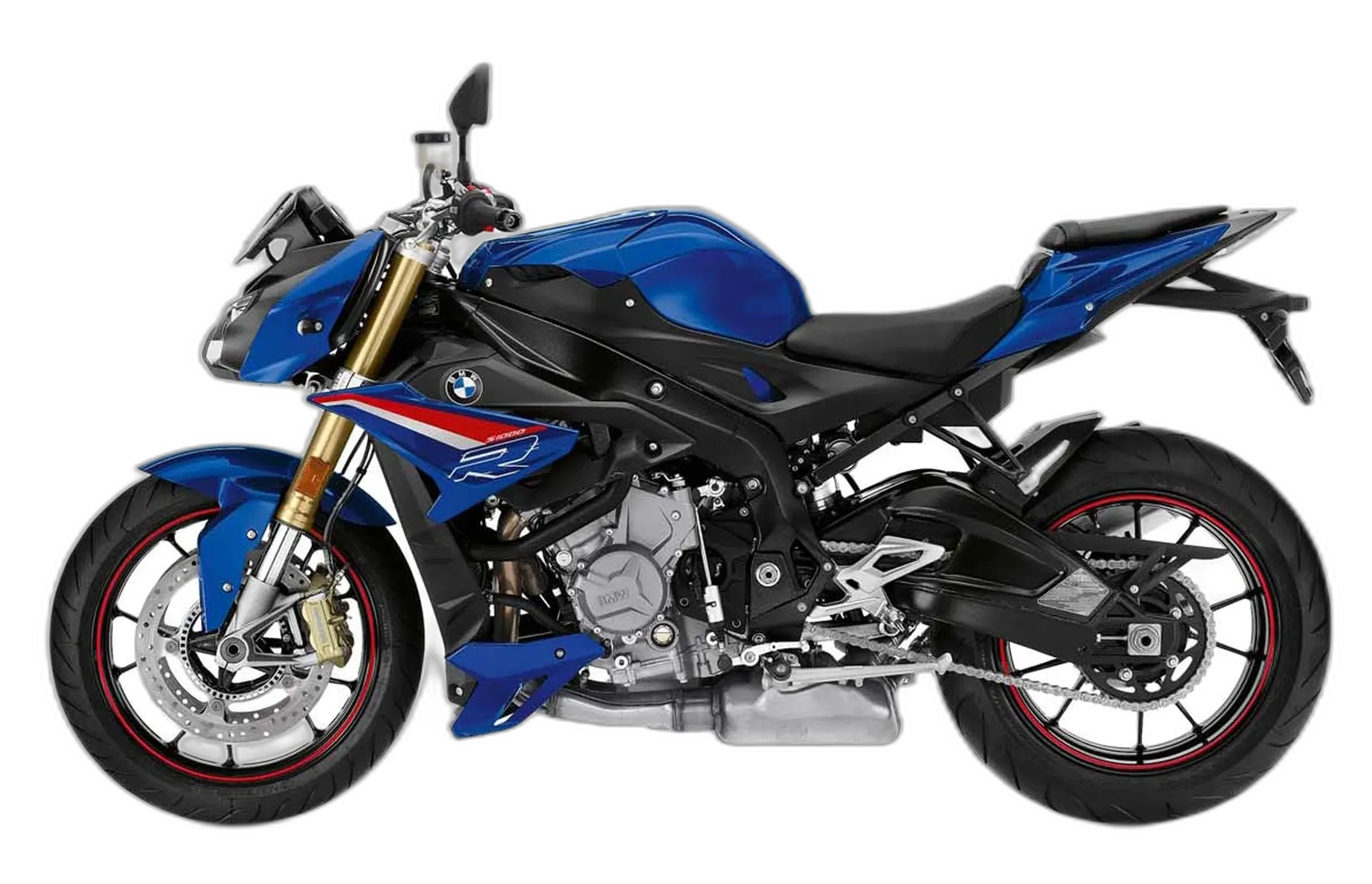
BMW built the S 1000 R by stripping the S 1000 RR superbike of its bodywork and retuning that 999 cc inline-four for usable torque instead of a peaky top end. The result makes 160 hp and 83 lb-ft, with the strongest pull arriving low and staying there. The aluminum perimeter frame and swingarm are the genuine high-spec hardware off the faired bike, not cost-cut substitutes. Add BMW Dynamic Damping Control (DDC) and a deep electronics suite, and you get a naked that carries real superbike pedigree without asking you to fold onto clip-ons.

This is a bike for riders who want superbike performance they can actually use on real roads, not just on a track. Two controls move it from a soft, forgiving city setup to a fully uncensored machine, so the same bike covers a careful commute and a committed afternoon charge. The honest caveat is that the chassis is tuned close to race-stiff, and the adjustable damping doesn't fully resolve it, so broken pavement and long touring days punish you. Its racing spirit also keeps you in a constant state of pursuit when you just want to cruise. Buy it for the intensity, not the comfort.

Hard Numbers

Spec sheets don't ride bikes, but they set the baseline.

Show full specs & equipment Hide specs & equipment
Key specifications
Power 160 hp (118 kW) @ 11,000 rpm
Torque 83 lb-ft (112 Nm) @ 9,250 rpm
Displacement 999 cc
Engine Inline-four
Bore × stroke 80 × 49.7 mm
Compression 12:1
Cooling Liquid-cooled
Fuel system EFI (throttle body)
Gearbox 6-speed
Final drive Chain
Frame Aluminum perimeter
Front brake 320 mm
Rear brake 220 mm
Front tire 120/70 ZR17
Rear tire 190/55 ZR17
Wheelbase 56.7 in (1439 mm)
Seat height 32.0 in (814 mm)
Wet weight 456 lb (207 kg)
Fuel capacity 4.6 gal (17.5 L)
Top speed 160 mph (257 km/h)
Fuel economy 38 mpg (US)

Equipment check

Chassis

  • Electronic Suspension BMW Dynamic Damping Control (DDC) Realtime road adaptationBrake dive control Optional
  • Front Suspension Adjustable Standard
  • Rear Suspension Adjustable Standard
  • Steering Damper Standard
  • Cruise Control Optional

Comfort

  • Heated Grips Optional

Drivetrain

  • Slipper Clutch Standard

Safety

  • ABS Standard
  • Wheelie Control Optional

The Voice of Experience

Portrait of NastyNils

The test ride

Thumb the starter and the four barks out an angry, raw howl, no acoustic polish trying to make it pleasant. Roll off and you get a raspy, hoarse burble on the overrun, deliberate character BMW dialed in. The wide handlebar puts you upright and in command, and one push drops it into a corner with no sense of moving mass. At a genuine pace the chassis sits eerily flat and planted, calmer than a naked has any right to be. You do feel the cost of that intensity: with no screen, the air loads hard against your helmet on fast straights, and the K47 four sends a buzz through the bars and mirrors at cruising revs. One small gripe is that the active-mode text on the dash runs too small to read at a glance on the move.

Rated point by point — where it earns its keep

My own 0–100 score for this bike against the class, area by area — the marker on each bar is the class average.

What I keep coming back to with this chassis is how much control it hands you exactly where you can't see the exit. The wide handlebar and direct, confident steering feedback let me correct a line mid-corner through intent rather than effort, so a blind, tightening bend stops being a guess. That pays off most in tight, technical going, where the taller, wider bar lets me place the front precisely without wrestling anything. The surprising part is that none of that costs me at speed. The bike still settles into a fast sweeper and holds its chosen line with no drama and no mid-corner argument, the hardware underneath quietly doing its job. So I get the line-holding solidity of a full-fairing superbike through every radius, but with far more room to move the machine around beneath me when a section turns awkward. Most bikes make you pick one of those; this one gives you both in the same package. The accuracy that makes it effortless to thread through slow, fiddly going is the same accuracy I lean on hard once the road opens up, and it never feels like two different settings. After a committed technical run I came away thinking about the road, not about how much work it took to keep the front pointed. The motorcycle gets out of the way and lets me ride.

I rode this thing across the most punishing combination I could line up, a race circuit, open public road, and a full day of high alpine passes, and it never felt out of place on any of it. Its terminal speed trails the faired bikes, and honestly that barely registers, because with nothing wrapped around you the rush hits well before the numbers do. The voice seals it: an angry, unsweetened howl that sounds exactly as mean as the bike behaves.

What defines this motor for me is what BMW gave up to make it usable. The top end is capped below the full-race version it's derived from, and on paper that reads like a loss, but in practice I almost never reached for the ceiling, because the drive sits so much lower in the rev range. There's always something under my wrist. Roll on from the bottom and the motor simply hauls, with no flat patch where I'd usually need a downshift to wake it up, so I'm rarely caught out of the meat of it. That low, broad delivery is what makes the bike feel like it always has more in hand without ever turning frantic. It pulls and keeps pulling, and in the back-and-forth between rider and engine, I always ran out of road or nerve before it ran out of drive. The character riding on top of all that torque is unmistakably race-bred, snappy and alive the instant I crack the throttle, never soft or muted the way a detuned engine often goes. If there's an honest limit, it's that capped ceiling itself: chase a number right at the top and you can feel where the full-race motor would keep climbing while this one eases off. But that's a trade I'd take every time, because what I gave up at the extreme top I got back everywhere I actually ride.

Comfort is where the bike's racing focus sends you the bill, and it isn't a small one. The suspension is set almost to race spec, and even the optional adjustable damping at its most forgiving only takes the worst off; on the broken, patchy pavement you find high in the mountains, the jolts still reach you, and a long stint on less-than-perfect roads is what finally grinds me down. With nothing out front to break the wind, real speed loads the air onto my helmet with no spot to escape it, and that mounts over distance. The harder part to live with is the temperament. The power, the exhaust, the whole spirit of the thing keep me chasing the next corner, so on a day I'd rather just roll along and take in the country, it won't allow it, and across hours that wears. One small thing worth checking yourself on a test ride: the indicator showing which ride mode is active uses tiny lettering that a few testers struggled to read while moving.

Where this bike genuinely earned my trust was in conditions that had no business being rideable. On near-freezing pavement slicked with wet snow, with barely any grip to work with, Rain mode, the lean-angle-aware ABS, and the optional self-softening suspension all pulled in the same direction and simply kept me moving forward. That's not a list of features sitting idle. On that surface it was doing real work, and the optional heated grips stopped being a luxury the second the temperature fell at altitude. What surprised me is how much usable spread lives inside the same electronics package. Even one notch down from the sharpest setting, the front will still lift cleanly under power, smooth and controlled with the optional wheelie control keeping it honest, so the foul-weather safety net and the playful side aren't two different bikes. They're the same one, reached by toggling a mode.

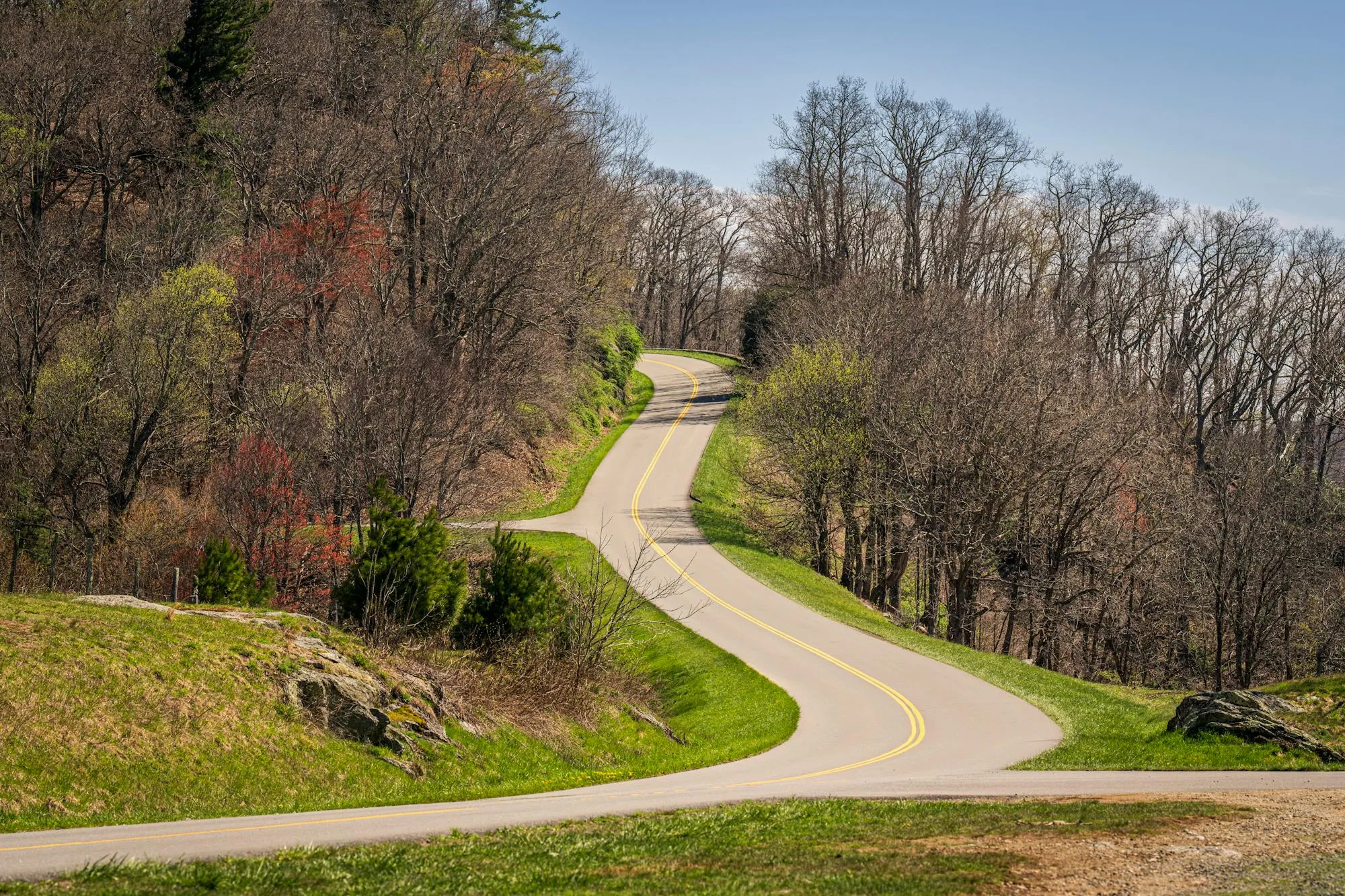
A winding asphalt road descending through the Appalachian Mountains, likely the famous Tail of the Dragon section in Tennessee and North Carolina. Multiple technical right-hand and left-hand curves are visible in this aerial perspective, surrounded by deciduous forest in spring foliage. Clear sunny conditions, well-maintained asphalt with yellow center lines marking the curves. No motorcycle or rider visible in the frame.
Mark Stebnicki / Pexels

The Truth on the Street

I didn't pull any of this off a brochure. It comes from years of reading what riders post under my videos, working through forum threads, swapping stories with owners at the track, and answering the notes they send me directly. On the S 1000 R the chatter settles into one clear shape: deep trust in the motor and the brakes, set against a short list of rough edges owners simply learn to manage.

Engine and brakes win the loyalty

Two subjects carry nearly every conversation. The first is the inline-four. Riders describe a motor that shrugs off hard use, and they point to bikes still running clean well past 60,000 miles (100,000 km) as proof it was built to last. What they savor day to day is the low and midrange shove, a strong pull that's there from low revs without having to wind it out, with more torque on tap than the faired sibling across much of the range. The brakes draw the same conviction, rated for strong, dependable stopping and a firm bite the instant you squeeze. Past that headline pair, owners credit the borrowed superbike chassis with precise, neutral handling that stays planted when leaned on, and they trust the riding modes and traction control, joined on optioned bikes by the available semi-active suspension and quickshifter. The four-cylinder howl gets named often too, and a loyal group runs the bike for multi-day trips on its deep fuel range and upright stance, pillion included.

The cold-start and switch gripes

The complaints are just as consistent, and the loudest one shows up before the bike warms through. A rough idle, the occasional stall when cold, and surging at low speed come up constantly, common enough that plenty of owners go looking for a fix. Close behind is the left-hand switch cube, where the cruise and mode buttons have a habit of cutting out at random until the unit gets swapped. Buzz through the bars and mirrors at a steady cruise gets raised almost as often, and owners note the facelift bikes took some of the edge off without erasing it.

Where comfort pays the bill

For something wearing a naked badge, the seating divides opinion. Riders flag the forward lean, the rear-set pegs, a seat that stops being comfortable across a long day, and a turning circle that feels tight at parking pace. With nothing out front to break the wind, sustained high-speed runs wear on owners over distance. A few mention heat off the right side in stop-and-go traffic, and others point to the climb in price once you start ticking option boxes for a fully equipped build. Some note the bike feels a touch heavy for the class. The asymmetric headlight rounds it out, still as divisive among owners as the day it launched.

Known issues

  • Cold-start stalling, rough idle, low-speed surging

    fuel systemoccasional

    Idle hunting and stalling on cold start, particularly in cool ambient conditions; low-speed surging in low gears at light throttle. Linked to lean cold-start and cruise mapping in the Euro 3 ECU calibration. Aftermarket BoosterPlug sells a fix product specifically for the K47 that addresses this. Some bikes were resolved through a BMW software update; others by switching fueling devices.

  • Vibration through handlebars and mirrors at 4,000–5,000 rpm and at sustained cruise

    chassisoccasional

    The K47 inline-four has no counterbalancer. Riders report buzz through the bars, mirrors, and pegs at typical highway cruising rpm; mirrors blur above roughly 75 mph (120 km/h), making rear vision difficult on highway runs. Heavier bar-end weights mitigate but do not eliminate it. The MY2017 facelift added vibration dampers at the handlebar clamps, which improved the issue but did not remove it.

  • Left-side handlebar switch cube intermittent failures

    electricsoccasional

    Switches on the left-side handlebar cluster — particularly the cruise-control and ride-mode buttons — fail intermittently, with users reporting the switch becoming unresponsive. Warranty replacement of the entire cluster is the typical fix.

  • Cam-chain rattle / tensioner concerns on cold start

    engineoccasional

    Audible rattle on cold start on some early-production bikes; a small number resulted in cam-chain tensioner replacement under warranty. Reports concentrate on MY2014–2015. Broader corroboration limited.

  • Heat radiation from right-side header and catalytic converter

    exhaustcommon

    The right-side header and catalytic converter radiate noticeable heat onto the rider's right leg in stop-and-go traffic and at low road speeds.

  • OE silencer discoloration

    exhaustvery common

    The stock stainless silencer (MY2014–2016) and titanium Akrapovič silencer (MY2017+ in some markets) discolor visibly with use — a cosmetic concern frequently raised by buyers.

The Expert Benchmark

Where this BMW S 1000 R pulls ahead of — or falls behind — its rivals on the numbers, and the typical bike in its class on character.

What kind of bike this is — character vs. the class

This bike Class average

The shape of the BMW S 1000 R — numbers and character vs. the average Hyper Naked

Head-to-head: BMW S 1000 R vs. its rivals

The Handshake Score

Forget spec-sheet bragging. Here's who the S 1000 R is actually built for.

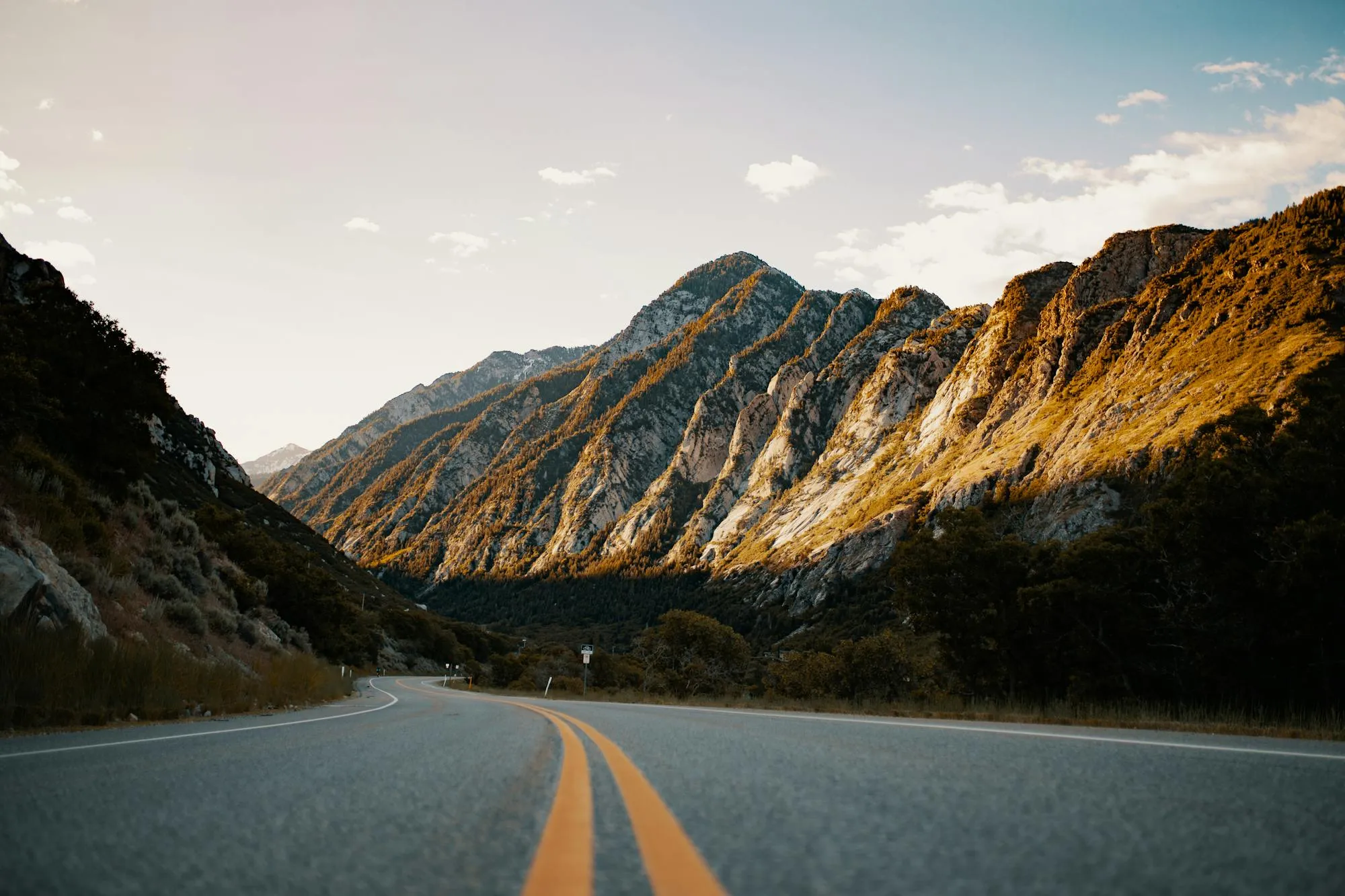
A scenic view of Angeles Crest Highway winding through rugged Southern California canyon terrain. Rocky mountainsides with golden earth tones frame the asphalt road with tight sweeping curves. Double yellow center line visible, sparse vegetation along the shoulders, clear blue sky with white clouds. Daylight, dry conditions. No motorcycle or rider visible. Iconic location for canyon-road enthusiasts.
Josh Sorenson / Pexels

Best motorcycle for Laguna Seca?

If you're chasing apex precision and clean braking markers on track days, this hands you real RR chassis hardware and electronics you can trust. Just know a faired bike will reel you back in down the long straights.

Made for Barber Motorsports Park · WeatherTech Raceway Laguna Seca · Circuit of the Americas
Best motorcycle for Angeles Crest?

For Angeles Crest and the weekend canyon runs, the early torque and quick steering are exactly what you want; it carves switchbacks and holds its line. The race-stiff setup is the only tax on rougher pavement.

Made for Angeles Crest Highway · Coronado Trail / US 191 · Highway 1 / Big Sur

Best motorcycle for Tail of the Dragon?

On the Dragon and the Blue Ridge twisties, the wide bar and broad midrange let you focus on technique instead of the gearbox. Tight, repeatable corner work is where this bike feels most at home.

Made for Back of the Dragon · Blue Ridge Parkway · Cherohala Skyway