By NastyNils·
Motorcycle comparison · Naked Bike vs Sport Tourer
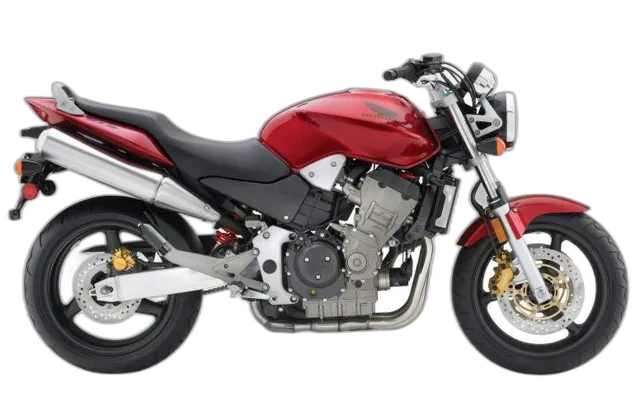
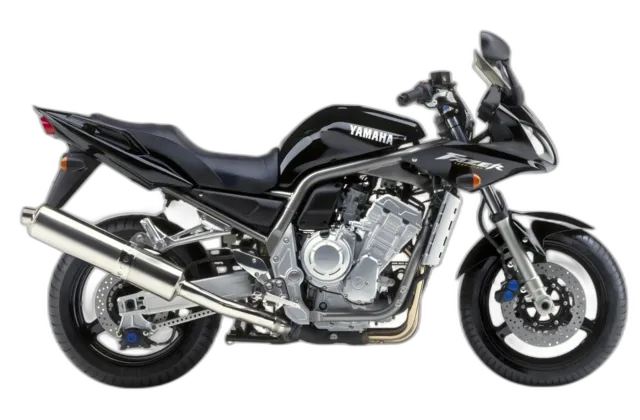
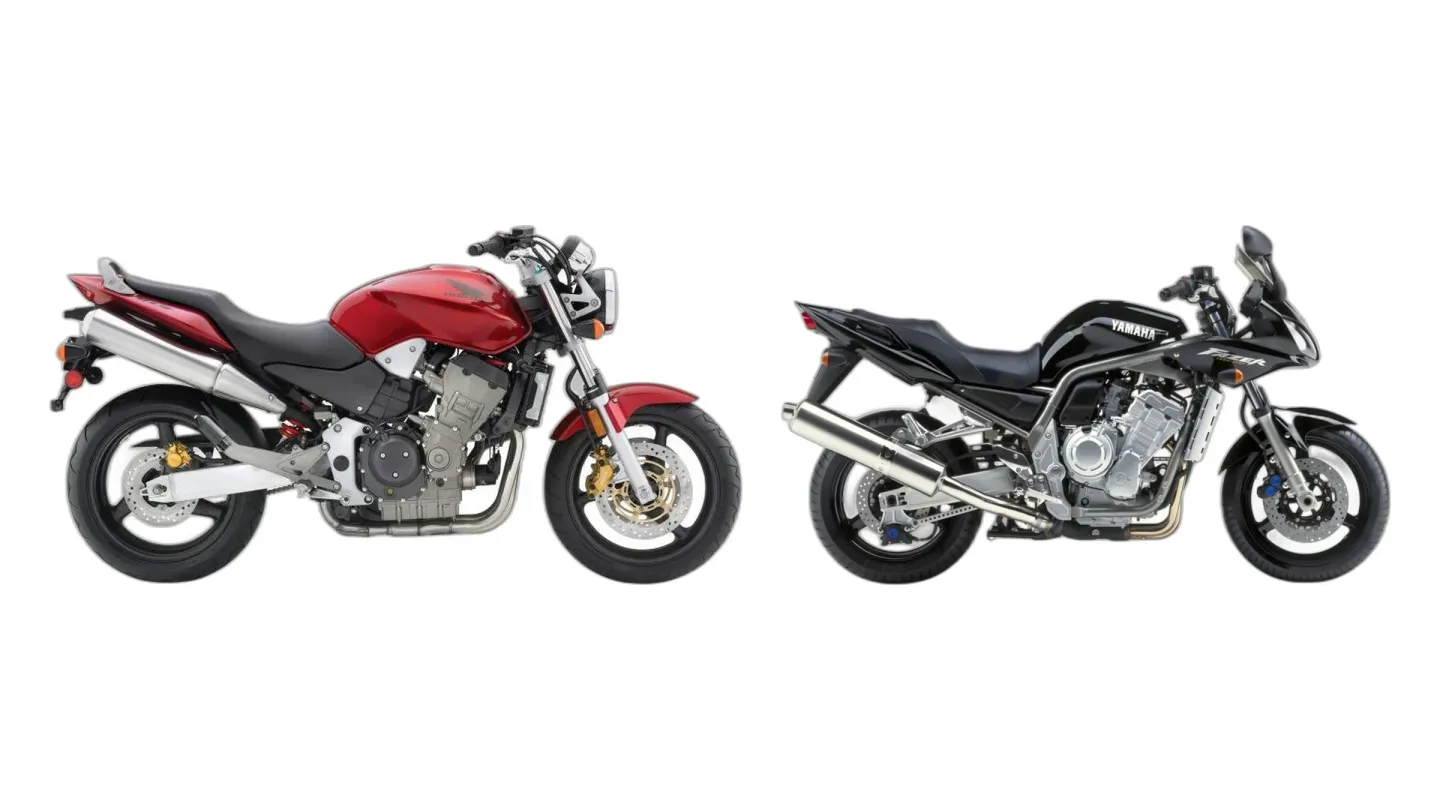
Honda CB 900 F Hornet (CB900F 2nd Gen) vs Yamaha FZS 1000 Fazer (FZS1000)
Honda CB 900 F Hornet vs Yamaha FZS 1000 Fazer: where they split, and which one to buy.
Roll on from low revs and the Honda CB 900 F Hornet doesn't hesitate: its engine pulls smooth from the bottom. The Yamaha FZS 1000 Fazer's throttle hits like a superbike's.
So which one do you buy?
The CB 900 F Hornet has the edge if…
Daily commuting & city riding
Inches ahead: CB 900 F Hornet
For the ride to work, the CB 900 F Hornet noses ahead. The reason: lighter steering. Don't let that alone make the call.
Sporty riding on twisty roads
Small edge: CB 900 F Hornet
Back-road fun leans slightly toward the CB 900 F Hornet. That comes from more feel through the bars and a sportier chassis. It's a narrow call, so trust your test ride.
The FZS 1000 Fazer has the edge if…
Traveling with luggage
Edges it: FZS 1000 Fazer
For trips with luggage, the FZS 1000 Fazer nudges ahead. Most of that is better wind protection and more range per tank.
What makes each one tick
CB 900 F Hornet
The CB 900 F Hornet carries its weight low in a steel spine frame, and the wide bar turns it like a middleweight. Corner entry takes only a nudge. There's so much spread in its torque that you don't hunt the gearbox for the right ratio. The twistgrip feeds power in softly on wet asphalt.
FZS 1000 Fazer
A heavier flywheel keeps the FZS 1000 Fazer docile in town traffic, yet there's still a wild rush up top. The upright bar and padded seat don't wear you down over a long day. At pace, the soft fork wallows. The brake lever hauls it down with a firm bite.
Nils rode the FZS 1000 Fazer in Sardinia in 2003 (NastyNils Testride).
The Voice of Experience

What actually separates them
- The CB 900 F Hornet has the lower seat: 31.3 in (795 mm) vs 32.1 in (815 mm).
- The FZS 1000 Fazer makes more peak power: 145 hp (107 kW) vs 109 hp (80 kW).
- The FZS 1000 Fazer makes more peak torque: 78 lb-ft (106 Nm) vs 68 lb-ft (92 Nm).
Which one for the way you ride
Comfortable long-distance riding
Not its job: CB 900 F Hornet
No long-distance verdict for the CB 900 F Hornet. It's made for something else entirely.
A confidence-building first motorcycle
Both fall short
For a brand-new rider, both are the wrong place to start. Learn the basics on a smaller bike first.
Who each one is built for
What's good, and what you'll live with
CB 900 F Hornet
What owners say
Strengths
- Flexible, smooth inline-four
- Legendary Honda reliability
FZS 1000 Fazer
What owners say
Strengths
- All-day comfort and practical ergonomics
- Exceptional value for money
Trade-offs
- Soft and underdamped suspension
Known problems to check before you buy
CB 900 F Hornet
- Fuel pump relay failure causing no-start Failure of the fuel pump relay or corrosion in the electrical connectors can prevent the fuel pump from priming, resulting in a no-start condition. Often occurs after long periods of storage.
FZS 1000 Fazer
- EXUP valve sticking The exhaust power valve (EXUP) can seize if not regularly cleaned and lubricated, causing poor low-end response and backfiring.
- Engine paint flaking and corrosion Paint on the engine cases and frame rails is prone to flaking, with corrosion appearing on fasteners and exposed surfaces.
What they share
- Engine
- Inline-four
- Cooling
- Liquid-cooled
- Gearbox
- 6-speed
- Final drive
- Chain
- Front tire
- 120/70-17
- Rear tire
- 180/55-17
Where the spec sheets split
| CB 900 F Hornet | FZS 1000 Fazer | |
|---|---|---|
| Seat height | 31.3 in (795 mm) | 32.1 in (815 mm) |
| CB 900 F Hornet | FZS 1000 Fazer | |
|---|---|---|
| Displacement | 919 cc | 998 cc |
| Power | 109 hp (80 kW) | 145 hp (107 kW) |
| Peak power at | 9,000 rpm | 10,000 rpm |
| Torque | 68 lb-ft (92 Nm) | 78 lb-ft (106 Nm) |
| Peak torque at | 6,500 rpm | 7,500 rpm |
| Top speed | 146 mph (235 km/h) | 160 mph (257 km/h) |
| CB 900 F Hornet | FZS 1000 Fazer | |
|---|---|---|
| Fuel economy | 31 mpg (US) / 7.6 L/100 km | 43 mpg (US) / 5.5 L/100 km |
| Fuel capacity | 5.0 US gal (19 L) | 5.5 US gal (21 L) |
Head to head, area by area
Both bikes on the same scale, one area at a time.