By NastyNils·
Motorcycle comparison · Naked Bike
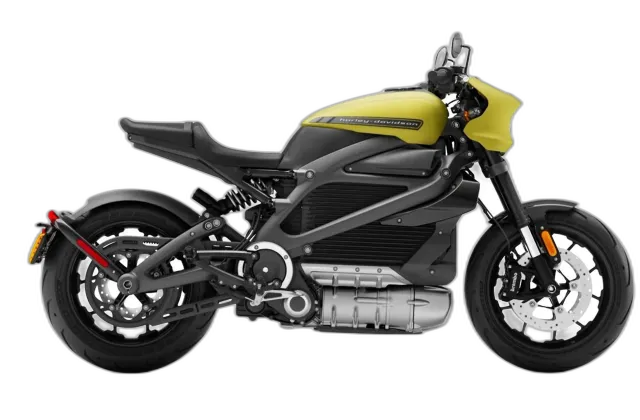
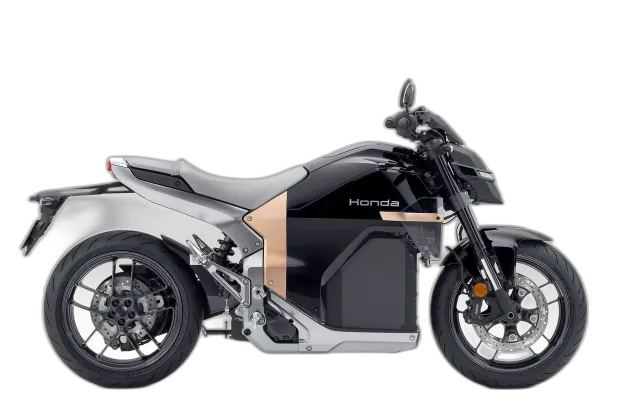
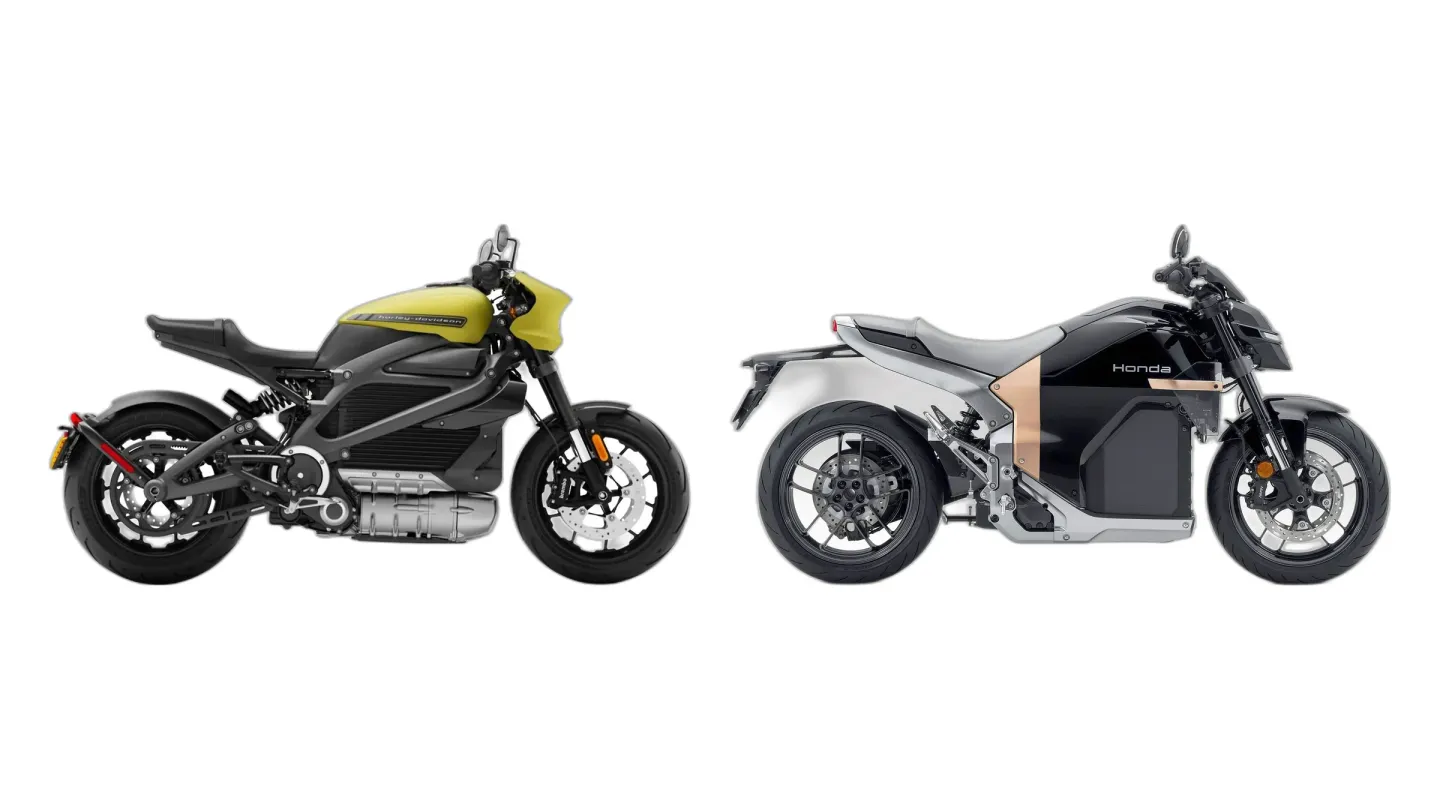
Harley-Davidson LiveWire ELW (MY2019) vs Honda WN7 (MY2026)
Harley-Davidson LiveWire ELW vs Honda WN7: no fairing, no excuses. Here's how to pick.
Hit a broken patch on the Harley-Davidson LiveWire ELW and the stiff Showa suspension tells you what's happening under each wheel. The Honda WN7's suspension stays firm over that jolt and doesn't wallow. It's happy to go along when the pace picks up.
So which one do you buy?
The LiveWire ELW has the edge if…
Sporty riding on twisty roads
Small edge: LiveWire ELW
On a twisty road, the LiveWire ELW edges ahead. Most of that is harder acceleration and stronger brakes. Not by enough to settle it alone.
The WN7 has the edge if…
Riding two-up with a passenger
Slight edge: WN7
On a ride for two, the WN7 feels a little more settled. It's down to a better reliability record. Not enough of a gap to overrule your passenger.
What makes each one tick
LiveWire ELW
The LiveWire's motor shoves you toward speed from a standstill and doesn't let up. Its mass hangs low in the chassis, and the bars don't fight back-and-forth direction changes. It eats tight corners.
Nils rode the LiveWire ELW in Austria in 2020, and in 2021 (NastyNils Testride).
WN7
The WN7's motor answers with instant torque and doesn't buzz the grips. Fun is extremely high, and you can use the performance without bothering anyone. Snap it quickly from one lean angle to the other and you feel the heavy battery. As the bike steers into a bend, there's a clear read of traction coming up through the tires. On a moderate descent, two buttons dial in enough regen that you'll barely touch the brake levers. Regen hands off to drive cleanly.
The Voice of Experience

What actually separates them
- The WN7 has the lower wet weight: 480 lb (218 kg) vs 549 lb (249 kg).
- The LiveWire ELW makes more peak power: 105 hp (78 kW) vs 24 hp (18 kW).
- The LiveWire ELW makes more peak torque: 86 lb-ft (117 Nm) vs 74 lb-ft (100 Nm).
Which one for the way you ride
A confidence-building first motorcycle
Sits this out: LiveWire ELW
The LiveWire ELW has too much motor for a first bike. Get your basics down on something smaller.
Traveling with luggage
Wrong job for both
For a week on the road with gear, both fall short. A proper tourer will carry it with far less fuss.
Call it even on commuting. Choose on fit, price and the one that makes you grin.
Who each one is built for
What's good, and what you'll live with
LiveWire ELW
Strengths
- A Real Corner-Eater
- Low-Slung Weight That Pivots
- Electronics With Sporting Intent
- Almost Nothing To Maintain
- Instant, ferocious torque
Trade-offs
- You Steer It Every Inch
- No Wind Protection At All
- Range Goes Fast, By Choice
- Public Charging Stalls Touring
- Heavy for its size
WN7
From Nils' own saddle time
Strengths
- Torque the instant you ask
- Honda-grade build and dependability
- Calm and planted at speed
- Fast charging that actually helps
- Properly connected cockpit
Trade-offs
- Range isn't the priority
- Fork with zero adjustment
- Bare for touring
What they share
- Engine
- Electric
- Cooling
- Liquid-cooled
- Gearbox
- 1-speed
- Final drive
- Belt
- Fork
- Upside-down (USD)
Where the spec sheets split
| LiveWire ELW | WN7 | |
|---|---|---|
| Wet weight | 549 lb (249 kg) | 480 lb (218 kg) |
| LiveWire ELW | WN7 | |
|---|---|---|
| Power | 105 hp (78 kW) | 24 hp (18 kW) |
| Torque | 86 lb-ft (117 Nm) | 74 lb-ft (100 Nm) |
What comes fitted, what costs extra
| LiveWire ELW | WN7 | |
|---|---|---|
| Cornering ABS | Not offered | Standard |
| Manually Adjustable Rear Suspension | Not offered | Standard |
| USB Charging Port | Not offered | Standard |
Head to head, area by area
Both bikes on the same scale, one area at a time.