By NastyNils·
Motorcycle comparison · Naked Bike
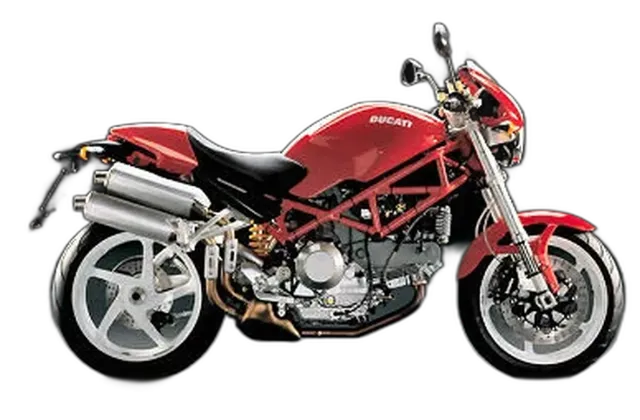
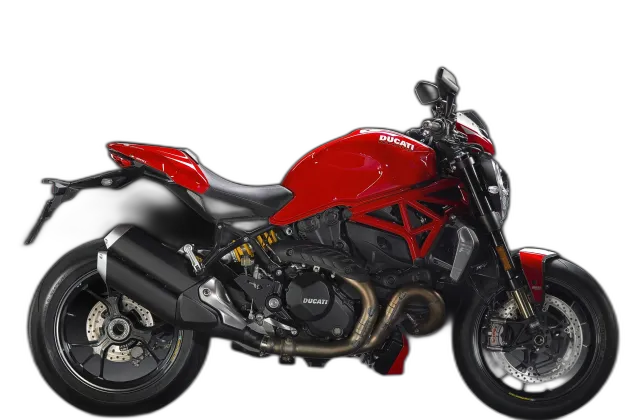
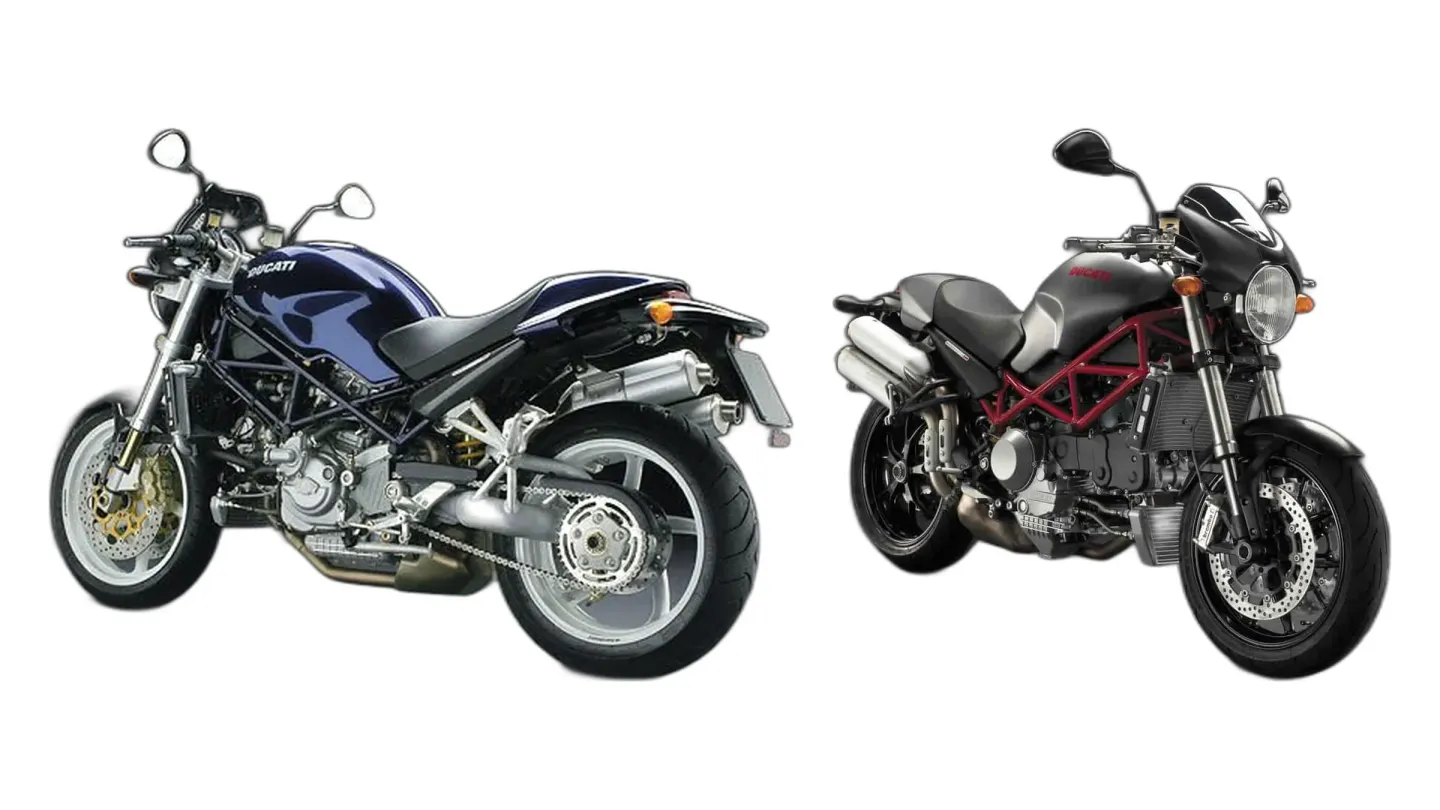
Ducati Monster S4R (MY2003) vs Monster S4R (MY2007)
Late on the brakes at the end of a fast straight, the 2003 Ducati Monster S4R's lever builds bite in one clean ramp that's easy to meter. The 2007 Ducati Monster S4R's radial Brembos grab hard from the first squeeze. Its lever doesn't go quiet as the pace climbs.
What makes each one tick
2003 Monster S4R
Hours into a mountain loop, the 2003 Monster S4R still hasn't worn you down, because its chassis never asks you to fight it. Genuinely comfortable seat, and it holds up over a full day. Corner entry barely registers in the chassis. The bars don't change their pull as the bike tips in, rolls through the apex and drives out again. The fork soaks up broken asphalt and holds its line.
Nils rode the 2003 Monster S4R in Austria in 2005 (NastyNils Testride).
2007 Monster S4R
Past the middle of the tach, the 2007 Monster S4R's twin surges forward and doesn't ease off as it revs out. On the Angeles Crest Highway, a mid-corner bump comes straight up through the steel trellis frame. The suspension doesn't smother it, and you read the road surface through the bar. The under-seat pipes boom to redline.
Nils rode the 2007 Monster S4R in 2007 (NastyNils Testride).
The Voice of Experience

What actually separates them
- The 2007 Monster S4R makes more peak power: 130 hp (96 kW) vs 114 hp (84 kW).
- The 2007 Monster S4R makes more peak torque: 76 lb-ft (103 Nm) vs 71 lb-ft (96 Nm).
- The 2003 Monster S4R has the larger fuel tank: 4.0 US gal (15.1 L) vs 3.7 US gal (14 L).
Which one for the way you ride
A confidence-building first motorcycle
Neither is a natural fit
As first bikes, both are a stretch. Starting smaller isn't a step down.
Traveling with luggage
Not built for this
For a week on the road with gear, both fall short. A proper tourer will carry it with far less fuss.
Look at commuting, twisty roads, and running costs and you'll find two bikes doing the same job equally well. Fit is what breaks the tie.
Who each one is built for
What's good, and what you'll live with
2003 Monster S4R
From Nils' own saddle time
Strengths
- Smooth, Predictable Throttle
- Chassis You Simply Place
- Front Brakes You Can Read
- Suspension Tuned for Real Roads
- Flyscreen Punches Above Its Size
Trade-offs
- Soft Below the Midrange
- Hard Work in Switchbacks
- Sidestand Is Too Short
2007 Monster S4R
What owners say
Strengths
- Thrilling Testastretta engine
- Engaging, communicative chassis
Known problems to check before you buy
2003 Monster S4R
- Fuel tank hinge leak The tank hinge weld can develop a leak, causing fuel to drip onto the engine.
2007 Monster S4R
No confirmed faults on file yet. That's not the same as fault-free.
What they share
- Engine
- 90° V-twin
- Cooling
- Liquid-cooled
- Gearbox
- 6-speed
- Final drive
- Chain
- Fork
- Upside-down (USD)
- Front brake
- 320 mm
- Front tire
- 120/70-17
- Rear tire
- 180/55-17
- Wheelbase
- 56.7 in (1440 mm)
Where the spec sheets split
| 2003 Monster S4R | 2007 Monster S4R | |
|---|---|---|
| Seat height | 31.5 in (800 mm) | 31.6 in (802 mm) |
| 2003 Monster S4R | 2007 Monster S4R | |
|---|---|---|
| Displacement | 996 cc | 998 cc |
| Power | 114 hp (84 kW) | 130 hp (96 kW) |
| Peak power at | 8,750 rpm | 9,500 rpm |
| Torque | 71 lb-ft (96 Nm) | 76 lb-ft (103 Nm) |
| Peak torque at | 7,000 rpm | 7,500 rpm |
| 2003 Monster S4R | 2007 Monster S4R | |
|---|---|---|
| Fuel capacity | 4.0 US gal (15.1 L) | 3.7 US gal (14 L) |
Head to head, area by area
Both bikes on the same scale, one area at a time.