By NastyNils·
Motorcycle comparison · Hyper Naked
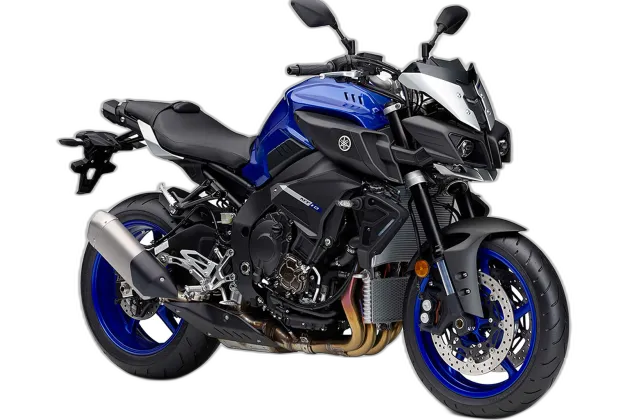
KTM 1290 Super Duke R (MY2014) vs Yamaha MT-10 (RN45-SP)
KTM 1290 Super Duke R vs Yamaha MT-10: no fairing, no excuses. Here's how to pick.
Pinned down a long straight, the KTM 1290 Super Duke R hangs with superbikes and doesn't run short of shove. The Yamaha MT-10's engine talks even at a lazy roll-on, and it's wired straight to the rear tire. Every twitch of grip reaches your right wrist.
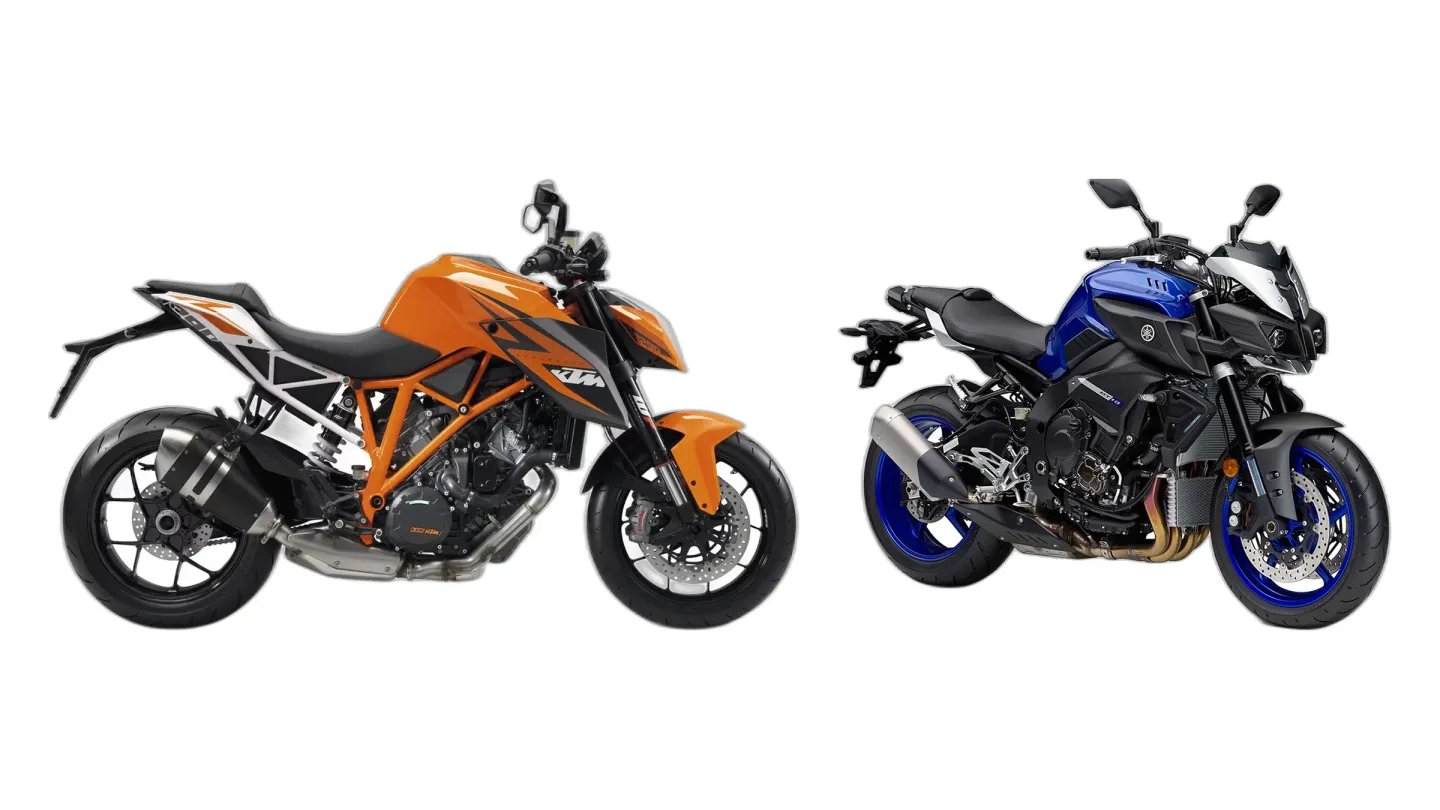
So which one do you buy?
The 1290 Super Duke R has the edge if…
Keeping running costs low
Small edge: 1290 Super Duke R
On running costs, the 1290 Super Duke R edges it. Not by enough to bank on.
The MT-10 has the edge if…
Racetrack use
Nose ahead: MT-10
Between the curbs, the MT-10 asks a bit less of you at speed. What tips it: more suspension adjustment. It's a fine margin, nothing more.
Sporty riding on twisty roads
Slight edge: MT-10
Through a string of corners, the MT-10 feels a little more eager. Most of that is better suspension. The gap is small, so ride both.
Daily commuting & city riding
Narrow edge: MT-10
The MT-10 makes slightly more sense as a commuter. The reason: friendlier manners. Don't read much into a gap this small.
What makes each one tick
1290 Super Duke R
The Super Duke folds you into a supermoto-style crouch that's built for top-end performance, not all-day comfort. Since 2017, stiffer springs and sportier damping have firmed up the fork and shock, and a bump comes through them with precision. The fork's feedback never goes quiet.
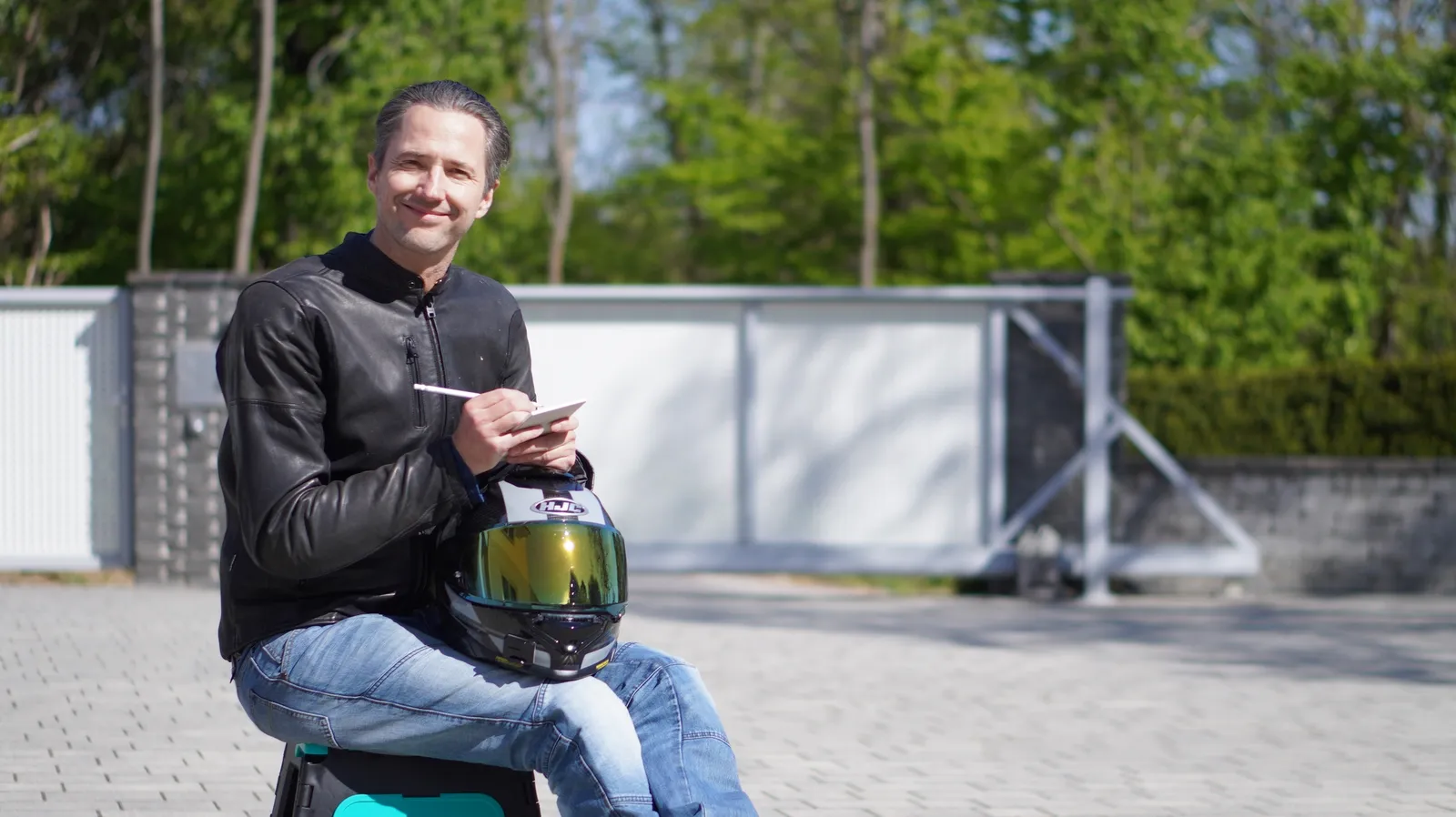
Nils rode the 1290 Super Duke R in Andalusia in 2013, in Andalusia, Austria, Hungary, and the Czech Republic in 2014, in 2015, and in Austria in 2017 (NastyNils Testride).
MT-10
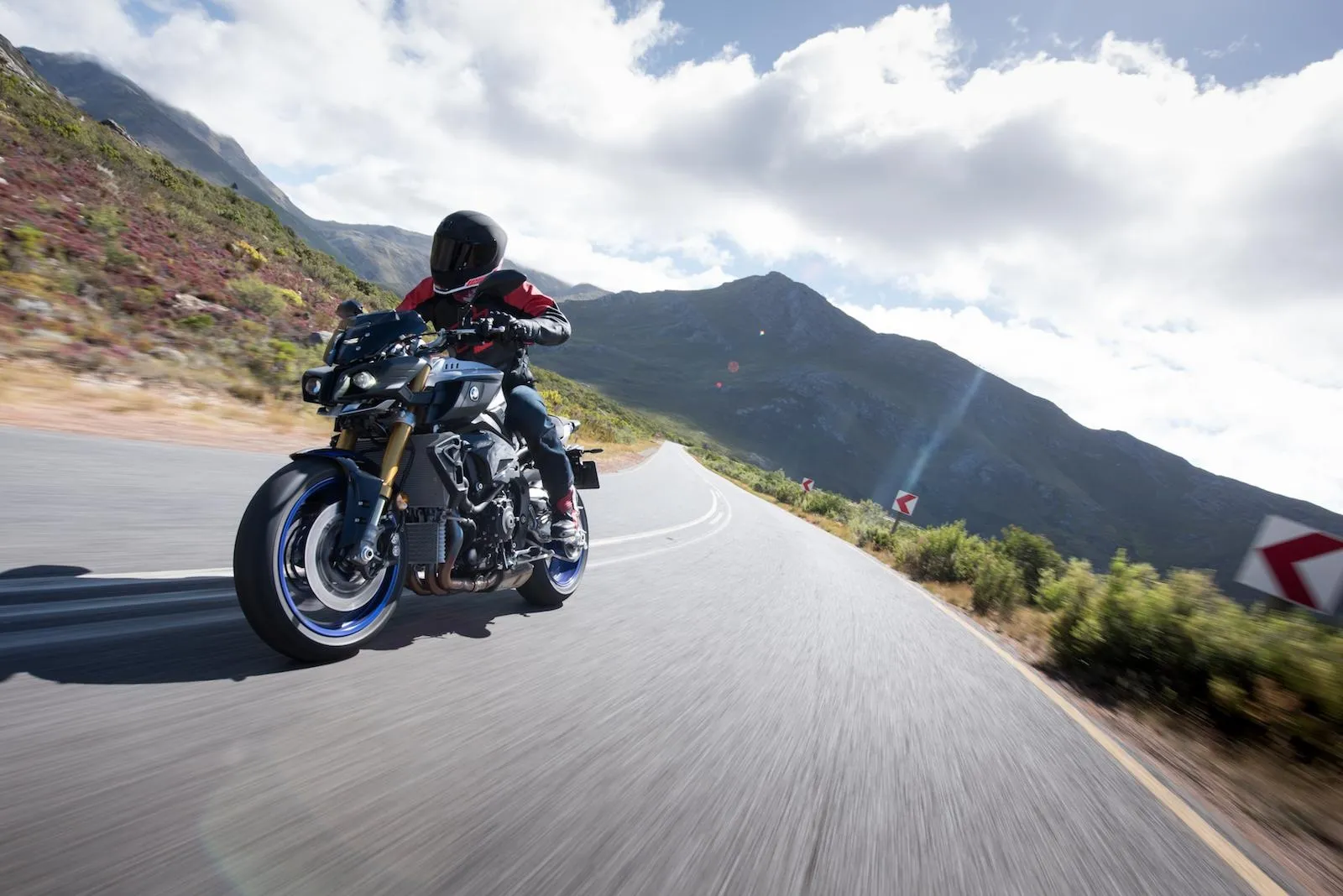
The MT-10's seat and bars put a six-foot-plus rider where nothing's cramped and nothing's stretched. Long days on varied roads feel fine on it. Short wheelbase means it naturally wants to stand up, but the bike doesn't feel unstable for it. At corner entry the front goes in willingly and doesn't get hyperactive. Bar pressure and hip weight both steer it, and the fork keeps feeding back the contact patch through the whole corner. Low down, the four's civil. Up top, it howls raw and keeps climbing.
Nils rode the MT-10 in South Africa in 2017, and in Switzerland in 2020 (NastyNils Testride).
The Voice of Experience
What actually separates them
- The 1290 Super Duke R makes more peak power: 179 hp (132 kW) vs 160 hp (118 kW).
- The 1290 Super Duke R makes more peak torque: 106 lb-ft (144 Nm) vs 82 lb-ft (111 Nm).
- The 1290 Super Duke R has the larger engine: 1301 cc vs 998 cc.
Which one for the way you ride
For character, you won't find daylight between them. Let the test ride settle it.
Who each one is built for
What's good, and what you'll live with
1290 Super Duke R
Strengths
- Lean Clearance For Days
- Built Right For Tall Riders
- Electronics That Enable, Not Dull
- It Holds Up Long Term
- Brembo M50 stopping power
Trade-offs
- Stock Pipe Sounds Lifeless
- Nothing Between You And The Wind
- Long Sweepers Expose The Chassis
- Insurance Bites Younger Buyers
- Aggressive ergonomics, limited long-distance comfort
MT-10
From Nils' own saddle time
Strengths
- Clean, precise low-end throttle
- Savage once it spins up
- Öhlins that reads the road
- TC that still allows wheelies
- Surprising wind protection
Trade-offs
- TC ignores lean angle
- Styling never fully clicks
- Heat onto your legs
- Rear caliper can seize
Known problems to check before you buy
1290 Super Duke R
- Brembo radial master cylinder plastic piston cracking — recall (NHTSA Recall 18V-033) Recall 18V033000 The plastic (PPS polymer) piston in the front master cylinder could crack or break under heavy load, hard ABS engagement, or after a tip-over, leading to loss of front-brake function. Remedy: dealer replaces the plastic piston with an aluminum piston.
- Fuel tank threaded-insert leak — recall (NHTSA Recall 15V-441) Recall 15V441000 Threaded inserts at the rear of the plastic fuel tank could leak fuel due to a coating-process irregularity in tank manufacture. Risk of fuel ignition if combined with an ignition source. KTM notified affected owners; remedy was inspection and sealing of the inserts, or tank replacement where an existing leak was found.
- Radiator top-rail seam splitting The top-right (sometimes top-left) seam of the radiator splits along the upper rail. Owners attribute the failure to radiator-mount design and stress transfer from the freely-rotating exhaust clamp. Symptom: visible coolant weep from the upper radiator seam, eventual coolant loss and overheating risk.
- Clutch slave cylinder rubber-seal swelling and air ingress The OEM clutch slave cylinder rubber seal swells over time, causing internal corrosion and air ingress in the hydraulic line. Symptoms: milky or dark clutch fluid, hard-to-find neutral, hot-clutch fade, repeated bleeding required. Re-sealing rarely lasts; owners typically replace with billet aftermarket units (Oberon, Rottweiler).
- Hydraulic cam chain tensioner loses pressure The factory cam chain tensioner is hydraulic and runs on engine oil pressure. It can bleed down or fail to hold pressure, which leaves the timing chain slack. The usual symptom is a ticking or rattling noise from the cam chain area, most noticeable at idle or just after a cold start before oil pressure builds.
- Fuel pump failure — low fuel pressure, stalling, no-start "Fuel Pump Failure" warning, bike cuts out, hangs at approximately 5,500 rpm, will not restart. KTM identified the fuel filter and/or pump motor as the cause of low fuel pressure; a replacement kit (seals, gaskets, filters, motor) is supplied by the dealer.
- Rear wheel bearing failure due to swingarm water ingress The Gen 1 single-sided swingarm has no internal drain hole. Water collects inside the swingarm, corroding the rear wheel hub bearings. Symptoms: vague "steering" feel from the rear wheel under on/off throttle. Owners frequently find a half-cup of water when removing the axle adjuster. KTM addressed this on the Gen 2 swingarm by adding a drain hole — a tacit confirmation of the Gen 1 design defect.
- Side-stand sensor failure — no-start or stalling Side-stand sensor fails — often a magnet-related fault contaminated by chain-area debris. Bike will not start or stalls when in gear. The 1290 sensor uses a 50% duty-cycle pulse, so a simple bypass requires a dedicated dongle (Rottweiler, Vanasche).
- Jerky on/off throttle transition at low rpm Snatchy on/off transition at 2,500–3,500 rpm, particularly noticeable in Rain mode. Stock fueling is lean for emissions compliance. Many owners install aftermarket fueling modules (Rottweiler, Power Commander) or apply ECU updates from the dealer; outcomes vary.
- Front fork seals develop weeping / "tide marks" The seals on the WP upside-down fork can start to weep over time. Oily tide marks show up on the fork tubes just below the seals. The leak tends to come on gradually with use rather than being present from new. If left alone, the seeping fork oil leaves a residue that collects road grime and slowly lowers the oil level in the affected leg.
- Front brake light switch error / brake light stuck on Omron switch on the Brembo master cylinder fails. "Front Brake Switch" error appears on the dash; brake light may be stuck on, or a fault code is logged. Wire-routing strain at the master cylinder is the documented cause. Some owners report MTC (traction control) faults as a downstream side effect.
MT-10
- Engine ticking noise ('Yamaha tick') A persistent ticking sound from the engine at idle or low revs is commonly reported and often attributed to normal valvetrain or injector operation, though some owners find it intrusive.
What they share
- Cooling
- Liquid-cooled
- Gearbox
- 6-speed
- Final drive
- Chain
- Front brake
- 320 mm
- Front tire
- 120/70-17
- Rear tire
- 190/55-17
Where the spec sheets split
| 1290 Super Duke R | MT-10 | |
|---|---|---|
| Seat height | 32.9 in (835 mm) | 32.5 in (825 mm) |
| 1290 Super Duke R | MT-10 | |
|---|---|---|
| Displacement | 1301 cc | 998 cc |
| Engine | 75° V-twin | Inline-four |
| Power | 179 hp (132 kW) | 160 hp (118 kW) |
| Peak power at | 8,870 rpm | 11,500 rpm |
| Torque | 106 lb-ft (144 Nm) | 82 lb-ft (111 Nm) |
| Peak torque at | 6,500 rpm | 9,000 rpm |
| Top speed | 180 mph (290 km/h) | 150 mph (241 km/h) |
| 1290 Super Duke R | MT-10 | |
|---|---|---|
| Fuel economy | 31 mpg (US) / 7.5 L/100 km | 30 mpg (US) / 7.8 L/100 km |
| Fuel capacity | 4.8 US gal (18 L) | 4.5 US gal (17 L) |
| 1290 Super Duke R | MT-10 | |
|---|---|---|
| Wheelbase | 58.3 in (1482 mm) | 55.1 in (1400 mm) |
What comes fitted, what costs extra
| 1290 Super Duke R | MT-10 | |
|---|---|---|
| Cornering ABS | Standard (from 2017) | Not offered |
| Wheelie Control | Standard | Not offered |
| Cruise Control | Standard (from 2017) | Standard |
| Quickshifter | Not offered | Standard |
| TFT Display | Standard (from 2017) | Standard |
| Tire Pressure Monitoring (TPMS) | Standard | Not offered |
| LED Headlight | Standard (from 2017) | Standard |
Head to head, area by area
Both bikes on the same scale, one area at a time.