By NastyNils·
Motorcycle comparison · Hyper Naked vs Sport Tourer
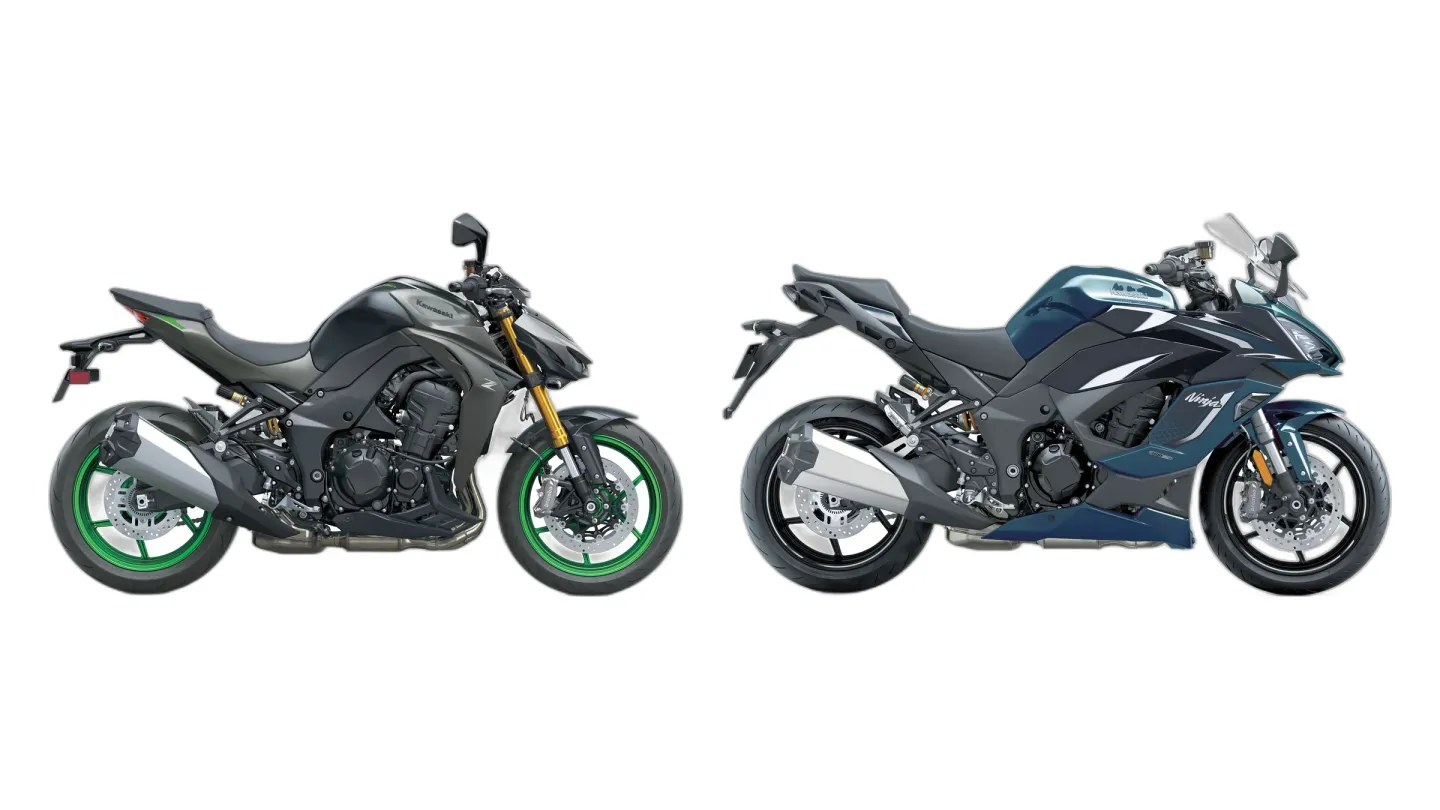
Kawasaki Z1100 (MY2026-SE) vs Ninja 1100SX (ZX1100H-SE)
Kawasaki Z1100 vs Ninja 1100SX: where they split, and which one to buy.
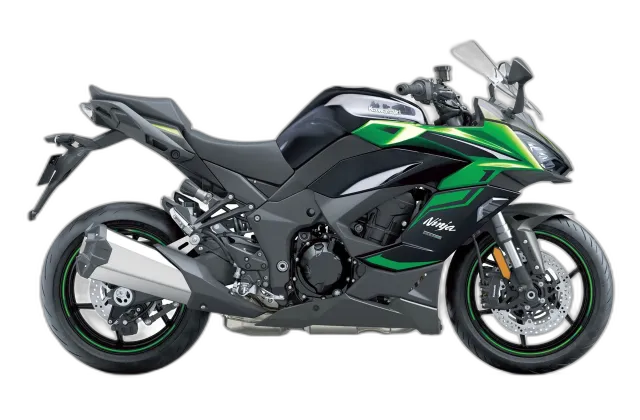
You'll want off the Kawasaki Z1100 well before a long day's over. The Kawasaki Ninja 1100SX's chassis doesn't fuss as the hours stack up. It holds a neutral line, bend after bend.
So which one do you buy?
Buy the Ninja 1100SX if…
Traveling with luggage
Runaway pick: Ninja 1100SX
Loaded for a long trip, the Ninja 1100SX pulls clearly ahead. That comes from better wind protection and more comfort on long stints. It's the one you'll want with a week of gear on board.
The Z1100 has the edge if…
Sporty riding on twisty roads
Small edge: Z1100
Back-road fun leans slightly toward the Z1100. Most of that is stronger brakes. It's a narrow call, so trust your test ride.
What makes each one tick
Z1100
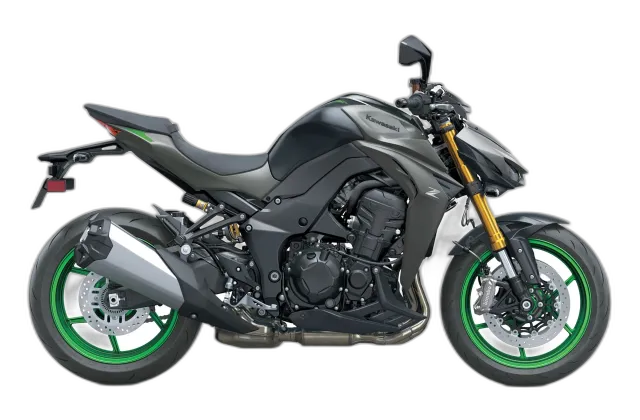
From low revs, the Z1100's inline-four pulls with a thick midrange shove, and it builds speed without drama. On the Angeles Crest Highway, that grunt means a pass doesn't ask for more than a roll of the throttle. The upside-down fork meets each bump. The crouched nose looks hungry even when it's parked.
Ninja 1100SX
Down low, the Ninja 1100SX's inline-four pulls cleanly with a silky surge that thickens through the midrange. There's enough upright in the bars for a full day in the seat. Despite its weight, the twin-spar aluminum frame tips it into corner entry, and it's planted through the arc. The forward lean loads the front tire.
The Voice of Experience

What actually separates them
- The Z1100 has the lower seat: 32.1 in (815 mm) vs 32.9 in (835 mm).
- The Z1100 has the lower wet weight: 487 lb (221 kg) vs 516 lb (234 kg).
- The Ninja 1100SX has the larger fuel tank: 5.0 US gal (19 L) vs 4.5 US gal (17 L).
Which one for the way you ride
Comfortable long-distance riding
Not its job: Z1100
No long-distance verdict for the Z1100. It's made for something else entirely.
These two run dead level on commuting and running costs. Sit on both in the showroom and trust what your body says.
Who each one is built for
What's good, and what you'll live with
Z1100
What owners say
Strengths
- Smooth, flexible engine with strong midrange
Ninja 1100SX
What owners say
Strengths
- Silky-smooth, torque-rich inline-four
- Refined electronics package
- Premium Öhlins & Brembo hardware
Trade-offs
- Peak power reduced vs predecessor
What they share
- Displacement
- 1099 cc
- Engine
- Inline-four
- Cooling
- Liquid-cooled
- Power
- 136 hp (100 kW)
- Peak power at
- 9,000 rpm
- Torque
- 83 lb-ft (113 Nm)
- Peak torque at
- 7,600 rpm
- Gearbox
- 6-speed
- Final drive
- Chain
- Fork
- Upside-down (USD)
- Front tire
- 120/70-17
- Rear tire
- 190/50-17
Where the spec sheets split
| Z1100 | Ninja 1100SX | |
|---|---|---|
| Seat height | 32.1 in (815 mm) | 32.9 in (835 mm) |
| Wet weight | 487 lb (221 kg) | 516 lb (234 kg) |
| Z1100 | Ninja 1100SX | |
|---|---|---|
| Fuel capacity | 4.5 US gal (17 L) | 5.0 US gal (19 L) |
| Z1100 | Ninja 1100SX | |
|---|---|---|
| Front brake | 310 mm | 300 mm |
What comes fitted, what costs extra
| Z1100 | Ninja 1100SX | |
|---|---|---|
| Wheelie Control | Standard | Not offered |
| Heated Grips | Option | Standard |
| Adjustable Windscreen | Not offered | Standard |
| Electrically Adjustable Windscreen | Not offered | Standard |
| Luggage System | Not offered | Option |
Head to head, area by area
Both bikes on the same scale, one area at a time.