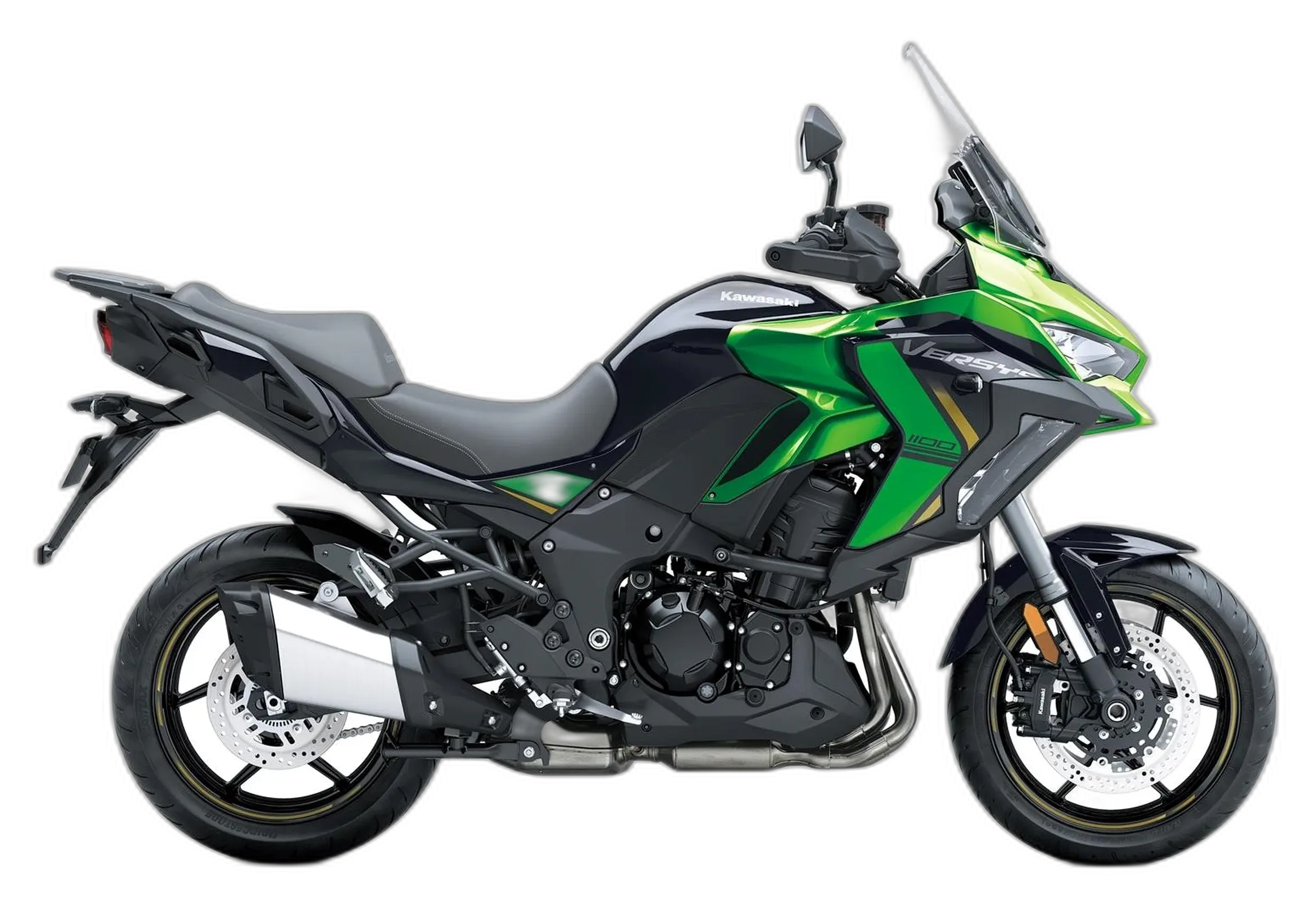
Kawasaki Versys 1100 (MY2025-SE) — Sport Tourer
Kawasaki press archive

2025 · Sport Tourer · A variant of the Versys 1100

Versys 1100 SE (MY2025-SE)

Sold in the US as Kawasaki Versys 1100 SE LT

Differences between the standard Versys 1100 and the SE

4.5 / 5 NastyNils Rating · against its class

Smooth Power, Dialed Suspension

The Machine's Character

The Versys 1100 SE is built around a 1099 cc inline-four making 135 hp and 83 lb-ft, and every part of it is aimed at distance rather than drama. Peak torque lands at 7,600 rpm, which puts the useful pull right where touring speeds live, and the tall sixth gear keeps the motor loafing on an interstate. The SE hardware is the real story: electronically controlled suspension, cruise control, a quickshifter that works up and down, heated grips, a TFT dash with phone connectivity, LED lighting with cornering lights, a center stand and luggage. This is a premium tall tourer, fully equipped.

On the road it behaves like a heavy bike that hides its heft once moving, and the appeal is stamina, not aggression. The inline-four has the kind of mechanical honesty that ages well, and the rider aids you actually use on a long day (ABS, traction control, ride modes) are all standard. It suits riders who want 200 to 400 mile days without arriving beaten up, solo or loaded. The caveats are physical: 569 lb wet and a 33.1 in seat make it a handful at walking pace, the chain final drive wants regular attention, and the rear shock gives you nothing to turn by hand.

Hard Numbers

Spec sheets don't ride bikes, but they set the baseline.

Show full specs & equipment Hide specs & equipment
Key specifications
Power 135 hp (99 kW) @ 9,000 rpm
Torque 83 lb-ft (112 Nm) @ 7,600 rpm
Displacement 1099 cc
Engine Inline-four
Cooling Liquid-cooled
Gearbox 6-speed
Final drive Chain
Front tire 120/70-17
Rear tire 180/55-17
Seat height 33.1 in (840 mm)
Wet weight 569 lb (258 kg)
Fuel capacity 5.5 gal (21 L)

Equipment check

Chassis

Comfort

Connectivity

Drivetrain

Lighting

  • LED Headlight Standard

Safety

  • ABS Standard
  • Traction Control Standard
  • Ride Modes Standard

What the Versys 1100 SE Adds — Differences vs the Standard Versys 1100

The Versys 1100 SE (MY2025-SE) builds on the standard Versys 1100: the upgraded hardware, the key spec changes and where its character shifts. The full ride, specs, scoring and verdict are all right here on this page.

How the SE shifts the character

Where the SE does more
  • A richer, more connected tech suite
  • More suspension adjustment to dial in
Sunset over the Adriatic Sea near Primosten, Croatia. Golden hour light bathes calm water in warm tones, with a small sailboat on the distant horizon. Rocky vegetation frames the right foreground. Clear skies and gentle conditions.

The Truth on the Street

This section isn't my ride. It's what owners have told me over the years in the paddock, at club nights, over coffee at fuel stops, and in the messages riders send once they've put real miles on their own bikes. On the Versys 1100, that chatter lines up clearly. Riders praise the engine, the comfort for two and how much easier the bike makes everyday riding. The complaints are fewer, and fewer owners raise them.

The engine owners keep bringing up

The engine gets the most praise, and riders mention it more than anything else. Owners describe the enlarged inline-four as creamy and torque-rich. It pulls cleanly from low revs and stays silky as the revs climb, and riders say the power is broad and usable in real-world riding instead of waiting at the top end. Highway riding keeps coming up as where it shines. The revised quickshifter comes up almost as often. It now works from 1,500 rpm, so owners report clutchless shifts even in stop-and-go traffic. They describe the upshifts as seamless and barely noticeable, and they say it takes a lot of effort out of city riding and makes touring more relaxed.

Built for two, riding on air

Passenger comfort is a recurring theme. Owners describe a spacious seat, plenty of legroom and generous pillion accommodations, and several call it an outstanding bike for carrying a passenger, with effective wind protection and little vibration. The upright ergonomics and a well-padded seat mean riders report no hot spots on long journeys. The semi-active electronic suspension gets its share of credit too. Riders call the ride plush and well controlled, isolated over bumps yet composed in corners, and they say it adapts to conditions by itself while keeping this big bike planted.

The short list of gripes

Owners bring up weight most often. They feel it at low speeds and when moving the bike around by hand. A few mention a soft, spongy shift lever that leaves them unsure whether a gear has engaged, especially on slower shifts, and sometimes they glance at the dash to confirm it. One owner found the initial throttle response snatchy in Full power mode, and says that feels jarring around town.

Known issues

  • Spongy gear shift lever feel

    drivetrain rare

    The shift lever has excessive play and a vague engagement, causing uncertainty about gear selection. The issue is inherent to the mechanism and can be distracting.

  • Fluctuating idle RPM after service

    fuel system rare

    One owner reported unstable idle speed (up to 1,500 rpm) following a dealer service at ~2,500 miles (4,000 km), diagnosed as insufficient vacuum pressure (5.8 psi / 40 kPa vs. spec 7.5 psi / 52 kPa). Throttle body replacement was recommended but resolution was delayed.

The Expert Benchmark

Where this Kawasaki Versys 1100 pulls ahead of — or falls behind — its rivals on the numbers, and the typical bike in its class on character.

What kind of bike this is — character vs. the class

This bike Class average

The shape of the Kawasaki Versys 1100 — numbers and character vs. the average Sport Tourer

Head-to-head: Kawasaki Versys 1100 vs. its rivals

The Long-Haul Verdict

Forget spec-sheet bragging. Here's who the Versys 1100 is actually built for.

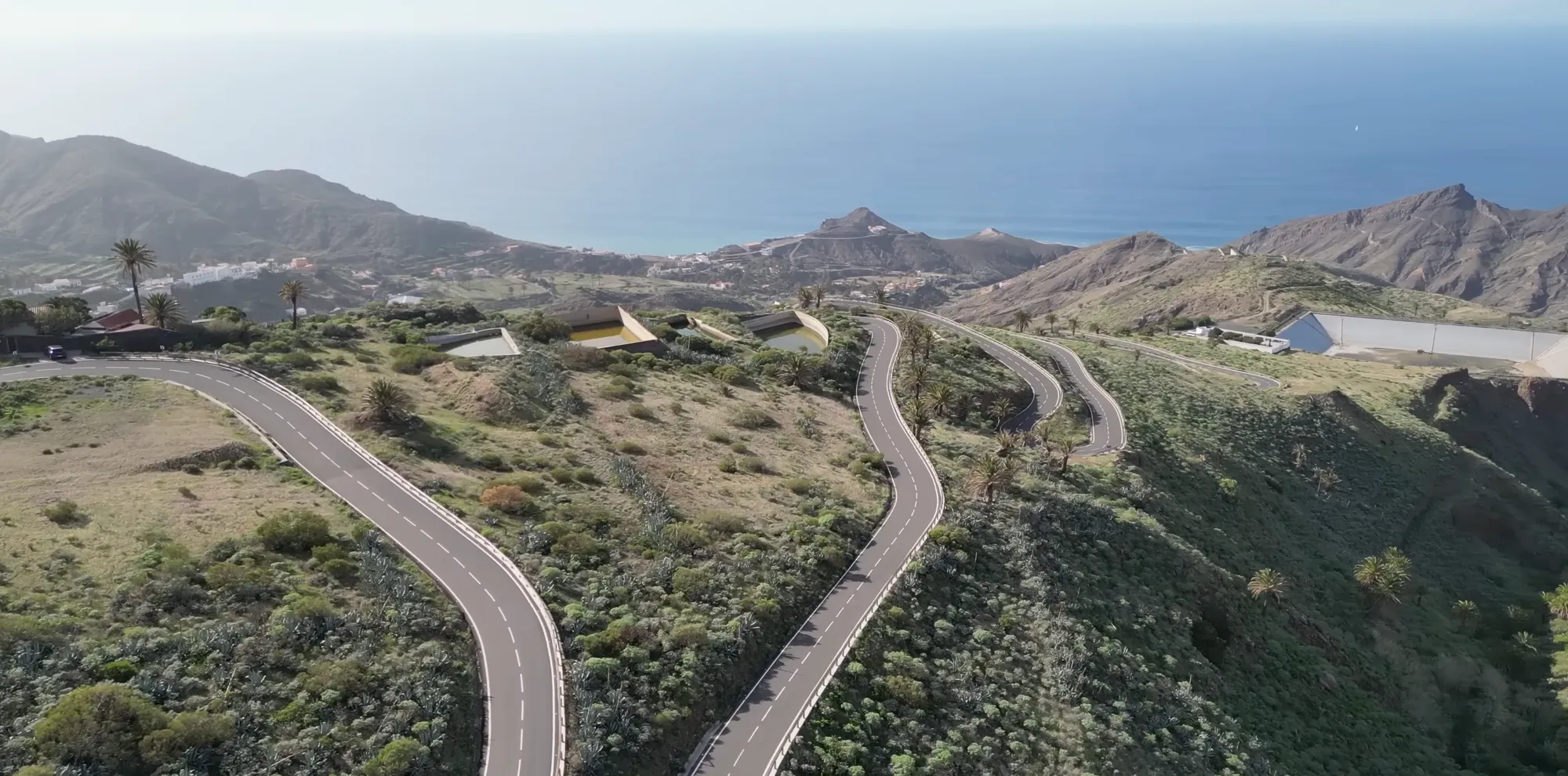
Aerial view of a winding asphalt road cutting through volcanic terrain on La Gomera, Canary Islands. The road curves through sparse green vegetation with rocky volcanic peaks visible in the background and a settled valley to the left. Clear lane markings, dry climate, partly cloudy sky.

Best motorcycle for Highway 1?

This is your bike. It has the comfort and the electronics for 200 to 400 mile days on Highway 1 or the Blue Ridge, and it still enjoys every corner in between them.

Made for Black Hills · Blue Ridge Parkway · Cherohala Skyway

Best touring motorcycle for long distance?

Loaded or two-up, it has the seat, the tank and the long-legged gearing for national park distances. Accept the chain maintenance and the weight at rest as part of the deal.

Made for Beartooth Highway · Blue Ridge Parkway · Going-to-the-Sun Road

Best motorcycle for Tail of the Dragon?

It will hold a clean line through the Cherohala and the Dragon, but you are steering 569 lb of touring bike. Rewarding when you ride it smooth, tiring if you fight it.

Made for Tail of the Dragon · Back of the Dragon · Blue Ridge Parkway

What's new versus the previous generation

If you're cross-shopping the older generation, here's what changed.

Kawasaki Versys 1000 (LZT00C)

Previous generation · 2019

Kawasaki Versys 1000 (LZT00C)

A Thousand CCs of Long-Haul Trust

Compare to the previous model →

Alternatives to the Kawasaki Versys 1100

If this one isn't quite the fit, these are the bikes worth riding back-to-back against it.

Any price note compares both bikes at the same age — the youngest age both have on the used market — against this Kawasaki Versys 1100. “cheaper/pricier” is what that bike costs second-hand, not how worn it is.

Find it in these lists

Compare it with every bike that shares the same spec or equipment.