

Suzuki GSX-S 1000 GX (MY2024) — Sport Tourer
NastyNils / Suzuki press archive

2024 · Sport Tourer · Buyer's Guide

GSX-S 1000 GX (MY2024)

Superbike Soul, Touring Body

The Machine's Character

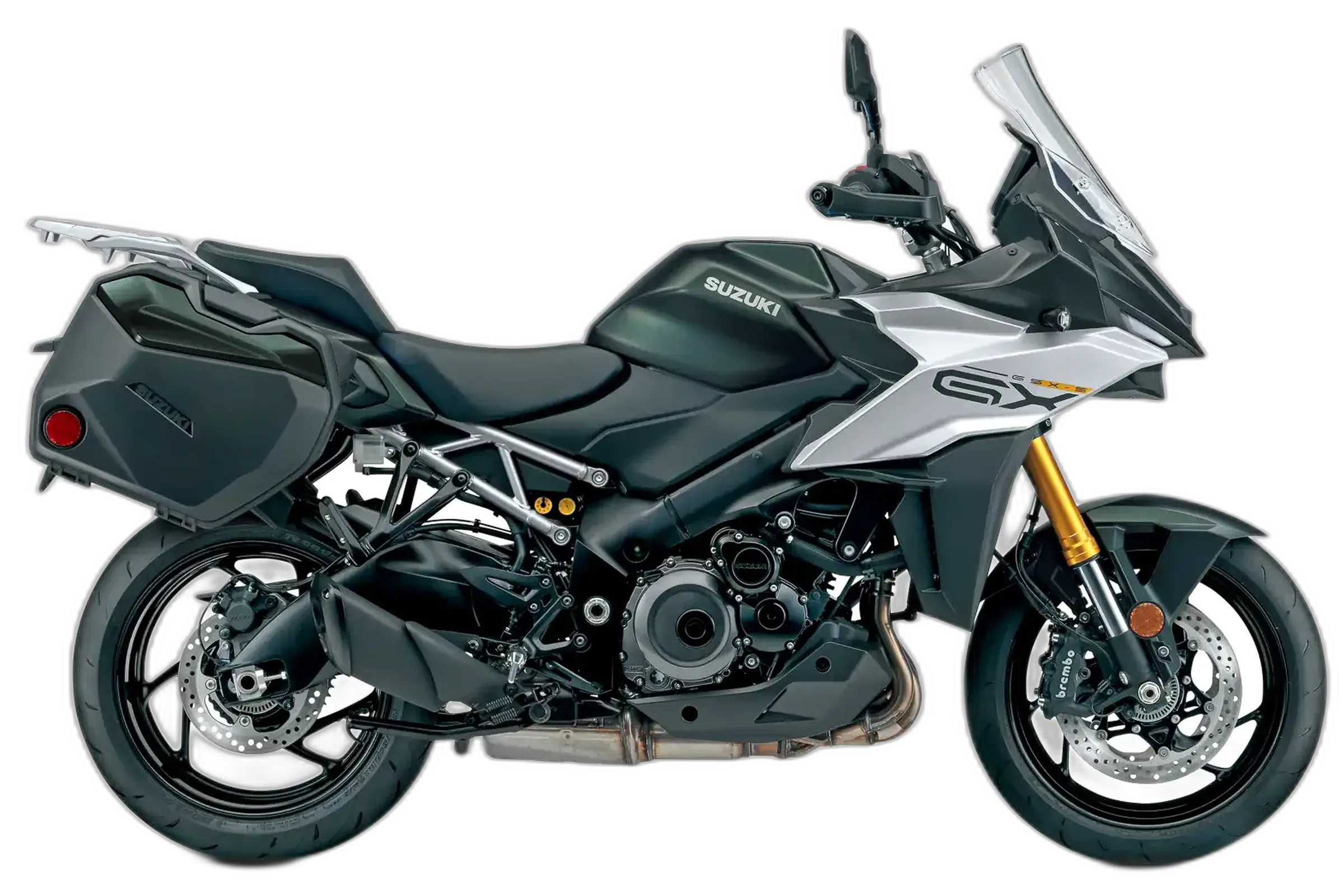
The GX takes the K5-derived inline-four that runs through Suzuki's liter lineup and drops it into a taller, upright crossover built for distance. You get 152 hp and 78 lb-ft from 999 cc, served with the kind of long, linear pull that keeps climbing to 11,000 rpm without a step or a surge anywhere in the band. Underneath sits semi-active suspension and a six-axis IMU feeding the Suzuki Motion Track Brake System, the Bi-directional Quick Shift System, and the Drive Mode Selector Alpha (SDMS-α). Suzuki calls it a Sport Crossover, and the label fits: street wheels, sport-touring rubber, superbike-class top end sitting on real suspension travel.

On the road it rides long-legged and composed, the sort of machine that shrinks a 300-mile day and asks for nothing back. It ran flawlessly across the whole test with no faults over the full distance, and the build quality reads like it was made to outlast the loan. This one suits the rider who wants a single bike for touring, twisties, and the occasional hard day without buying three. The honest caveat: wind protection is good for a crossover but short of a dedicated adventure tourer, and the sharpest ride mode is too twitchy for regular road use, so leave it in the milder settings.

Hard Numbers

Spec sheets don't ride bikes, but they set the baseline.

Show full specs & equipment Hide specs & equipment
Key specifications
Power 152 hp (112 kW) @ 11,000 rpm
Torque 78 lb-ft (106 Nm) @ 9,250 rpm
Displacement 999 cc
Engine Inline-four
Cooling Liquid-cooled
Gearbox 6-speed
Final drive Chain
Fork Upside-down (USD)
Front tire 120/70 ZR17 M/C (58W) tubeless, OE Dunlop Roadsport 2
Rear tire 190/50 ZR17 M/C (73W) tubeless, OE Dunlop Roadsport 2
Wheelbase 57.9 in (1470 mm)
Seat height 33.3 in (845 mm)
Wet weight 511 lb (232 kg)
Fuel capacity 5.0 gal (19 L)
Top speed 133 mph (214 km/h)
Fuel economy 38 mpg (US)

Equipment check

Chassis

  • Electronic Suspension Standard
  • Front Suspension Adjustable Standard
  • Rear Suspension Adjustable Standard
  • Cruise Control Standard

Comfort

  • Heated Grips Optional
  • Adjustable Windscreen Standard
  • Luggage System Optional

Connectivity

  • TFT Display Standard
  • Smartphone Connectivity Standard
  • USB Charging Port Standard

Drivetrain

  • Quickshifter Suzuki Bi-directional Quick Shift System Clutchless ridingFull throttle upshift Standard
  • Slipper Clutch Standard

Lighting

  • LED Headlight Standard

Safety

  • ABS Standard
  • Cornering ABS Suzuki Motion Track Brake System Cornering brake safety Standard
  • Traction Control Standard
  • Ride Modes Suzuki Drive Mode Selector Alpha (SDMS-α) Selectable ride modesLean sensitive traction Standard

The Voice of Experience

Portrait of NastyNils

The test ride

Settle into the saddle and the first few minutes read pure touring bike, upright and unhurried, with the controls falling to hand without a hunt. The wide fairing builds a genuine wall against the weather, and long highway stretches pass in real comfort behind it. Vibration is impressively contained: seat, bars, and pegs stay smooth, with only a faint tingle in the bar ends once you wind past mid-revs. The riding triangle held up over full days without the seat or knee angle turning into a complaint, though carry a lot of leg and the knee bend lands on the compact side. Cruise control takes the mental overhead off the distance miles once your hands learn the two-bar sequence. And the hardware feels overbuilt in the good way, every switch and panel telegraphing that durability came first.

Rated point by point — where it earns its keep

My own 0–100 score for this bike against the class, area by area — the marker on each bar is the class average.

Through a set of corners the chassis is the standout. It tells you precisely where the bike is at every point of the arc, with none of the vagueness or floaty feel that makes you second-guess a line. The feedback stays crisp the whole way through, and there's real dynamic room to lean on it. Two things cap that. The wheelie control steps in earlier than I wanted, trimming power and holding the front down before I'd actually asked for it, and a rider with some experience will feel that leash off a hard exit. Lean-angle clearance is the other ceiling. It's set for touring rather than sport, so it's never an issue on the road, but if you come expecting a sportbike's range of motion, it simply isn't there.

The piece the overview skips is the windshield. It offers a few mounting positions, but moving between them means stopping and climbing off, so you commit to a height before you roll out and live with whatever you chose. For ordinary riding that's no hardship. Line up a full day of high-speed highway and you'll wish you could raise it without pulling over. The controls claw some of that back. The switchgear is laid out intuitively enough that I never had to dig through menus while moving, and the display stays legible at a glance when you're eating up distance and don't want your eyes off the road. One straight note for taller riders: at around six feet I fit the cockpit without any fuss, but anyone carrying substantially more leg should throw a leg over it in person before committing, since the space up front is cut for touring comfort rather than for stretching out. None of that undoes how easy the bike is to spend a day on. It just marks the two spots where the packaging shows its priorities.

Roll the throttle open and the calm face this bike wears turns out to be a disguise. The four-cylinder hauls hard enough to straighten your arms and shove your weight back, firing you between corners before you've consciously decided to hurry. The way the drivetrain delivers it is what sells the whole thing, though. Noise, feel, and the mechanical polish of the unit are dialed in so cleanly that the motor builds quiet confidence from the first mile. And it stays content enough at any point in the range that the gearbox almost feels like an option. The quickshifter is genuinely good, but the engine is so willing everywhere I rarely bothered reaching for it.

Nothing on this bike gave me a reason to doubt it. It never threw a warning it shouldn't have, never asked for attention mid-ride, and it finished as tight as it started. On a machine you buy to cover long distances, that steadiness is the part that actually counts.

This bike runs quicker than it looks, and usually quicker than I meant to go. It keeps nudging ahead of my own pace, the sort of machine that has me checking the speedo when I thought I was loafing. What convinced me most is how far its range stretched. The same bike that strung together back-to-back touring days also pulled duty as an instructor mount at track events and spent time on a supermoto layout, holding its own at both ends without any obvious compromise.

The front brake does its job without any theater, but the part that stuck with me is the rear. It's genuinely usable here, predictable and well-enough modulated that I reached for it on low-grip sections instead of treating it as a panic lever. On most bikes you lean on the front and engine braking alone. Here all three work together, blending naturally without ever fighting each other.

A couple of details tell you who built this bike. Rubber feelers sit low on the footrests to warn you before the exhaust, which hangs low on this machine, ever touches down. Simple idea, and it works. Where the package strains is the touring logistics. The phone pairing app connected on the first try, which is rarer than it should be, but the navigation it feeds you is basic, fine for the odd A-to-B run and out of its depth on a real route. Mounting your own GPS doesn't rescue it, since there's no good spot above the screen and a bar mount sits too low, and the accessory catalog has no answer either. The optional case system looks right on the bike, but for a long haul I ended up swapping it for a lighter, more compact bag, which tells you what the fitted cases weigh once you load them for serious miles.

Sunset over the Adriatic Sea near Primosten, Croatia. Golden hour light bathes calm water in warm tones, with a small sailboat on the distant horizon. Rocky vegetation frames the right foreground. Clear skies and gentle conditions.

The Truth on the Street

Nils doesn't build this section from a spec sheet. It comes from years of listening to riders talk shop: paddock conversations, owner chatter over a coffee stop, and the steady stream of emails and direct messages that land in his inbox after people log real miles. On the GX 1000, the pattern that comes back is consistent. Riders trust it to run and run, they lean hard on the electronic suspension, and their gripes cluster tightly around the contact patch and the details of covering distance.

The suspension riders lean on

The loudest praise, and the most consistent, is reliability. Owners report piling up serious mileage with nothing to show for it: no mechanical trouble, no electrical faults, and the semi-active suspension itself has stayed clean of glitches. That suspension is the other headline. Riders describe it staying composed and well-controlled across surfaces that would upset lesser setups, staying almost unbothered by big hits on corrugated pavement, wet roads, and gravel. Around it, the crowd that puts on long days points to the upright crossover stance and the fuel range as what makes the bike a genuine mile-eater. The gearbox draws its own quiet approval too, with the quickshifter singled out as clean and free of false neutrals, even working through the cruise control. Under all of it sits an inline-four riders characterize as linear and eager to rev, pulling with a superbike-on-stilts feel once it reaches the top of the range.

Where the complaints collect

The most common gripe is the stock rubber. Riders find the factory tires vague and short on confidence, with a harsh edge to the ride and a tendency to push through a corner unless you actively lean the bike in, and many swap them out early. Distance riders raise two comfort notes as well. At a 70 to 80 mph cruise the engine is spinning fast enough to blur the mirrors slightly, and a good number wish for a taller top gear. The cruise control also draws repeat mention for shedding speed in an abrupt step rather than easing off. Practical annoyances round it out: the windscreen takes tools to move between its positions, with a hex key that isn't in the factory kit, and the fixings can loosen at speed. Brakes come up too, with riders calling the lever feel wooden and vague, and the rubber lines a sore point at this money. Some also note that heated grips, a center stand, and luggage sit on the options list rather than coming fitted.

Known issues

No widely-reported issues on record.

    The Expert Benchmark

    Where this Suzuki GSX-S 1000 GX pulls ahead of — or falls behind — its rivals on the numbers, and the typical bike in its class on character.

    What kind of bike this is — character vs. the class

    This bike Class average

    The shape of the Suzuki GSX-S 1000 GX — numbers and character vs. the average Sport Tourer

    Head-to-head: Suzuki GSX-S 1000 GX vs. its rivals

    The Long-Haul Verdict

    Forget spec-sheet bragging. Here's who the GSX-S 1000 GX is actually built for.

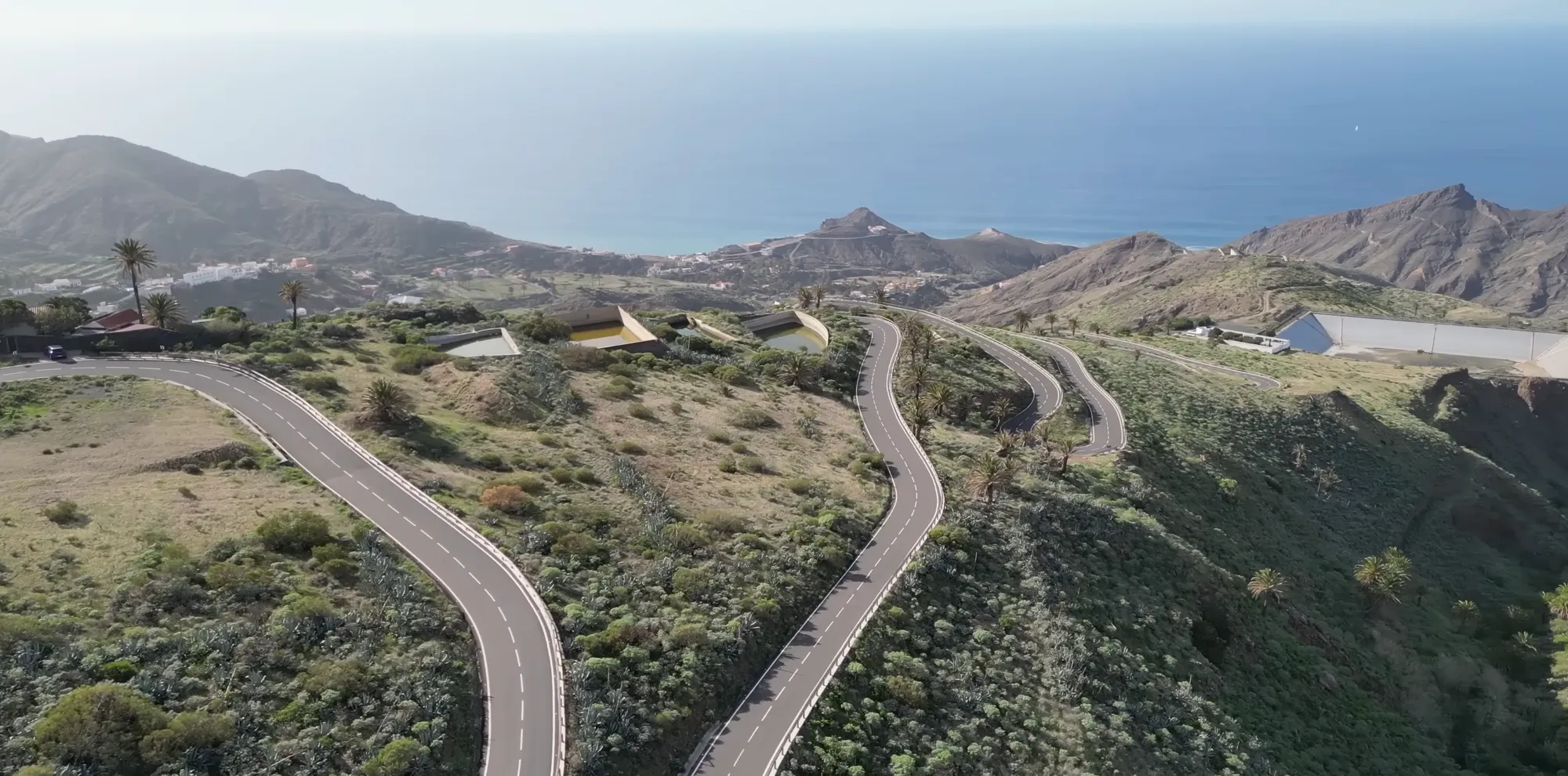
    Aerial view of a winding asphalt road cutting through volcanic terrain on La Gomera, Canary Islands. The road curves through sparse green vegetation with rocky volcanic peaks visible in the background and a settled valley to the left. Clear lane markings, dry climate, partly cloudy sky.

    Best motorcycle for Highway 1?

    This is your bike. It links twisties, comfort, and 200-to-400-mile days as well as anything, staying composed whether you're carving the Blue Ridge or just eating highway to get there.

    Made for Black Hills · Blue Ridge Parkway · Cherohala Skyway
    Best touring motorcycle for long distance?

    It'll cover the big miles in comfort and never miss a beat, but pack light and budget a taller screen; the stock wind protection and factory cases aren't built for fully loaded two-up marathons.

    Made for Beartooth Highway · Blue Ridge Parkway · Going-to-the-Sun Road

    Best motorcycle for Tail of the Dragon?

    The snappy, communicative chassis rewards clean lines on the Dragon and Cherohala, but the touring lean-angle ceiling and stability-first tires mean you'll want stickier rubber to really push.

    Made for Back of the Dragon · Blue Ridge Parkway · Cherohala Skyway
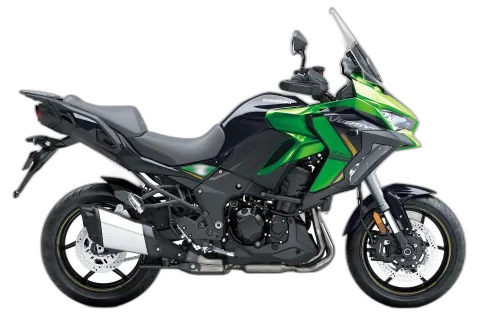
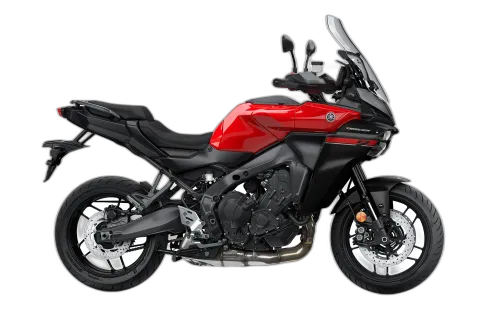
    Alternatives to the Suzuki GSX-S 1000 GX

    If this one isn't quite the fit, these are the bikes worth riding back-to-back against it.

    Any price note compares both bikes at the same age — the youngest age both have on the used market — against this Suzuki GSX-S 1000 GX. “cheaper/pricier” is what that bike costs second-hand, not how worn it is.