By NastyNils·
Motorcycle comparison · Hyper Naked vs Naked Bike
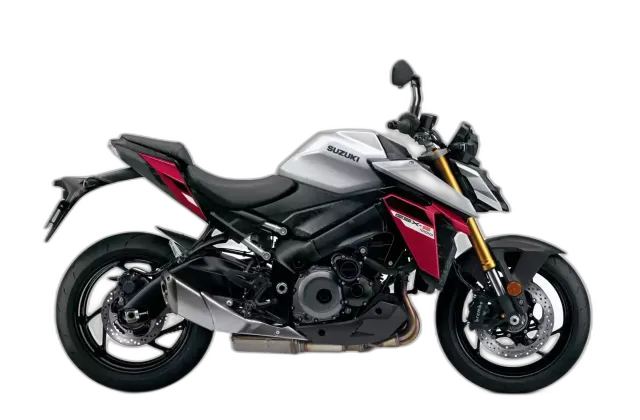
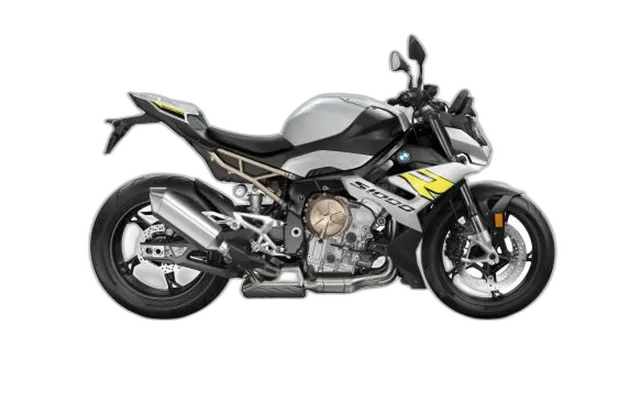
BMW S 1000 R (K63) vs Suzuki GSX-S1000 (MY2025)
BMW S 1000 R vs Suzuki GSX-S1000: which one's easier to live with every day.
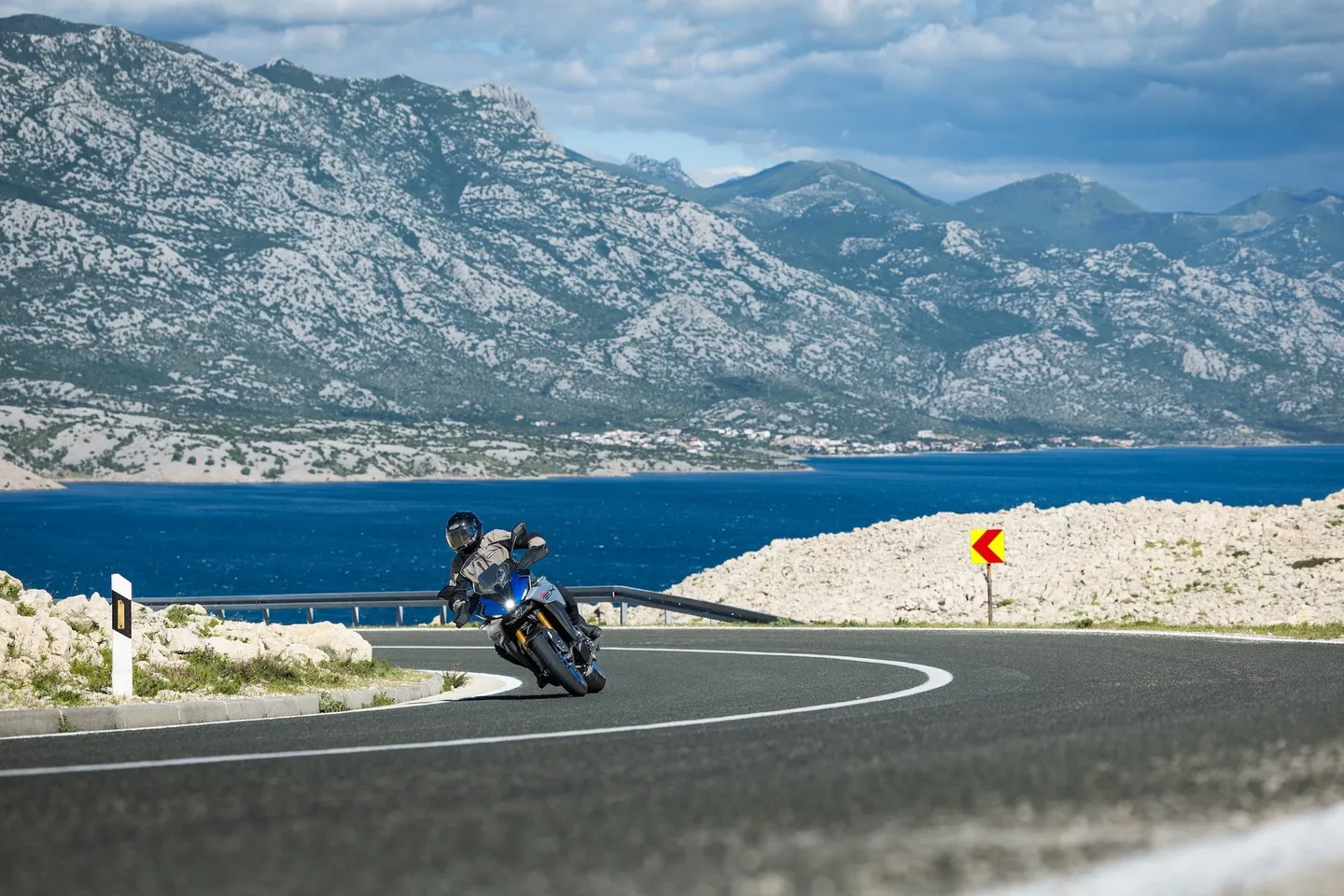
Turn the BMW S 1000 R in hard and its front tire doesn't flutter or hunt for grip. The Suzuki GSX-S1000 drops in and locks onto your line.
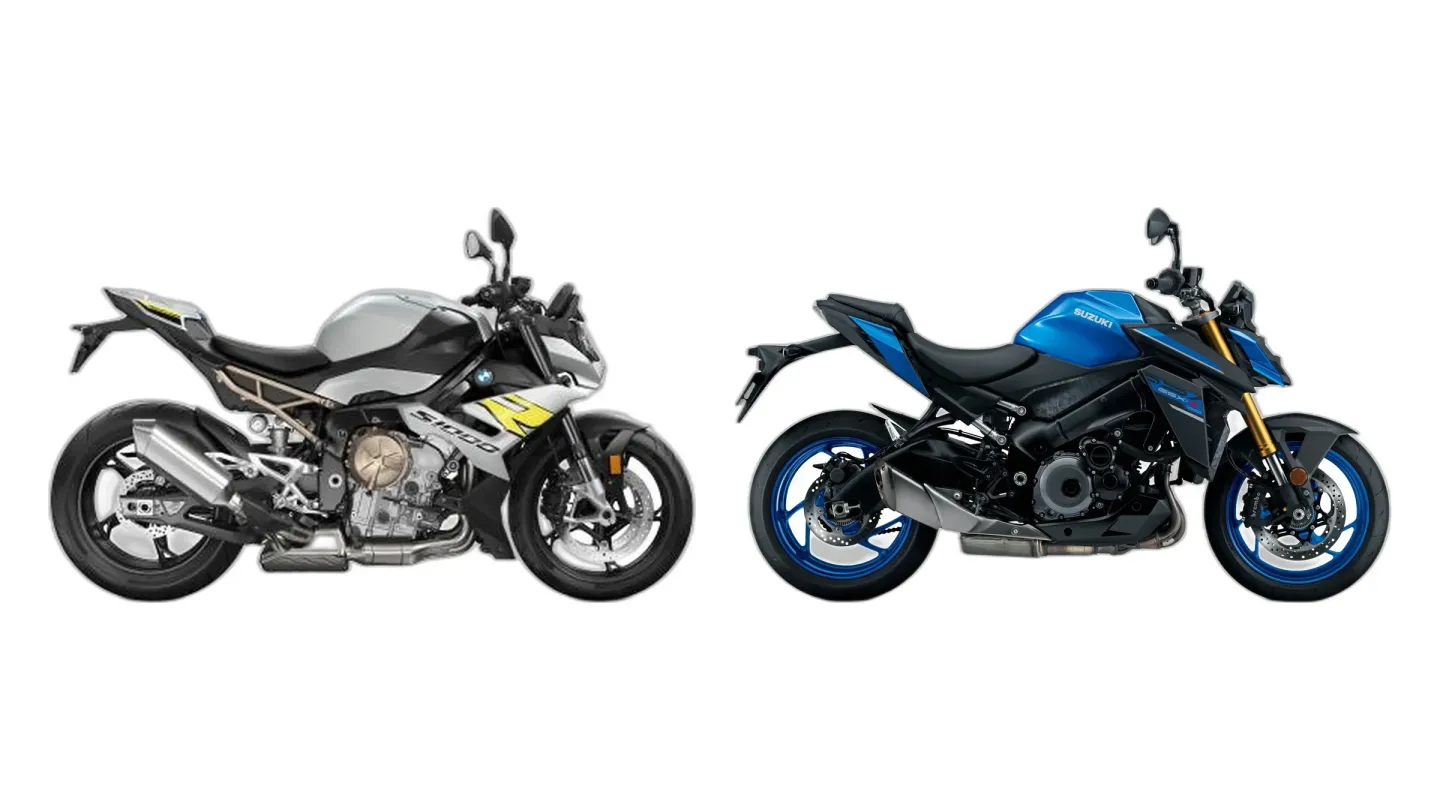
So which one do you buy?
The S 1000 R has the edge if…
Sporty riding on twisty roads
Edges it: S 1000 R
The S 1000 R nudges ahead once the pavement starts to wiggle. Thank a sportier chassis and more feel through the bars for that. Don't expect a night-and-day difference.
Daily commuting & city riding
Narrow edge: S 1000 R
The S 1000 R edges it for the daily grind. It's a small gap, not a reason on its own.
The GSX-S1000 has the edge if…
Riding two-up with a passenger
A touch ahead: GSX-S1000
The GSX-S1000 is slightly kinder to a passenger. Your passenger should still try both.
Traveling with luggage
Inches ahead: GSX-S1000
For a week away, the GSX-S1000 noses in front. Put it down to a better passenger seat. Fit the bags you want before you decide.
Which one's the smarter buy
Different bikes, different deals
The S 1000 R and GSX-S1000 sit in different classes, so neither is the clear better buy for the money.
What makes each one tick
S 1000 R
There's no spectacle in how the S 1000 R answers you, just a direct reply to every input. A cracked throttle through a tight bend gets a pull from a broad spread of revs while the fork and shock work as one. The frame doesn't budge.
Nils rode the S 1000 R in Hungary in 2021, and in Austria and Spain in 2025 (1000PS test reports).
GSX-S1000
Down low, the GSX-S1000's four spins so smoothly that you'll catch yourself circling at lazy revs. Fast left-right switches don't unsettle the chassis, which stays flat and exits clean. Up top, the four screams to redline.
Nils rode the GSX-S1000 in Austria and Hungary in 2025 (1000PS test reports).
The Voice of Experience

What actually separates them
- The GSX-S1000 has the lower seat: 31.9 in (810 mm) vs 32.7 in (830 mm).
- The S 1000 R has the lower wet weight: 439 lb (199 kg) vs 472 lb (214 kg).
- The S 1000 R makes more peak power: 165 hp (121 kW) vs 152 hp (112 kW).
Which one for the way you ride
Comfortable long-distance riding
Neither is a natural fit
Both of these get tiring on a long day. A proper tourer will treat you better on big miles.
Who each one is built for
What's good, and what you'll live with
S 1000 R
Strengths
- Torque Long Before The Top End
- A Fork That Never Stops Talking
- Lighter Than 439 lb Feels
- An Engine Built To Outlast You
- Low weight for the power class
Trade-offs
- Base Spec Is A Different Bike
- Early Builds And ABS Units
- DDC Softens Over Big Miles
- Rear Tires Are A Line Item
- Hayes brake calipers: poor modulation and bite
GSX-S1000
Strengths
- Real Superbike Frame Underneath
- Top End Turns Savage
- Drivetrain Works As One Unit
- Planted Through Fast Transitions
- Thick Mid-Range In Any Gear
Trade-offs
- Brakes Need Real Effort
- Suspension Soft From The Crate
- Mode A Is Hair-Trigger
- Thin paint and finish
Known problems to check before you buy
S 1000 R
- Premature failure of individual coil-on-plug units (pencil-type) One or more ignition coils fail; symptoms: misfires, cylinder dropout, rough running, check-engine warning. Typically one coil fails first, then others follow. Recommended community solution: replace all 4 ignition coils simultaneously. Special tool (BMW 12 3 621) and airbox removal required.
- Coolant loss via the weep hole of the combined oil/water pump The combined oil/water pump can develop a leak; coolant exits via the weep hole at the rear of the oil pan. Two seals: if the first fails, coolant leaks externally; if the second fails, coolant mixes with oil (critical). Some owners report recurrence after warranty repair.
- Cascading error messages: ABS, TC, engine management, crash sensor simultaneously Simultaneous illumination of multiple warnings: "ABS Pro Failure", "TC Failure", "Adaptive Headlight Failure", "Crash Sensor Failure", "Electrical system critical". Often traceable to loose or corroded battery terminals. CAN bus communication errors cascade across all systems.
- Strong vibrations above 5,500–6,000 rpm The inline four-cylinder without a balance shaft generates noticeable vibrations at bar ends, mirrors, and footpegs. Mirrors become blurry at highway speeds. Numbness in hands on longer rides. Considered a design characteristic (weight saving from the absence of a balance shaft), not a defect. Community remedies: heavy bar-end weights (HVMP), Rizoma Stealth mirrors, foam pellets in clip-ons.
- Jerky throttle response below 3,000 rpm (ride-by-wire) Jerky, unharmonious response from the ride-by-wire system at low rpm and constant part-throttle operation. Particularly pronounced in Dynamic/Race mode. Cause: lean mapping for Euro 5 compliance. Community remedies: BoosterPlug/Red-Chip module, Rain/Road mode in city traffic, ECU remap.
- Quickshifter (Shift Assistant Pro) intermittently non-functional Quickshifter stops working on upshifts from 2nd to 3rd gear and above, while 1st to 2nd works. Causes include pinched or damaged 4-wire cable, incorrect chain tension, and software error. Community solution: quickshifter reset, inspect chain tension, and check cable for damage.
- "DDC!" error message and failure of electronic suspension control "DDC!" error message on the display, suspension settings no longer adjustable. Causes: battery terminal issues, CAN bus errors, connector issues at fork/shock. Affects only vehicles with the optional DDC suspension.
- Engine stalling when pulling the clutch, at traffic lights, or when shifting Rough idle and engine stalling, particularly on MY2021–2022. Cause: Euro 5 lean-mixture strategy in ECU mapping. BMW released a software update in January 2022 that resolved the problem for many owners.
- Failure of the combination switch (start/stop/kill switch) due to heat/UV The PCB-based combination switches (introduced from the BMW S 1000 platform in 2009) can develop hairline cracks in the circuit traces due to thermal expansion. Symptoms: motorcycle will not start, intermittent electrical failures. Occurs particularly after parking in direct sunlight. A cross-platform BMW issue since 2009.
GSX-S1000
- Sticky ignition key barrel The ignition lock can become difficult to turn, especially over time, requiring lubrication or eventual replacement.
- Starter motor occasionally fails to engage Some owners experience a clicking noise when pressing the starter button; the issue may be related to the starter relay or battery cable connections.
- Thin paint and corrosion-prone fasteners Owners report that the paint on the frame and engine covers chips easily, and some hardware shows rust after a few years.
What they cost used
Both bikes priced used at the same age: 1 year old.
- S 1000 R
- about $16,200
- GSX-S1000
- about $11,200
At one year old, the BMW S 1000 R sits around $16,200 while the Suzuki GSX-S1000 lands near $11,200. That's a $5,000 gap in the Suzuki's favor. These are estimates from earlier US market records, not live listings.
What they share
- Displacement
- 999 cc
- Engine
- Inline-four
- Cooling
- Liquid-cooled
- Gearbox
- 6-speed
- Front tire
- 120/70-17
Where the spec sheets split
| S 1000 R | GSX-S1000 | |
|---|---|---|
| Seat height | 32.7 in (830 mm) | 31.9 in (810 mm) |
| Wet weight | 439 lb (199 kg) | 472 lb (214 kg) |
| S 1000 R | GSX-S1000 | |
|---|---|---|
| Power | 165 hp (121 kW) | 152 hp (112 kW) |
| Torque | 84 lb-ft (114 Nm) | 78 lb-ft (106 Nm) |
| S 1000 R | GSX-S1000 | |
|---|---|---|
| Fuel capacity | 4.4 US gal (16.5 L) | 5.0 US gal (19 L) |
| S 1000 R | GSX-S1000 | |
|---|---|---|
| Rear tire | 190/55-17 | 190/50-17 |
What comes fitted, what costs extra
| S 1000 R | GSX-S1000 | |
|---|---|---|
| Cruise Control | Option | Not offered |
| USB Charging Port | Option | Not offered |
| Heated Grips | Option | Not offered |
Head to head, area by area
Both bikes on the same scale, one area at a time.