By NastyNils·
Motorcycle comparison · Hyper Naked
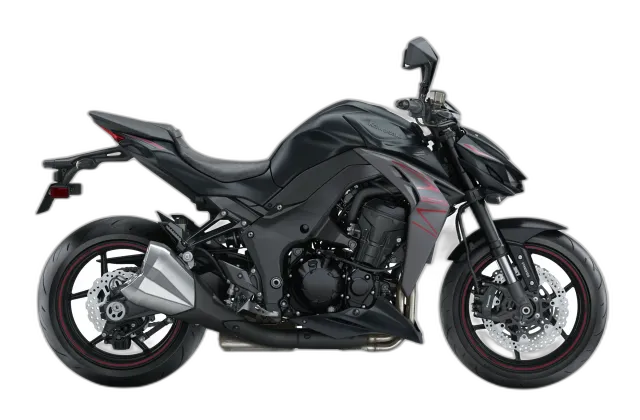
BMW S 1000 R (K47) vs Kawasaki Z1000 (ZZRT00F)
BMW S 1000 R vs Kawasaki Z1000: no fairing, no excuses. Here's how to pick.
You'll find the BMW S 1000 R's motor pulling from the very bottom of the revs, and there's always engine waiting under your wrist. Roll on the Kawasaki Z1000 and its flywheel mass doesn't hide: every twist of the grip carries physical heft. Each downshift blip thumps like heavy machinery.
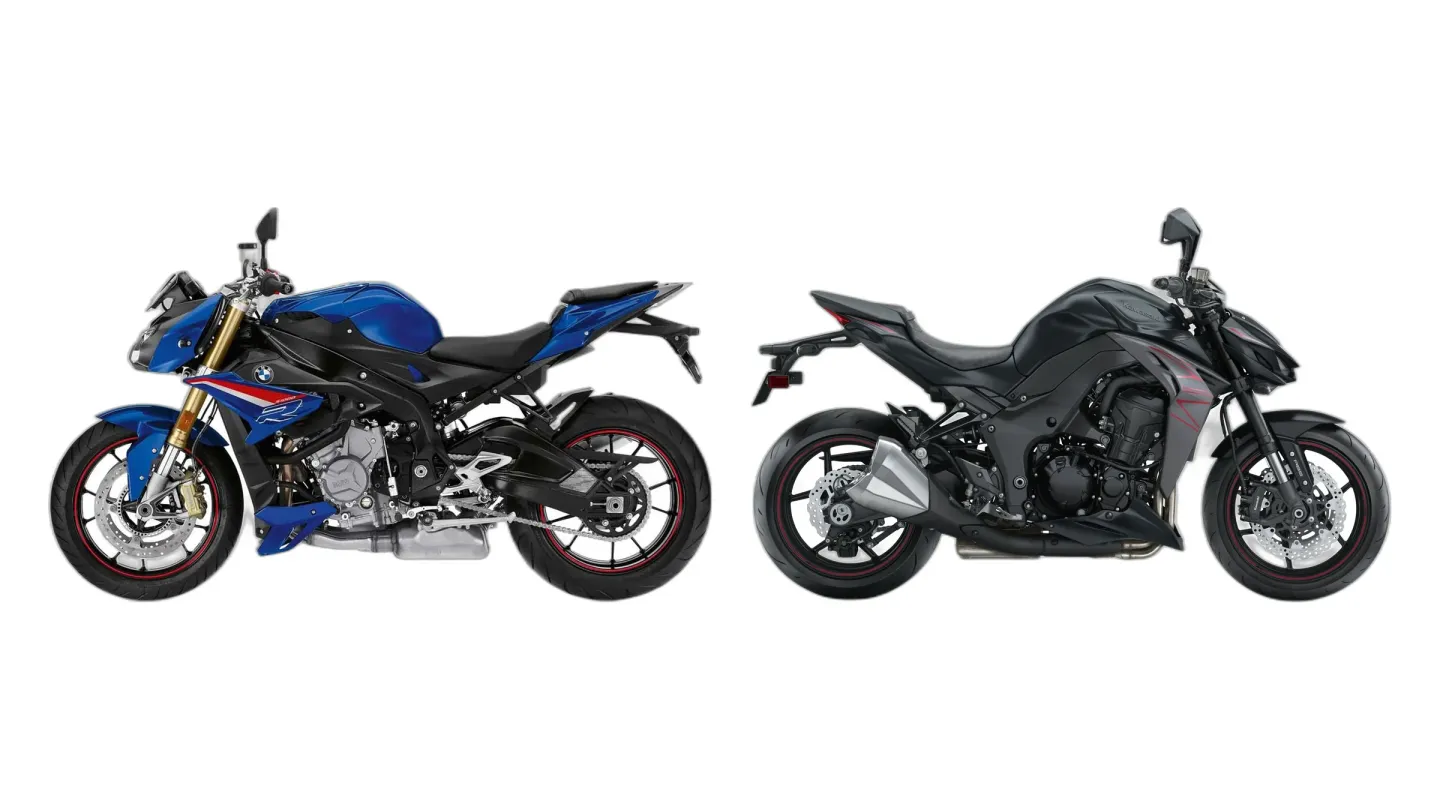
So which one do you buy?
The S 1000 R has the edge if…
Racetrack use
A touch ahead: S 1000 R
Lap after lap, the S 1000 R noses ahead. It's down to more feel through the bars. Your own riding will make a bigger difference than this gap.
Sporty riding on twisty roads
By a nose: S 1000 R
The S 1000 R nudges ahead once the pavement starts to wiggle. Don't expect a night-and-day difference.
Which one's the smarter buy
Depends what you want it for
The price gap doesn't produce a clear winner. Neither bike is the clear better buy for the money.
What makes each one tick
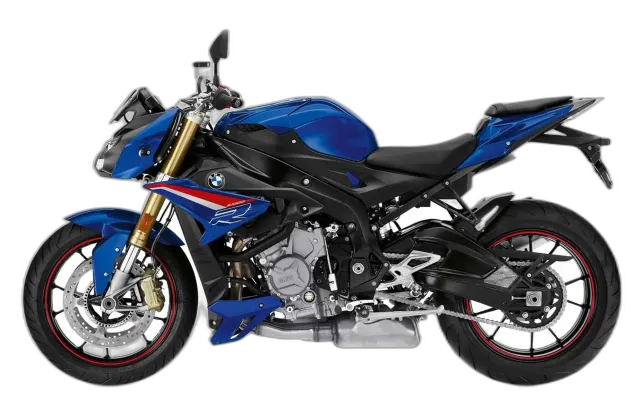
S 1000 R
There's superbike stability in the S 1000 R's chassis, yet its tall, wide bar lets you place it through tight sections like a much smaller bike. The front snaps into tight switchbacks. Off the brake lever and into a long, fast sweeper, the chassis tracks true and doesn't ask for corrections. The exhaust howls raw, with nothing filtered out.
Nils rode the S 1000 R in Spain in 2013, in Andalusia, Spain, and the Czech Republic in 2014, in Andalusia in 2015, and in Austria in 2017 (NastyNils Testride).
Z1000
On a gentle throttle the Z1000 surges smoothly, yet a wide-open throttle strips away that calm for a raw, direct hit. Its inline-four answers straight. At corner entry, the bars don't push back or fight the turn. The chassis holds its line through hairpins.
Nils rode the Z1000 in 2014 and 2025 (NastyNils Testride).
The Voice of Experience
What actually separates them
- The S 1000 R has the lower wet weight: 456 lb (207 kg) vs 487 lb (221 kg).
- The S 1000 R makes more peak power: 160 hp (118 kW) vs 142 hp (104 kW).
- Traction Control: standard on the S 1000 R, not offered on the Z1000.
Which one for the way you ride
Comfortable long-distance riding
Wrong job for both
Big miles aren't where either one shines. You'll be watching for the next rest stop.
Nothing splits them on character and commuting. Ride both back to back and the decision usually makes itself.
Who each one is built for
What's good, and what you'll live with
S 1000 R
Strengths
- Usable torque, race character
- Third gear does everything
- Savage, relentless acceleration
- Traction control adds speed
- Three bikes in one
Trade-offs
- Suspension too stiff
- Wind hits hard at speed
- Loses ground on long straights
- Never lets you settle
- Cold-start and low-speed fueling glitches
Z1000
From Nils' own saddle time
Strengths
- Flywheel Mass You Actually Feel
- Linear, Then Genuinely Raw
- Motor Takes Real Mileage
- Composed Through Tight Corners
- Used Values Hold Up
Trade-offs
- Seat Gets Old In Hours
- No Wind Protection At All
- Stock Suspension Runs Firm
- No Traction Control Or Quickshifter
Known problems to check before you buy
S 1000 R
- Cold-start stalling, rough idle, low-speed surging Idle hunting and stalling on cold start, particularly in cool ambient conditions; low-speed surging in low gears at light throttle. Linked to lean cold-start and cruise mapping in the Euro 3 ECU calibration. Aftermarket BoosterPlug sells a fix product specifically for the K47 that addresses this. Some bikes were resolved through a BMW software update; others by switching fueling devices.
- Vibration through handlebars and mirrors at 4,000–5,000 rpm and at sustained cruise The K47 inline-four has no counterbalancer. Riders report buzz through the bars, mirrors, and pegs at typical highway cruising rpm; mirrors blur above a certain speed, making rear vision difficult on highway runs. Heavier bar-end weights mitigate but do not eliminate it. The MY2017 facelift added vibration dampers at the handlebar clamps, which improved the issue but did not remove it.
- Left-side handlebar switch cube intermittent failures Switches on the left-side handlebar cluster — particularly the cruise-control and ride-mode buttons — fail intermittently, with users reporting the switch becoming unresponsive. Warranty replacement of the entire cluster is the typical fix.
- Cam-chain rattle / tensioner concerns on cold start On early production models, hydraulic cam chain tensioner leak-down can cause an audible rattle on cold start until engine oil pressure builds.
Z1000
No confirmed faults on file yet. That's not the same as fault-free.
What they cost used
These prices compare a 10-year-old S 1000 R with a 10-year-old Z1000.
- S 1000 R
- about $9,100
- Z1000
- about $5,900
At ten years old, the BMW S 1000 R sits around $9,100 while the Kawasaki Z1000 lands near $5,900. That's a $3,200 gap in the Z1000's favor. These are US market estimates, not live listings.
What they share
- Engine
- Inline-four
- Cooling
- Liquid-cooled
- Gearbox
- 6-speed
- Final drive
- Chain
- Front tire
- 120/70-17
- Rear tire
- 190/55-17
Where the spec sheets split
| S 1000 R | Z1000 | |
|---|---|---|
| Seat height | 32.0 in (814 mm) | 32.1 in (815 mm) |
| Wet weight | 456 lb (207 kg) | 487 lb (221 kg) |
| S 1000 R | Z1000 | |
|---|---|---|
| Displacement | 999 cc | 1043 cc |
| Power | 160 hp (118 kW) | 142 hp (104 kW) |
| Peak power at | 11,000 rpm | 10,000 rpm |
| Torque | 83 lb-ft (112 Nm) | 82 lb-ft (111 Nm) |
| Peak torque at | 9,250 rpm | 7,300 rpm |
| Top speed | 160 mph (257 km/h) | 147 mph (237 km/h) |
| S 1000 R | Z1000 | |
|---|---|---|
| Fuel capacity | 4.6 US gal (17.5 L) | 4.5 US gal (17 L) |
| S 1000 R | Z1000 | |
|---|---|---|
| Front brake | 320 mm | 310 mm |
| Wheelbase | 56.7 in (1439 mm) | 56.5 in (1435 mm) |
What comes fitted, what costs extra
| S 1000 R | Z1000 | |
|---|---|---|
| Traction Control | Standard | Not offered |
| Ride Modes | Standard | Not offered |
| Wheelie Control | Option | Not offered |
| Electronic Suspension | Option | Not offered |
| Steering Damper | Standard | Not offered |
| Cruise Control | Option | Not offered |
| Quickshifter | Option | Not offered |
| Heated Grips | Option | Not offered |
| LED Headlight | Not offered | Standard (from 2017) |
Head to head, area by area
Both bikes on the same scale, one area at a time.