By NastyNils· ·
Motorcycle comparison · Hyper Naked
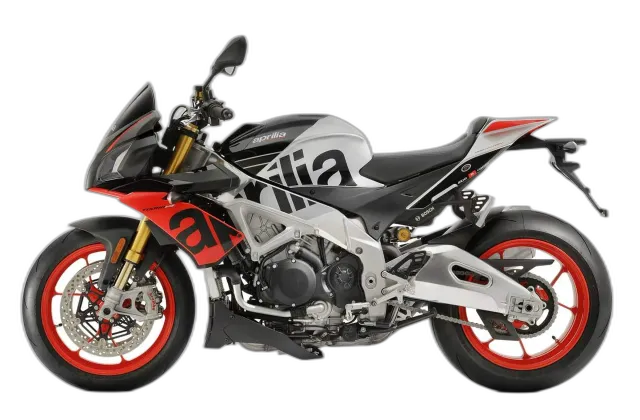
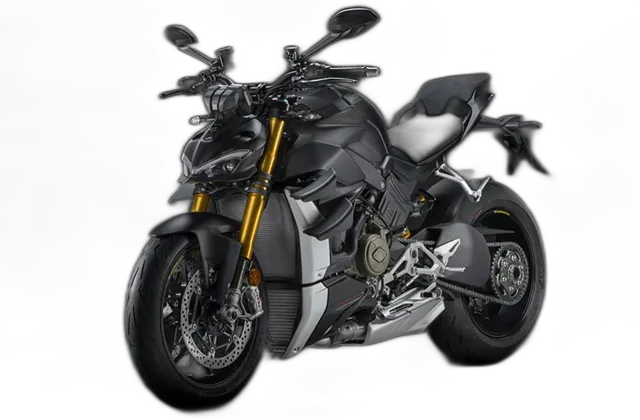
Aprilia Tuono V4 1100 (ZD4KZ-Factory) vs Ducati Streetfighter V4 (MY2020-S)
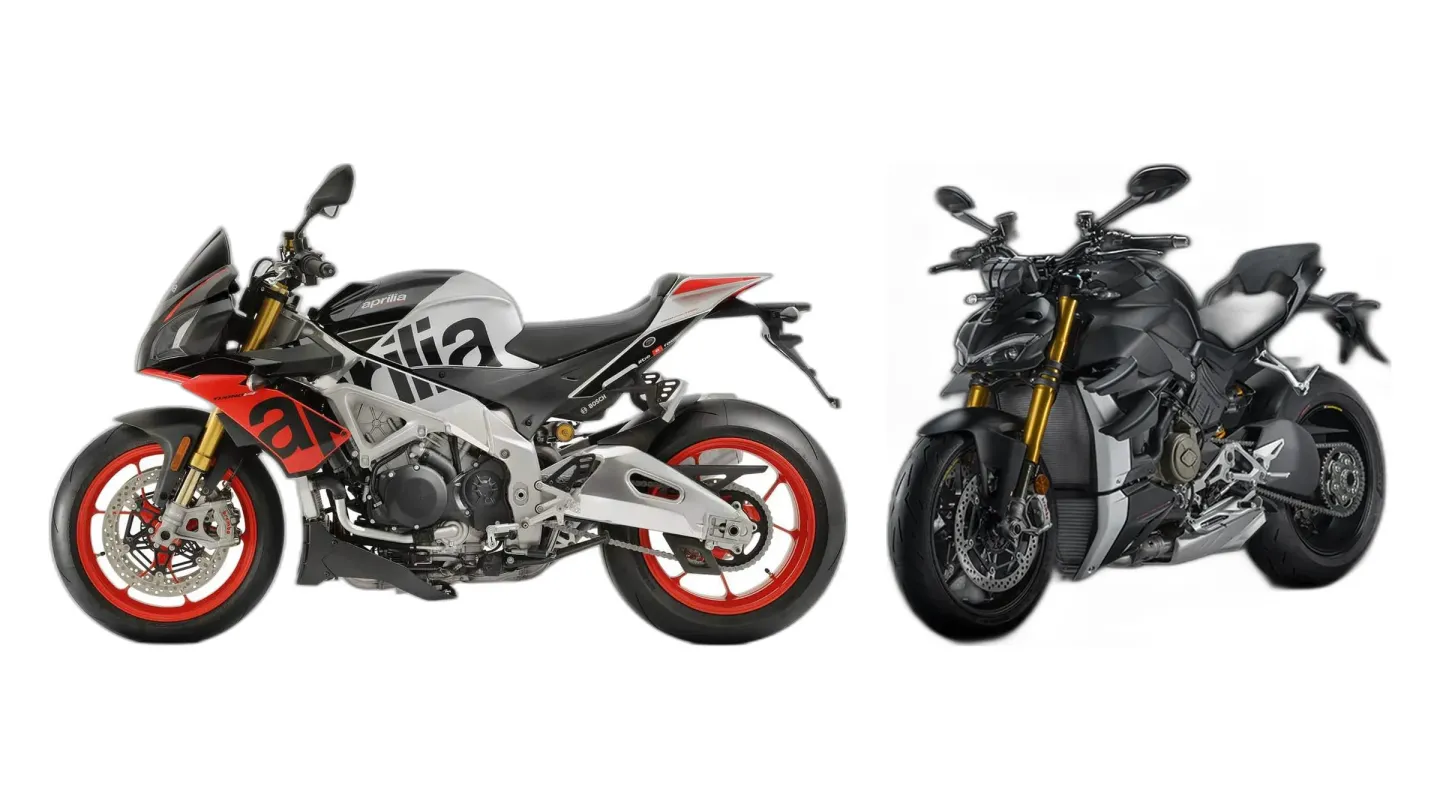
You'll notice first how the Aprilia Tuono V4 1100 takes a line through a fast sweeper and won't let it go. On the Ducati Streetfighter V4, the front doesn't wait; it bites the moment you turn in. It stays forgiving with every bit of that power.
So which one do you buy?
The Streetfighter V4 has the edge if…
Daily commuting & city riding
Edges it: Streetfighter V4
Day in, day out, the Streetfighter V4 nudges ahead in traffic. It isn't a big enough gap to plan around.
Character, looks and sound
Slight edge: Streetfighter V4
On sound and soul, the Streetfighter V4 comes out a touch ahead. Thank more distinctive styling for that. Your own eyes and ears outrank this verdict.
Which one's the smarter buy
Money won't decide it
The Tuono V4 1100 costs less, but that gap doesn't make it the better buy. Neither bike is the clear winner on value.
What makes each one tick
Tuono V4 1100
Even in Race mode, the throttle on the Tuono V4 1100 doesn't go digital, and you can still feed torque in as a corner opens. The slim tank frees your knees. On Angeles Crest Highway, the nose drops into each bend at once. The front tire tells you what it's got.
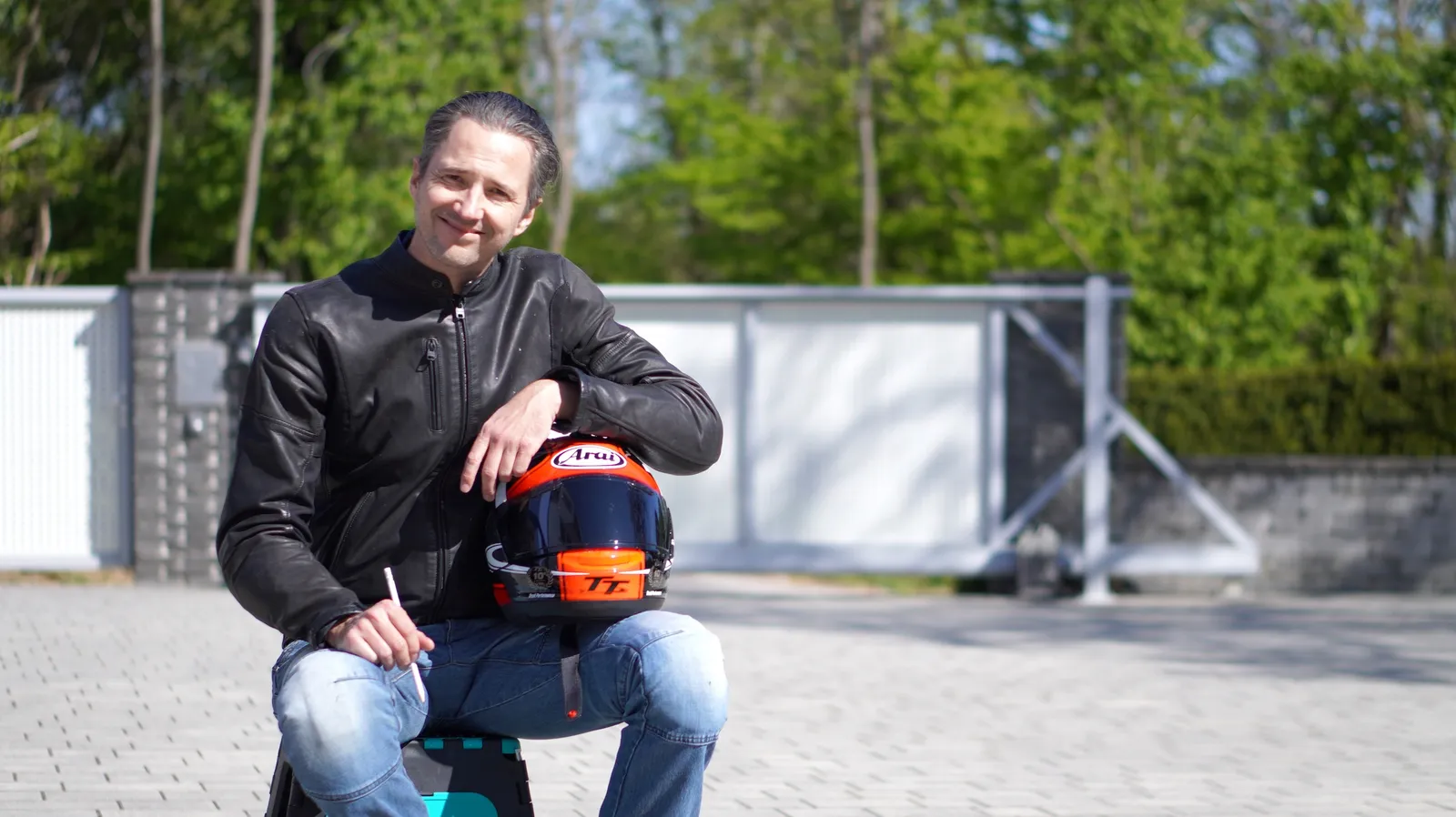
Nils rode the Tuono V4 1100 in Hungary and Italy in 2021 (NastyNils Testride).
Streetfighter V4
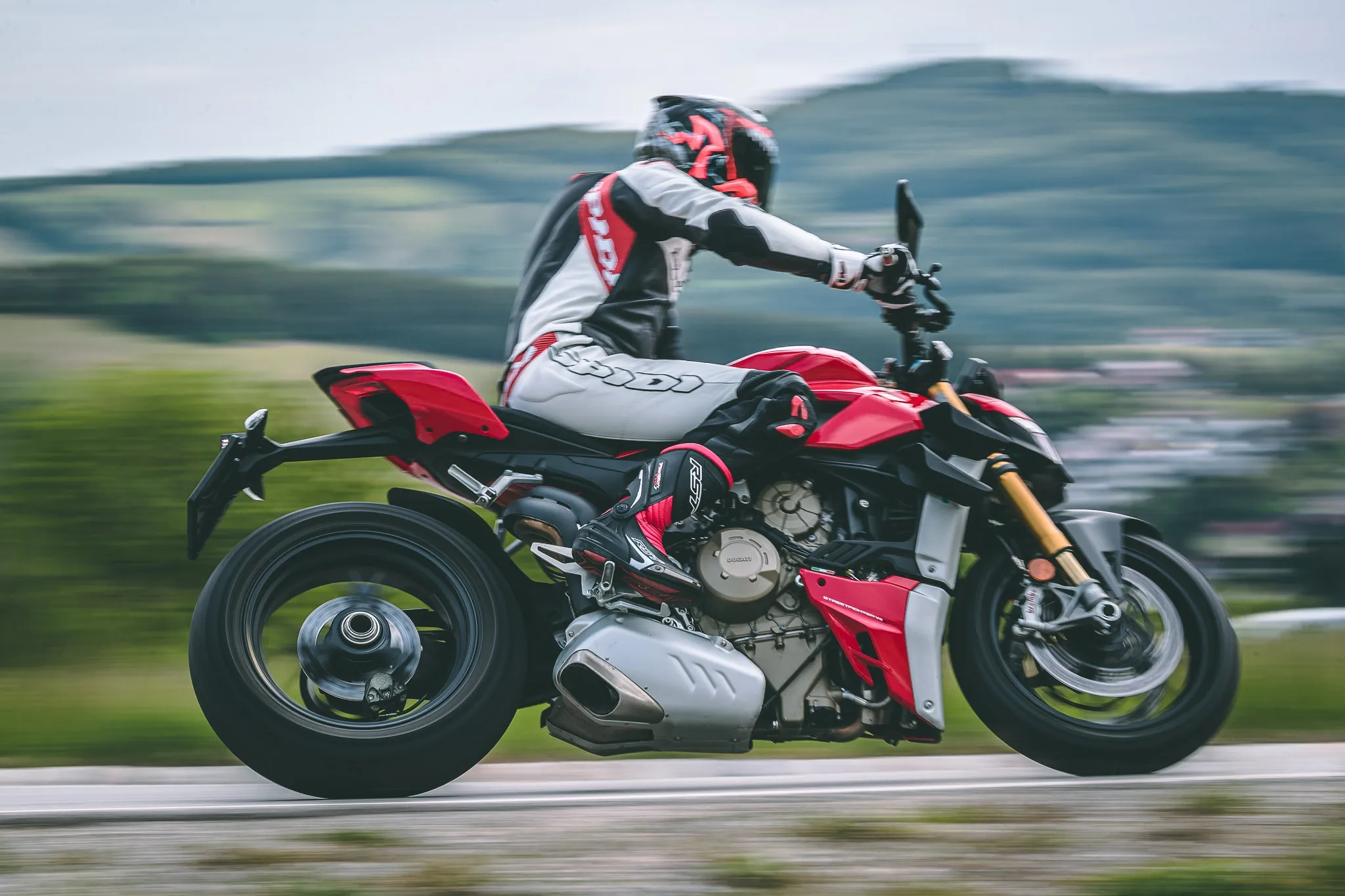
There's no step anywhere in the Streetfighter V4's Desmosedici Stradale, just one brutal shove from low revs up. The chassis doesn't shake or wallow. Stoplights are another matter, with the frame head soaking up engine heat. On the green, the throttle hauls it to the redline.
The Voice of Experience
What actually separates them
- The Tuono V4 1100 has the lower seat: 32.5 in (825 mm) vs 33.3 in (845 mm).
- The Streetfighter V4 has the lower wet weight: 439 lb (199 kg) vs 461 lb (209 kg).
- The Streetfighter V4 makes more peak power: 208 hp (153 kW) vs 175 hp (129 kW).
Which one for the way you ride
Comfortable long-distance riding
Neither one fits
Neither of these is a mile-muncher. If big days are the plan, keep looking.
These two run dead level on track days and twisty roads. Sit on both in the showroom and trust what your body says.
Who each one is built for
What's good, and what you'll live with
Tuono V4 1100
Strengths
- Throttle You Can Actually Feel
- Rear Steers You To The Apex
- Faster Without More Horsepower
- Slim Tank, Real Room
- Planted Through Fast Sweepers
Trade-offs
- Too Loud For Long Days
- More Plastic Than A Naked Wants
- Runs Hot In City Traffic
- Soft, Uneven Low-Rpm Power
- Build quality below class standard
Streetfighter V4
What owners say
Strengths
- Brutal, linear engine power
- Comprehensive safety electronics
- First-class brake system
- More comfortable than expected
Trade-offs
- Extreme heat at low speeds
- No wind protection
- Missing comfort features despite premium price
Known problems to check before you buy
Tuono V4 1100
- High coolant temperatures and overheating tendency at low speeds The Euro 5 Tuono runs very hot in slow city traffic and when idling at traffic lights, because the radiator and fan cannot shed enough heat without steady airflow. Coolant temperature climbs into the warning range and stays high until the bike is moving at a sustained pace again. Owners report having to switch the engine off during long stops to keep temperatures under control.
- Dog wear in 3rd and 4th gear with intensive quickshifter use With frequent quickshifter use under full throttle and high rpm, the dogs in 3rd and 4th gear wear faster than normal. False neutrals then occur between 3rd/4th and 4th/5th gear. Aprilia has hardened replacement parts available for 3rd and 4th gear. The problem has been documented since the V4 platform and is also confirmed for Euro 5.
- Valve guide failure requiring cylinder head replacement An exhaust valve guide in the rear cylinder can work loose or detach, resulting in substantial loss of cylinder compression during leak-down testing and severe engine power loss resembling an electronic limp mode.
- Noticeable power deficit and uneven throttle response in the lower rpm range The Euro 5 mapping causes a measurable power gap below 5,500 rpm. Throttle response at 4,000-5,500 rpm feels uneven/pulsating. When transitioning from 5-15% throttle to closed throttle, the engine can react jerkily. An Aprilia Race Map or Rapid Bike tuning kit largely resolves the problem.
- Soft paintwork, scratch-prone surfaces, corroding fasteners The paintwork is described as extremely scratch-prone — without adequate clear coat. Graphics/decals in some areas have no clear coat and are quickly damaged by stone chips. Fasteners and washers (particularly mudguard mountings) are not stainless and show early corrosion. Body panels do not fit precisely and have visible panel gaps.
Streetfighter V4
- Ducati Quick Shift (DQS) malfunction and limp mode The quickshifter fails to reliably execute upshifts under hard acceleration (engine cut without gear change). False neutrals between 4th/5th and 5th/6th gear. DQS error message can trigger limp mode (rev limit at approx. 4,000 rpm). Causes: defective DQS sensor, gear position sensor or throttle position error. ECU reset (ignition off/on) can help. Aftermarket gearing changes worsen the problem.
- Elevated oil consumption and oil ingress into the airbox Some V4 engines exhibit elevated oil consumption. Oil blow-by into the airbox has been reported at low mileages (from approx. 4,000 mi (6,500 km)). Oil consumption varies by individual engine and oil used: racing oils (e.g. Motul 300V) tend to cause higher consumption than street oils. Correct measurement requires 2 hours of standing time for oil return. In severe cases: engine replacement under warranty documented (on V4R).
- Oil or coolant leak at the water pump seal The water pump seal can fail. Oil or coolant leaks from the weep hole (inspection bore in the V of the engine). In severe cases leaking coolant can wash out the pump shaft bearing. Ducati has performed multiple seal revisions. Cross-platform issue (also Panigale V4).
- Fuel boils in tank at high temperatures Tank sits above the engine and is additionally heated by the exhaust headers. At high ambient temperatures (especially on track) fuel can form vapor bubbles, leading to engine stumbling or stalling. Ducati introduced a thermally reflective tank insulation as an official retrofit solution from MY2024.
- Extreme heat radiation to rider at low speeds The aluminum frame head acts as a heat sink. At low speeds, the engine radiates intense heat onto the rider's thighs and calves. Reports of noticeable burns after short rides in city traffic. Problem known since Panigale V4. Rear cylinder bank deactivates at standstill for heat reduction. At higher speeds, cooling from airflow becomes sufficient.
- Battery drains during extended storage The lithium battery (V4 S) drains during extended storage. Possible causes: ECU continuing to run when switched off, immobilizer, ABS module, aftermarket electronics (GPS tracker, alarm systems). DDA (Ducati Diagnostics Adapter) draws current when permanently connected. Recommendation: battery tender during storage (charging connector pre-wired from factory).
- Difficult cold start / multiple cranking attempts required Engine does not start on first attempt; 2-3 cranking attempts or waiting time required. Causes: lithium battery loses cranking power below 55°F (13°C); tight tolerances of the V4 engine require high cranking current; ECU cold start learning cycle can reset. Fuel pump needs priming time (wait for relay click before cranking). Dealer statement: V4 engine needs approx. 3,100 mi (5,000 km) to break in.
What they cost used
These prices compare a 5-year-old Tuono V4 1100 with a 5-year-old Streetfighter V4.
- Tuono V4 1100
- $13,300
- Streetfighter V4
- $17,500
At five years old, the Tuono V4 1100 sits around $13,300 while the Streetfighter V4 runs about $17,500. That's a $4,200 gap in the Tuono's favor. They're recorded figures from the used market, not live listings.
What they share
- Engine
- V4
- Cooling
- Liquid-cooled
- Gearbox
- 6-speed
- Final drive
- Chain
- Fork
- Upside-down (USD)
- Front tire
- 120/70-17
Where the spec sheets split
| Tuono V4 1100 | Streetfighter V4 | |
|---|---|---|
| Seat height | 32.5 in (825 mm) | 33.3 in (845 mm) |
| Wet weight | 461 lb (209 kg) | 439 lb (199 kg) |
| Tuono V4 1100 | Streetfighter V4 | |
|---|---|---|
| Displacement | 1077 cc | 1103 cc |
| Power | 175 hp (129 kW) | 208 hp (153 kW) |
| Peak power at | 11,350 rpm | 12,750 rpm |
| Torque | 89 lb-ft (121 Nm) | 91 lb-ft (123 Nm) |
| Peak torque at | 9,000 rpm | 11,500 rpm |
| Top speed | 168 mph (270 km/h) | 175 mph (282 km/h) |
| Tuono V4 1100 | Streetfighter V4 | |
|---|---|---|
| Fuel economy | 28 mpg (US) / 8.5 L/100 km | 29 mpg (US) / 8 L/100 km |
| Fuel capacity | 4.7 US gal (17.9 L) | 4.2 US gal (16 L) |
| Tuono V4 1100 | Streetfighter V4 | |
|---|---|---|
| Rear tire | 200/55-17 | 200/60-17 |
| Wheelbase | 57.5 in (1460 mm) | 58.6 in (1488 mm) |
What comes fitted, what costs extra
| Tuono V4 1100 | Streetfighter V4 | |
|---|---|---|
| Cruise Control | Standard | Not offered |
| USB Charging Port | Option | Not offered |
| Tire Pressure Monitoring (TPMS) | Not offered | Option |
| Heated Grips | Not offered | Option |
Head to head, area by area
Both bikes on the same scale, one area at a time.