By NastyNils·
Motorcycle comparison · Enduro
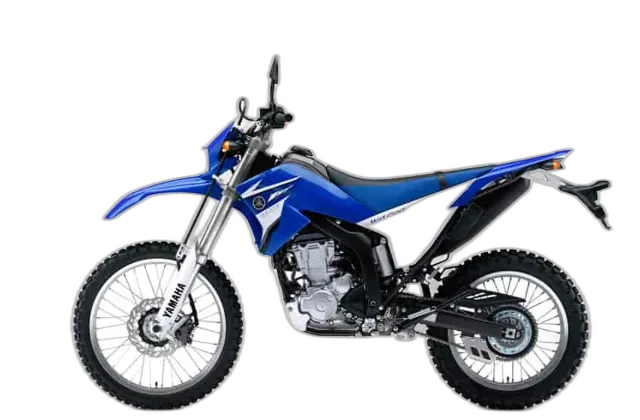
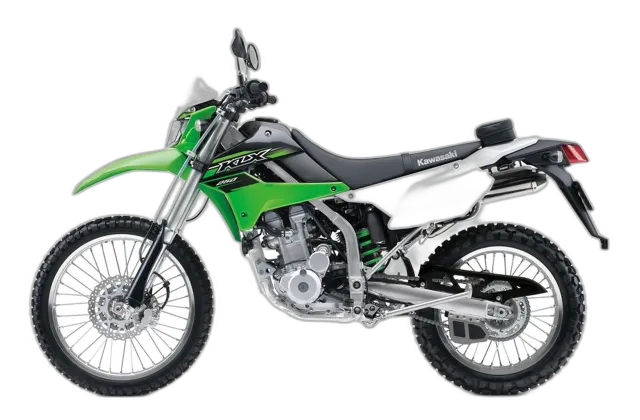
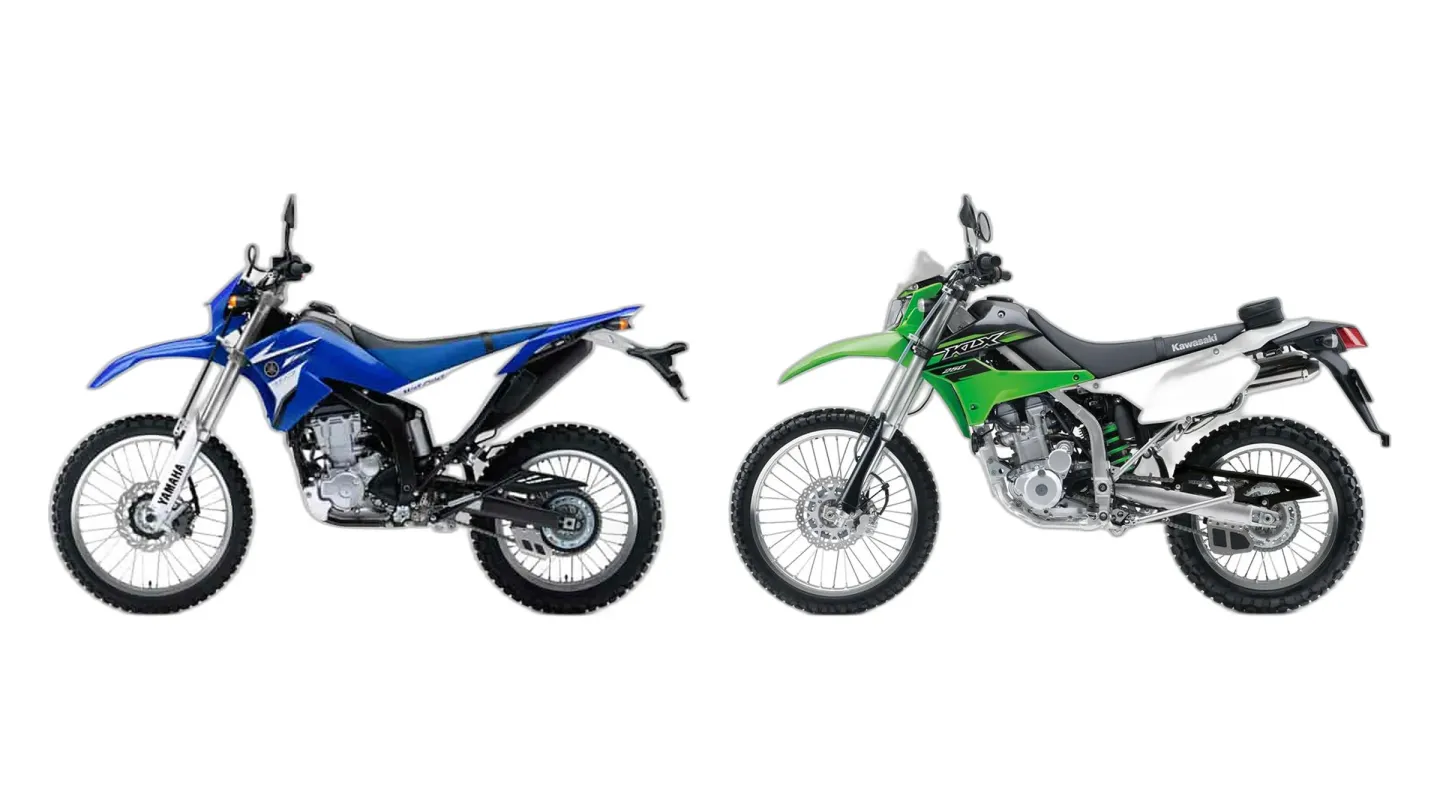
Yamaha WR 250R (MY2008) vs Kawasaki KLX 250 (KLX250-MY2009)
Yamaha WR 250R vs Kawasaki KLX 250: two dirt bikes, one choice. Here's how to make it.
Roll on the Yamaha WR 250R and there's hardly a buzz, just a quiet hum that won't wear you down over a long day. The Kawasaki KLX 250's engine isn't detuned to pass noise or emissions rules. Its throttle hands you the full rated pull.
So which one do you buy?
The WR 250R has the edge if…
Real off-road capability
A touch ahead: WR 250R
On loose ground, the WR 250R feels a little more sure-footed. Thank more suspension adjustment for that. Small margin, and the right tires matter more.
Sporty riding on twisty roads
Slight edge: WR 250R
The WR 250R is a touch more fun when the road starts bending. What tips it: better suspension and harder acceleration.
Keeping running costs low
By a nose: WR 250R
The WR 250R is a touch easier on the wallet to run. Condition still matters more than the model.
The KLX 250 has the edge if…
Daily commuting & city riding
Narrow edge: KLX 250
The KLX 250 edges it for the daily grind. Credit easier everyday riding. It's a small gap, not a reason on its own.
A confidence-building first motorcycle
Nose ahead: KLX 250
Learning the ropes leans slightly toward the KLX 250. That comes from easier controls and more comfort.
Which one's the smarter buy
Better value: KLX 250
The KLX 250 stretches your dollar further by leaning on practicality. That edge makes it the stronger buy at these used prices.
What makes each one tick
WR 250R
Under the lights and plate, there's a fuel-injected enduro inside the WR 250R. At 295 lb (134 kg) wet, the bike drops into a corner off a light push on the bar. Broken ledges don't upset the fork. Out on the highway, the steel frame runs dead straight.
KLX 250
The KLX 250 doesn't settle until there's speed on the trail; then its chassis quits wrestling the ground and floats. A bump at trail pace sinks into the fork and shock, and the front wheel holds the line you picked through ruts. Loose climbs need a running start. The chassis says so when a rock's too big.
Nils rode the KLX 250 in 2009 (NastyNils Testride).
The Voice of Experience

What actually separates them
- The KLX 250 has the lower seat: 35.0 in (890 mm) vs 36.6 in (930 mm).
- The WR 250R has the lower wet weight: 295 lb (134 kg) vs 304 lb (138 kg).
- The WR 250R makes more peak power: 31 hp (23 kW) vs 22 hp (16 kW).
Which one for the way you ride
Who each one is built for
What's good, and what you'll live with
WR 250R
What owners say
Strengths
- Smooth and quiet engine
KLX 250
Strengths
- Survives a full enduro loop
- Planted where racers twitch
- Quiet enough to go unnoticed
- Street-legal kit that earns its keep
- Easy company in the city
Trade-offs
- Stock tires suit neither surface
- Needs momentum to climb
- Highway is hostile ground
- Fussy cold starts
- Underpowered for road use
Known problems to check before you buy
WR 250R
- Stator coil failure (NHTSA Recall 15V-410) Recall 15V410000 Insufficient heat resistance in the stator coil insulation can lead to short-circuiting and engine stalling. Affected units need stator replacement.
- Clutch push lever oil seal failure (2014-2016, NHTSA Recall 16V-800) Recall 16V800000 Factory Modification Campaign: incorrect assembly process may cause the clutch push lever oil seal to crack, leading to oil leaks that could reach the rear tire.
- Fuel pump failure on early 2008 models Some early builds experienced fuel pump failures, causing stalling or no-start conditions. Dealer replacement under warranty was common.
KLX 250
- Front brake line kinking Improper routing of the front brake line from the factory can cause it to kink when the fork compresses, leading to a locked front brake and crashes.
- Carbureted cold‑start hard‑starting The CV carburetor is notoriously finicky in cold weather, requiring a precise choke/throttle ritual and extended warm‑up before the bike will idle cleanly.
What they cost used
These prices compare a 9-year-old WR 250R with a 9-year-old KLX 250.
- WR 250R
- about $5,000
- KLX 250
- about $2,900
At nine years old, the Yamaha WR 250R sits around $5,000 while the Kawasaki KLX 250 lands near $2,900. That's a $2,100 gap in the KLX 250's favor. These are estimates from earlier US market records, not live listings.
What they share
- Engine
- Single-cylinder
- Cooling
- Liquid-cooled
- Gearbox
- 6-speed
- Final drive
- Chain
- Fork
- Upside-down (USD)
- Front tire
- 80/100-21
Where the spec sheets split
| WR 250R | KLX 250 | |
|---|---|---|
| Seat height | 36.6 in (930 mm) | 35.0 in (890 mm) |
| Wet weight | 295 lb (134 kg) | 304 lb (138 kg) |
| WR 250R | KLX 250 | |
|---|---|---|
| Displacement | 250 cc | 249 cc |
| Power | 31 hp (23 kW) | 22 hp (16 kW) |
| Peak power at | 10,000 rpm | 7,500 rpm |
| Torque | 18 lb-ft (24 Nm) | 15 lb-ft (20 Nm) |
| Peak torque at | 8,000 rpm | 7,000 rpm |
| Top speed | 87 mph (140 km/h) | 70 mph (113 km/h) |
| WR 250R | KLX 250 | |
|---|---|---|
| Fuel economy | 69 mpg (US) / 3.4 L/100 km | 60 mpg (US) / 3.9 L/100 km |
| Fuel capacity | 2.0 US gal (7.6 L) | 2.0 US gal (7.5 L) |
| WR 250R | KLX 250 | |
|---|---|---|
| Rear tire | 120/80-18 | 100/100-18 |
| Ground clearance | 11.8 in (300 mm) | 11.6 in (295 mm) |
| Front travel | 10.6 in (269 mm) | 10.0 in (254 mm) |
| Rear travel | 10.6 in (269 mm) | 9.1 in (231 mm) |
Head to head, area by area
Both bikes on the same scale, one area at a time.