By NastyNils·
Motorcycle comparison · Enduro
KTM 400 EXC (MY2010) vs Husqvarna TE 310 (MY2009)
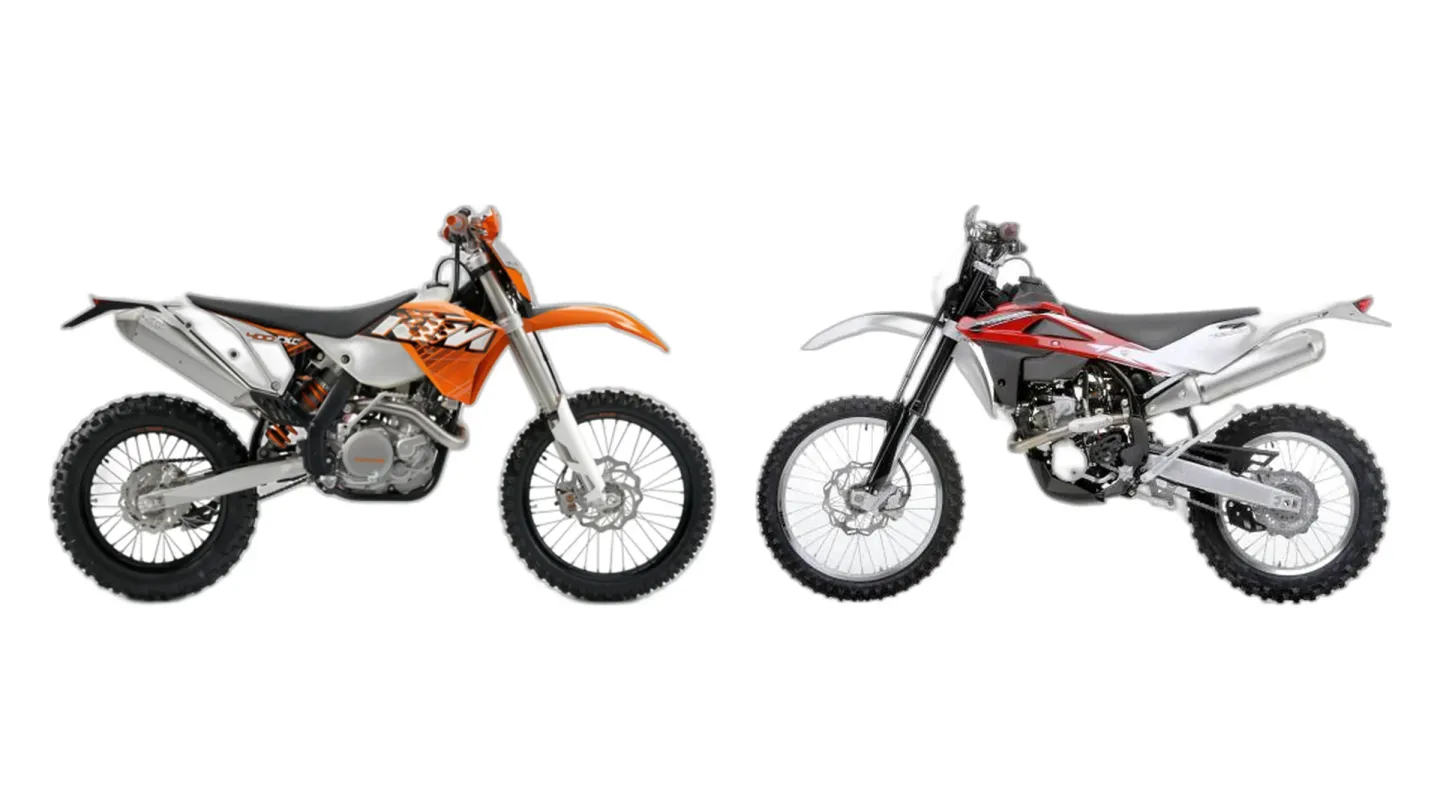
KTM 400 EXC vs Husqvarna TE 310: which one belongs in your truck bed?
You'll pull away on the KTM 400 EXC and feel its power build evenly as the throttle opens. The Husqvarna TE 310's electric start sometimes won't catch.
So which one do you buy?
The 400 EXC has the edge if…
Real off-road capability
A touch ahead: 400 EXC
The 400 EXC nudges ahead where the road turns to gravel. Close enough that a test ride on dirt is worth it.
The TE 310 has the edge if…
Daily commuting & city riding
Slight edge: TE 310
Through rush hour, the TE 310 is a little easier to live with. What tips it: lower running costs.
Keeping running costs low
Narrow edge: TE 310
Over a year of riding, the TE 310 noses ahead on running costs. A neglected example would wipe that out.
What makes each one tick
400 EXC
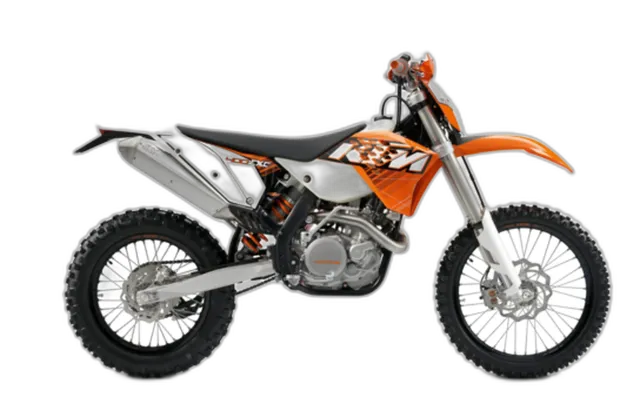
Over rocky ledges on Kane Creek, the 400 EXC's light chromoly frame flicks from line to line while the single feeds the rear tire a progressive swell of drive. There's just a carburetor feeding that single, and the bike stays bare-bones to its core. It doesn't hesitate at corner entry. The front tire's already pointing at the exit.
TE 310
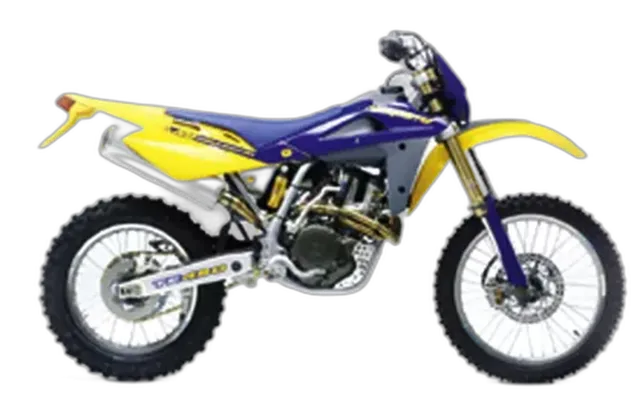
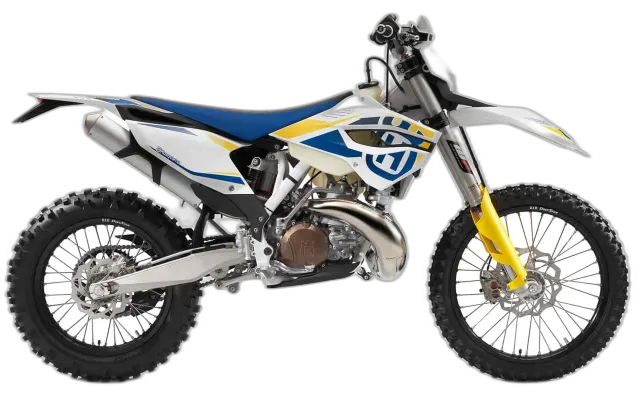
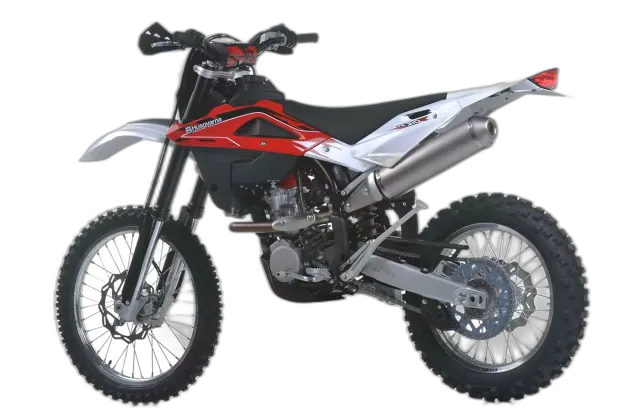
Between tight trees, the TE 310's steel single-tube frame stays steady yet still darts from gap to gap. Its hydraulic clutch slips in smoothly, and the wide-ratio gearbox stretches out once the trail widens. At the brake lever, the chassis doesn't squirm as the bike stops. The Sachs shock keeps it planted.
The Voice of Experience

What actually separates them
- The TE 310 has the lower seat: 37.5 in (952 mm) vs 38.8 in (985 mm).
- The 400 EXC makes more peak power: 45 hp (33 kW) vs 33 hp (25 kW).
- The 400 EXC makes more peak torque: 29 lb-ft (39 Nm) vs 21 lb-ft (29 Nm).
Which one for the way you ride
For twisty roads and a first bike, you won't find daylight between them. Let the test ride settle it.
Who each one is built for
What's good, and what you'll live with
400 EXC
What owners say
Strengths
- Linear, controllable power delivery
- Lightweight and agile chassis
- Proven reliability with proper maintenance
TE 310
What owners say
Trade-offs
- Electric starter known for intermittent failures
Known problems to check before you buy
400 EXC
- Carburetor bogging/stalling Dirt or stale fuel can clog the pilot jet, leading to off-idle hesitation, stalling, and poor throttle response. Regular cleaning and an O-ring mod on the accelerator pump help resolve this.
TE 310
- Unreliable electric starter The electric start often fails to engage or turns over slowly. Many owners report needing to use the kickstarter, especially when the engine is hot. The issue stems from a combination of a weak starter clutch, battery drain, and sensitive valve clearances. A dealer-acknowledged fix exists but is not always applied.
What they share
- Engine
- Single-cylinder
- Cooling
- Liquid-cooled
- Gearbox
- 6-speed
- Final drive
- Chain
- Fork
- Upside-down (USD)
- Front tire
- 90/90-21
- Rear tire
- 140/80-18
- Front travel
- 11.8 in (300 mm)
Where the spec sheets split
| 400 EXC | TE 310 | |
|---|---|---|
| Seat height | 38.8 in (985 mm) | 37.5 in (952 mm) |
| 400 EXC | TE 310 | |
|---|---|---|
| Displacement | 393 cc | 297 cc |
| Power | 45 hp (33 kW) | 33 hp (25 kW) |
| Torque | 29 lb-ft (39 Nm) | 21 lb-ft (29 Nm) |
| 400 EXC | TE 310 | |
|---|---|---|
| Fuel capacity | 2.5 US gal (9.5 L) | 1.9 US gal (7.2 L) |
| 400 EXC | TE 310 | |
|---|---|---|
| Ground clearance | 15.0 in (380 mm) | 13.2 in (335 mm) |
| Rear travel | 13.2 in (335 mm) | 11.7 in (296 mm) |
Head to head, area by area
Both bikes on the same scale, one area at a time.