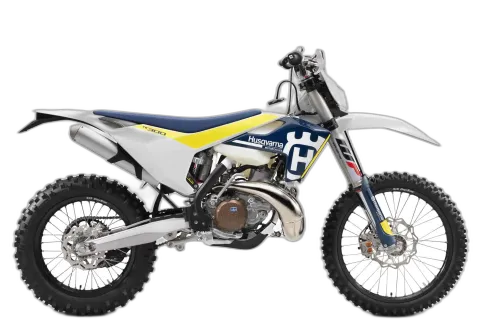
Husqvarna TE 300 (MY2014) — Enduro
Husqvarna Press

2014–2016 · Enduro · Buyer's Guide

TE 300 (MY2014)

4.5 / 5 NastyNils Rating · against its class

Two-Stroke Terrain Forgiver

The Machine's Character

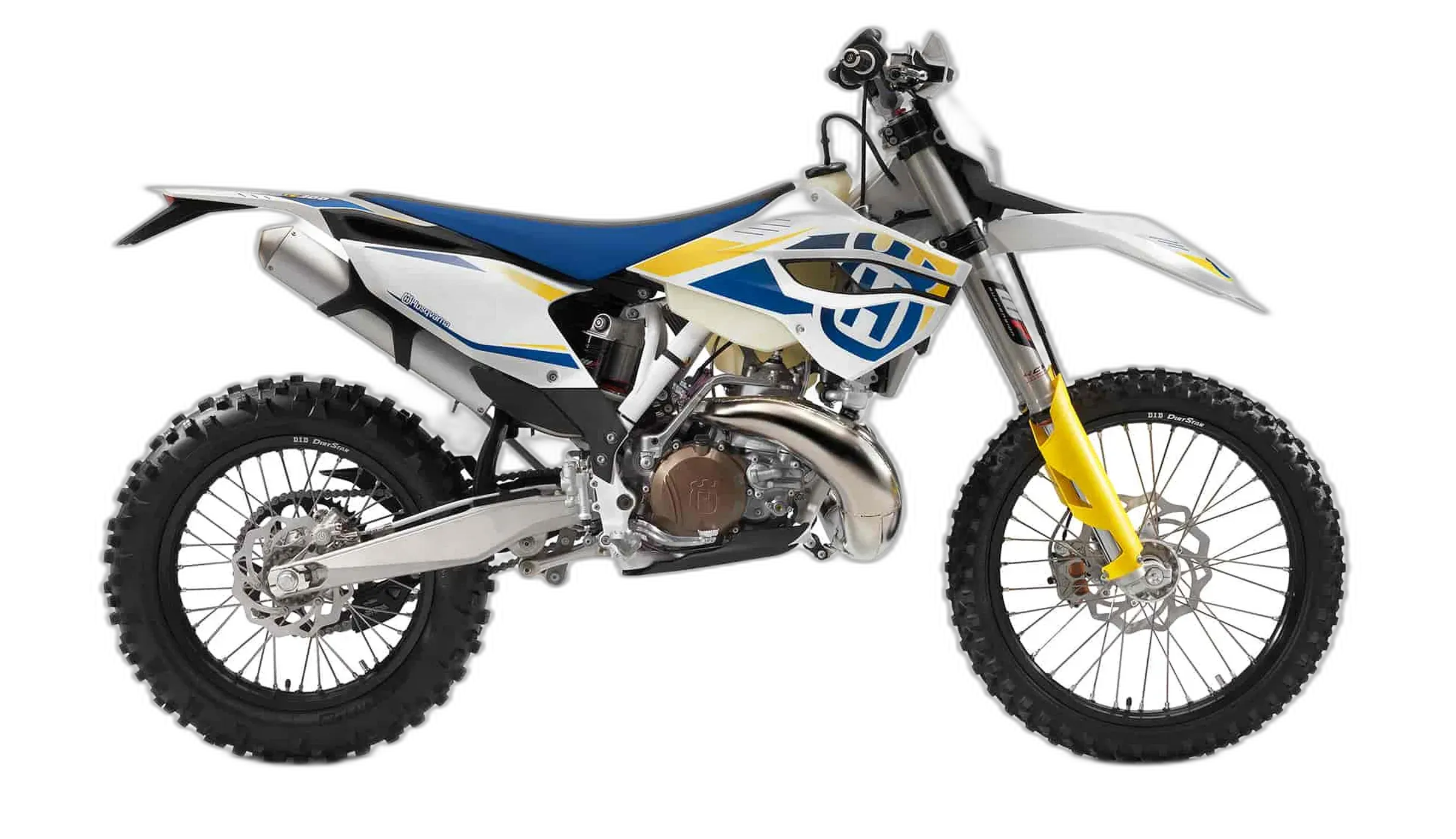
The TE 300 is a 293 cc liquid-cooled two-stroke single in a steel trellis frame, and it has one job: getting you through ugly terrain without wearing you out. It makes 55 hp at 9,000 rpm and 26 lb-ft, but what matters more is how broad that power is. Almost any section works in three different gears, so the engine keeps carrying you when your shifting slips. Up front there's a fully adjustable WP 4CS fork with 11.8 in (300 mm) of travel. Out back, a linkage shock gives 13.0 in (330 mm), and ground clearance is 14.0 in (355 mm). The Husqvarna styling has real substance underneath it.

On the trail it feels light and flickable, and the chassis takes rocks and roots without fuss. It's built for experienced off-road riders who spend their days in technical terrain. If you need an easy seat or real range, look elsewhere: the seat sits at 37.8 in (960 mm) and the tank holds 2.6 gal (10 L). Its wear points are the usual hard-use list. Check the stator and look for water in the speedometer, which was part of a global recall, so ask whether that work was done. Feel for clutch slip from worn plates and look for oil at the rear shock seal. All of it can be fixed, and none of it is a deal-breaker.

Hard Numbers

Spec sheets don't ride bikes, but they set the baseline.

Show full specs & equipment Hide specs & equipment
Key specifications
Power 55 hp (40 kW) @ 9,000 rpm
Torque 26 lb-ft (35 Nm)
Displacement 293 cc
Engine Single-cylinder
Cooling Liquid-cooled
Gearbox 6-speed
Final drive Chain
Fork Upside-down (USD)
Front brake 260 mm
Front tire 90/90-21
Rear tire 140/80-18
Wheelbase 58.3 in (1480 mm)
Ground clearance 14.0 in (355 mm)
Front travel 11.8 in (300 mm)
Rear travel 13.0 in (330 mm)
Seat height 37.8 in (960 mm)
Fuel capacity 2.6 gal (10 L)

Equipment check

Chassis

  • Front Suspension Adjustable Standard
  • Rear Suspension Adjustable Standard

The Voice of Experience

Portrait of NastyNils

The test ride

My test bike had a Rekluse automatic clutch and a hand-mounted rear brake, and together they change how a whole day in the woods feels. The throttle picks up crisply, and the 300 feels eager to work with you instead of against you. Standing on the pegs through tight, technical stuff, your left hand has much less to do. Your fingers take over the rear brake, so both boots stay planted where they belong. After a botched move on a steep climb you just roll away again, and your head is free to pick the next line instead of managing levers. The catch is that the auto clutch sometimes felt a tick unsettled with this engine. And if clutch technique is wired into your muscle memory, your reflexes will reach for moves the bike no longer answers.

Rated point by point — where it earns its keep

My own 0–100 score for this bike against the class, area by area — the marker on each bar is the class average.

In tight technical terrain, the bike stopped being something I had to keep alive. Switchbacks, step-downs, jumps and ugly roots all came without the fear of a stall, and a failed attempt cost me nothing but a restart from where I stood. The hand-operated rear brake added a level of control I never got from a pedal. In tight turns I could steer the slide with real accuracy, and on drops I split the braking between front and rear exactly as I wanted it.

Open the throttle on this 300 and the response is clean and immediate, with no hesitation to wait out. I also found it very tolerant of gear choice. If I was a gear too high or too low for a section, the engine just got on with it, so a lazy left foot carried no penalty. My one reservation is the pairing with the Rekluse. The auto clutch didn't always land in the powerband as precisely as I would with my own hand. Nothing failed, but I could feel the gap.

Where the automatic clutch earns its place is the constant stopping and starting of a real trail day. On a steep grade I could come to a halt, then pull away with engagement so gentle that the restart took no planning at all. In stop-and-go work I left it in second, waited, and rode off when I was ready. No hunting for neutral, no holding the lever in between. That whole routine simply went away.

The discomfort here isn't physical. It's in your head. I have spent years snapping the clutch to get over obstacles, and on this setup that habit works against you. Going automatic isn't a small adjustment. It changes the way you ride the bike. On a hard obstacle, when the pressure is on, instinct beats intention, and what your hands do no longer produces the result you expect. For a seasoned enduro rider, that's a genuine disruption, not a detail.

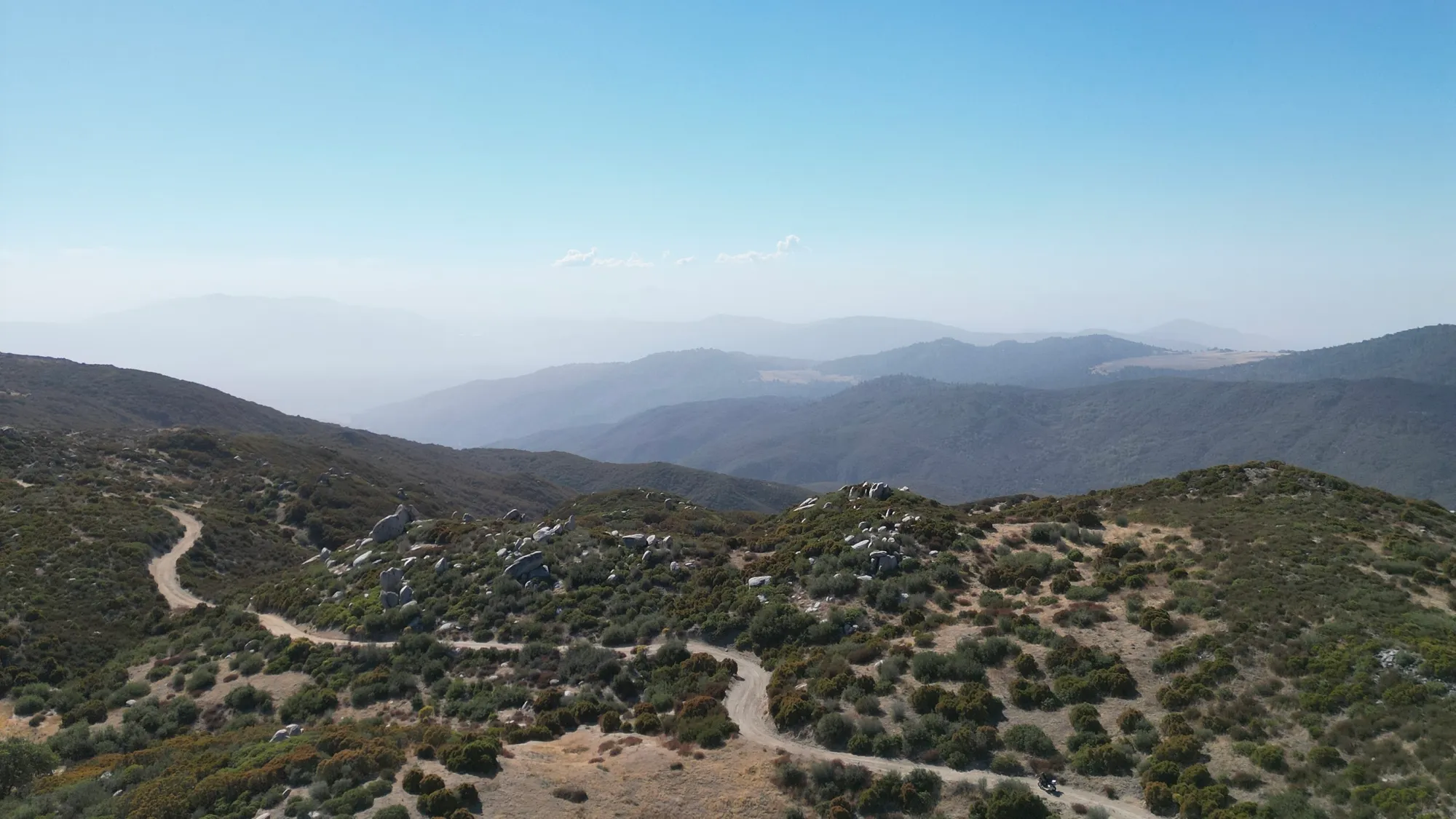
Aerial drone view of Palomar Divide Road winding through chaparral-covered mountain ridges in San Diego County. Multiple S-curve sections descend through sparse vegetation with distant valley views visible in the haze. Gravel and packed-earth surface.

Known issues

  • Electrical system faults

    electrics occasional Recall

    Stator failures and water ingress into the speedometer unit lead to starting problems and blank/misted displays. Speedometer failures were reportedly a global recall.

  • Clutch slippage

    drivetrain occasional

    Worn clutch plates can cause slippage under load, often surfacing after hard use. Replacement of the plates restores normal operation.

  • Rear shock seal leaks

    suspension occasional

    Some units develop an oil leak from the rear shock seal, causing a loss of damping. A seal kit or replacement resolves the issue.

The Expert Benchmark

Where this Husqvarna TE 300 pulls ahead of — or falls behind — its rivals on the numbers, and the typical bike in its class on character.

What kind of bike this is — character vs. the class

This bike Class average

Head-to-head: Husqvarna TE 300 vs. its rivals

The 'Should I Buy It?' Score

Forget spec-sheet bragging. Here's who the TE 300 is actually built for.

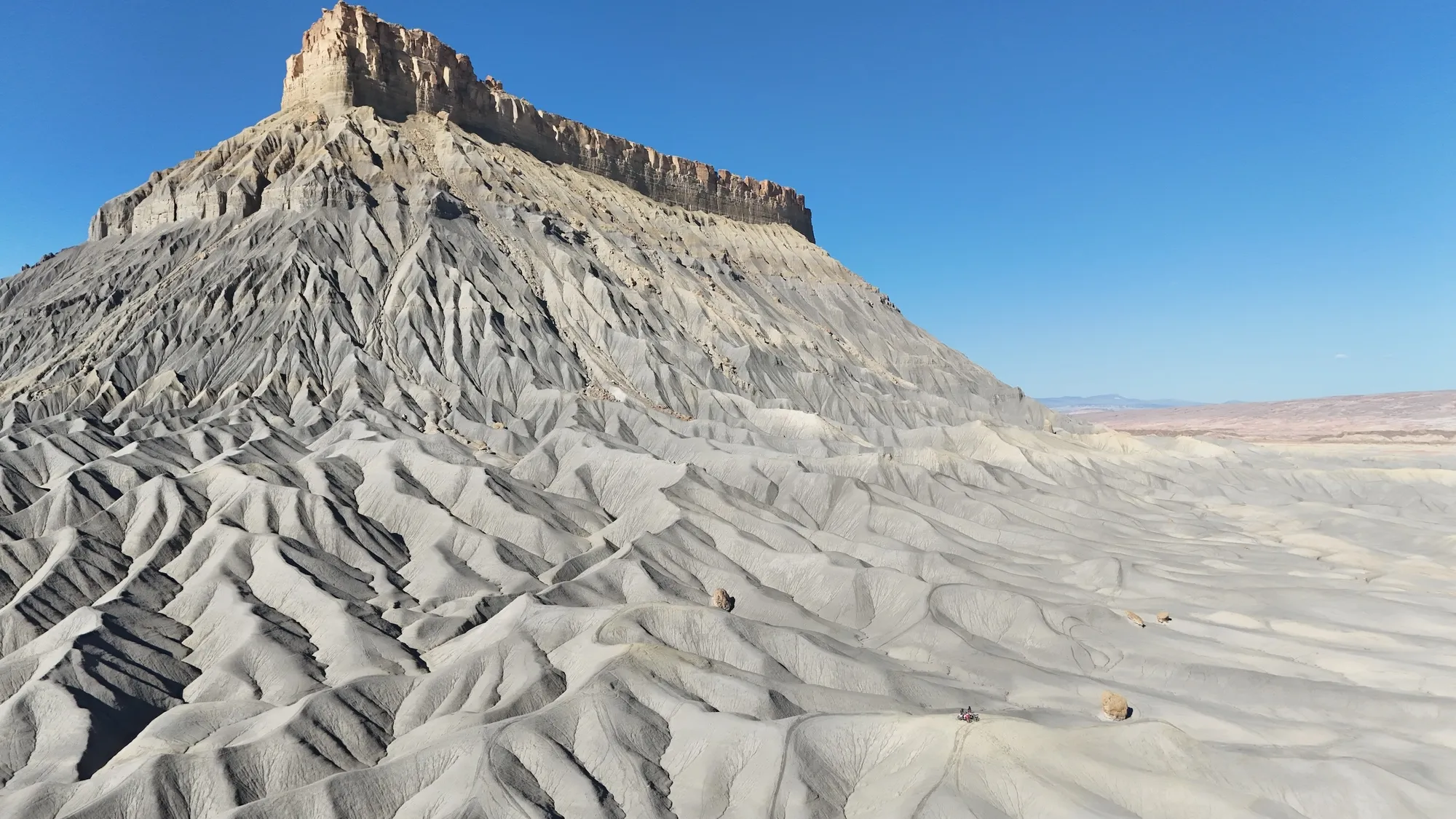
Factory Butte in Utah's high desert badlands, captured in daylight under clear blue sky. The formation's distinctive multi-colored strata and steep erosional gullies dominate the frame. Arid terrain with minimal vegetation stretches across the foreground and background. Typical American Southwest landscape.
NastyNils / Nastynils.com

Best motorcycle for Moab?

This is your bike. It's light, it pulls through ledges and sand in almost any gear, and 14.0 in of clearance handles the rocks. Just plan your fuel around the 2.6 gal tank.

Made for Bar M / Kane Creek · Imperial Sand Dunes · Johnson Valley OHV Area
Best motocross bike for Loretta Lynns?

It will turn laps, and the fully adjustable suspension gives you room to tune it. But this is an enduro built for broad, forgiving pull, not a pure motocrosser. Great for training, less so for the gate.

Made for Carnegie State Vehicular Recreation Area · Fox Raceway at Pala · Glen Helen Raceway

Best motorcycle for BDR routes?

It will eat the gnarly sections alive. But a 2.6 gal (10 L) tank, a 37.8 in seat and no luggage system make multi-day logistics hard work. Ride it for day loops, not the whole route.

Made for AZBDR — Arizona Backcountry Discovery Route · California BDR South · COBDR — Colorado Backcountry Discovery Route

Alternatives to the Husqvarna TE 300

If this one isn't quite the fit, these are the bikes worth riding back-to-back against it.

Any price note compares both bikes at the same age — the youngest age both have on the used market — against this Husqvarna TE 300. “cheaper/pricier” is what that bike costs second-hand, not how worn it is.