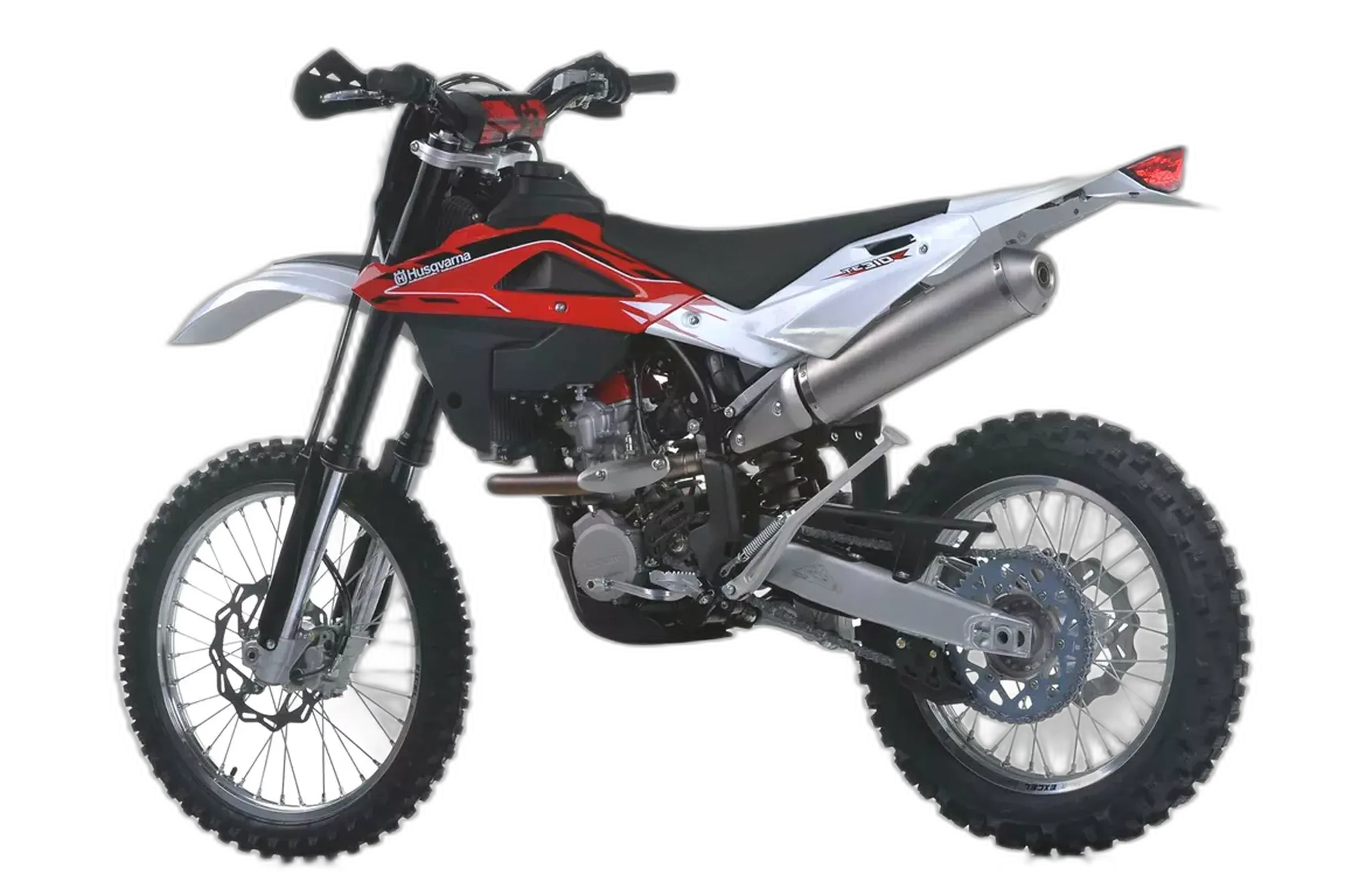
Husqvarna TE 310R (MY2013) — Enduro
NastyNils / Husqvarna Press

2013 · Enduro · Buyer's Guide

TE 310R (MY2013)

Last Italian Enduro, Built Honest

The Machine's Character

This last Italian-built Husqvarna is a competition-bred enduro built around a 302cc liquid-cooled fuel-injected single putting out 34 hp and 18 lb-ft. The torque spreads wide and arrives without any hard hit, which is exactly what you want when grip is scarce. A steel trellis frame and fully adjustable suspension give it real off-road credentials, and the whole package is tuned as a coherent unit rather than a sharp-edged racer. It leans toward rideability over headline numbers, and in this class that is the right call. Missing peak power is not the point here.

The reward comes with patience. Turn-in is deliberate rather than flickable, so on open, easy ground the front can feel reluctant. Get into serious technical terrain and that same manageable, predictable character becomes an asset instead of a compromise. This is a bike for a rider who values survival and traction over showing off. The honest caveat: fit and finish on the seat, plastics, and controls sit at good-not-great, and the starter system has a reputation for trouble. Go in knowing that, and the substance holds up well.

Hard Numbers

Spec sheets don't ride bikes, but they set the baseline.

Show full specs & equipment Hide specs & equipment
Key specifications
Power 34 hp (25 kW)
Torque 18 lb-ft (25 Nm)
Displacement 302 cc
Engine Single-cylinder
Cooling Liquid-cooled
Gearbox 6-speed
Final drive Chain
Fork Upside-down (USD)
Front brake 260 mm
Front tire 90/90-21
Rear tire 120/90-18
Wheelbase 58.5 in (1485 mm)
Ground clearance 13.2 in (335 mm)
Front travel 11.8 in (300 mm)
Rear travel 11.6 in (295 mm)
Seat height 37.8 in (960 mm)
Fuel capacity 2.2 gal (8.5 L)

Equipment check

Chassis

  • Front Suspension Adjustable Standard
  • Rear Suspension Adjustable Standard

The Voice of Experience

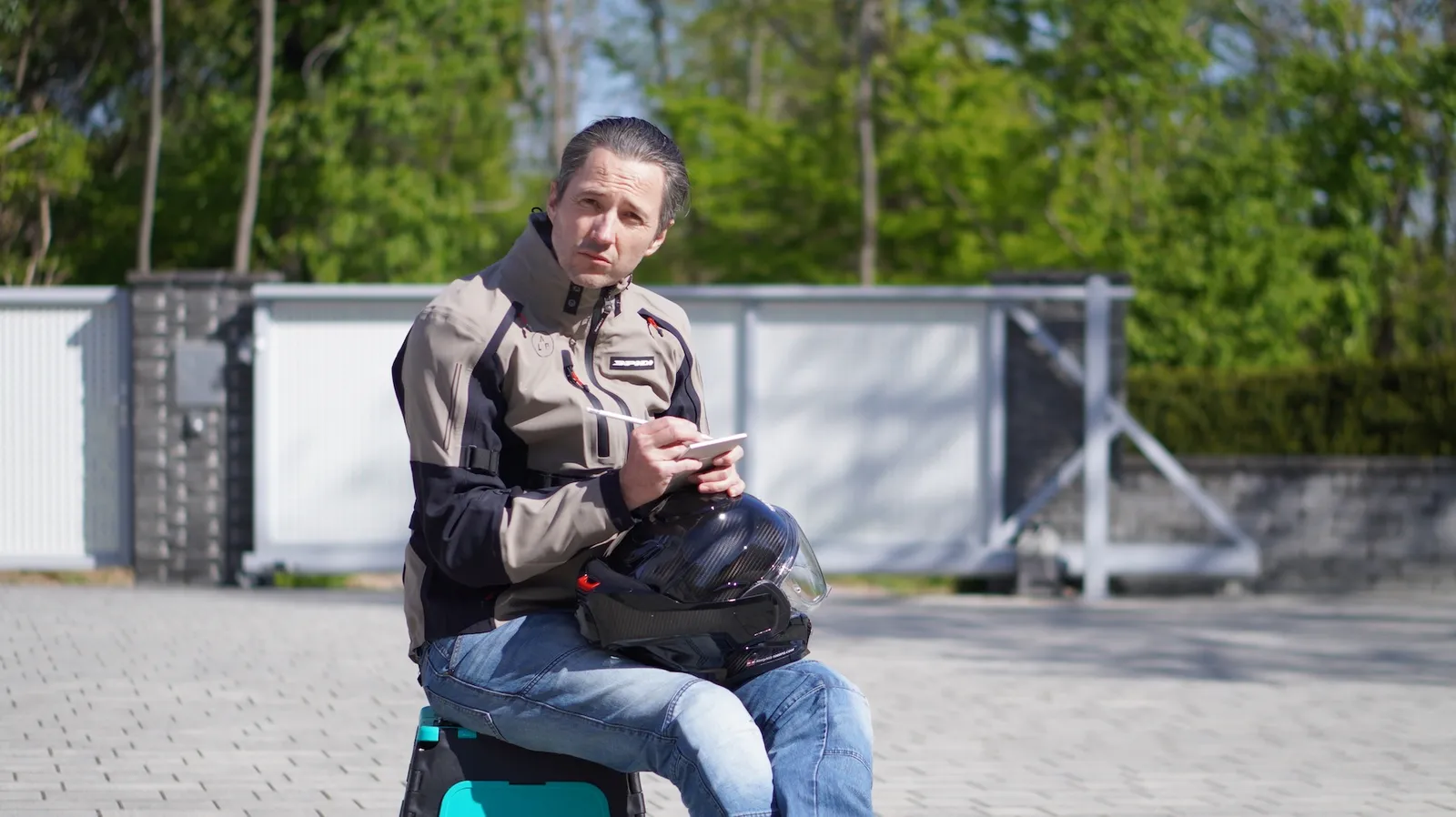
Portrait of NastyNils

The test ride

First impressions are modest, and that is the honest read. The seat sits tall at 37.8 in (960 mm), so short riders will feel it at a standstill, but once you are moving the bike feels light and willing to be placed. Sound and delivery stay civil, with none of the frantic edge you might brace for. What stands out over a long day is how it grows on you: by the end of an extended run the engine and chassis had clicked into one coherent feel, and comfort in the saddle climbed noticeably. There is a genuinely reassuring detail in the backcountry, too. A capacitor keeps it running even if the battery quits, which matters when you are hours from the nearest help. Ride it long enough and the package makes sense.

Rated point by point — where it earns its keep

My own 0–100 score for this bike against the class, area by area — the marker on each bar is the class average.

What I trust most here is the front end. It stays loaded and grippy right at the point where most bikes ask you to be cautious, so I'm already setting up my drive out while I'm still mid-corner. The trade is steering that never rushes. Point it and it obeys, but with no snap, and on smooth open ground I found the front almost lazy. Once the going gets rough, that unhurried feel turns into real confidence.

I'll give credit where the metal earns it. The frame, swingarm, and running gear look properly sorted, a clear step up from what came before. It's the touch points that let it down. Sit on it and work the controls and the seat, plastics, and cockpit all land at good rather than great. On most bikes I'd shrug. On one wearing this badge, with the history behind it, I notice the gap, and so will you.

This is a bike built not to bite you, and I mean that as praise. Nothing on the motor or chassis is sharpened to a point; the two are tuned to work as one calm, sensible unit. Drop into tight technical ground where a nervous machine ends your day in the first hour, and that steadiness pays. It also asks for patience. My early laps left me lukewarm, but the longer I stayed out, the more it settled into something I wanted to keep riding.

The injection is where I felt the biggest gain over the old model. Response is clean and honest across most of the rev range. My one complaint sits right off a closed throttle, where that first crack isn't quite as smooth as I'd like. Get past that initial inch and it's sorted. The torque itself spreads wide and even, and it never lunges at you. When grip is thin, that measured delivery is worth more to me than any peak figure.

The detail that sticks with me is the capacitor sitting behind the electrics. Let the battery go flat and the engine keeps turning over regardless, so a dead cell doesn't strand you. Out where the trail runs for hours and there's nobody around to give you a push, that isn't a spec-sheet footnote to me. It's the kind of thing you end up quietly grateful for.

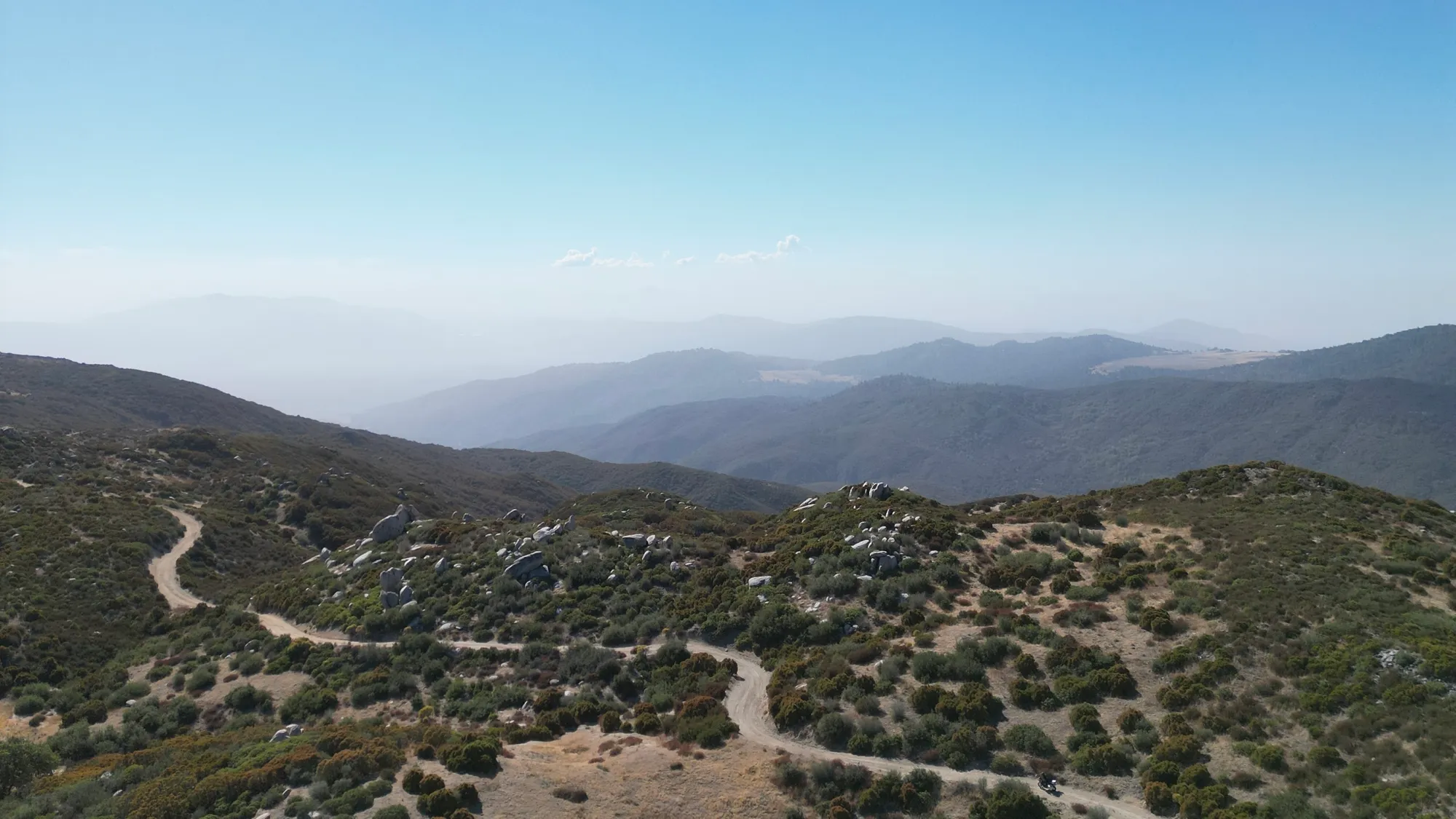
Aerial drone view of Palomar Divide Road winding through chaparral-covered mountain ridges in San Diego County. Multiple S-curve sections descend through sparse vegetation with distant valley views visible in the haze. Gravel and packed-earth surface.

The Truth on the Trail

I've spent years listening to the people who actually ride this bike: threads that run for pages, talk in the paddock, and the notes and emails owners send me straight to the inbox. For the TE 310R, that chatter settles into a clear split. Riders warm to how it works off-road, and start grumbling the moment pavement comes into the picture.

What holds up in the dirt

Two things come up again and again. The engine earns steady praise for pulling cleanly in the tight stuff and out in the open, and the light chassis draws just as much. Riders consistently call it agile and sure-footed, the sort of bike that builds confidence when the terrain turns technical.

The gripes riders share

The complaints cluster around the road. Owners call the close-ratio gearbox and firm off-road setup tiring and buzzy on pavement, and few treat it as a real dual-sport. Some mention a hard seat that passes plenty of vibration through on longer days. Others find the suspension goes soft after hard use and asks for frequent tweaking, and a few thought the looks were behind the times even when new.

Known issues

  • Notorious starter motor and auto-decompressor failures

    enginecommon

    The electric starter system is underpowered and prone to failure, often manifesting as a clicking relay or inability to turn the engine over. The auto-decompressor mechanism can go out of adjustment, further hindering starting. Many owners resort to kick-starting or replacing the starter motor/worm gear assembly.

  • Fuel injection and backfiring issues when uncorked

    fuel systemoccasional

    When the stock exhaust and emissions equipment are removed (uncorking), the bike may develop poor idle, backfiring on deceleration, and inconsistent fueling. Re-mapping or restoring some restriction often alleviates the problem.

The Expert Benchmark

Where this Husqvarna TE 310R pulls ahead of — or falls behind — its rivals on the numbers, and the typical bike in its class on character.

What kind of bike this is — character vs. the class

This bike Class average

Head-to-head: Husqvarna TE 310R vs. its rivals

The 'Should I Buy It?' Score

Forget spec-sheet bragging. Here's who the TE 310R is actually built for.

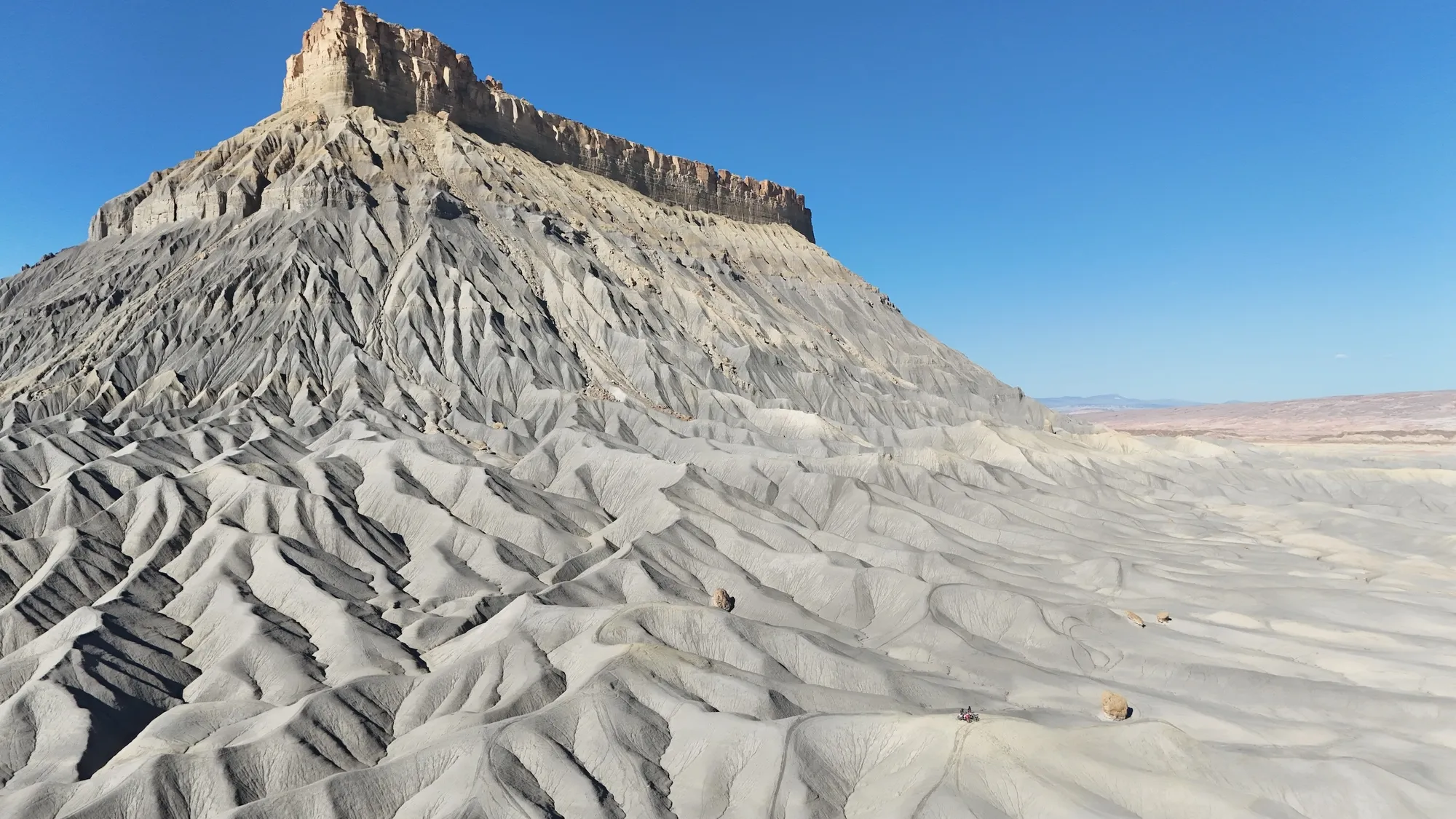
Factory Butte in Utah's high desert badlands, captured in daylight under clear blue sky. The formation's distinctive multi-colored strata and steep erosional gullies dominate the frame. Arid terrain with minimal vegetation stretches across the foreground and background. Typical American Southwest landscape.
NastyNils / Nastynils.com

Best motorcycle for Moab?

This is your natural terrain. On slickrock, sand, and tight technical sections the drama-free torque and forgiving front let you focus on line and traction, which is exactly how you build and hold skill out there.

Made for Bar M / Kane Creek · Imperial Sand Dunes · Johnson Valley OHV Area

Best motorcycle for BDR routes?

The capability and light handling suit technical BDR sections, but be honest about the 2.2 gal (8.5 L) tank and race-bred focus. For long multi-day logistics and range, this asks more of your planning than a purpose-built middleweight.

Made for AZBDR — Arizona Backcountry Discovery Route · California BDR South · COBDR — Colorado Backcountry Discovery Route