By NastyNils·
Motorcycle comparison · Cruiser
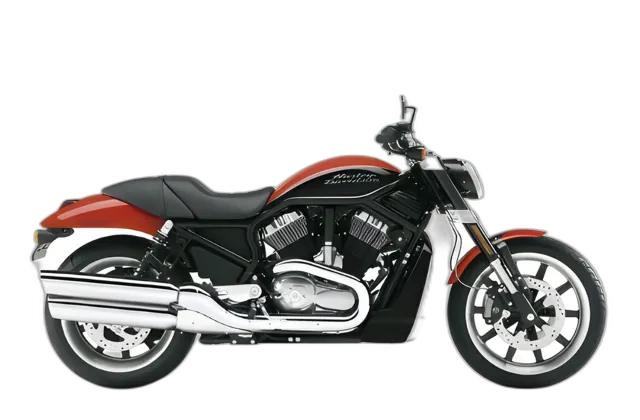
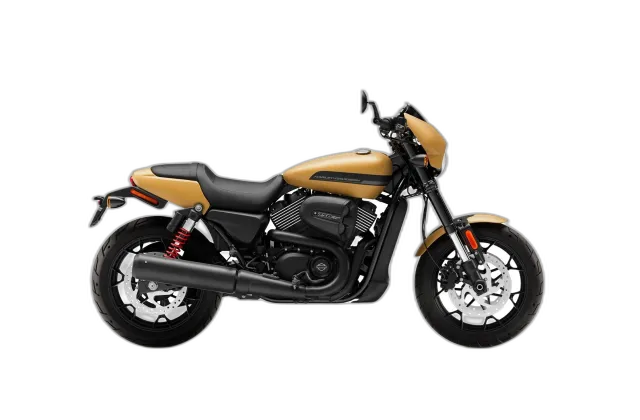
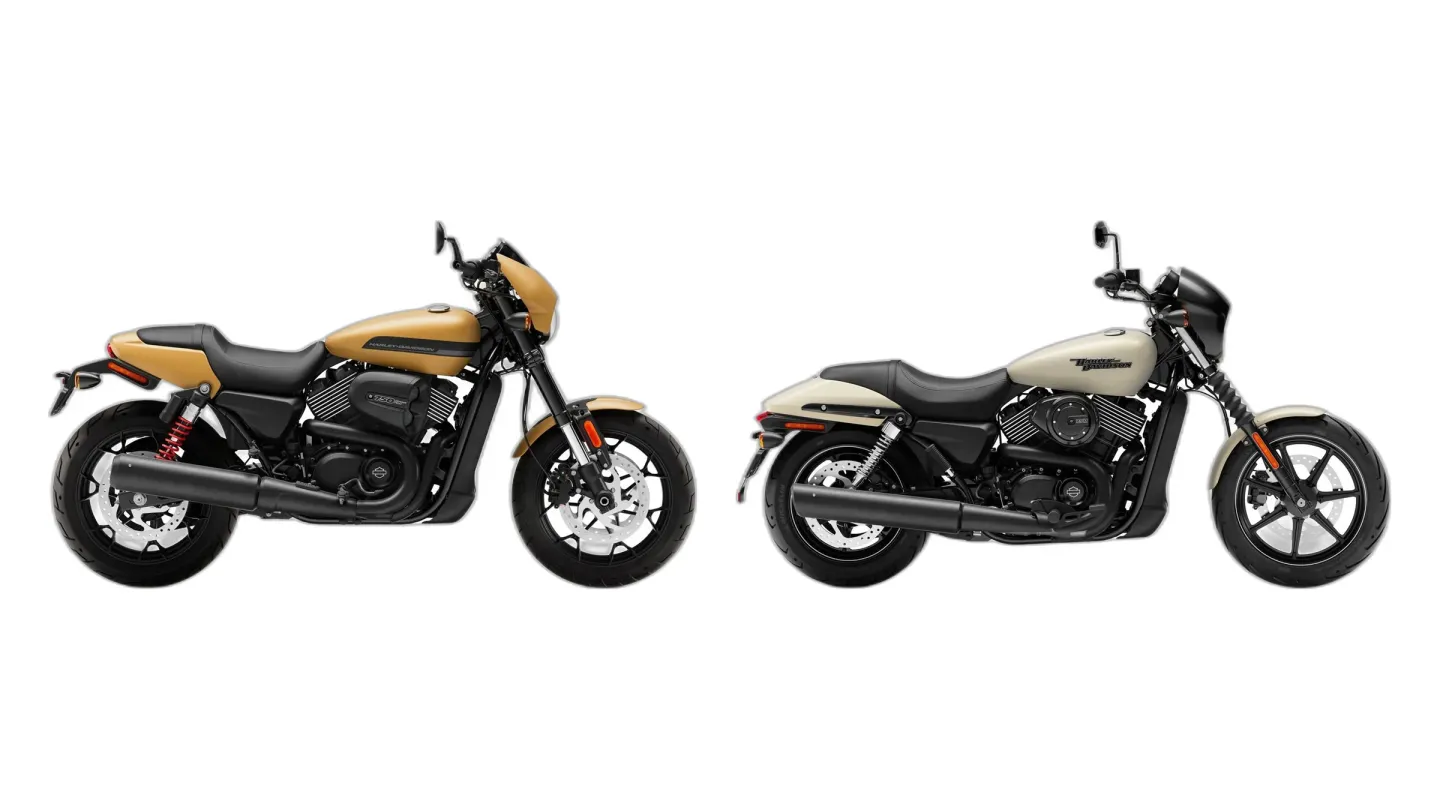
Harley-Davidson Street Rod (XG750A) vs Street 750 (XG750)
Harley-Davidson Street Rod vs Street 750: buy with your heart, but read this first.
At a yellow light, the Harley-Davidson Street Rod's front brake bites and it's hauling the bike down. The Harley-Davidson Street 750's lever turns mushy and the front doesn't grab back. Its rear brake ends up doing the heavy work.
So which one do you buy?
The Street Rod has the edge if…
Sporty riding on twisty roads
A touch ahead: Street Rod
On a twisty road, the Street Rod edges ahead. That comes from harder acceleration and stronger brakes. Not by enough to settle it alone.
Character, looks and sound
Slight edge: Street Rod
Looks and sound lean slightly toward the Street Rod. It's down to a purer look and more distinctive styling.
The Street 750 has the edge if…
Daily commuting & city riding
Inches ahead: Street 750
The Street 750 makes slightly more sense as a commuter. Don't read much into a gap this small.
Which one's the smarter buy
No clear advantage
The Street 750 costs less, but the Street Rod isn't the clear better buy for the money. Which one is the better buy depends on what you want it for.
What makes each one tick
Street Rod
There's a revver hiding in the Street Rod, and its high-output V-twin keeps climbing toward a redline that doesn't feel like a Harley. On Iron Mountain Road, the sharper rake drops the nose into each bend the moment you ask. The chassis keeps up. Its inverted fork holds the nose steady through the apex.
Street 750
In stop-and-go traffic, the Street 750's narrow chassis and low center of gravity let it slip through gaps on a bare nudge of the bar. Its seat sits just 27.9 in (709 mm) up, with a narrow profile that's easy to flat-foot at a stop. The throttle wakes a liquid-cooled twin that spins up smoothly and doesn't shake at city speeds. Power climbs in one even sweep.
The Voice of Experience

What actually separates them
- The Street 750 has the lower seat: 27.9 in (709 mm) vs 30.1 in (765 mm).
- The Street 750 has the lower wet weight: 505 lb (229 kg) vs 525 lb (238 kg).
- The Street Rod makes more peak power: 70 hp (52 kW) vs 57 hp (43 kW).
Which one for the way you ride
Comfortable long-distance riding
Not built for this
For all-day comfort, both fall short. Keep the rides short and you'll get on fine with either.
Nothing splits them on running costs. Ride both back to back and the decision usually makes itself.
Who each one is built for
What's good, and what you'll live with
Street Rod
What owners say
Strengths
- Significantly improved handling and brakes
- Modern café racer styling
Street 750
What owners say
Strengths
- Smooth, free-revving liquid-cooled engine
- Agile and lightweight handling
- Ultra-low seat height
Trade-offs
- Underpowered front brake
- Clunky low-speed gear shifts
- Cramped rider triangle for taller riders
- Electrical gremlins from exposed wiring
Known problems to check before you buy
Street Rod
No confirmed faults on file yet. That's not the same as fault-free.
Street 750
- Front brake weakness and bias The single front disc setup delivers underwhelming stopping power; many riders complain of excessive rear-brake reliance and a vague lever feel. Periodic caliper service and fresh fluid may mitigate, but the design limits overall performance.
- Exposed wiring harness corrosion Wiring routed near the steering head and fork is exposed to weather, leading to corrosion, broken connections and intermittent electrical failures (lights, switches, instrument cluster).
- Missing rear reflector (recall) Recall 15V217000 2015 models were recalled because they lacked a required red reflex reflector on the rear, a federal safety standard item. Dealers installed one free of charge.
What they cost used
These prices compare a 6-year-old Street Rod with a 6-year-old Street 750.
- Street Rod
- about $5,700
- Street 750
- about $3,500
At six years old, the Street Rod sits around $5,700 while the Street 750 lands near $3,500. That's a $2,200 gap in the Street 750's favor. These are estimates from the used market, not live listings.
What they share
- Displacement
- 749 cc
- Engine
- 60° V-twin
- Cooling
- Liquid-cooled
- Gearbox
- 6-speed
- Final drive
- Belt
Where the spec sheets split
| Street Rod | Street 750 | |
|---|---|---|
| Seat height | 30.1 in (765 mm) | 27.9 in (709 mm) |
| Wet weight | 525 lb (238 kg) | 505 lb (229 kg) |
| Street Rod | Street 750 | |
|---|---|---|
| Power | 70 hp (52 kW) | 57 hp (43 kW) |
| Torque | 48 lb-ft (65 Nm) | 45 lb-ft (60 Nm) |
| Street Rod | Street 750 | |
|---|---|---|
| Fuel capacity | 3.5 US gal (13.2 L) | 3.5 US gal (13.1 L) |
| Street Rod | Street 750 | |
|---|---|---|
| Fork | Upside-down (USD) | Telescopic |
| Front tire | 120/70-17 | 100/80-17 |
| Rear tire | 160/60-17 | 140/75-15 |
| Wheelbase | 59.3 in (1507 mm) | 60.4 in (1534 mm) |
What comes fitted, what costs extra
| Street Rod | Street 750 | |
|---|---|---|
| ABS | Option | Not offered |
| Manually Adjustable Rear Suspension | Standard | Not offered |
Head to head, area by area
Both bikes on the same scale, one area at a time.