·

Harley-Davidson Dyna Wide Glide FXDWG (MY2010) — Cruiser
Harley-Davidson Press

2010–2011 · Cruiser · Buyer's Guide

Dyna Wide Glide FXDWG (MY2010)

3.5 / 5 NastyNils Rating · against its class

Factory Chopper, No Apologies

The Machine's Character

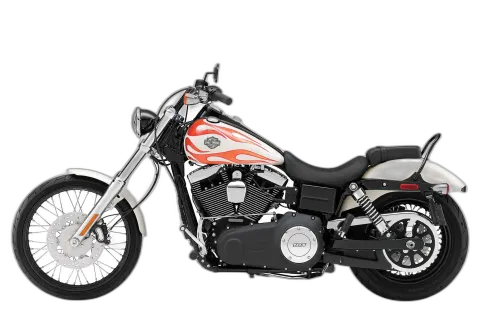
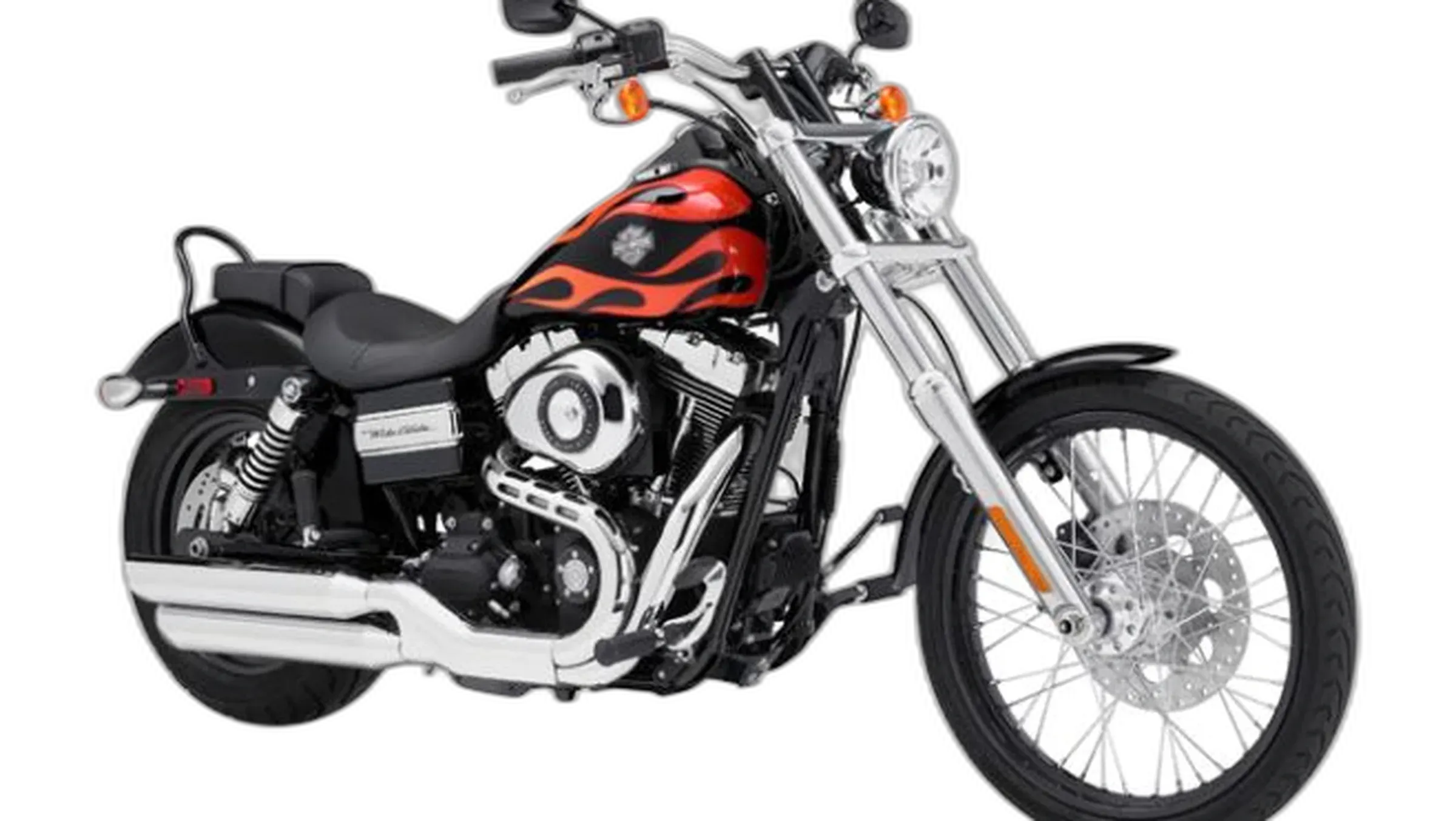
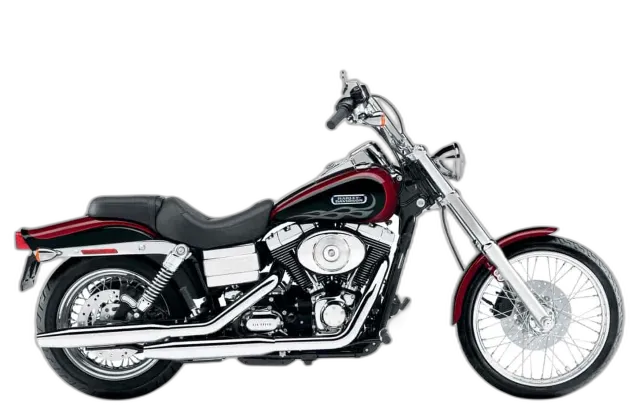
The Wide Glide is the chopper of the Dyna family, and this generation wears the look without apology. The fork is raked out to 34 degrees. A skinny 80/90-21 front and a fat 180/60-17 rear stretch the bike across a 68.3 in (1735 mm) wheelbase, and the seat sits just 25.5 in (648 mm) off the ground. Power comes from the air-cooled, rubber-mounted Twin Cam 96, a 1584 cc 45° V-twin rated at 77 hp and 92 lb-ft, sent through a 6-speed gearbox and a belt. It's a Dyna built to chopper proportions. Pure stance!

On paper, this hardware is built for long, unhurried highway runs and a slow roll down the boulevard afterward. Drag bars pull you forward into a stretched, fists-forward posture. The long wheelbase and raked-out front end point to a bike that stays settled at speed, and 666 lb (302 kg) wet adds to that planted stance. That's the deal: lots of metal, a low seat, big torque. ABS is an available option, not standard. It points to a rider who buys a Harley for presence and style first and sees the steel double-cradle frame as a starting point for making it their own. A blank canvas.

Hard Numbers

Spec sheets don't ride bikes, but they set the baseline.

Show full specs & equipment Hide specs & equipment
Key specifications
Power 77 hp (57 kW)
Torque 92 lb-ft (125 Nm)
Displacement 1584 cc
Engine 45° V-twinMotorcycles With V-Twin Engines →
Cooling Air-cooled
Gearbox 6-speed
Final drive BeltMotorcycles With Belt Drive →
Fork Telescopic
Front tire 80/90-21
Rear tire 180/60-17
Wheelbase 68.3 in (1735 mm)
Seat height 25.5 in (648 mm)Motorcycles With a Seat Height Under 30 Inches →
Wet weight 666 lb (302 kg)
Fuel capacity 4.7 gal (17.8 L)

Equipment check

Safety

  • ABS Optional
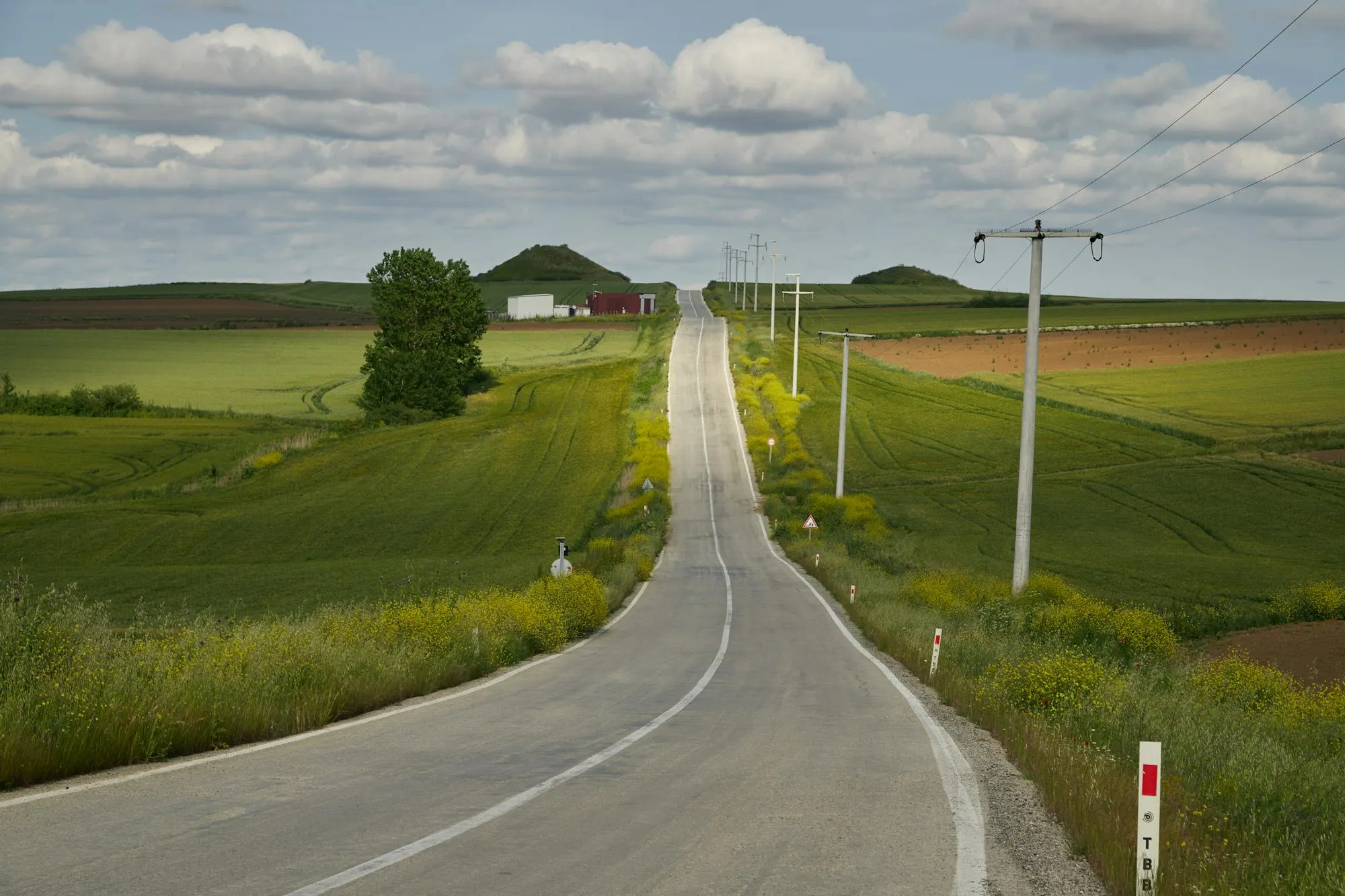
A long, straight paved road stretches toward the horizon through agricultural fields in Vermont. Power lines and a mailbox are visible along the roadside. Lush green vegetation, cumulus clouds, good daylight conditions. The landscape is flat to gently rolling. Asphalt pavement appears to be in good condition. Rural American setting.
Meric Tuna / Pexels

The Truth on the Street

Nothing here comes from a press kit. This is what has come back to me over years of listening: paddock conversations, owners talking at club nights, and the messages riders send me directly. On the Wide Glide that chatter lines up unusually well, with the praise pointed at the engine and the look, and the complaints clustered below walking pace.

What owners bring up first

The Twin Cam gets the most consistent praise. Riders describe strong pull off the line and a flat spread of torque that makes town work easy and highway passing an afterthought. Just as consistently they call the ride comfortable and settled at cruising speed, with vibration kept down in a way they say rigid-mounted cruisers rarely manage. Owners keep coming back to the look too: black and chrome, unmistakably its own bike in the Dyna lineup.

Where the grumbling starts

The recurring complaint is low speed. Owners say the front end wanders in parking lots and tight U-turns and never quite lets them relax. Some mention the shake at idle, heavy through the bars and pegs and stronger than what they felt on Softails. A few shorter riders say the reach to the forward controls leaves them overextended and sore on longer days.

Known issues

  • Valve train top-end noise

    engine occasional

    Some owners report audible valve-train clatter, especially when cold; this is considered a normal operating characteristic of the Twin Cam engine and does not indicate a mechanical fault.

The Expert Benchmark

Where this Harley-Davidson Dyna Wide Glide FXDWG pulls ahead of — or falls behind — its rivals on the numbers, and the typical bike in its class on character.

What kind of bike this is — character vs. the class

This bike Class average

The shape of the Harley-Davidson Dyna Wide Glide FXDWG — numbers and character vs. the average Cruiser

Head-to-head: Harley-Davidson Dyna Wide Glide FXDWG vs. its rivals

The 'Should I Buy It?' Score

Forget spec-sheet bragging. Here's who the Dyna Wide Glide FXDWG is actually built for.

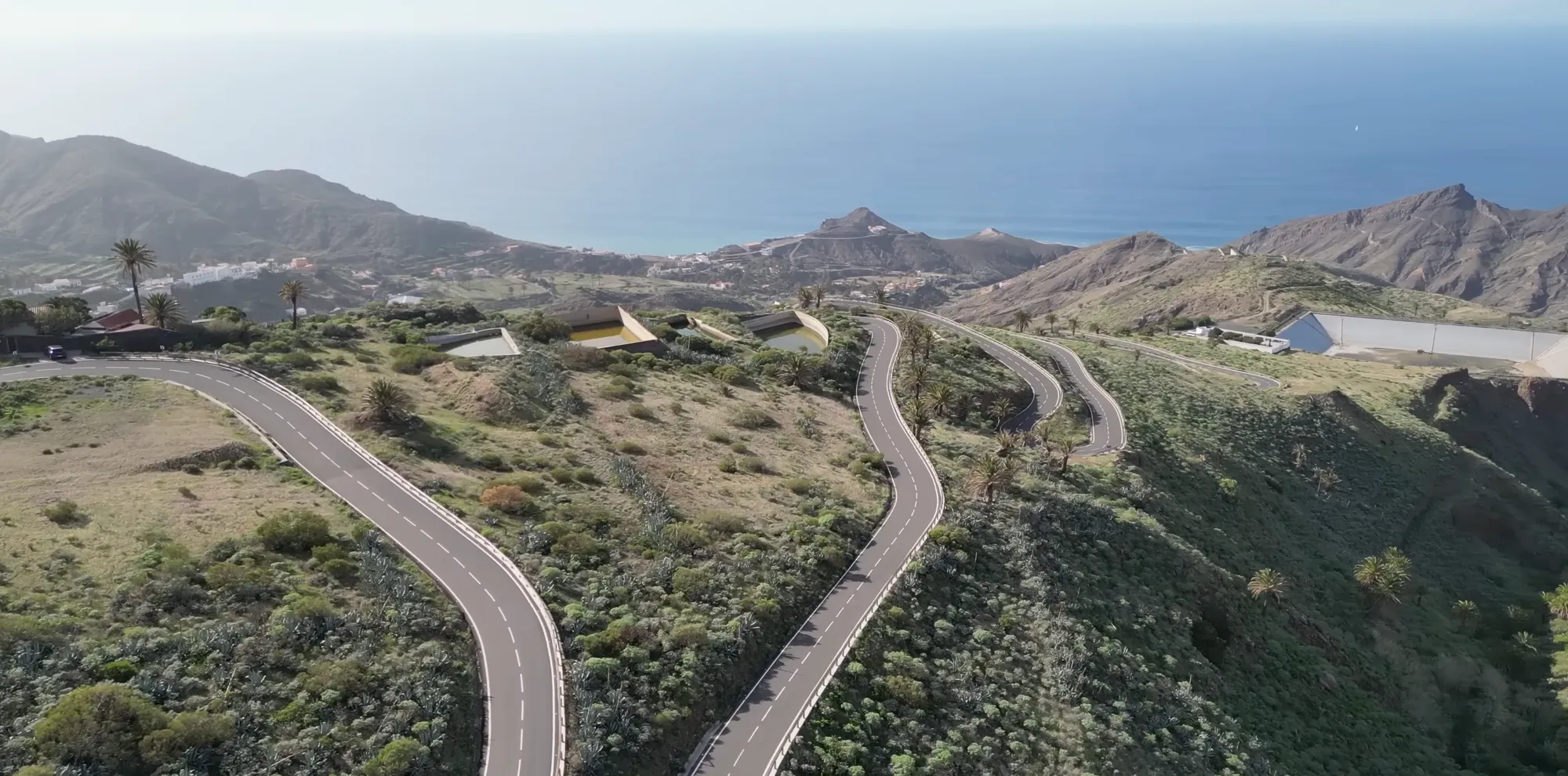
Aerial view of a winding asphalt road cutting through volcanic terrain on La Gomera, Canary Islands. The road curves through sparse green vegetation with rocky volcanic peaks visible in the background and a settled valley to the left. Clear lane markings, dry climate, partly cloudy sky.

Best cruiser for Sturgis?

If your year revolves around Sturgis and Daytona, this is the best fit here: an air-cooled Twin Cam V-twin, a raked-out chopper stance and a 25.5 in seat. Pure Harley identity.

Made for Florida State Road A1A · Black Hills · Main Street, Daytona Beach
Best retro motorcycle for road trips?

A strong match for slow-rhythm runs through small towns and along historic routes. The retro, purist styling suits you, though the stretched drag-bar posture leans more chopper than classic.

Made for Park Loop Road · Handbuilt Motorcycle Show · Blue Ridge Parkway

Best touring motorcycle for long distance?

A partial fit at best. The long wheelbase points to settled highway manners, but a 4.7 gal tank and a stretched, fists-forward stance aren't built around loaded two-up touring.

Made for Beartooth Highway · Blue Ridge Parkway · Going-to-the-Sun Road

What's new versus the previous generation

If you're cross-shopping the older generation, here's what changed.

Harley-Davidson Dyna Wide Glide FXDWG (FXDWG-MY2005)

Previous generation · 2005

Harley-Davidson Dyna Wide Glide FXDWG (FXDWG-MY2005)

Factory Chopper, Zero Compromises

Compare to the previous model →

Alternatives to the Harley-Davidson Dyna Wide Glide FXDWG

If this one isn't quite the fit, these are the bikes worth riding back-to-back against it.

Any price note compares both bikes at the same age — the youngest age both have on the used market — against this Harley-Davidson Dyna Wide Glide FXDWG. “cheaper/pricier” is what that bike costs second-hand, not how worn it is.

Find it in these lists

Compare it with every bike that shares the same spec or equipment.