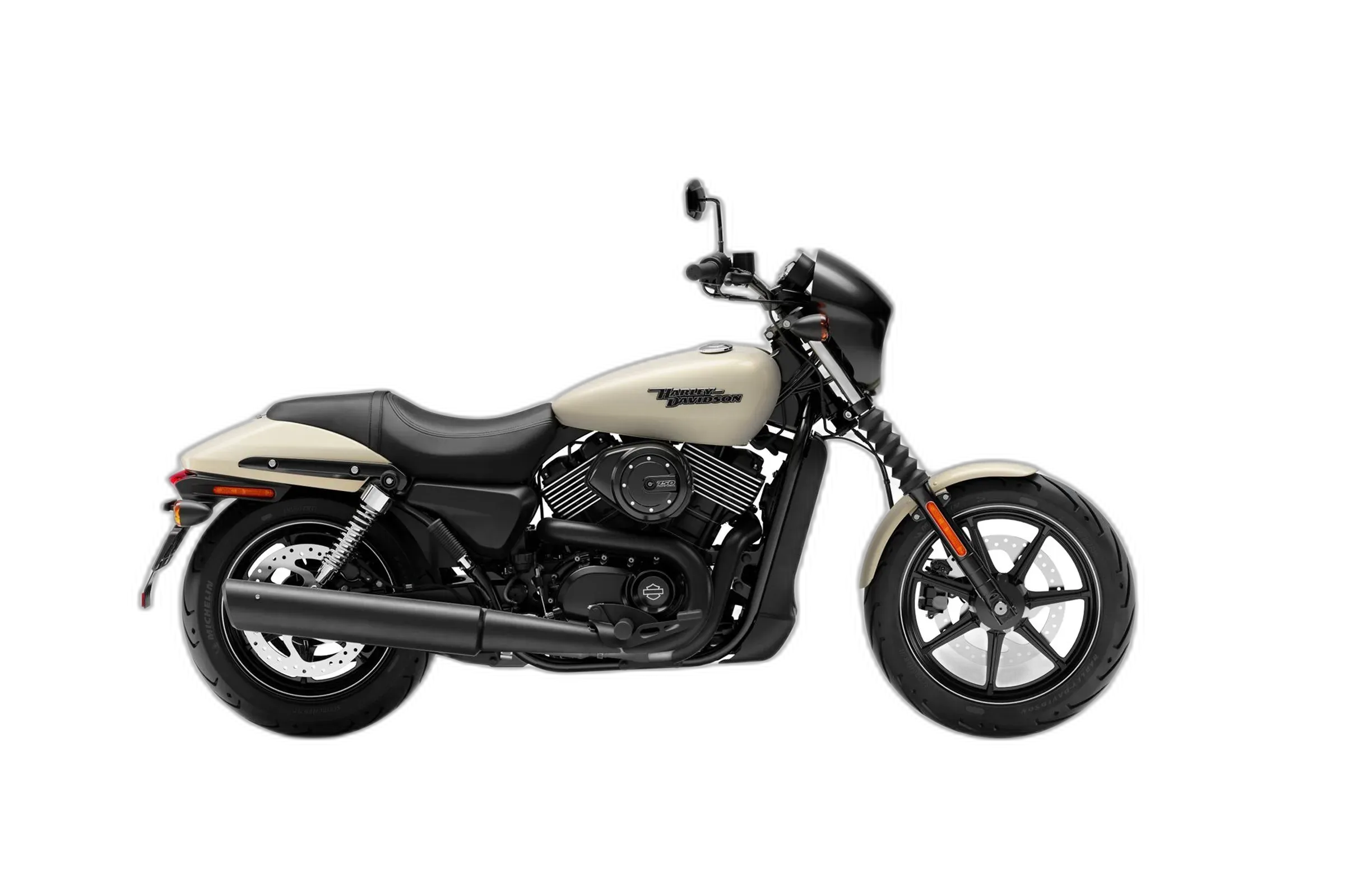
Harley-Davidson Street 750 (XG750) — Cruiser
Harley-Davidson press archive

2014–2020 · Cruiser · Buyer's Guide

Street 750 (XG750)

2 / 5 NastyNils Rating · against its class

Harley Built for the City

The Machine's Character

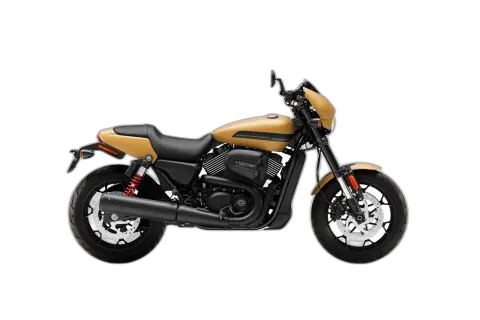
The Street 750 is the Harley that trades ceremony for usability. Its 749 cc, 60-degree V-twin is liquid-cooled and revs more freely than the badge on the tank leads you to expect, feeding 57 hp and 45 lb-ft through a six-speed box and a belt. The chassis is built around a 27.9 in seat and a 60.4 in wheelbase, so the stance still reads cruiser while the proportions stay small. There is no ABS, no traction control, no rider modes. What you get is a stripped-back American twin aimed squarely at the rider who wants the look and the mechanical presence without the bulk.

There is real substance under the simplicity. It holds a line on the highway better than its price and size suggest, running steady and untroubled at cruising speed, and the controls ask almost nothing of you. Running costs stay modest. It suits a rider who wants a Harley for daily use, short trips, and city miles rather than one who plans on crossing states two-up. The honest caveat is the front brake: a single disc that never feels strong or communicative, which pushes you onto the rear pedal more than it should. Watch the wiring near the steering head for corrosion too.

Hard Numbers

Spec sheets don't ride bikes, but they set the baseline.

Show full specs & equipment Hide specs & equipment
Key specifications
Power 57 hp (43 kW)
Torque 45 lb-ft (60 Nm)
Displacement 749 cc
Engine 60° V-twin
Cooling Liquid-cooled
Gearbox 6-speed
Final drive Belt
Fork Telescopic
Front tire 100/80-17
Rear tire 140/75-15
Wheelbase 60.4 in (1534 mm)
Seat height 27.9 in (709 mm)
Wet weight 505 lb (229 kg)
Fuel capacity 3.5 gal (13.1 L)

Equipment check

Connectivity

  • Keyless System Optional
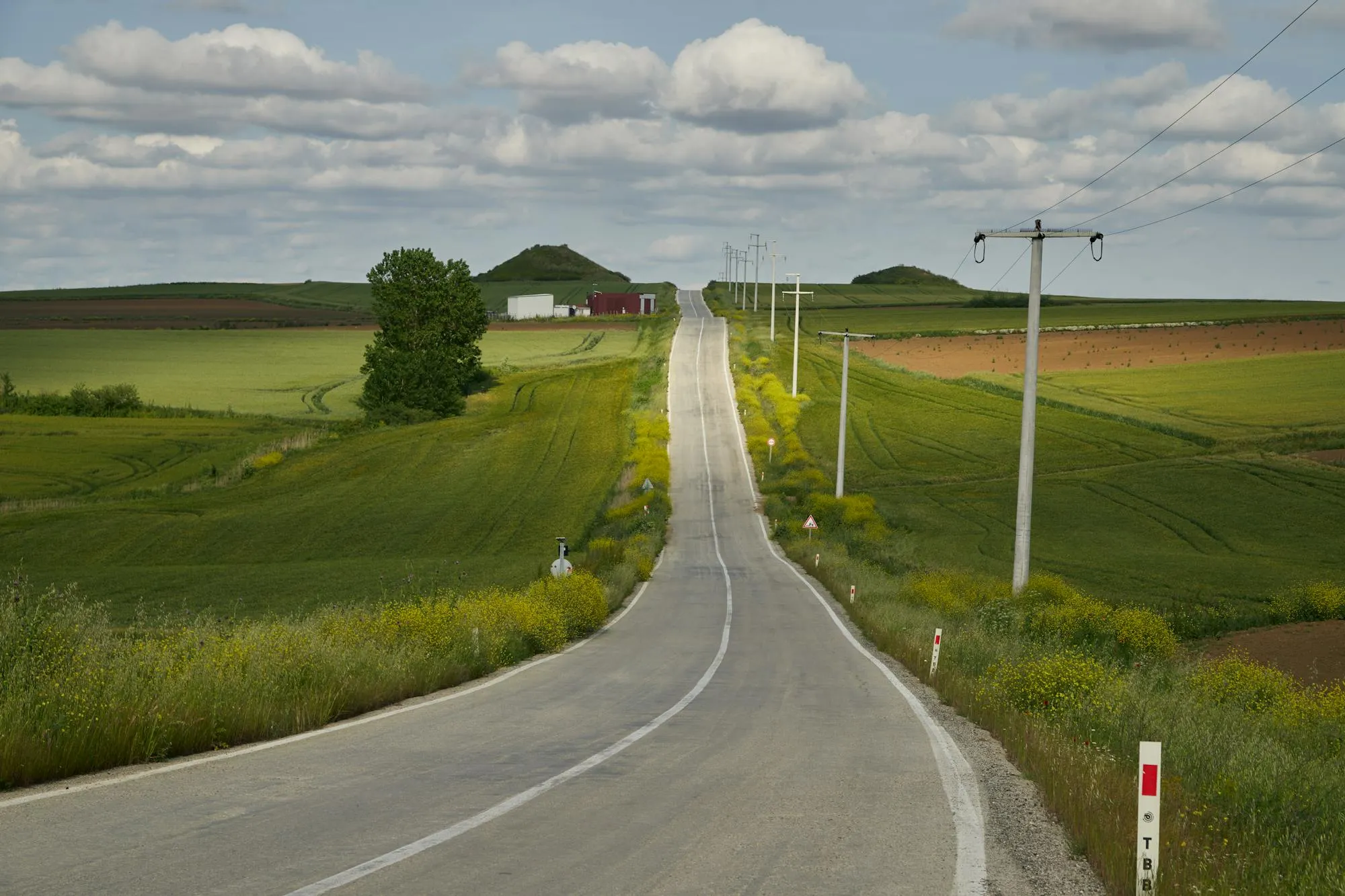
A long, straight paved road stretches toward the horizon through agricultural fields in Vermont. Power lines and a mailbox are visible along the roadside. Lush green vegetation, cumulus clouds, good daylight conditions. The landscape is flat to gently rolling. Asphalt pavement appears to be in good condition. Rural American setting.
Meric Tuna / Pexels

The Truth on the Street

Over the years I've heard a lot about the Street 750. I've heard it in the paddock, at club nights and over coffee with owners, and in the emails and messages riders send me once they've lived with one. The pattern is clear. Riders like how easy and lively it feels. They are just as consistent about where it falls short: the brakes, the gearbox, the electrics and how it fits taller bodies.

A Harley that rides like a standard

The engine is where most owners start. Riders consistently describe a twin that likes to rev and delivers its power in a linear way, and many say it feels nothing like the air-cooled Harleys they knew before. Around town it stays smooth and free of buzz. Shorter riders and newcomers keep bringing up the seat. It's low and narrow, so getting both feet flat on the ground is easy. Owners also talk about how nimble it is in heavy traffic and on winding roads, and several say it feels more like a standard than a cruiser.

Where taller riders run out of room

The same low seat divides opinion. Taller owners say their knees end up folded tight against the mid-mounted pegs, and those pegs touch down early in corners. Mirrors are a recurring gripe. They sit too narrow and show more elbow than road, and many owners move them or fit extenders. Some riders report buzz through the bars and pegs once speeds climb, which makes longer highway stints tiring even though the engine is calm elsewhere. A few heavier riders say the seat leaves them numb after an hour or so.

Stopping, shifting and the electrics

The complaint riders raise most often is about braking. They describe the front lever as mushy and the stopping power as weak, and both owners and testers say they rely heavily on the rear brake to make up for it. The gearbox draws steady criticism as well. First and second are described as notchy, false neutrals are common unless you stomp the lever firmly, and cold starts make it worse. The last recurring theme is electrical. Owners report corrosion and intermittent faults in the lights, switches and instruments, and they blame poorly protected wiring.

Known issues

  • Fuel pump recall

    fuel system rare Recall

    Certain 2015 models were recalled for a faulty fuel pump that could cause stalling or failure to start. The recall required a free replacement at H-D dealers.

  • Front brake weakness and bias

    brakes occasional

    The single front disc setup delivers underwhelming stopping power; many riders complain of excessive rear-brake reliance and a vague lever feel. Periodic caliper service and fresh fluid may mitigate, but the design limits overall performance.

  • Alternator rotor key-way wear

    engine occasional

    Poor metal quality can cause the key-way on the alternator rotor to wallow out, leading to erratic timing, surging and a lag/leap feeling. Repair requires rotor replacement, and parts availability has been inconsistent.

  • Exposed wiring harness corrosion

    electrics common

    Wiring routed near the steering head and fork is exposed to weather, leading to corrosion, broken connections and intermittent electrical failures (lights, switches, instrument cluster).

  • Missing rear reflector (recall)

    bodywork rare Recall

    2015 models were recalled because they lacked a required red reflex reflector on the rear, a federal safety standard item. Dealers installed one free of charge.

The Expert Benchmark

Where this Harley-Davidson Street 750 pulls ahead of — or falls behind — its rivals on the numbers, and the typical bike in its class on character.

What kind of bike this is — character vs. the class

This bike Class average

The shape of the Harley-Davidson Street 750 — numbers and character vs. the average Cruiser

Head-to-head: Harley-Davidson Street 750 vs. its rivals

The 'Should I Buy It?' Score

Forget spec-sheet bragging. Here's who the Street 750 is actually built for.

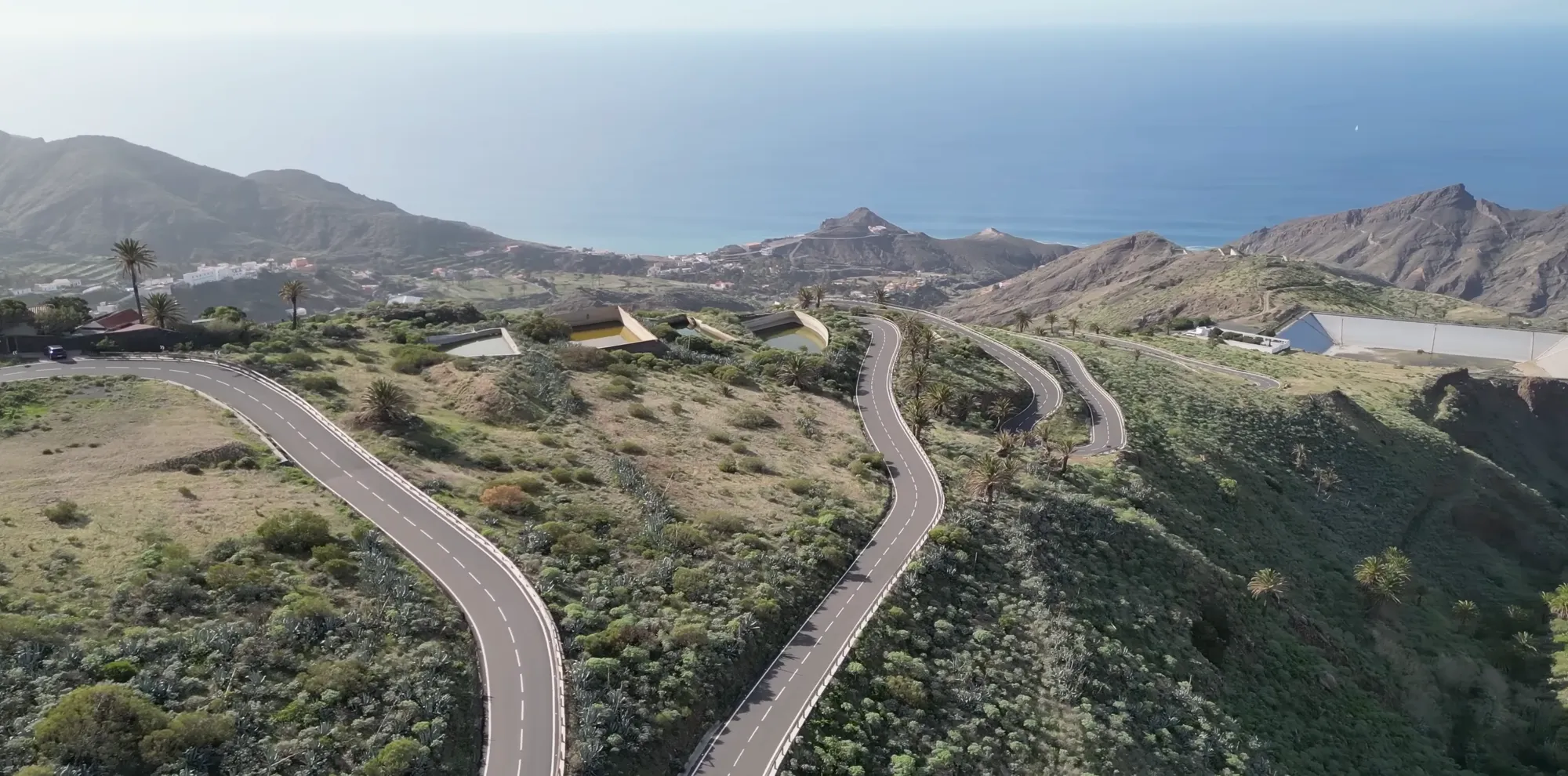
Aerial view of a winding asphalt road cutting through volcanic terrain on La Gomera, Canary Islands. The road curves through sparse green vegetation with rocky volcanic peaks visible in the background and a settled valley to the left. Clear lane markings, dry climate, partly cloudy sky.

Best cruiser for Sturgis?

You'll get the stance and the badge, but this is the small, liquid-cooled twin, not the big-inch rumble a rally crowd expects. Fine for the ride into town, thin on the drama you go there for.

Made for A1A — Florida Atlantic Coast · Black Hills / Sturgis Rally Hub · Daytona Main Street / Bike Week
Best retro motorcycle for road trips?

For unhurried two-lane days and small-town stops it works well, and it's cheap to run. Just plan short legs: the seat, the 3.5 gal tank and the weak front brake set the pace.

Made for Acadia National Park · Austin / Handbuilt Motorcycle Show · Blue Ridge Parkway

Best touring motorcycle for long distance?

Not your bike. It's stable at speed, but with no luggage, no cruise control, a small tank and a single soft front disc, loaded long-haul days are the wrong job for it.

Made for Beartooth Highway · Blue Ridge Parkway · Going-to-the-Sun Road

Alternatives to the Harley-Davidson Street 750

If this one isn't quite the fit, these are the bikes worth riding back-to-back against it.

Any price note compares both bikes at the same age — the youngest age both have on the used market — against this Harley-Davidson Street 750. “cheaper/pricier” is what that bike costs second-hand, not how worn it is.