By NastyNils·
Motorcycle comparison · Adventure
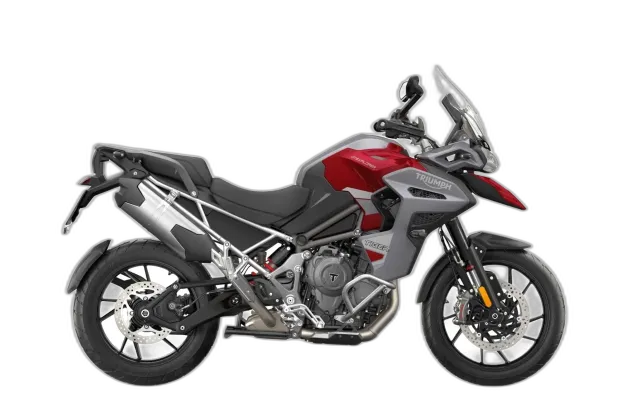
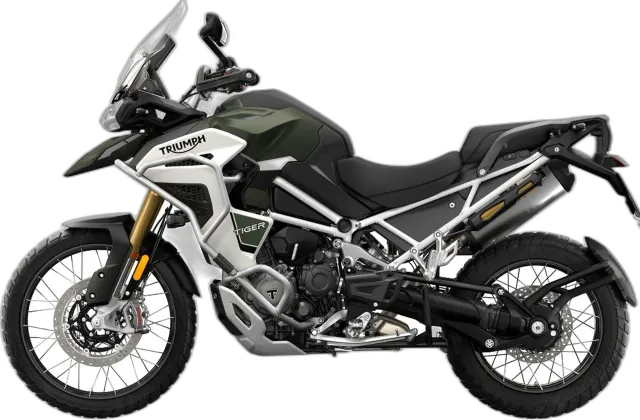
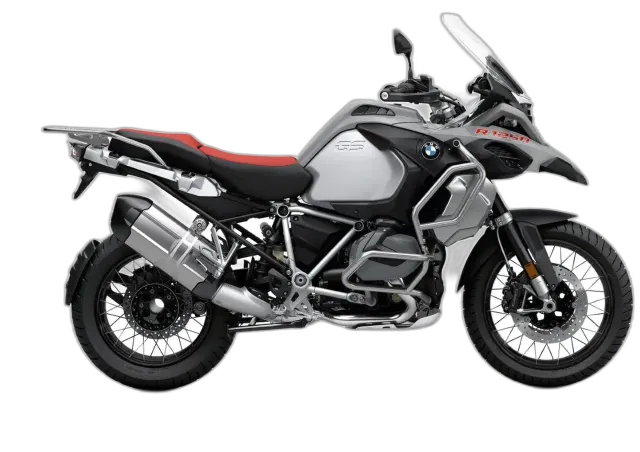
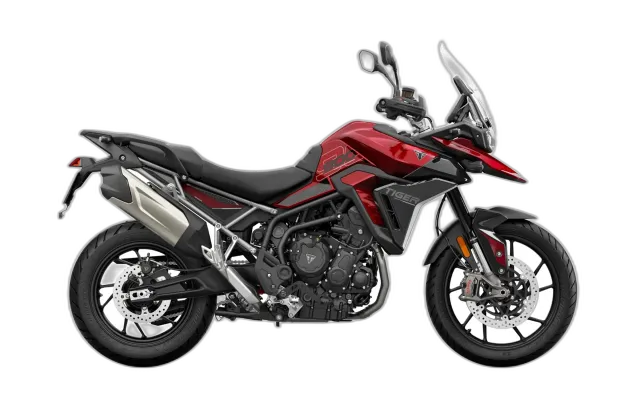
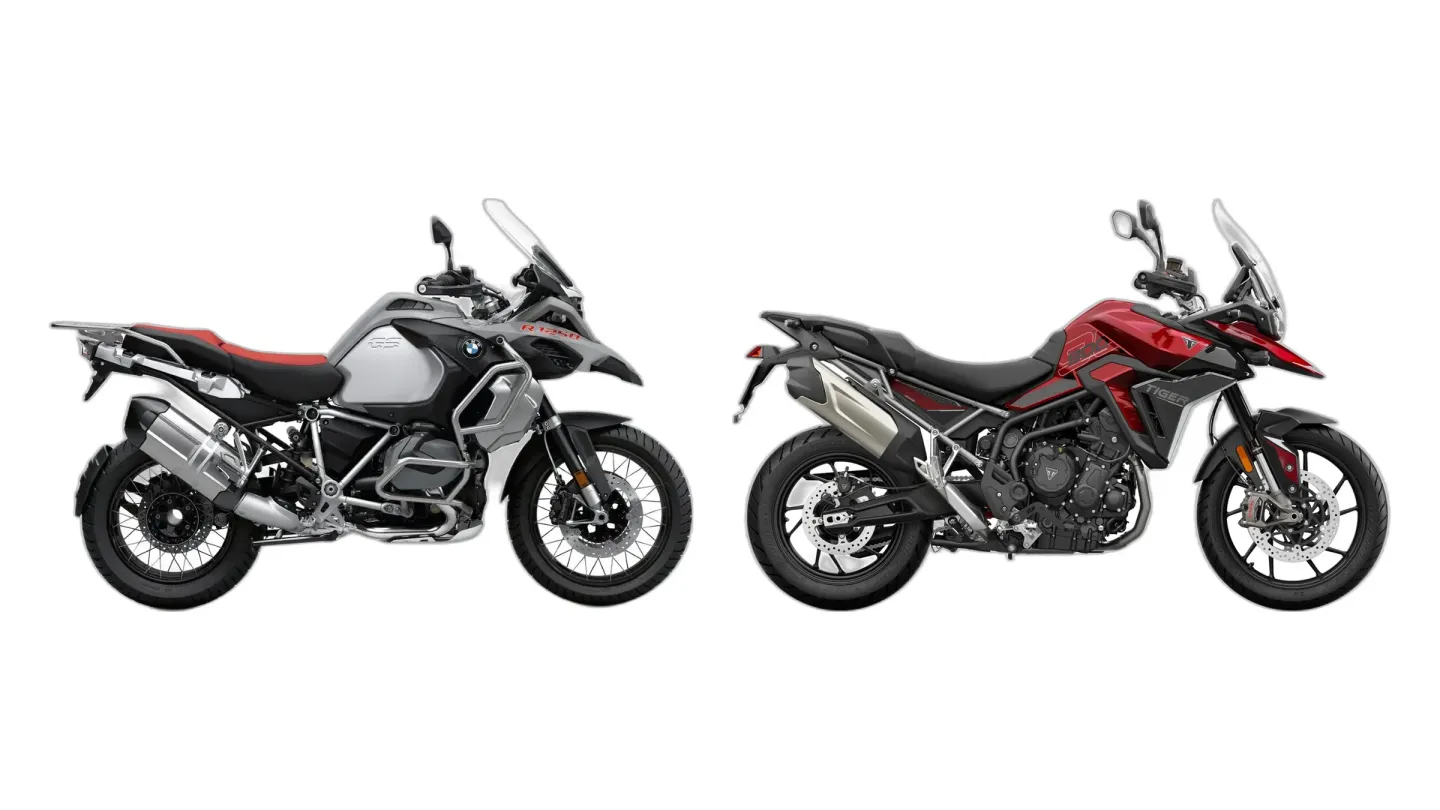
BMW R 1250 GS Adventure (K51) vs Triumph Tiger 900 (C080-GTPro)
BMW R 1250 GS Adventure vs Triumph Tiger 900: long days, loaded bags, one choice to make.
You'll feel the BMW R 1250 GS Adventure shove at the first crack of throttle and keep shoving clear to redline. The Triumph Tiger 900 thumps like a twin as you roll it on down low. Then it's spinning hard and snarling up top.
So which one do you buy?
The R 1250 GS Adventure has the edge if…
Sporty riding on twisty roads
Edges it: R 1250 GS Adventure
In the twisties, the R 1250 GS Adventure asks a bit less of you to go quickly. Put it down to harder acceleration and a sportier chassis. Call it a modest edge.
Real off-road capability
Small edge: R 1250 GS Adventure
The R 1250 GS Adventure nudges ahead where the road turns to gravel. Most of that is more suspension adjustment and more low-end pull. Close enough that a test ride on dirt is worth it.
Comfortable long-distance riding
A touch ahead: R 1250 GS Adventure
Hour after hour, the R 1250 GS Adventure feels a little kinder to you. The reason: more range per tank. It's a close-run thing, though.
Keeping running costs low
Inches ahead: R 1250 GS Adventure
The R 1250 GS Adventure is a touch easier on the wallet to run. Condition still matters more than the model.
The Tiger 900 has the edge if…
Daily commuting & city riding
Slight edge: Tiger 900
Your daily ride leans slightly toward the Tiger 900. Fit and price can easily outweigh that.
Which one's the smarter buy
No clear winner on value
Neither bike is the clear better buy at these used prices. The R 1250 GS Adventure costs more, but the Tiger 900 doesn't offer a decisive value edge.
What makes each one tick
R 1250 GS Adventure
Hours on the Beartooth Highway don't wear down anyone aboard the GS Adventure, with its roomy seat and a tall screen that pushes the wind aside. At walking pace it's a handful, and 591 lb (268 kg) turns a parking lot or a tight trail into a chore. Corner entry goes without fuss, since the well-sorted chassis lets the big bike steer in cleanly. Broken pavement barely unsettles the Telelever front.
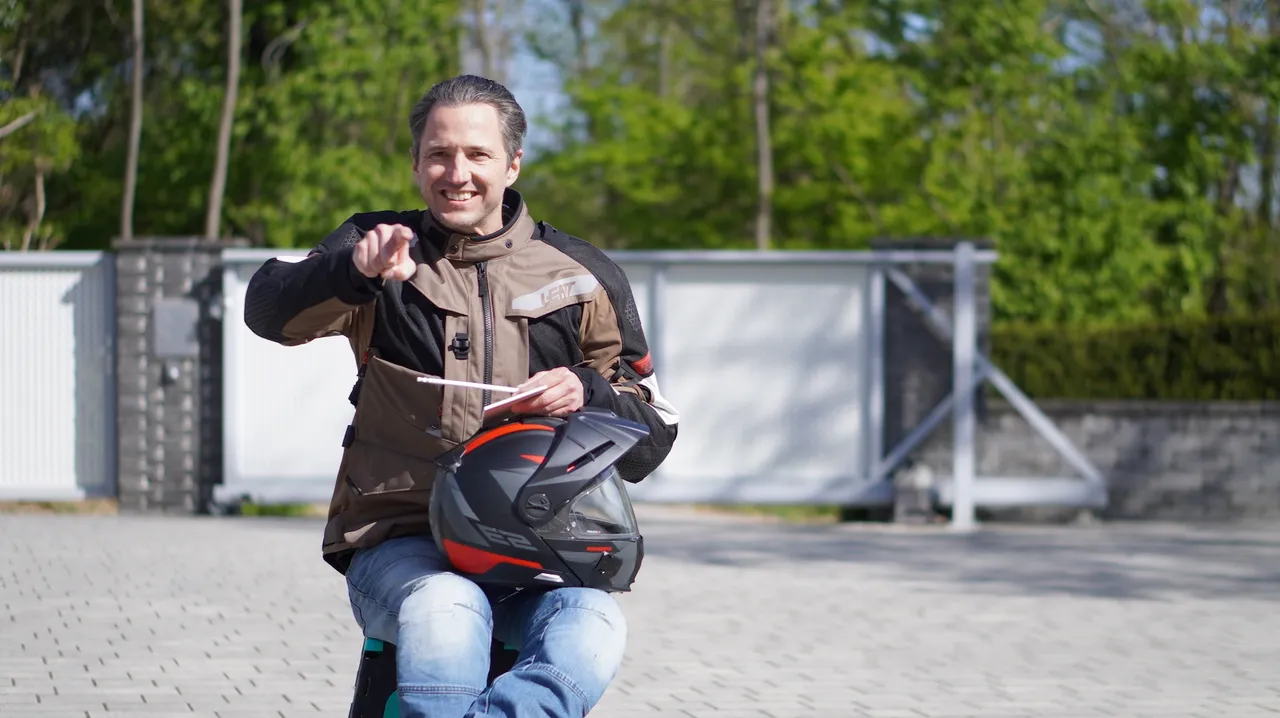
Nils rode the R 1250 GS Adventure in 2021 and 2023 (NastyNils Testride).
Tiger 900
The Tiger's sporty geometry lets it switch direction quickly through fast sweepers on pavement. A mid-sweeper bump meets short-travel suspension that's calibrated for tarmac, and the chassis doesn't lose its planted feel. There's a low-rev tingle from the uneven-firing triple in the footpegs and handlebar on long highway stretches. The front lever bites and modulates.
The Voice of Experience
What actually separates them
- The Tiger 900 has the lower seat: 32.3 in (820 mm) vs 35.0 in (890 mm).
- The Tiger 900 has the lower wet weight: 483 lb (219 kg) vs 591 lb (268 kg).
- The R 1250 GS Adventure makes more peak power: 136 hp (100 kW) vs 108 hp (80 kW).
Which one for the way you ride
Who each one is built for
What's good, and what you'll live with
R 1250 GS Adventure
What owners say
Strengths
- Supreme touring comfort and wind protection
- Surprisingly agile handling for its size
Trade-offs
- Heavy and cumbersome at low speeds
- High purchase price and expensive options
- Complexity and early reliability concerns
Tiger 900
What owners say
Strengths
- Distinctive T-plane triple character
- Comprehensive standard equipment as GT Pro
- Stronger and smoother engine for MY2024
- Road-biased chassis behaviour
Trade-offs
- Vibration character of the T-plane triple
- Premium price within the class
- Weight relative to mid-size adventure rivals
What they cost used
These prices compare a 2-year-old R 1250 GS Adventure with a 2-year-old Tiger 900.
- R 1250 GS Adventure
- about $20,000
- Tiger 900
- about $13,400
At two years old, the BMW R 1250 GS Adventure sits around $20,000 while the Triumph Tiger 900 lands near $13,400. That's a $6,600 gap in the US market. These are estimates from earlier records, not live listings.
What they share
- Gearbox
- 6-speed
Where the spec sheets split
| R 1250 GS Adventure | Tiger 900 | |
|---|---|---|
| Seat height | 35.0 in (890 mm) | 32.3 in (820 mm) |
| Wet weight | 591 lb (268 kg) | 483 lb (219 kg) |
| R 1250 GS Adventure | Tiger 900 | |
|---|---|---|
| Displacement | 1254 cc | 888 cc |
| Engine | Flat-twin (boxer) | Inline-three |
| Cooling | Air/liquid-cooled | Liquid-cooled |
| Power | 136 hp (100 kW) | 108 hp (80 kW) |
| Peak power at | 7,750 rpm | 9,500 rpm |
| Torque | 105 lb-ft (143 Nm) | 66 lb-ft (90 Nm) |
| Peak torque at | 6,250 rpm | 6,850 rpm |
| R 1250 GS Adventure | Tiger 900 | |
|---|---|---|
| Fuel economy | 50 mpg (US) / 4.75 L/100 km | 50 mpg (US) / 4.7 L/100 km |
| Fuel capacity | 7.9 US gal (30 L) | 5.3 US gal (20 L) |
| R 1250 GS Adventure | Tiger 900 | |
|---|---|---|
| Final drive | Shaft | Chain |
| Fork | Telelever | Upside-down (USD) |
| Front brake | 305 mm | 320 mm |
| Front tire | 120/70-19 | 100/90-19 |
| Rear tire | 170/60-17 | 150/70-17 |
| Wheelbase | 59.2 in (1504 mm) | 61.3 in (1556 mm) |
| Ground clearance | 9.9 in (252 mm) | 6.7 in (170 mm) |
| Front travel | 8.3 in (210 mm) | 7.1 in (180 mm) |
| Rear travel | 8.7 in (220 mm) | 6.7 in (170 mm) |
What comes fitted, what costs extra
| R 1250 GS Adventure | Tiger 900 | |
|---|---|---|
| Cornering ABS | Standard (from 2021) | Standard |
| Electronic Suspension | Option | Standard |
| Steering Damper | Standard | Not offered |
| Quickshifter | Option | Standard |
| Navigation | Option | Standard |
| USB Charging Port | Standard | Not offered |
| Tire Pressure Monitoring (TPMS) | Option | Standard |
| Cruise Control | Option | Standard |
| Heated Grips | Option | Standard |
Head to head, area by area
Both bikes on the same scale, one area at a time.